
Toccamano

Nome scientifico: Sherardia arvensis L.

Famiglia: Rubiaceae


MORFOLOGIA

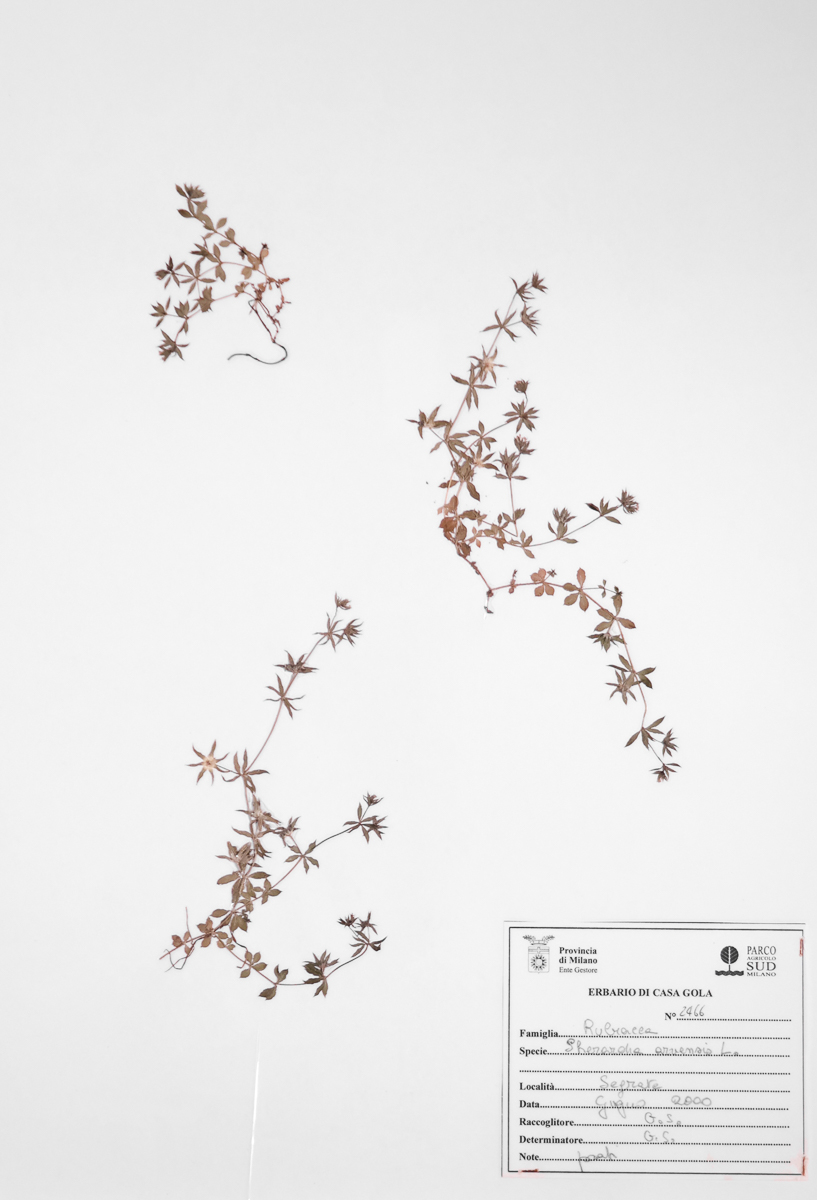
Portamento e dimensioni: Pianta erbacea annuale, alta 5-20 cm.


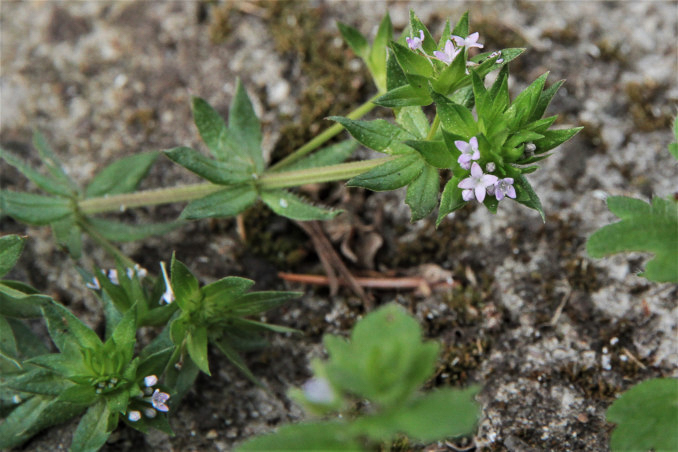
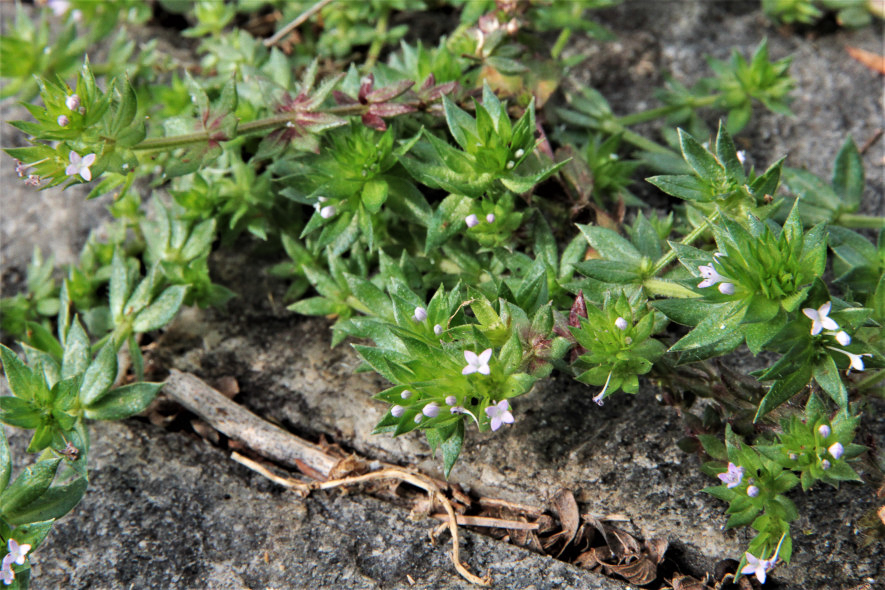
Fusto: fusti gracili, prostrato-ascendenti, semplici o ramificati alla base, tetragoni e ruvido-scabri agli angoli per peli aculeati ricurvi.

Foglie: inferiori opposte, le medie verticillate a 4 e le superiori verticillate a 6 (2 x 5-8 mm), lanceolate, scabre ai margini, mucronate, attenuate alla base, uninervie.


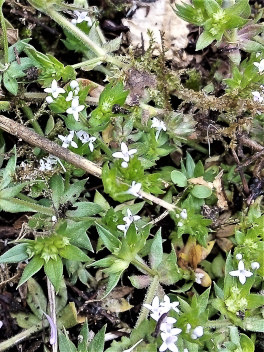
Fiori: Infiorescenza in capolino pauciflora terminale o ascellare con 4-10 fiori ermafroditi subsessili circondati da un verticillo di 6-8 brattee simili alle foglie, scabre sui margini, saldate alla base e superanti i fiori. Calice ispido con (4)6 denti (0,3-1 mm) triangolari e subulati, persistente e accrescente nel frutto. Corolla (ca 4-5 mm) attinomorfa ipocrateriforme, di color roseo-lilacino, raramente bianca, con 4 lobi acuti e con tubo allungato cilindrico lungo circa 1,5 volte i lobi. Fiorisce da febbraio a luglio.

Frutti e semi:Il frutto è uno schizocarpo biloculare (2-5 mm) composto da 2 mericarpi saldati alla base e coronati dai denti calicini persistenti.

DISTRIBUZIONE E HABITAT


Cresce in tutta Italia da 0 m ai 1.900 m. Vive in garighe, incolti, pascoli, luoghi erbosi, vigne, spesso infestante le colture.


UTILIZZO


In passato, il colore rosso estratto dalle sottili radici di S. arvensis era usato per la tintura dei tessuti. Ma il raccolto non era sufficiente a motivare una coltivazione su larga scala della pianta; inoltre, il colore non era così brillante come quello che si otteneva da Rubia tinctorum.


Foto: gentilmente offerte da Claudio Farinati

Famiglia

Rubiaceae

Specie

Sherardia arvensis L.

Tipologia

Pianta erbacea

Habitat

Coltivazioni, Incolti, Prati

Field madder


Scientific name: Sherardia arvensis L.

Family: Rubiaceae


MORPHOLOGY


Growth habit and size: Annual herbaceous plant, reaching a height of 5-20 cm.


Stem: Slender, prostrate-ascending stems, simple or branched at the base, quadrangular and rough-scabrous at the corners due to curved prickly hairs.


Leaves: The lower leaves are opposite, the middle leaves are whorled in fours, and the upper leaves whorled in sixes (2 x 5-8 mm). They are lanceolate, scabrous at the margins, mucronate, and tapering at the base, with a single nerve.


Flowers: Inflorescence in a terminal or axillary few-flowered head with 4-10 subsessile hermaphrodite flowers surrounded by a whorl of 6-8 bracts similar to the leaves. These bracts are scabrous at the edges, fused at the base, and exceeding the flowers. The calyx is bristly with (4)6 triangular and subulate teeth (0.3-1 mm), persistent and enlarging in the fruit. The corolla (about 4-5 mm) is actinomorphic hypocrateriform, pink-lilac, rarely white, with 4 acute lobes and an elongated cylindrical tube about 1.5 times the length of the lobes. It blooms from February to July.


Fruits and seeds: The fruit is a bilocular schizocarp (2-5 mm) composed of 2 mericarps fused at the base and crowned by persistent calyx teeth.


DISTRIBUTION AND HABITAT


It grows throughout Italy from 0 m to 1,900 m. It thrives in garrigues, fallow fields, pastures, grassy areas, and vineyards, often infesting crops.


USE


In the past, the red dye extracted from the slender roots of S. arvensis was used for dyeing fabrics. However, the yield was not sufficient to justify large-scale cultivation of the plant, and the color was not as bright as that obtained from Rubia tinctorum.


Photos: Kindly provided by Claudio Farinati

Famiglia

Rubiaceae

Specie

Sherardia arvensis L.

Tipologia

Pianta erbacea

Habitat

Coltivazioni, Incolti, Prati