

Black locust
Scientific name: Robinia pseudoacacia L.
Family name: Fabaceae
MORPHOLOGY
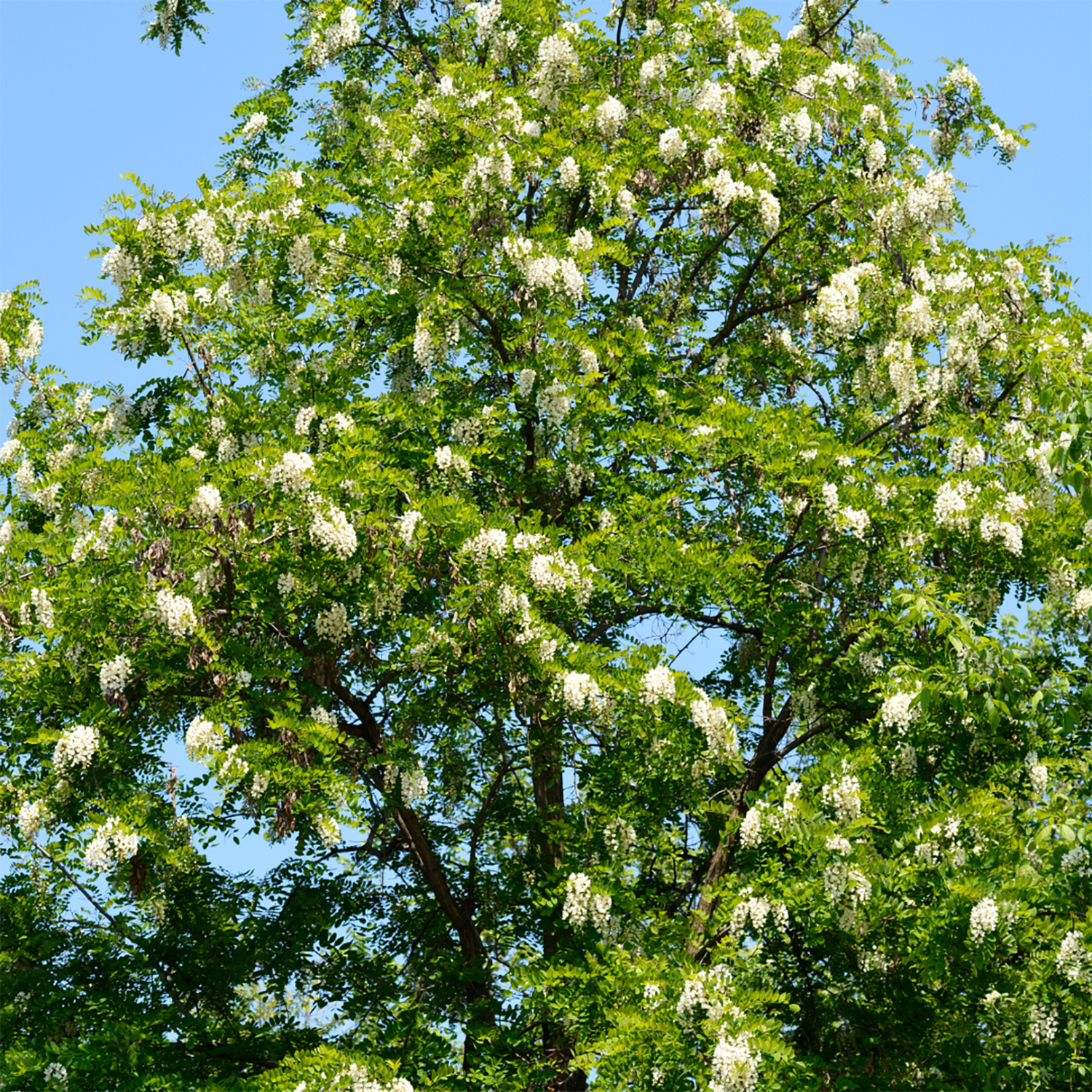
Growth habit and size: Deciduous tree or bushy form, with a branched crown. It is relatively short-lived, reaching a maximum age of 70 years.
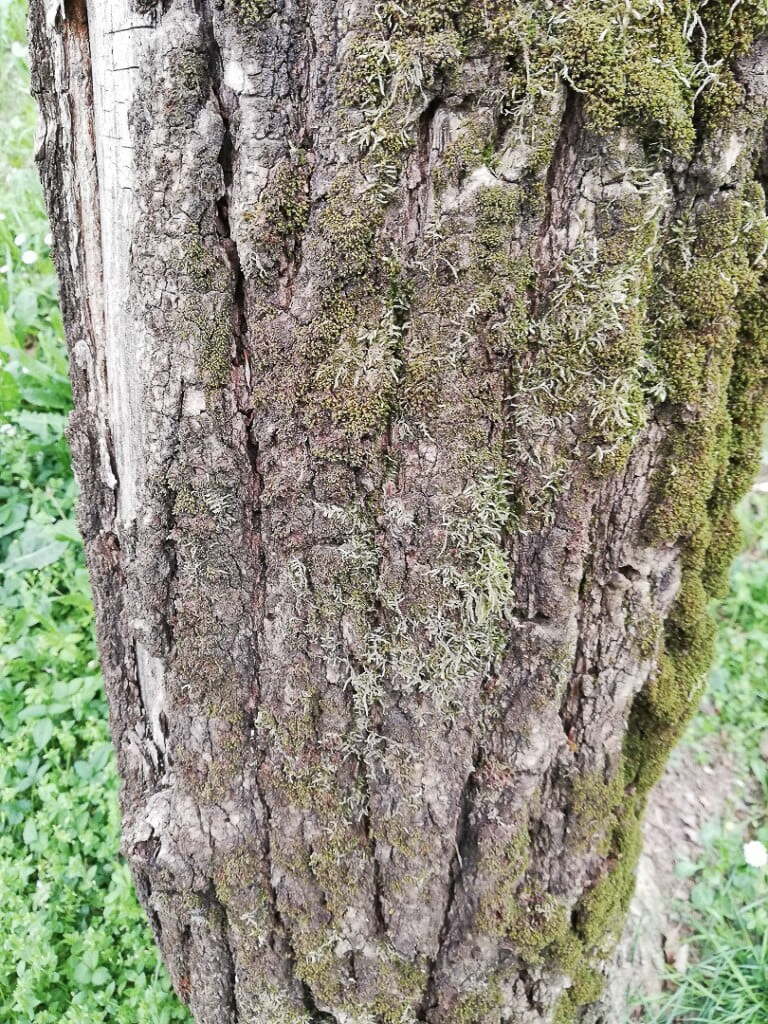
Bark: Wrinkled, light brown.
Leaves: Alternate, consisting of 11-21 oval leaflets with entire margins. They are provided with sturdy spines.
Flowers: Clustered in dense pendulous racemes, green-white, intensely scented.
Fruits and seeds: Smooth legumes, reddish-brown when ripe, which remain on the plant throughout the winter. Each contains 3 to 10 very hard brown seeds.
DISTRIBUTION AND HABITAT
A plant native to North America, it grows in pure woodlands, along escarpments, fallow land, and hedgerows, from the plains up to 1,300 m above sea level. It is extremely adaptable, and indifferent to substrate as long as it is well drained. It often behaves as an invasive plant, preventing the growth of other plant species and fungi, thus decreasing the biodiversity of some forests.
USE
The black locust is used as an ornamental plant in difficult urban environments due to its resistance to polluted air. The brown, hard wood rich in tannins is resistant to moisture and is easily workable; it is used for heavy carpentry, poles, outdoor furniture, and barrel staves. The edible flowers produce excellent honey. It contains a high vitamin content and minerals such as calcium, phosphorus, iron, magnesium, sodium, potassium, zinc, and essential oils. In phytotherapy, it is used as an anti-inflammatory to combat sore throat and cough, as an astringent in cases of diarrhea, and as an emollient, helping mucous membranes against acidity in cases of esophagitis or heartburn. Before taking any plant-based product (medicinal or non-medicinal) for therapeutic or similar purposes, it is always advisable to consult a doctor. Red dye can be obtained from the fruits of the black locust, while yellow dye can be obtained from the bark.
INTERESTING FACTS
The genus name is dedicated to Jean Robin, pharmacist, herbalist and curator of the Royal Botanical Garden of France.
Photo: Kindly provided by Valentina Gussoni