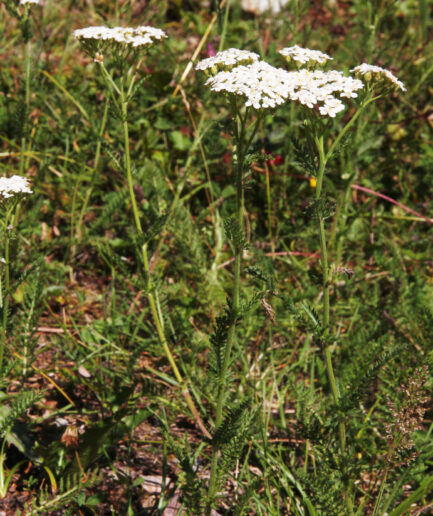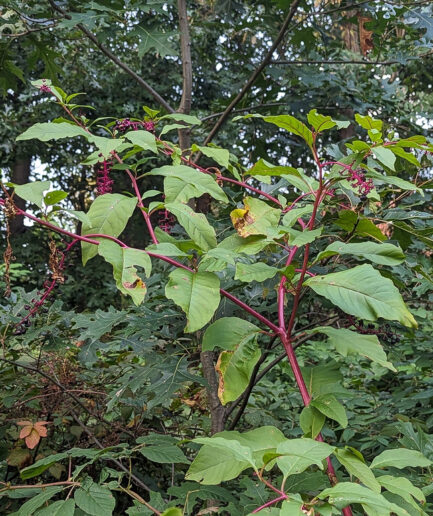



Wild Mallow
Scientific name: Malva sylvestris L.
Family: Malvaceae
MORPHOLOGY
Growth habit and size: Perennial herb with erect, branched stem, reaching heights of 80-120 cm.
Stem: Erect, cylindrical, pubescent stem.
Leaves: Basal and cauline leaves, palmately lobed, light green, hairy on the lower surface, with serrated margins.
Flowers: Hermaphroditic flowers arranged in terminal racemes. Corolla with five pink or violet petals, speckled with darker shades, approximately 2-4 cm in diameter.
Fruits and seeds: Fruit in the form of a schizocarp, composed of numerous separate parts containing seeds.
DISTRIBUTION AND HABITAT
Widespread in Europe, Western Asia, and North Africa. Commonly found along roadsides, edges of cultivated fields, meadows, and uncultivated land up to moderate altitudes.
USES
The leaves and flowers of Malva sylvestris have emollient and soothing properties. The leaves can be used to prepare decoctions or poultices to apply to skin inflammations, burns, and irritations. Additionally, the inflorescences can be used to prepare teas with soothing properties for the throat and to relieve coughs. Mallow is also a dye plant. The leaves yield a natural food colorant ranging from yellow to green, while the flowers yield a pale pink hue. The stem provides extremely resistant fibers used for making ropes and can also be processed as a substitute for corn to produce biogas.
INTERESTING FACTS
Malva sylvestris has been known since ancient times for its medicinal properties. It is mentioned in the herbal treatises from various ancient cultures, including Greek and Roman. In ancient Rome, mallow was considered a sacred plant dedicated to Venus, the goddess of love and beauty. It is also known as an edible plant: young leaves and flowers can be added to salads to enhance flavor and provide nutritional benefits.
Photo: Emilian Robert Vicol