
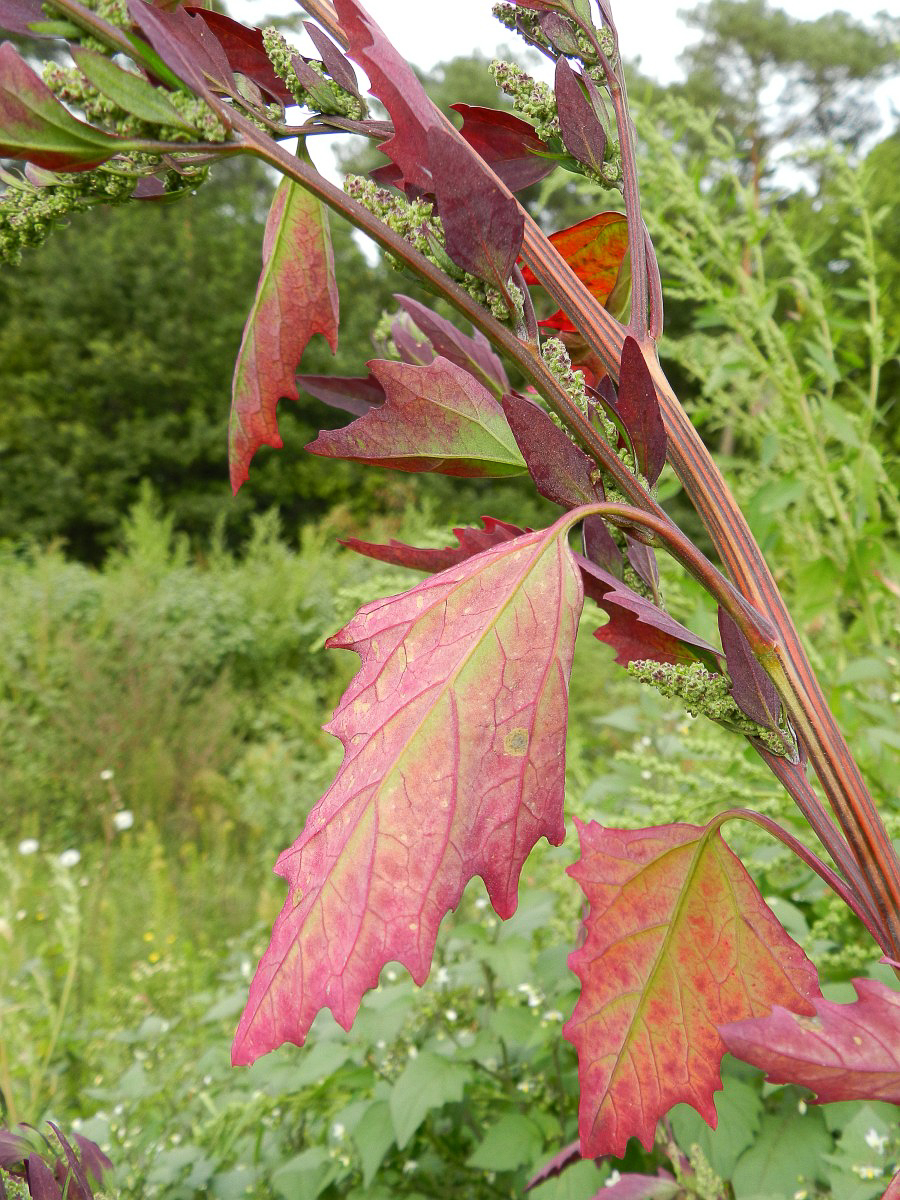
White goosefoot
Scientific name: Chenopodium album L.
Family: Amaranthaceae
MORPHOLOGY
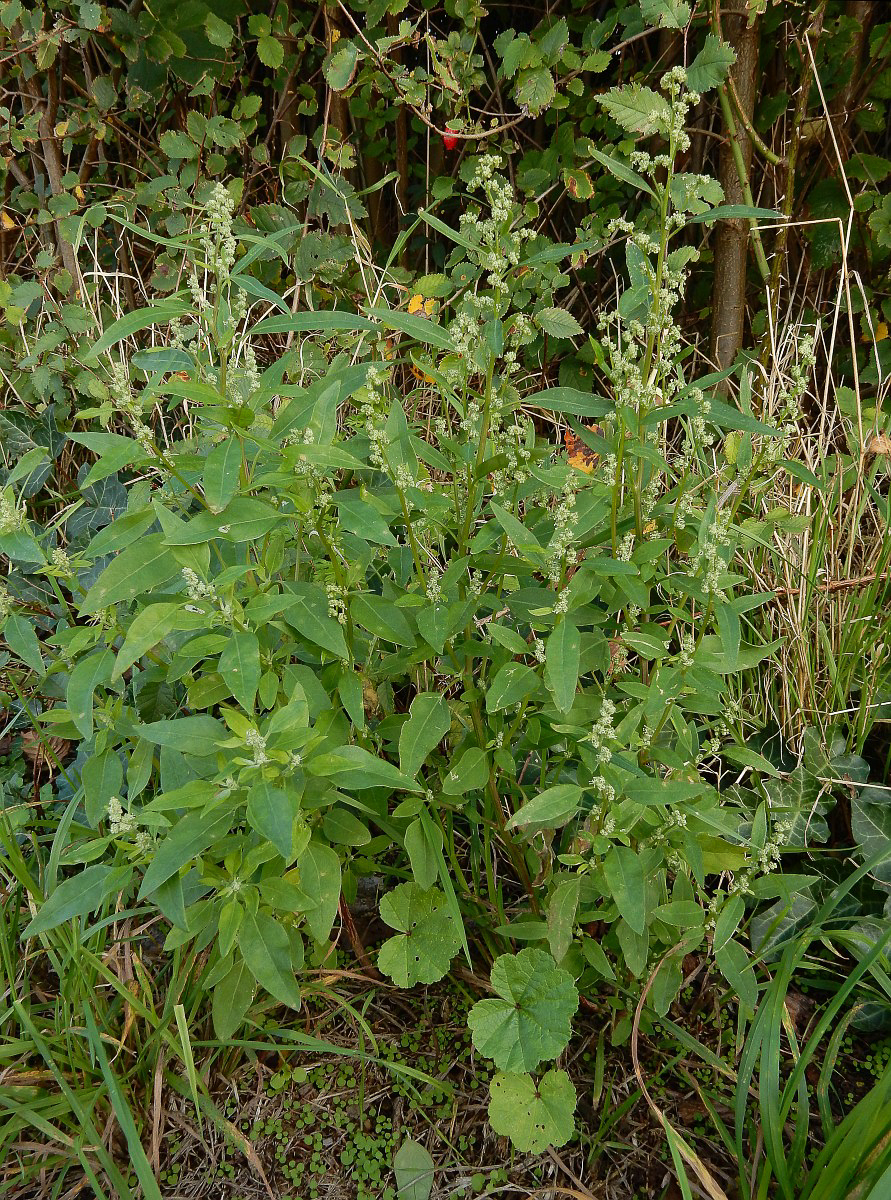
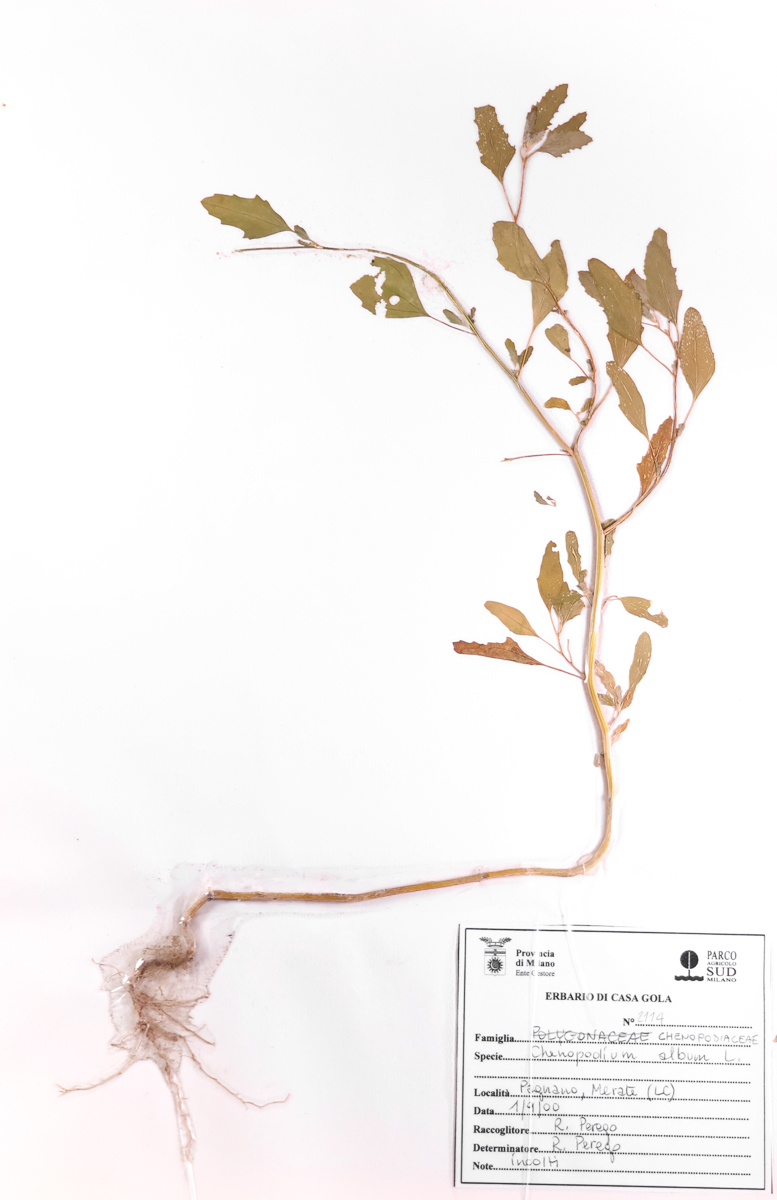
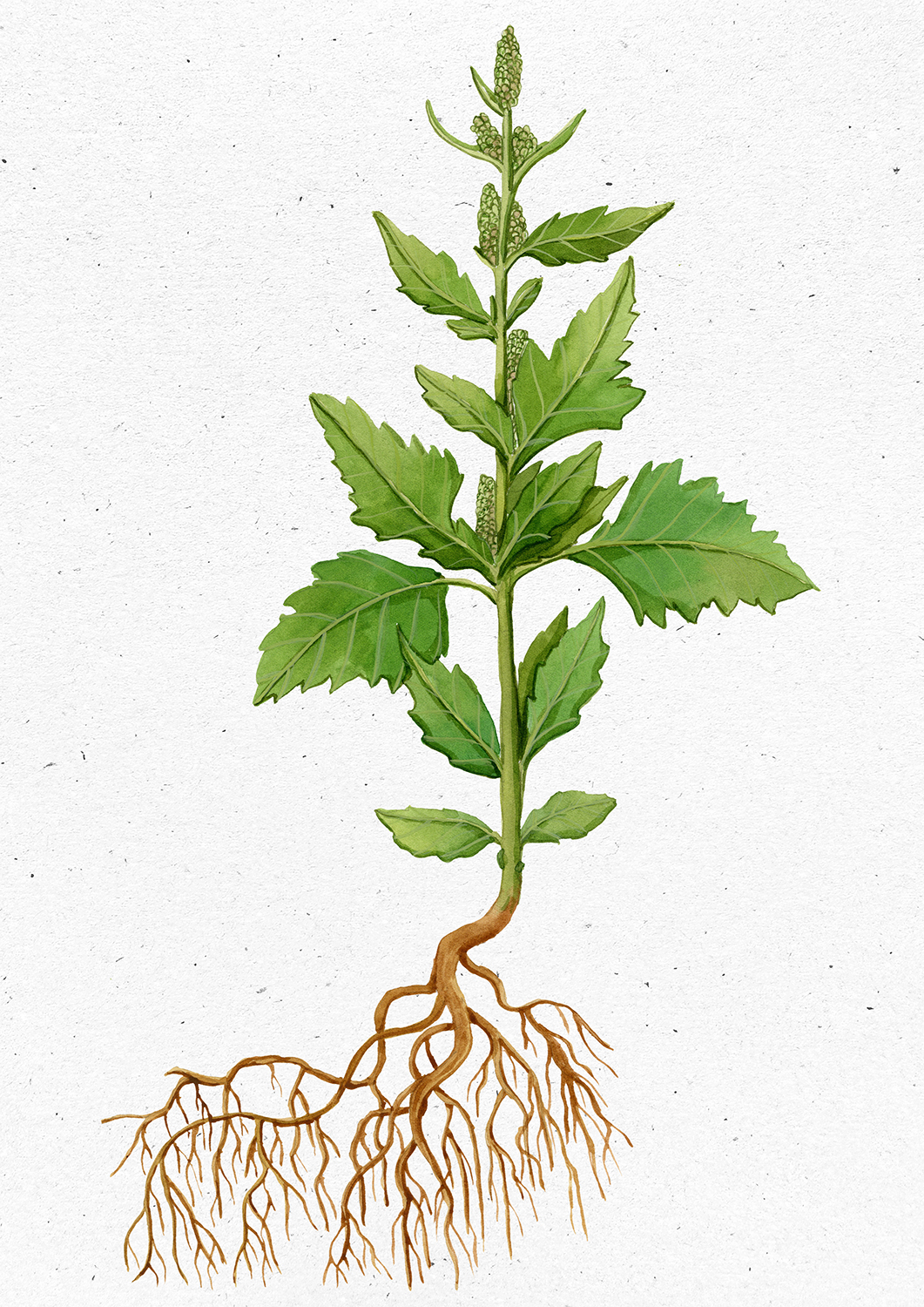
Habit and dimensions: An annual herb ranging from 10 to 150(200) cm in height, densely pubescent and glandular.
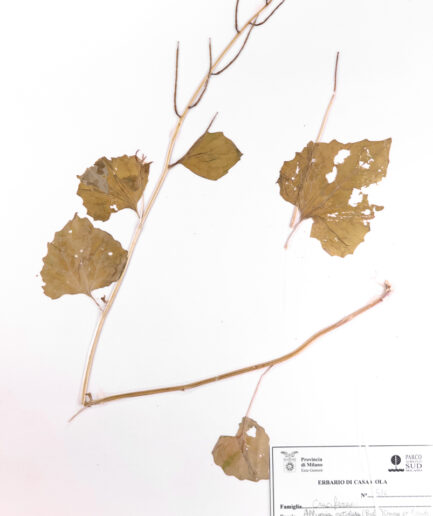
Stems: Erect stems irregularly branched from the base, less or more glaucous, ribbed, with reddish streaks at the axils of the branches and becoming powdery towards the upper part.
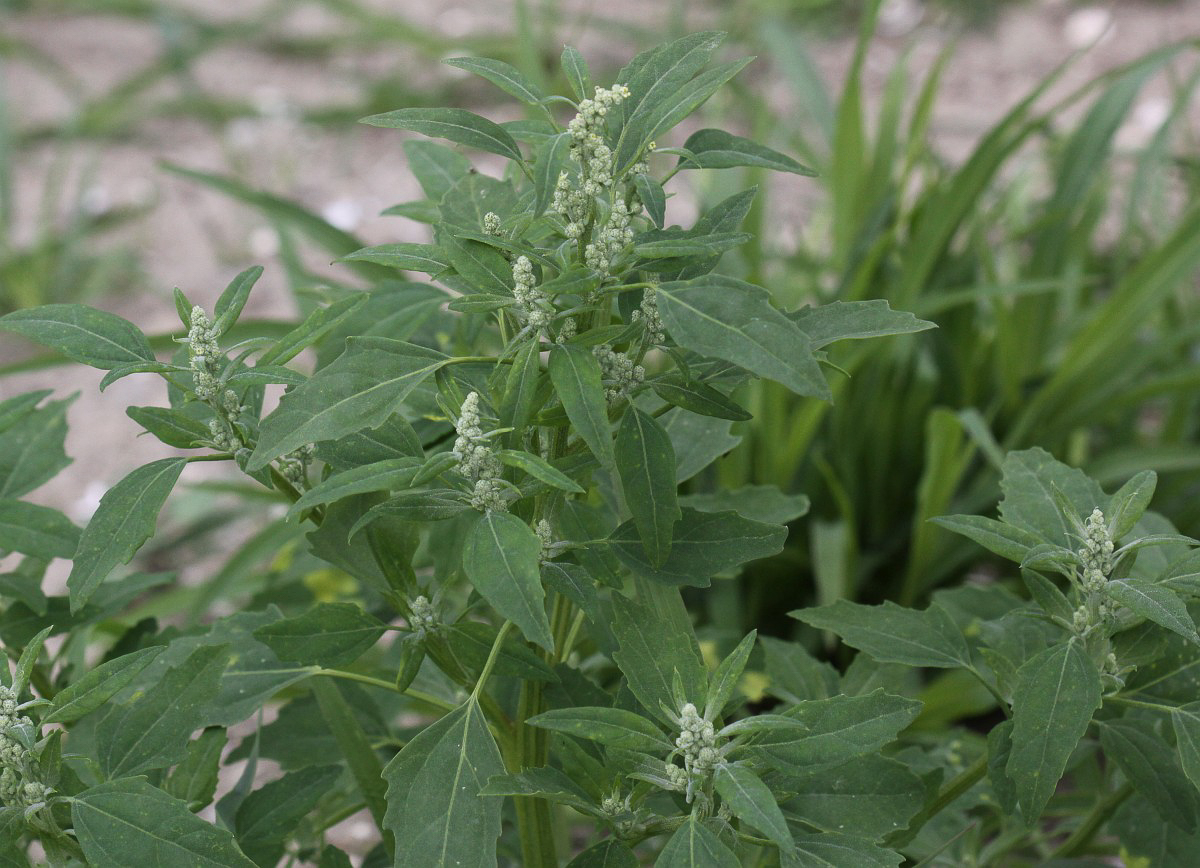
Leaves: Polymorphic leaves, petiolate (1 – 2.5 cm), more or less powdery, with concolorous faces, alternate, blade ranging from rhombic-ovate to lanceolate, 3 – 6 x 2.5(8) cm (generally longer than 1.5 times the width), gradually narrowed at the base and sub-acute at the apex. Margin entire or sinuate-dentate (3-6 pairs per side), or serrated; smaller leaves 3 – 4 cm lanceolate, subentire with powdery underside; sometimes young leaves may show reddish hues near the petiole attachment or throughout the lower surface and leaf margin.
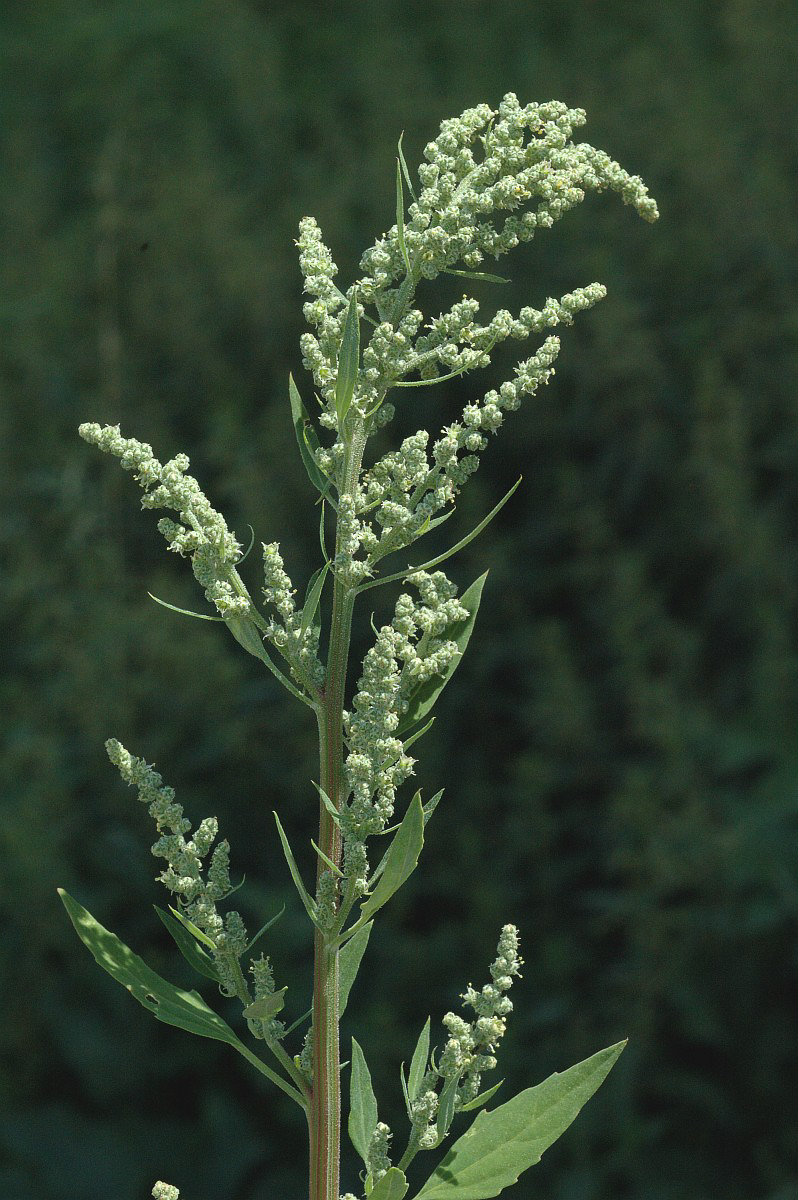
Flowers: Inflorescence spiciform and leafy, consisting of compact, subglobose, interrupted clusters 3 – 4 mm in diameter, situated in the axils of primary and secondary branches; the upper spikes are more elongated. Hermaphrodite flowers, greenish in color, 1.5 mm in diameter. Blooms from May to
December.
Fruits and seeds: The fruit is a depressed-ovoid utricle of 1.5 mm enclosing a single obovate seed of 1.2 – 1.6 mm, black, round, lenticular, horizontally arranged, with a margin from flattened to acute and a slightly rugose-crested surface.
DISTRIBUTION AND HABITAT
Present throughout Italy. It grows in cultivated fields, among spring cereals, ruins, pathways, from sea level up to 1500 m, with cases reported up to 2500 m.
USE
In folk medicine, due to its iron content and vitamins A – B – C, it was used as an anti-inflammatory, laxative, and antirheumatic. The seeds contain Lysine, a precursor to a vitamin like Niacin, essential for the human body which is unable to synthesize it. Before taking any plant-based product (medicinal or non-medicinal) for therapeutic or similar purposes, it is always advisable to consult a doctor. The use of this plant dates back to prehistoric times, with evidence found in excavations in several European countries (Denmark, Switzerland, Spain, France) and in the Americas. Today, it is gradually being replaced by C. bonus-henricus and spinach. In Italy, it is still used in some regions (especially Tuscany) to prepare ravioli filling or to color pasta.
INTERESTING FACT
This plant, native to boreal America, was cultivated by indigenous people in New Mexico, Arizona, and Utah because they cooked it for soups and ground the seeds into flour for making flatbreads or used it like our polenta. The same species was cultivated in Asia and India to overcome famine and sustain humans and animals. With the cultivation of spinach, it fell into disuse. It is a highly invasive species, putting other crops such as potatoes, wheat, and vegetables in difficulty, and is now considered a weed.
Photo: under the free license of Saxifraga and Ed Stikvoort, Marijke Verhagen, Peter Meininger, Rutger Barendse