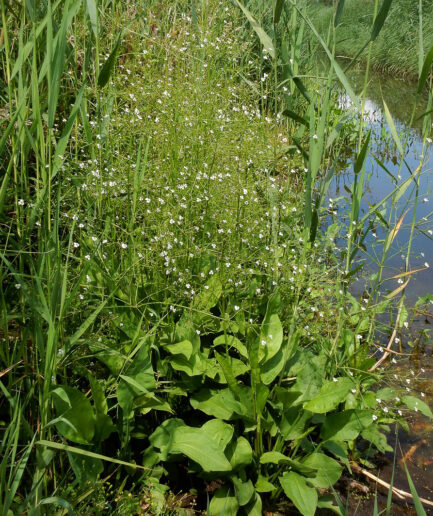



Common field speedwell
Scientific name: Veronica persica Poiret
Family name: Plantaginaceae
MORPHOLOGY
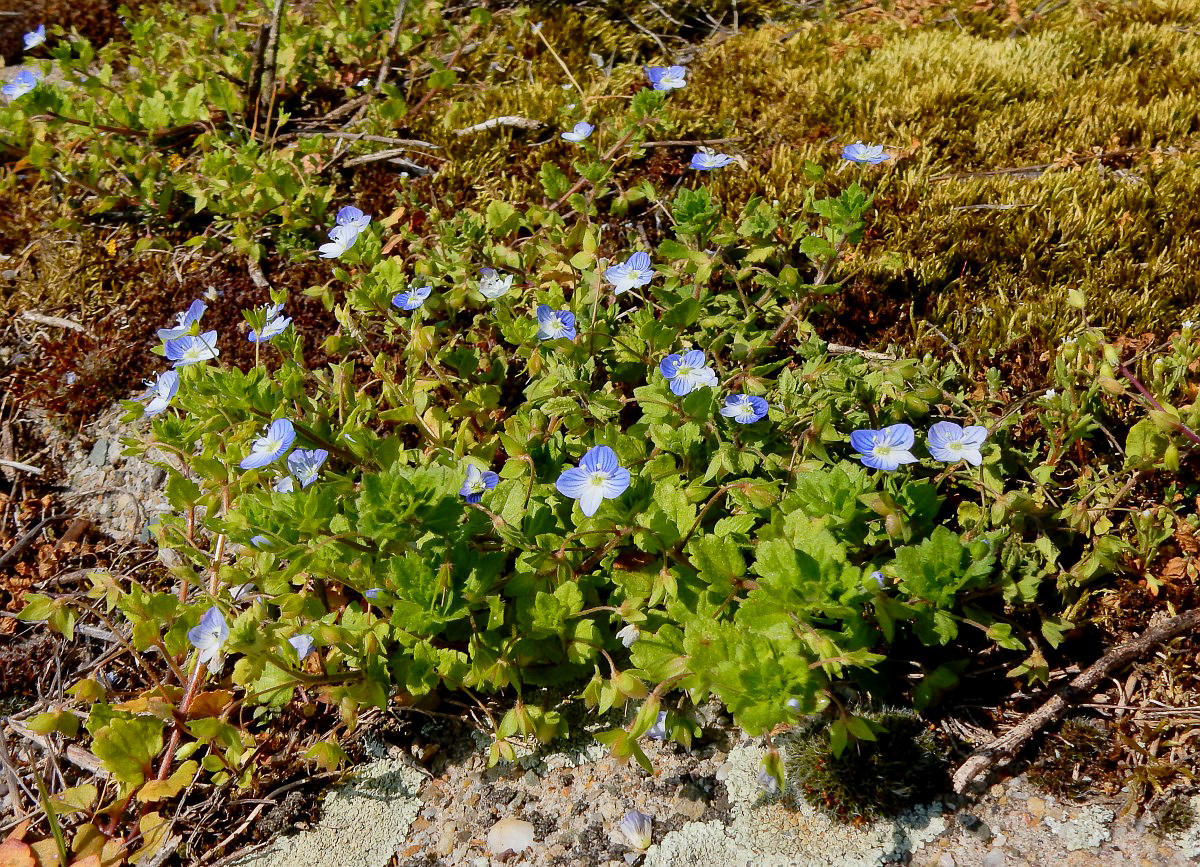
Habit and dimensions: annual herbaceous plant, reaching up to 50 centimeters in height.
Stem: hairy, prostrate and rooting, erect in the flowering part.
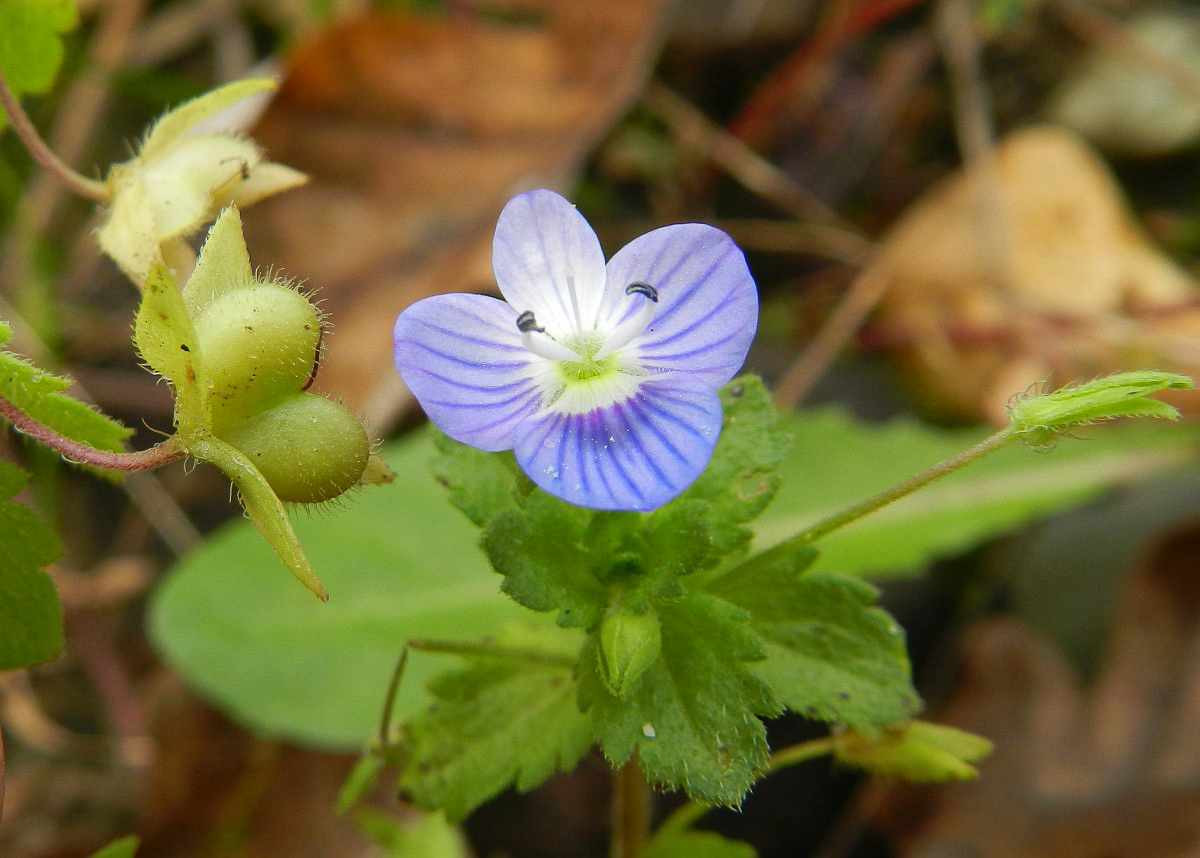
Leaves: simple, with an elliptical or oval shape and heavily toothed margins. Both surfaces of the leaves have hairs.
Flowers: borne in the axils of the leaves on long peduncles. The petals are blue, fading to yellow. They remain closed on cloudy days with little light.
Fruits and seeds: compressed, kidney-shaped capsules containing 5 to 20 yellowish, deeply concave ellipsoid seeds on one side.
DISTRIBUTION AND HABITAT
Native to Western Asia, now subcosmopolitan. Introduced to Europe as a segetal plant, meaning it grows among crops, it has become a weed in pastures, fallow lands, and gardens. In Italy, it is found in all regions up to 1,800 meters in altitude.
USE
Common field speedwell has tonic and expectorant properties. Note: Before taking any plant-based product (medicinal or otherwise) for therapeutic or similar purposes, it is always advisable to consult your doctor.
INTERESTING FACTS
The specific name refers to the plant’s place of origin: Persia. The species is also known as persian speedwell.
Photo: Courtesy of Saxifraga – Peter Meininger and Rutger Barendse under a free license.