


Hybrid Amaranth
Scientific Name: Amaranthus hybridus L.
Family: Amaranthaceae
MORPHOLOGY
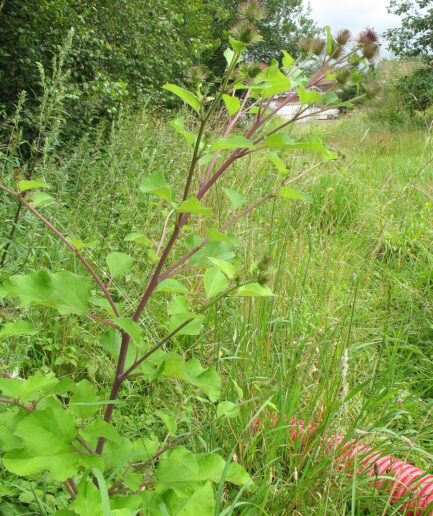
Growth habit and size: Annual herbaceous plant, more or less erect and glabrous with pubescent distal parts only when young (30-50 cm), reaching a height of up to 3 m.
Stems: Slightly branched and more or less pubescent, green-reddish with longitudinal streaks.
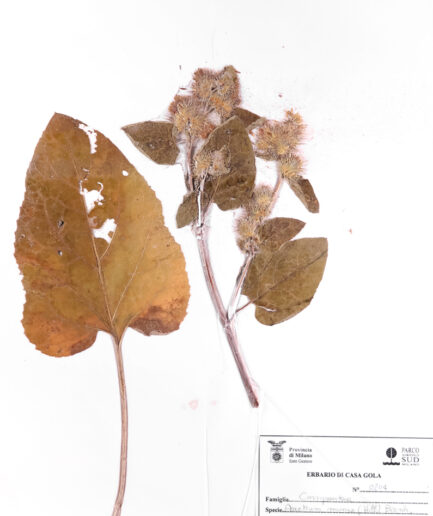
Leaves: Glabrous or slightly hairy, oval to ovate-lanceolate with cordate base, 1.5 – 10(12) x 1 – 5(6) cm. The margin is entire, and the apex is acute and mucronate. The petiole is half the length of the lamina, 1-2.5 cm, and the main vein is prominent.
Flowers: Terminal or axillary spicate inflorescence, erect or pendulous only in the terminal spikes (5-12(15) mm), green-reddish, blood-red, or yellowish. Pentamerous yellow-green flowers. Blooms from May to October.
Fruits and seeds: The fruit is a rhomboidal-ovate and compressed or urceolate pyxidium, 2-3 mm; shiny black/brown seeds.
DISTRIBUTION AND HABITAT
Non-native plant from South America, widespread throughout Italy. Found in fallow lands, ruins, and paths from 0 to 600 m.
USE
In North America, it is used in folk medicine as an emmenagogue, and as a disinfectant for sore throats. Today, it is used in homeopathic medicine. Before taking any plant-based product (medicinal or non-medicinal) for therapeutic or similar purposes, it is always advisable to consult a physician.
INTERESTING FACTS
In South Africa, this species is being tested for its ability to absorb heavy metals such as lead, mercury, etc., to be used for the remediation of soils particularly degraded by the spillage of pollutants.
Photo: Under free license from Saxifraga and Ed Stikvoort, Peter Meininger