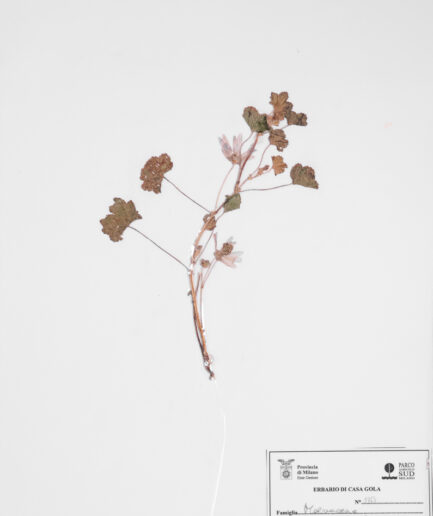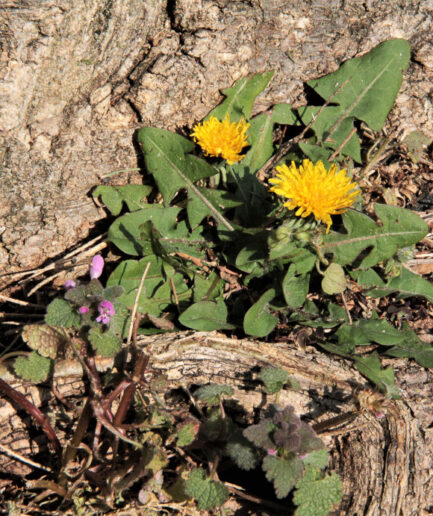



Ribwort plantain
Scientific Name: Plantago lanceolata L.
Family: Plantaginaceae
MORPHOLOGY
Habit and dimensions: A perennial herbaceous plant, extremely polymorphic, with a short and thick fibrous rhizome and fasciculated roots, reaching a height of 20-50 cm.
Stems: Erect stem, striated and furrowed.
Leaves: Basal rosette leaves are long, straight, lanceolate, with entire or dentate margins, equipped with a short petiole, usually glabrous, but sometimes very hairy. Leaf lobes are traversed by 5 parallel main veins, well-marked.
Flowers: At the height of the basal leaves, floral scapes emerge, covered with stiff hairs, leafless, with 5 longitudinal striations, ending with an oval or conical spike, formed by numerous flowers closely pressed against each other. The flowers develop at the level of the brown membranous bracts. The calyx consists of 2 free sepals and 2 fused ones, which are straight with a green central vein. The corolla is tubular and funnel-shaped, divided into lanceolate-brownish lobes. Blooms from February to October.
Fruits and seeds: The fruits are capsules with transverse dehiscence, called achenes, oval, tiny, and brown, containing 1-2 shiny seeds with a concave inner face.
DISTRIBUTION AND HABITAT
Present throughout Italy, it adapts to all soils and environments, generally in human-altered areas, in meadows and pastures, uncultivated land, rubble, roadsides, and gardens, from 0 to 2,000 m.
USE
It has antibacterial, expectorant, hemostatic, astringent, ophthalmic, soothing, laxative, and emollient properties. The seeds contain up to 30% mucilage which, when swelling in the intestine, acts as a laxative decongesting irritated mucous membranes; a glucoside, anacubin, which stimulates the secretion of uric acid; bactericidal substances, flavonoids, tannin, vitamins A C K, pectin. Infusions, juices, and decoctions can be made from it. If ingested in large quantities, it can cause constipation. Indicated for respiratory tract infections, for the treatment of oral and throat conditions, gastric disorders, insect bites, conjunctivitis, ulcers, wounds, and burns. This plant is used and cultivated by the pharmaceutical industry to prepare cough syrups. For external use, the infusion, as well as freshly crushed leaves, can be used to prepare compresses for slow-healing wounds. The juice can be used in making effective cough candies, and when fresh, it is useful when applied to bee stings. Aqueous extracts have moisturizing properties on the skin, used in masks and creams to rehydrate dry and partially dehydrated skin. The plant’s seeds are highly sought after by birds; those who have them in cages can feed them the spikes. Before taking any plant-based product (medicinal or non-medicinal) for therapeutic or similar purposes, it is always advisable to consult your doctor beforehand. Young leaves can be used in small quantities in salads, in soup preparation, or cooked like spinach. From the plant, starch, fibers, dyes, and tanning agents can be obtained.
INTERESTING FACTS
The most noticeable aspect of the inflorescence is the long and vibrant stamens, which form a crown that progressively moves towards the apex of the inflorescence as flowering progresses. This peculiarity, like everything that happens in nature, is not random: the stamens are long and vibrant because pollination is anemogamous, occurring through the wind. Plantain, which in the past was also called “Mars’ Herb,” was part of the group of so-called “magical” plants (together with Henbane, Belladonna, Mandrake, etc.) considered to be closely related to astrology. In the “Flight of the Seven Ibis,” for example, Plantain is found among the magical plants dominated by the flight of Mars and therefore linked to the signs of Aries and Scorpio. The evocative English name of Plantago, “white man’s foot,” alludes to the plant’s seeds, which were spread everywhere during colonial times, carried by Europeans in their trouser folds. P. lanceolata has been present since forests began to be cleared by farmers in the Stone Age about 5,000 years ago. From analyses carried out on pollen found in bogs and lake sediments, it has been found that the plant has flourished abundantly since then. Plantain can sometimes become invasive; its ability to push out numerous new shoots from the basal rosette allows it to survive trampling by livestock in pastures and mowing of meadows. In areas where apple trees are cultivated, it has been observed that in spring, P. lanceolata hosts Disaphis plantaginea, the gray apple aphid, which completes part of its life cycle on this plant before returning to apple trees in autumn.
Photo: under the free license of Saxifraga and Ed Stikvoort, Willem van Kruijsbergen, Jan van der Straaten