



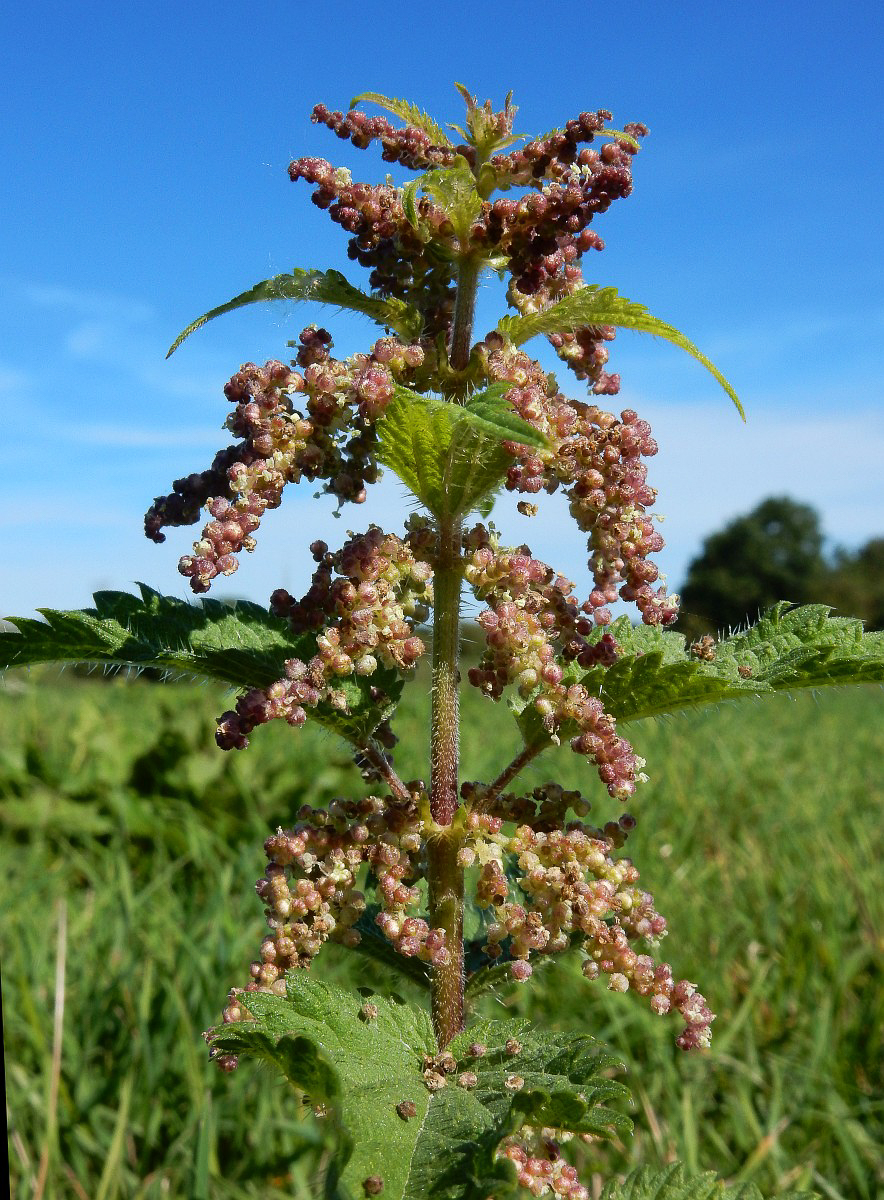
Stinging nettle
Scientific name: Urtica dioica L.
Family: Urticaceae
MORPHOLOGY
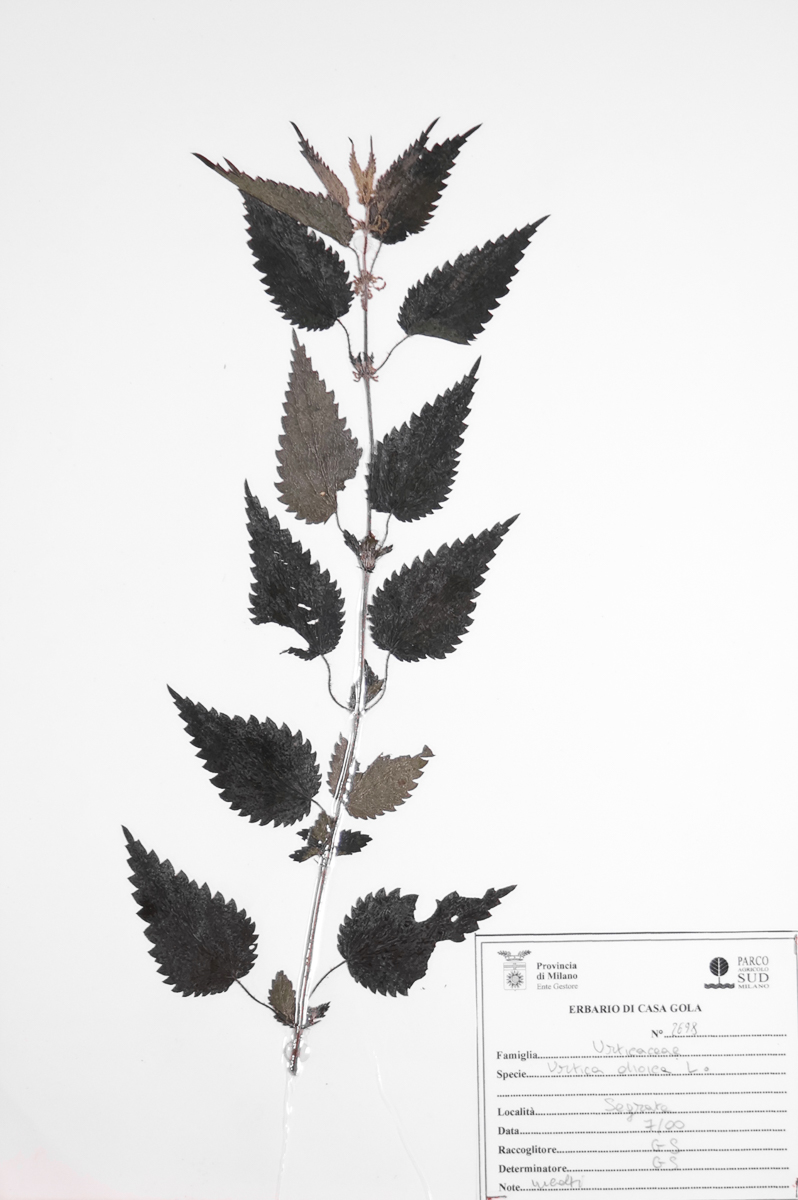
Habit and Size: Herbaceous perennial plant, 30 – 120 cm tall, with a rough appearance and dark green color.
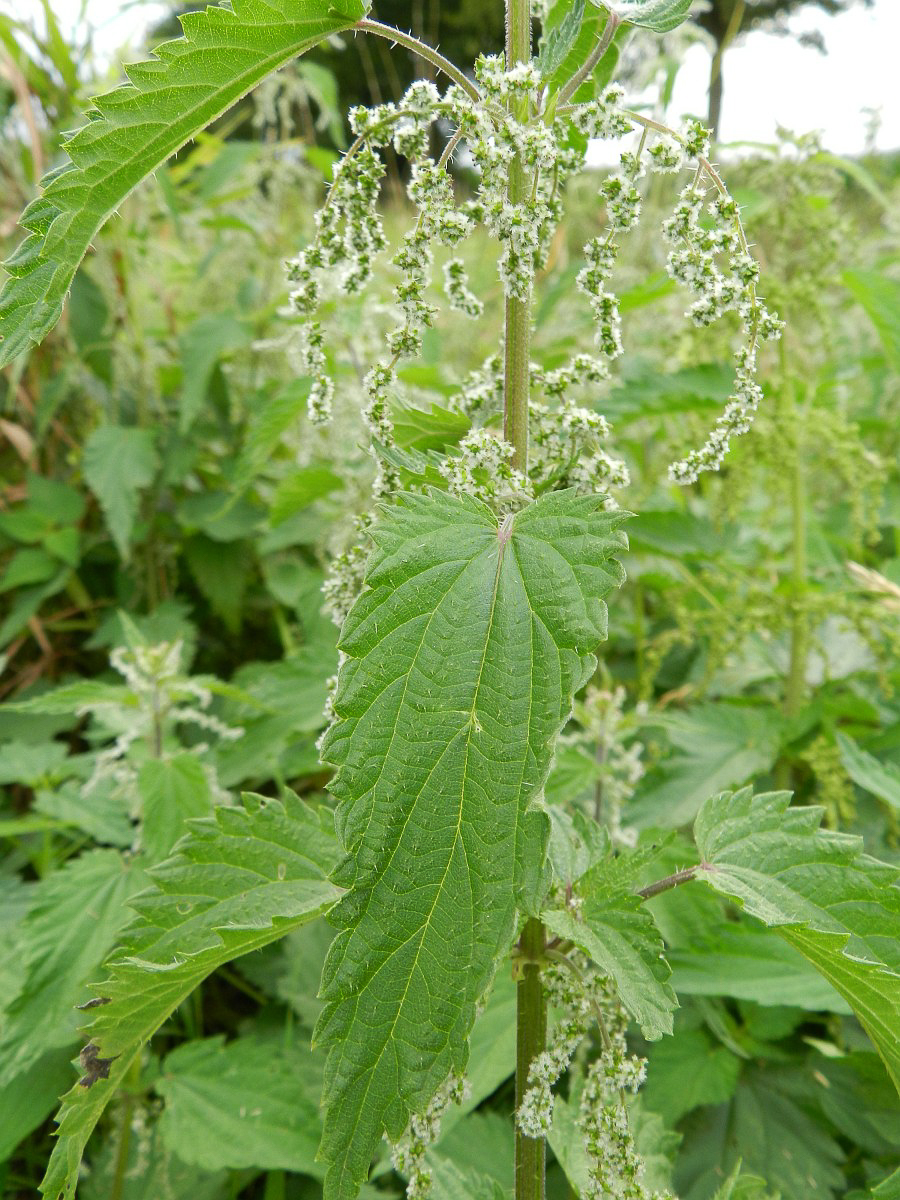
Stem: Robust, erect, and striated stems with a bluntly square cross-section, reddish or yellowish in color, generally unbranched, covered with stinging hairs.
Leaves: The leaves have four free stipules, often longer than 3 mm, and are pubescent on both sides. They are opposite, borne on petioles shorter than the leaf blade (not reaching halfway), much longer than wide, typically over 5 cm long. The lamina is ovate-lanceolate to lanceolate-linear at the top, with a heart-shaped base and an apex that narrows into an acute tooth. The margin is coarsely toothed with the terminal tooth longer than adjacent ones. The surface is rough, covered with short simple hairs mixed with long, rigid stinging hairs that break off with minimal contact, secreting an irritating liquid. Epidermal cystoliths are more or less elongated.
Flowers: Dioecious plant (bearing unisexual flowers on different plants) with simple or branched raceme inflorescences in whorls at the axils of the upper leaves. They are pendulous or recurved on female plants and generally spreading on male plants, shorter but always longer than the respective petiole, usually exceeding 2 cm (up to 5 cm at fruiting). Blooms from April to November.
Fruits and Seeds: The fruit is an ovoid-elliptical achene, olive-brown in color, with a tuft of hairs at the apex, enclosed in the enlarged tepals.
DISTRIBUTION AND HABITAT
Found throughout Italy in fallow lands, woods, and anthropized areas from 0 to 1,800 meters, with peaks up to 2,300 meters.
USE
Its active ingredients, such as formic acid, histamine, vitamins A, C, and K, and minerals, give the plant numerous properties recognized since ancient times. It is considered anti-asthmatic, hypoglycemic, anti-dandruff, galactagogue, hemostatic, astringent, diuretic, and tonic, and is used by pharmaceutical and cosmetic industries. Its flowers are useful for combating benign prostatic hyperplasia, promoting the elimination of fluids from the kidneys, and helping to relieve urinary disorders by reducing residues in the urinary tract. Its leaves have long been used for treating seborrheic skin and in lotions and shampoos against hair loss, as well as for relieving rheumatic and trauma-related pains. For external use, it is antiseptic. Before taking any herbal product (whether medicinal or non-medicinal) for therapeutic or similar purposes, it is always advisable to consult your doctor.
Its long fibers, spun since the Middle Ages, produce a durable fabric similar to hemp.
Dyes are obtained from the leaves and roots for use in medicines, cosmetics, hygienic products, and liquors.
When macerated in water for 12 hours, the plant produces a non-toxic liquid with insecticidal effects, which can be sprayed on aphid-infested plants.
It is an excellent forage plant and is also used in cooking like other vegetables to prepare soups, side dishes, and high-quality fillings.
Photos: Freely licensed from Saxifraga and Rutger Barendse, Jan van der Straaten, Ed Stikvoort