
Japanese hops
Scientific name: Humulus japonicus Siebold & Zucc.
Family: Cannabaceae
MORPHOLOGY
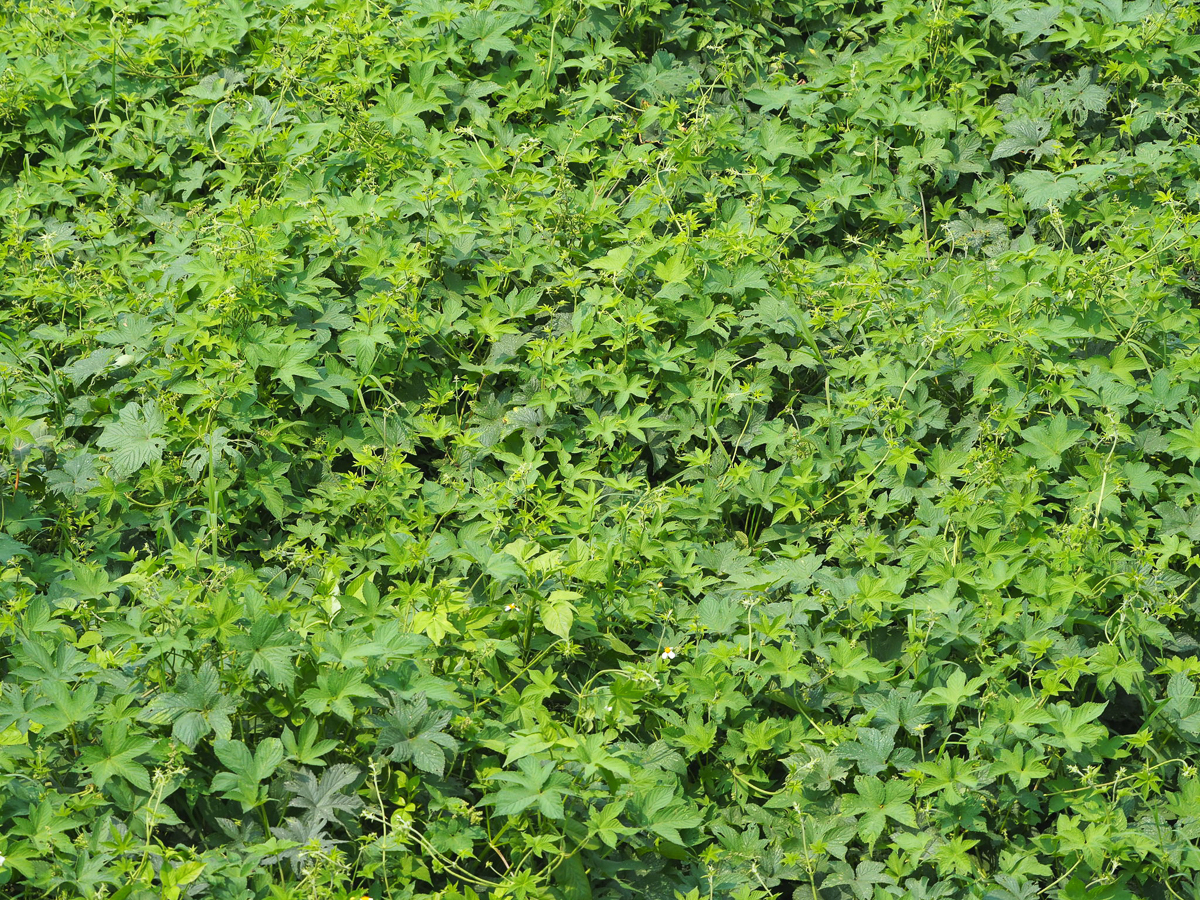
Habit and size: Annual dioecious herbaceous vine, climbing, reaching heights between 1 and 3 m.
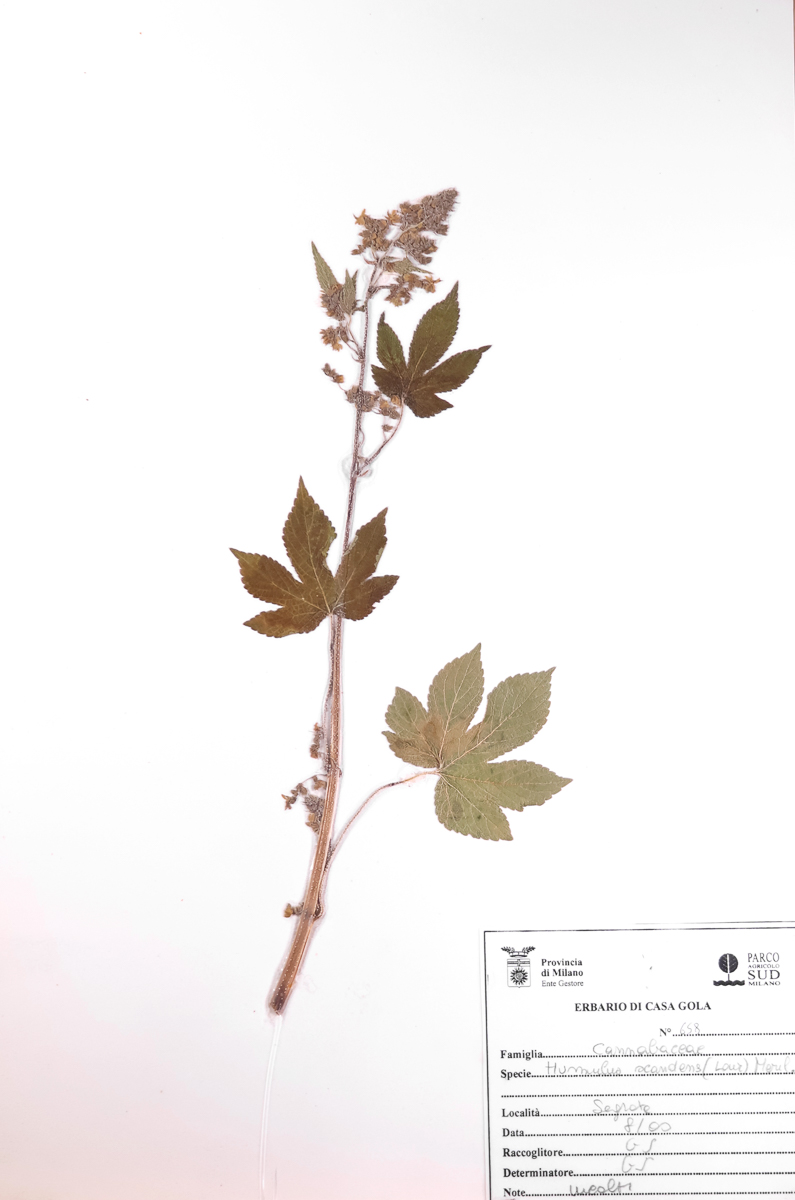
Stem: Branching, slender stems, climbing or prostrate, with stiff retrorse and mucronulate hairs (like leaf petioles), allowing them to twine around any support.
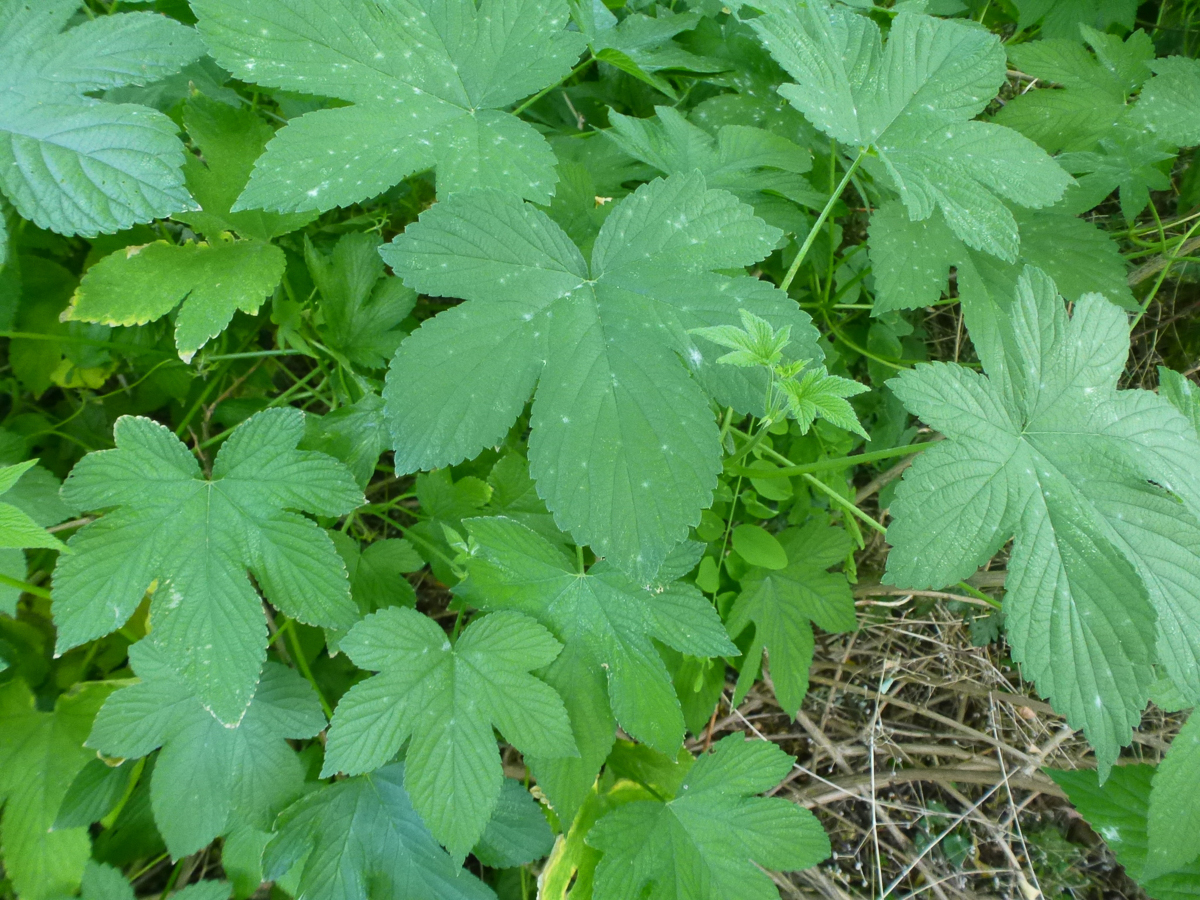
Leaves: 5-12 cm long, alternate, light green in color, borne on long petioles (longer than the leaves themselves!) with rough, reticulate blades circular in outline, heart-shaped at the base, deeply palmately divided into 5-7 acute lobes, serrated at the margins. The upper leaves often with only 3 lobes.
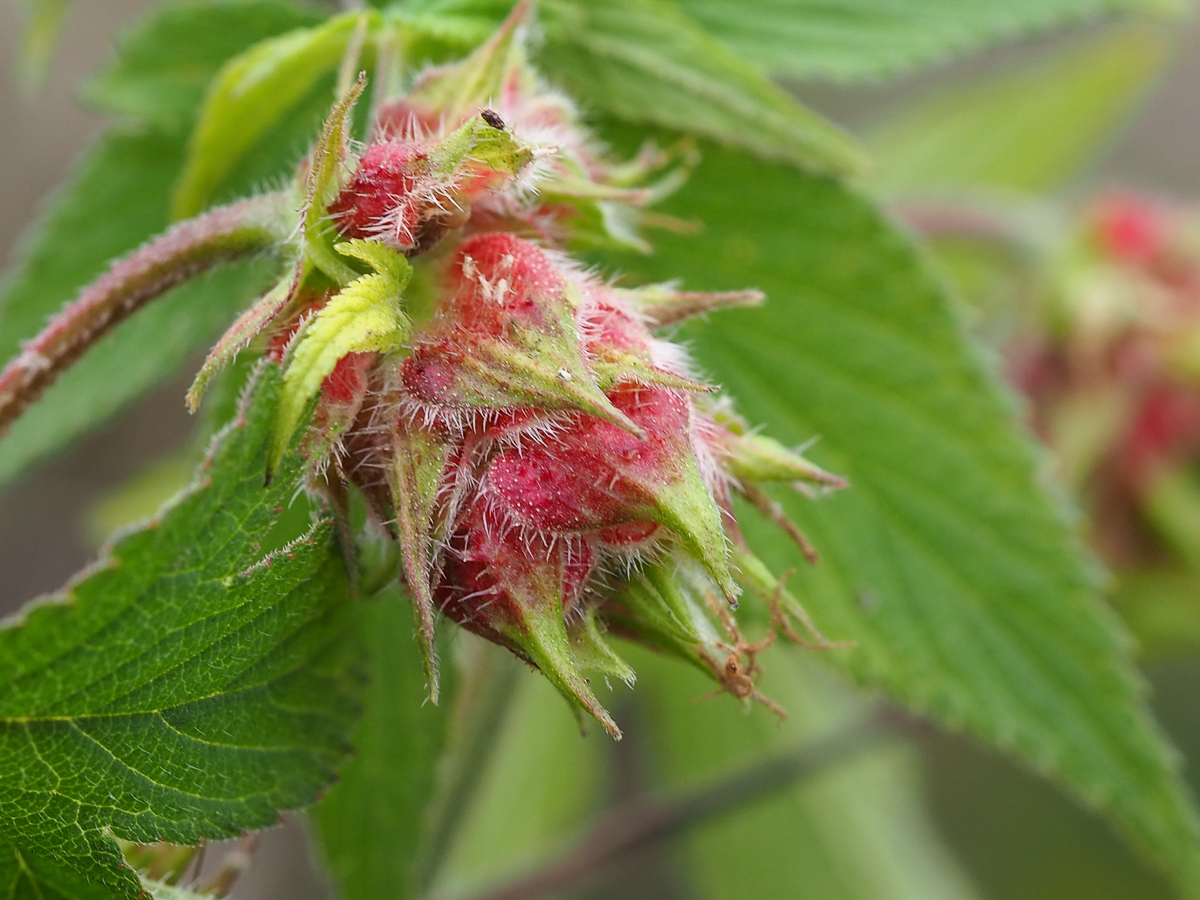
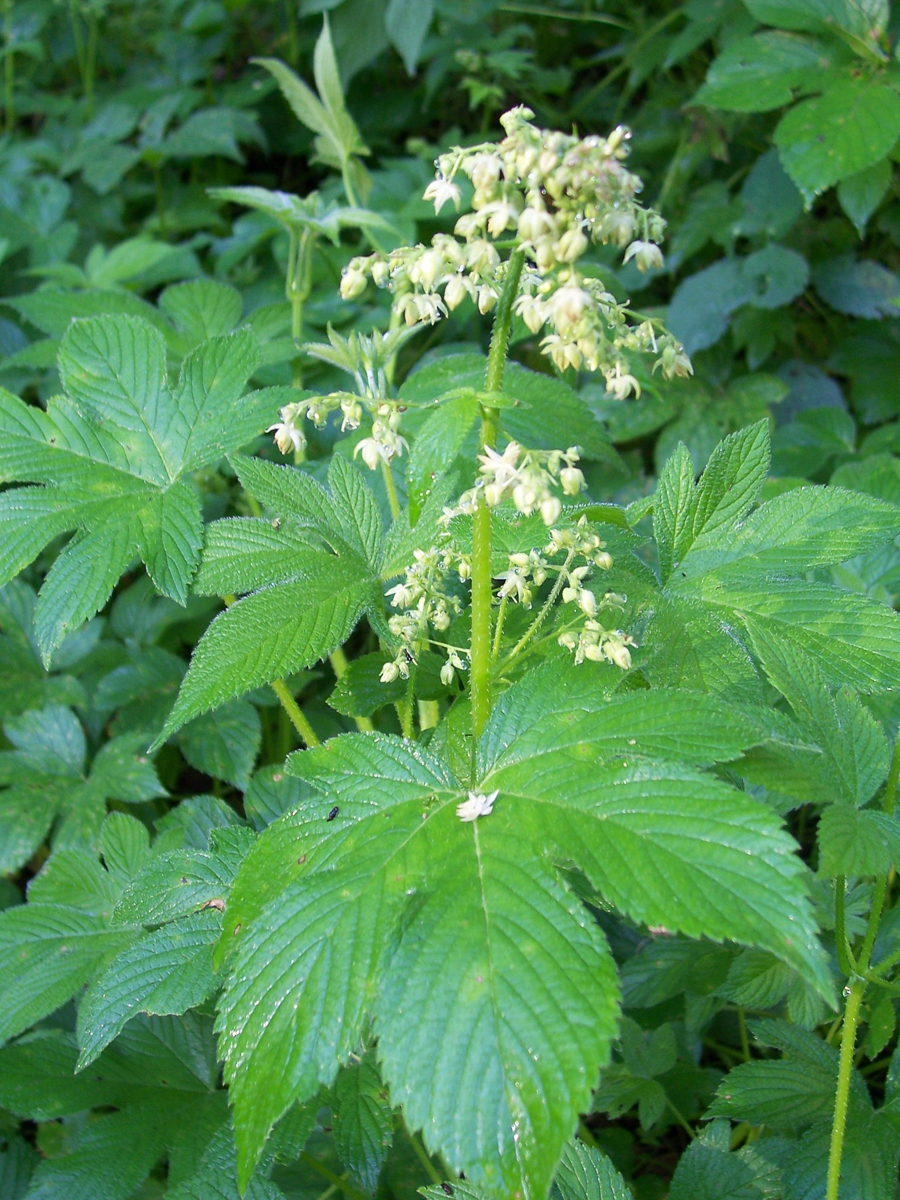
Flowers: Male (staminate) flowers arranged in long erect panicles (15-25 cm) in axils with 5 green-reddish petals and 5 stamens; female (pistillate) flowers pendulous at maturity, arranged in ovoid-oblong, yellow-greenish cone-shaped spikelets, enveloped by leafy bracts (7-10 mm) ovate-acuminate, curved at the apex, hairy and densely ciliate on the margins. Blooms from June to September.
Fruits and seeds: The fruit is a suborbicular yellow-brown achene without resin glands.
DISTRIBUTION AND HABITAT
Invasive alien species present from Tuscany upwards excluding Liguria, Aosta Valley, and Friuli. Found in woodlands, hedges, riverbanks, and streamsides, from 0 to 600 m.
Photo: Not subject to license from iNaturalist