
Common St. John’s Wort
Scientific name: Hypericum perforatum L.
Family: Hypericaceae
MORPHOLOGY
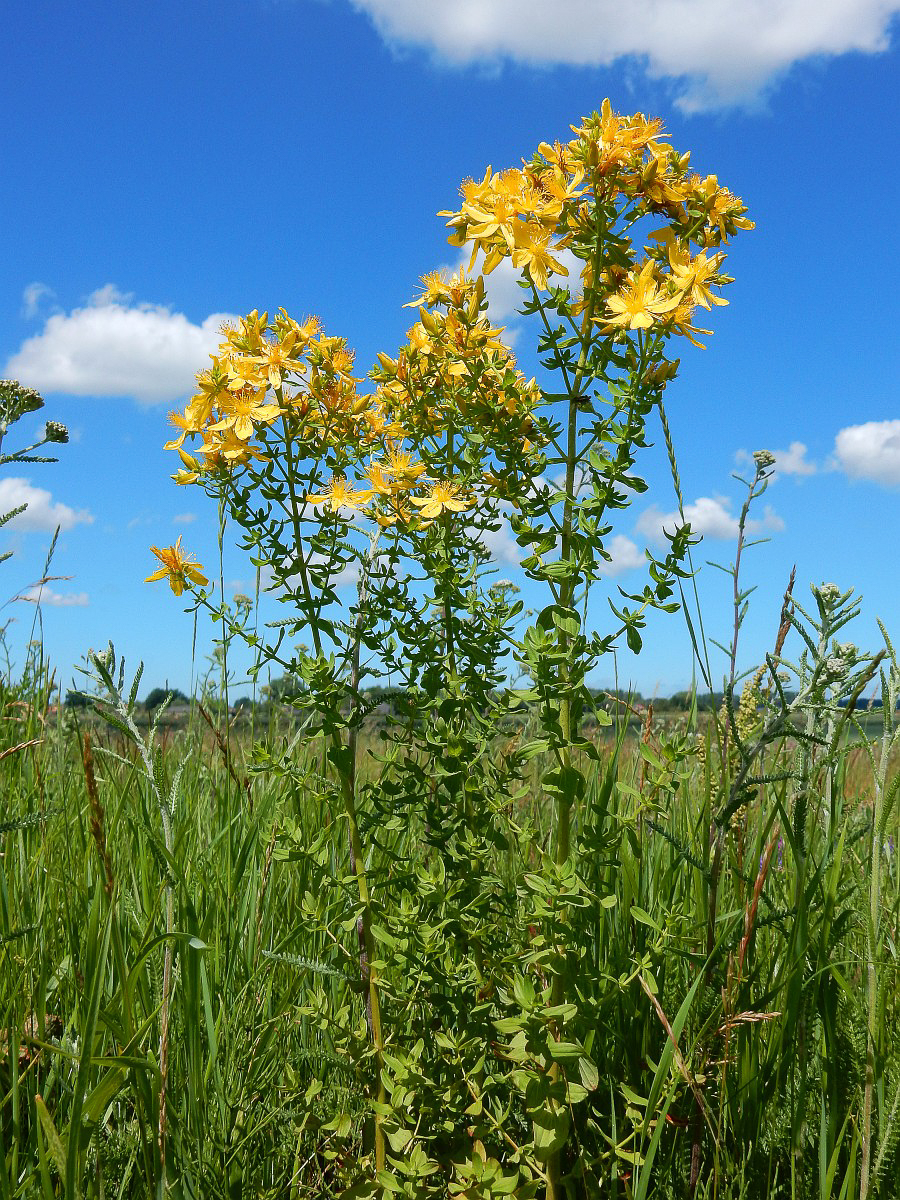
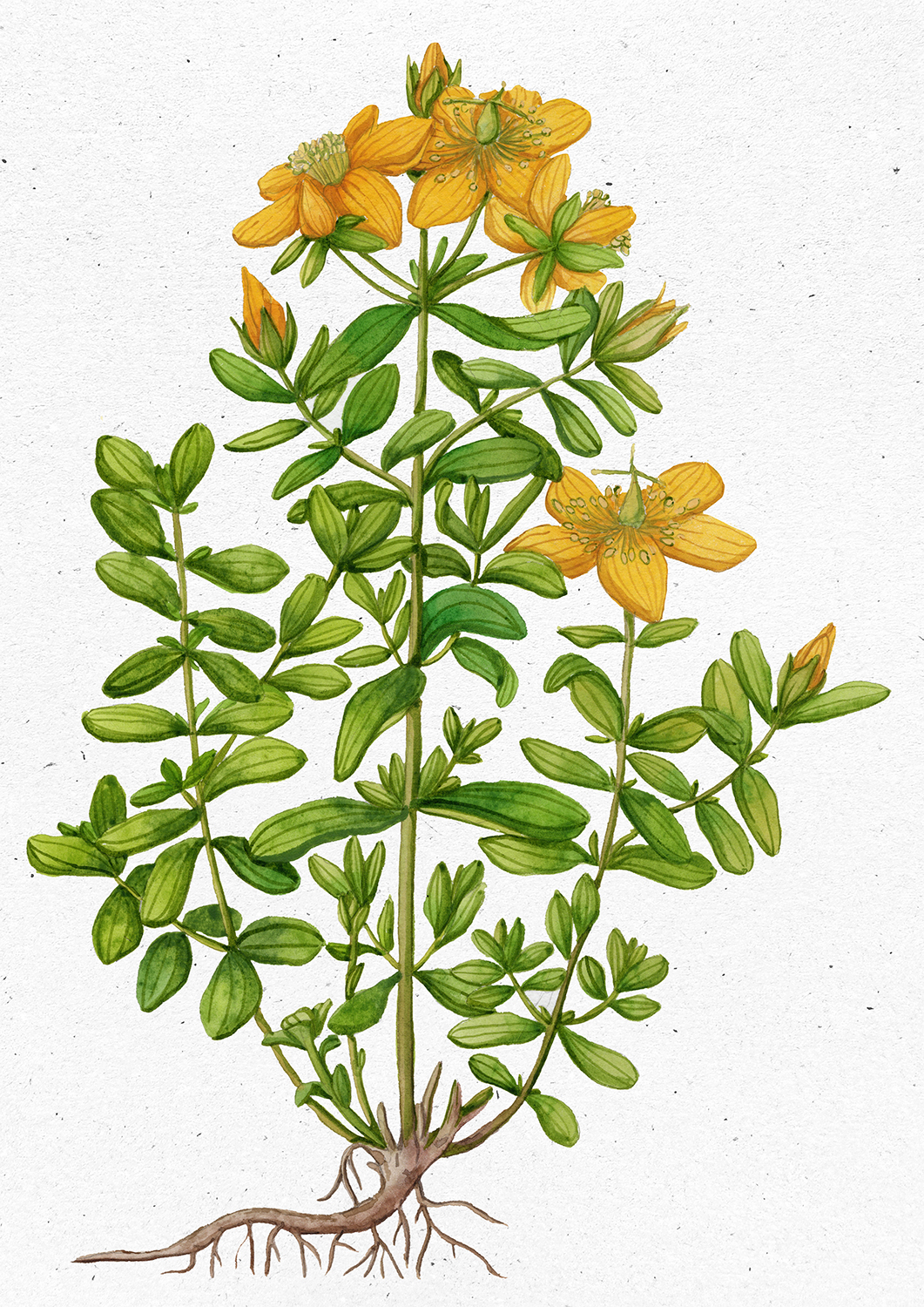
Habit and size: Perennial, herbaceous, rhizomatous plant, ranging from 20 to 100 cm in height.
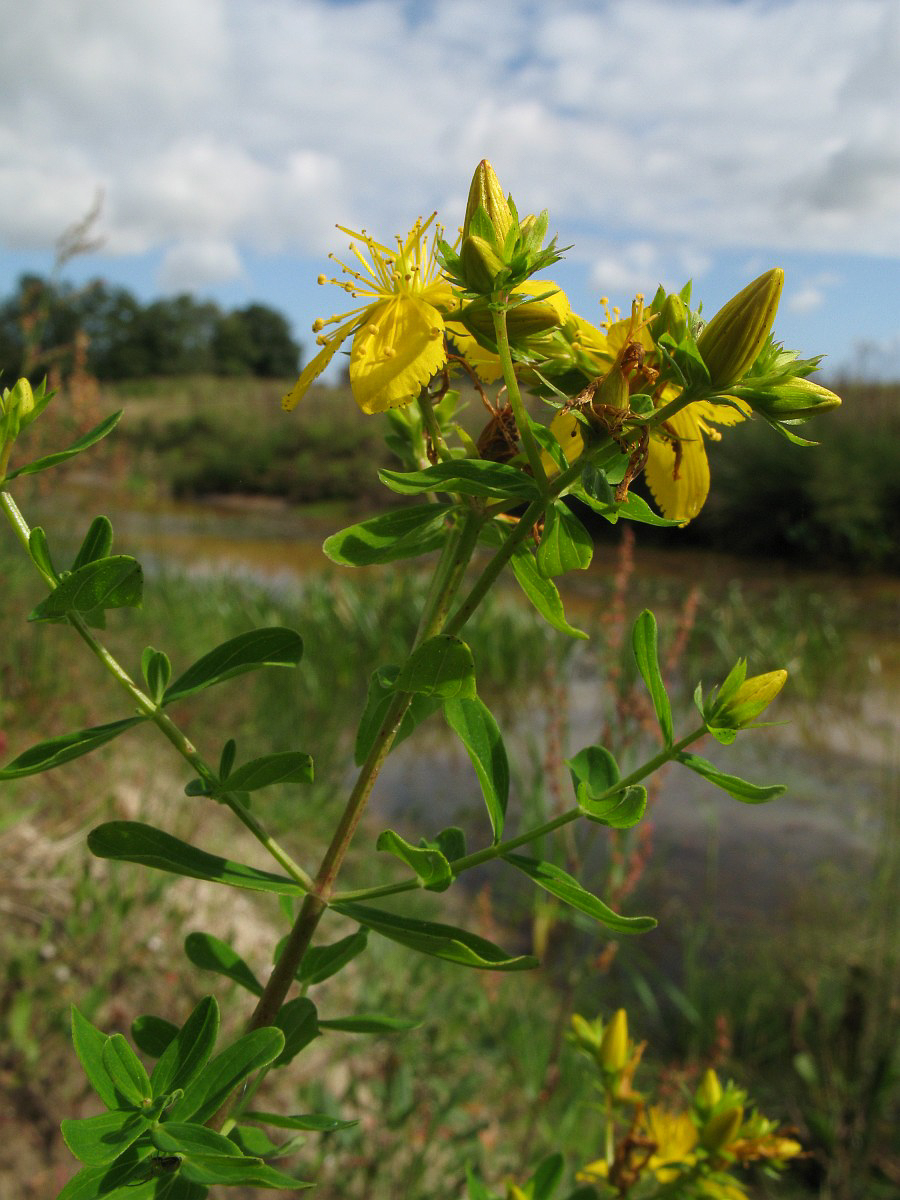
Stem: Glabrous stems, prostrate and lignified at the base, with horizontal, leafless branches that are more or less reddish; flowering branches are erect and branched, with stems that have 2 ridges giving the impression of a flattened stem.
Leaves: The leaves are opposite, nearly sessile or with short petioles, with ovate-lanceolate blades sprinkled with translucent glands that, in transparency, appear as small holes, and dark glands along the margin.
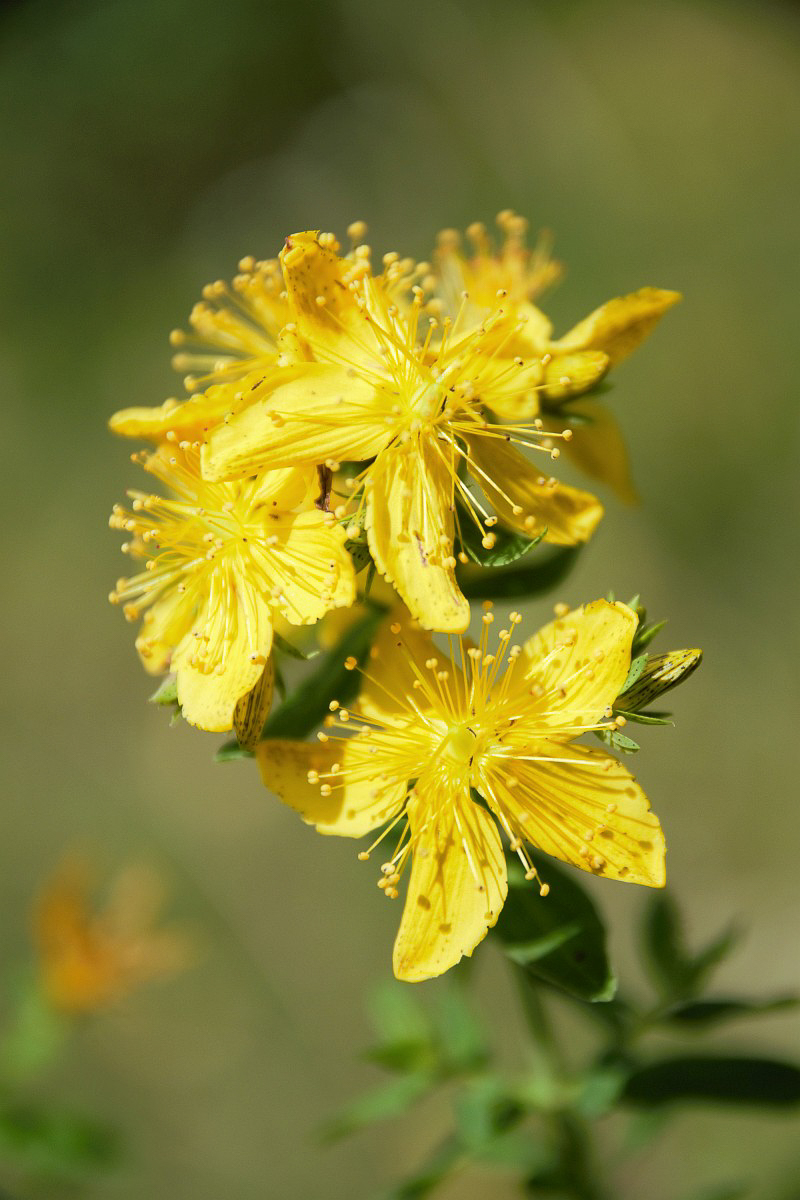
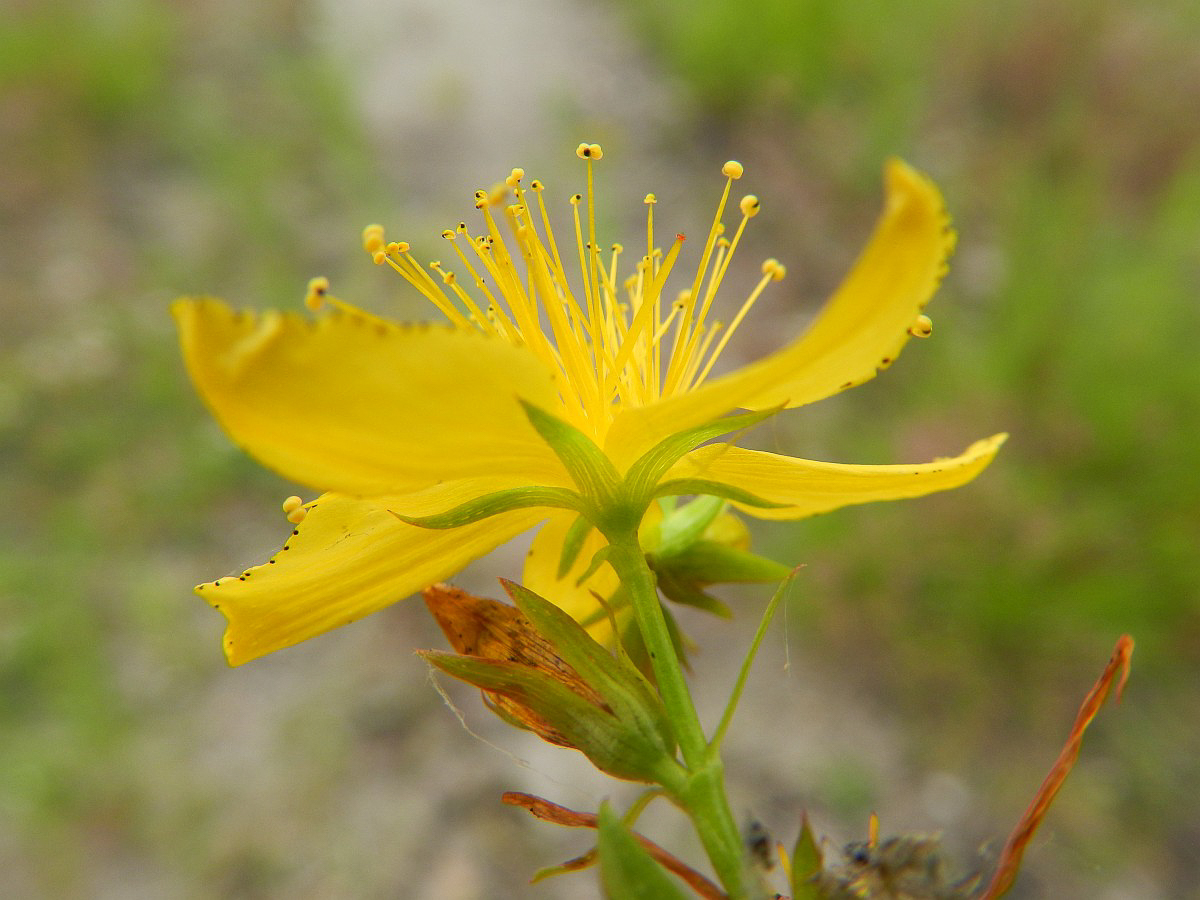
Flowers: The flowers are clustered in multiflowered apical corymbs, golden-yellow in color; they have 5 entire acute sepals with black glands along the margin, and 5 oval, asymmetric, dentate petals with dark glands on the margin. Blooms from April to August.
Fruits and seeds: The fruits are 5-9 mm trilocular, septicidal capsules, ranging from ovoid to subconical, reddish, with 2 longitudinal lines per valve and reddish, oblong, oblique glands on the sides. Cylindrical or ellipsoid seeds, sometimes curved, with a reticulate surface, red or reddish-black, measuring 0.8-1 mm.
DISTRIBUTION AND HABITAT
Present throughout Italy in dry meadows, roadside edges, grassy areas, and uncultivated land, from 0 to 1,600 m.
USE
Bitter-sweet herb with antidepressant, sedative, anxiolytic, refreshing, astringent, and anti-inflammatory properties; locally, it is also analgesic and antiseptic. St. John’s Wort has been used in herbal medicine for over 2000 years, and today its use is more widespread than ever. It is one of the best-selling medicinal herbs in the USA because in the 1980s it was discovered to possess antidepressant properties comparable to pharmaceuticals. The herb is mainly used in modern herbal medicine to treat mild depression. The oil can be used to heal wounds and massage sore parts, in cosmetics it is used to tone sagging skin, while the infusion can be used for couperose and redness. Caution: According to the EMEA, European Medicines Evaluation Agency, there is a risk of interactions between Hypericum perforatum preparations and other drugs, probably related to the induction of certain cytochrome P450 isoenzymes, which could lead to increased metabolism and reduced plasma concentration and therapeutic effects of some drugs metabolized by the same cytochrome, with a consequent possible therapeutic failure. Before taking any plant-based product (medicinal or non-medicinal) for therapeutic or similar purposes, it is always advisable to consult your doctor. It is used in the preparation of liqueurs for its aromatic and digestive properties. Dried stems can replace tea.
INTERESTING FACTS
There are many legends regarding the origin of the name “St. John’s Wort.” It was probably named by early Christians because the leaves and flowers contain glands that, when pinched, release a red oil, in honor of John the Baptist, believing that it secreted the red oil on August 29, coinciding with the anniversary of the saint’s beheading. It is part of the group of 9 “magic” herbs traditionally picked on the night of the solstice, which was originally set on the solstice date, later moved to June 24. It was believed that on the night of the meeting between the Sun and the Moon, the properties of the plants reached their maximum effectiveness. Whatever the origin of the name, it is certain that in the Middle Ages, on the eve of St. John’s, it was tradition to sleep with a bouquet of St. John’s Wort under the pillow, believing that by doing so, the saint would protect the sleeper from death for an entire year; hanging a bunch on the house door protected against demons. In ancient Rome, the plant was sacred to Jupiter and considered a symbol of light that disperses darkness and allows one to chase away the ghosts and demons of the night; from these popular beliefs comes the name “devil chaser.” With St. John’s Wort flowers, lavender, mint, rue, and rosemary, it was customary in the countryside around Rome to prepare “St. John’s water” by leaving the basin on the windowsill all night. The next morning, on the day of the feast, all the women of the house washed with this water, ensuring good health and smooth, fragrant skin in this way; unmarried girls, instead, while washing, had to think intensely of their beloved, which was believed to favor the realization of their marital desires within the year. People suffering from nightmares were advised to put a sprig of St. John’s Wort flowers under their pillow. Medieval knights apparently carried twigs under their armor. Women, to protect themselves from sexual violence, frequent during wartime, hid a sprig under their clothes. The plant, harvested on St. John’s night, a condition indispensable for its effectiveness, was believed to cure a wide variety of illnesses, predict the future through the appearance of its juice, and protect against lightning. In the past, traditional medicine used St. John’s Wort to treat snakebites. The blood-colored latex, called “St. John’s blood,” was an essential ingredient in the composition of potions and potions, with which it was believed possible to influence human will. The presence in large quantities in forage can color the milk red; this was once considered a symptom of the evil eye.
Photo: Not subject to license from Saxifraga and Ed Stikvoort, Simone van Velzen, Rutger Barendse