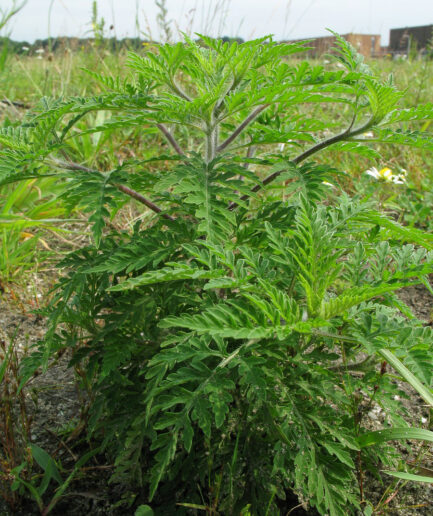

Cinquefoglia comune

Nome scientifico: Potentilla reptans L.

Famiglia: Rosaceae 


MORFOLOGIA 


Portamento e dimensioni: pianta perenne, erbacea, con radice a fittone, altezza 10÷30 cm. Tutta la pianta presenta una pelosità più o meno scarsa.


Fusto:  fusti striscianti, stoloniferi e radicanti ai nodi, stoloni rossastri, lunghi sino a 1 metro,


Foglie: le foglie basali sono lungamente peduncolate e profondamente pennate, divise in 5 o raramente 7 lobi oblungo-ovati, di colore verde su entrambe le pagine sono glabre o pubescenti, con margine grossolanamente dentato con 6-7 denti per lato. Alla base delle foglie, adnate al peduncolo, sono presenti stipole fogliacee. Le foglie cauline sono simili alle basali, ma minori e subsessili.


Fiori: I fiori sono solitari, ermafroditi, attinomorfi, pentameri, ascellari alle foglie basali, su peduncoli eretti, misurano 1-2 cm di diametro, di colore giallo oro. Il calice verde, persistente è formato da 5 sepali pelosi, triangolari-ovati ad apice ottuso. La corolla è composta da 5 petali più lunghi del calice, obcordati ad apice smarginato. Fiorisce da aprile a settembre.


Frutti e semi: i frutti sono sono composti da acheni aggregati, pelosi.


DISTRIBUZIONE E HABITAT


Presente in tutta Italia negli incolti, prati poveri e umidi, tra i ruderi e le macerie, nelle vicinanze degli stagni o fossi, al margine dei sentieri e delle strade; dal piano sino a 1.600 m


UTILIZZI


Ha proprietà astringenti, febbrifughe e debolmente antispasmodiche. Nella medicina popolare è usata soprattutto in caso di diarrea, emorragie nasali, infiammazioni gengivali e per bagni in caso di ferite difficilmente rimarginabili. In passato, tutta la pianta godeva fama di antidoto atto a guarire dalle morsicature degli animali velenosi, al succo venivano attribuite proprietà utili nella cura delle malattie polmonari. Prima di assumere qualsiasi prodotto di origine vegetale (farmaco o non farmaco) per fini terapeutici o simil-terapeutici, è sempre opportuno rivolgersi preventivamente al proprio medico.

Le foglie giovani, possono essere utilizzate in minima quantità in insalata, nella preparazione di zuppe, oppure cotte come gli spinaci.


CURIOSITÀ


L’industria cosmetica impiega questa pianta nella produzione di creme antirughe.


Foto: su licenza gratuita di Saxifraga e Peter Meininger, Marijke Verhagen, Rutger Barendse, Willem van Kruijsbergen

Famiglia

Rosaceae

Specie

Potentilla reptans L

Tipologia

Pianta erbacea

Habitat

Aree antropizzate, Incolti, Rive

Creeping cinquefoli


Scientific name: Potentilla reptans L. 

Family: Rosaceae


MORPHOLOGY


Habit and dimensions: Perennial herbaceous plant with a taproot, reaching a height of 10-30 cm. The entire plant is more or less hairy.


Stem: Creeping stems, stoloniferous and rooting at the nodes, reddish stolons, up to 1 meter long.


Leaves: Basal leaves are long-stalked and deeply pinnate, divided into 5 or rarely 7 oblong-ovate lobes, green on both sides, either glabrous or pubescent, with coarsely toothed margins with 6-7 teeth per side. Leaf stipules, leaf-like and adnate to the petiole, are present at the base of the leaves. Cauline leaves are similar to basal leaves but smaller and subsessile.


Flowers: The flowers are solitary, hermaphroditic, actinomorphic, pentamerous, axillary to the basal leaves, on erect peduncles, measuring 1-2 cm in diameter, golden yellow. The persistent green calyx is formed by 5 hairy, triangular-ovate sepals with obtuse apices. The corolla consists of 5 petals longer than the calyx, obcordate with an emarginate apex. Blooms from April to September.


Fruits and seeds: The fruits consist of aggregated, hairy achenes.


DISTRIBUTION AND HABITAT


Present throughout Italy in fallow lands, poor and humid meadows, among ruins and rubble, near ponds or ditches, along paths and roadsides; from sea level up to 1,600 m.


USE


It has astringent, febrifuge, and weakly antispasmodic properties. In folk medicine, it is mainly used for diarrhea, nosebleeds, gum inflammations, and for baths in the case of wounds that are difficult to heal. In the past, the entire plant was reputed to be an antidote for venomous animal bites, and its juice was attributed properties useful in the treatment of lung diseases. Before taking any plant-based product (medicinal or otherwise) for therapeutic or similar purposes, it is always advisable to consult a doctor. Young leaves can be used sparingly in salads, in soup preparation, or cooked like spinach.


INTERESTING FACTS


The cosmetic industry uses this plant in the production of anti-wrinkle creams.


Photo: under free license from Saxifraga and Peter Meininger, Marijke Verhagen, Rutger Barendse, Willem van Kruijsbergen

Famiglia

Rosaceae

Specie

Potentilla reptans L

Tipologia

Pianta erbacea

Habitat

Aree antropizzate, Incolti, Rive