
Carice migliacea

Nome scientifico: Carex panicea L.

Famiglia: Cyperaceae 


MORFOLOGIA


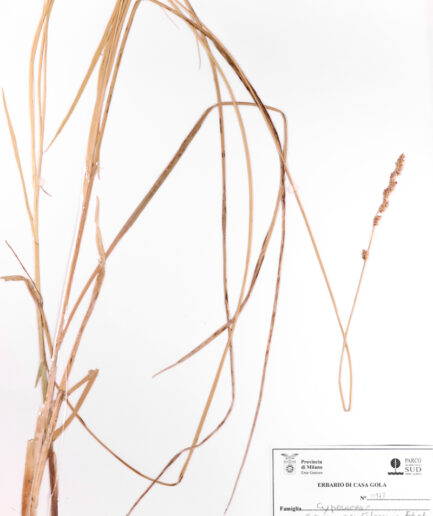
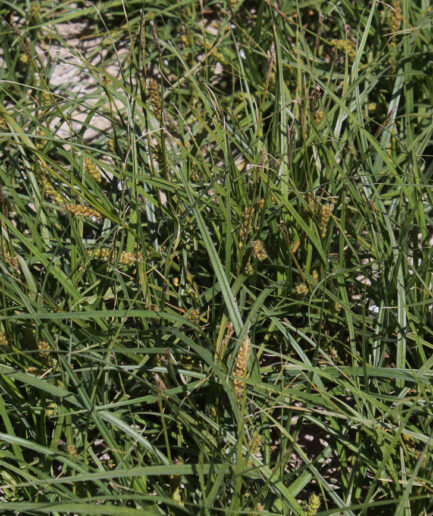
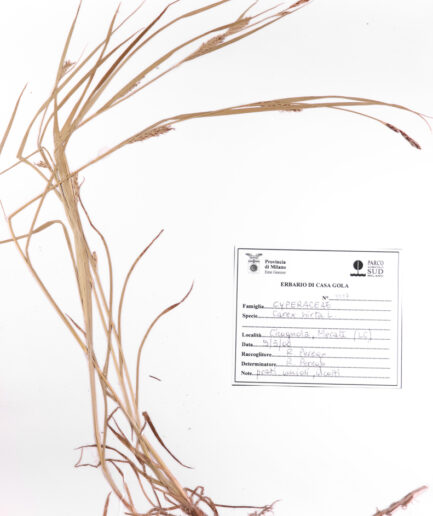
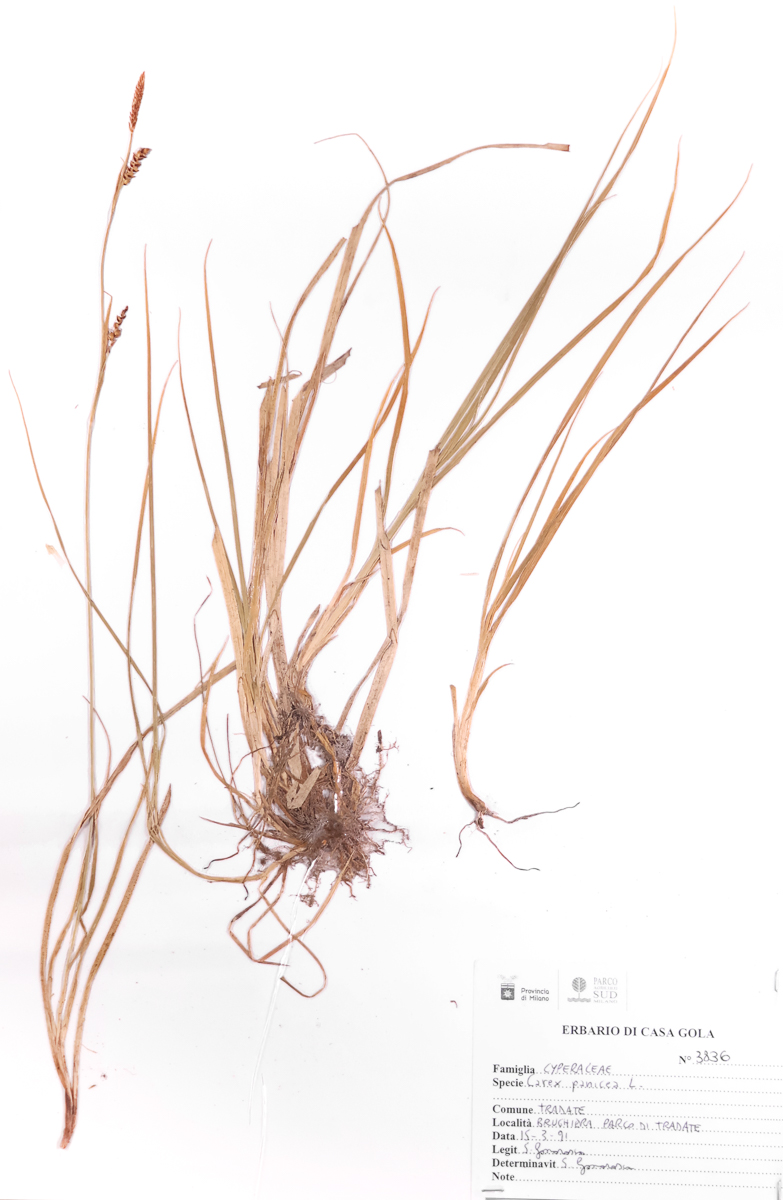
Portamento e dimensioni: pianta erbacea perenne alta 20-40 cm, con stoloni sotterranei allungati.


Fusto: fusti eretti, grossi, trigoni, con angoli leggermente acuti, più o meno lisci, avvolti alla base da guaine brune.


Foglie: foglie piane, glauche, più brevi del fusto, larghe 2-4 mm, che si assottigliano progressivamente in una punta sottile.


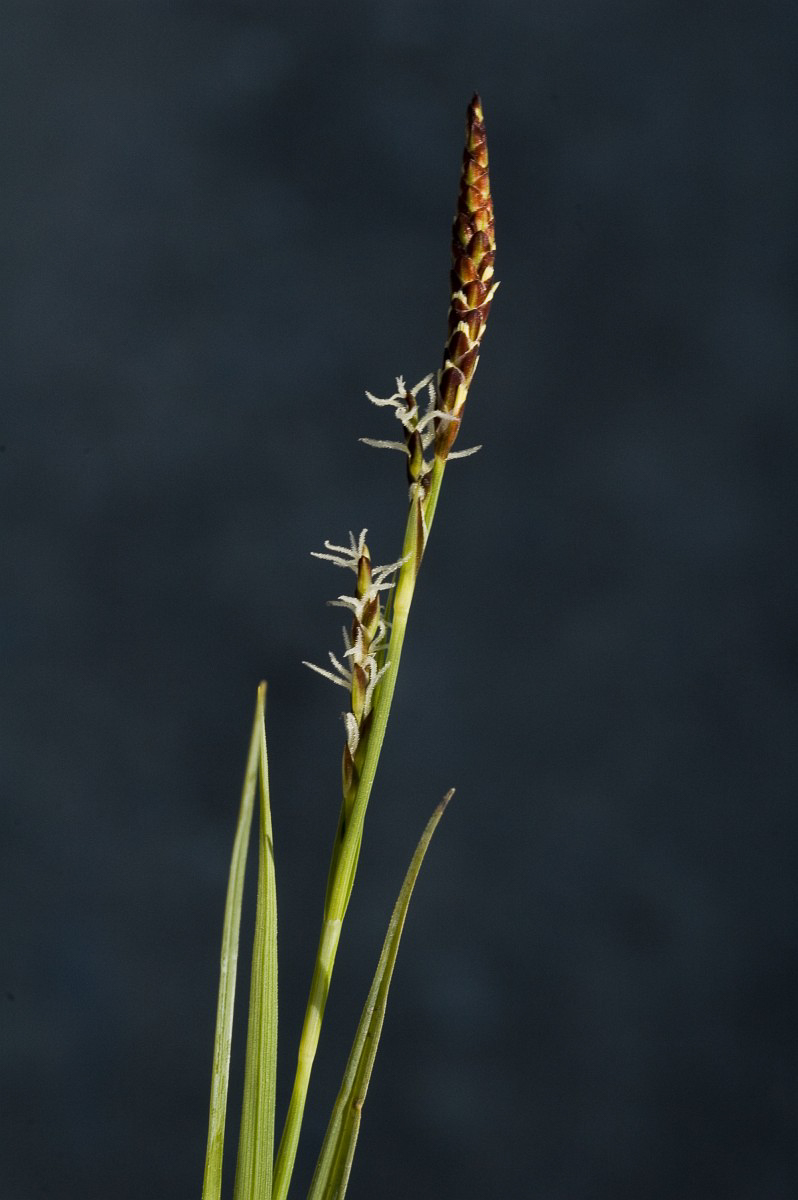
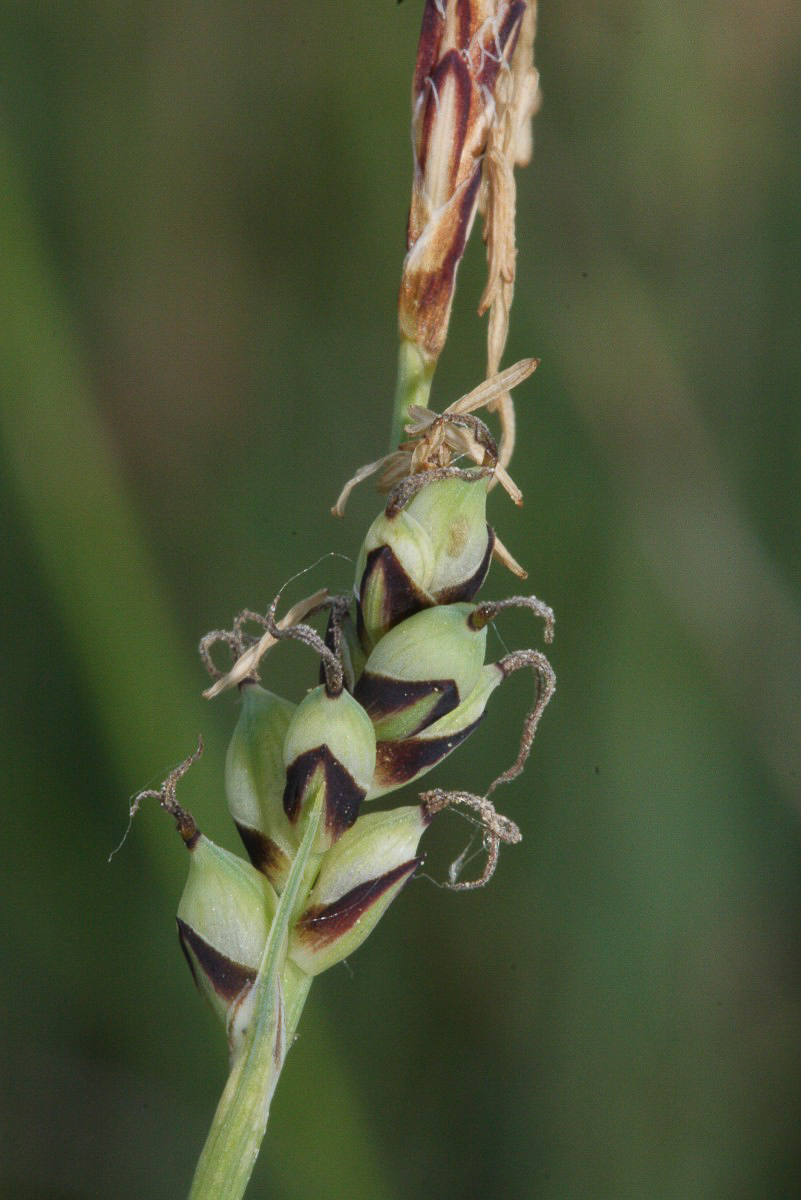
Fiori: infiorescenza composta da 1 spiga maschile terminale e 2-3 spighe femminili. Spiga superiore maschile fusiforme, brunastra lunga 1,5-2 cm.; gluma obovata, ottusa di colore bruno-rossastro chiaro. Spighe femminili erette lunghe 2-3 cm, con fiori basali spaziati, i superiori progressivamente ravvicinati; glume ovato-lanceolate più brevi degli otricelli, acute o con breve mucrone, con dorso liscio o raramente scabro nella parte distale, di colore bruno-rossastro scuro. Peduncoli allungati 0,5-3 cm, rigidi, tali da rendere più o meno tutte le spighe erette o eretto-patenti. Fiorisce tra marzo e luglio.


Frutti e semi: i frutti sono pseudanteci (otricelli) di 3-3,5 x 1,5 mm, suberetti, largamente fusiformi, trigoni, papillosi, giallo verdastri, variegati di purpureo, con becco breve, quasi indistinto, papilloso. Acheni di 2-2,5 x 0.9-1,2 mm, obovati o ellittici, trigoni, verdastri o brunastri.


DISTRIBUZIONE E HABITAT


Presente in tutta Italia tranne Sicilia, Campania, Basilicata e Molise. Cresce nelle paludi neutro basiche, torbiere basse, molinieti., tra  0 e 2.200 m


Foto: su licenza gratuita di Saxifraga e Hans Boll, Jan van der Straaten, Marijke Verhagen, Rutger Barendse

COD: 3836 Categoria: Tag: , ,
Famiglia

Cyperaceae

Specie

Carex panicea L.

Tipologia

Pianta erbacea

Habitat

Zone umide

Carnation sedge


Scientific name: Carex panicea L. 

Family: Cyperaceae


MORPHOLOGY


Habit and size: Perennial herbaceous plant, 20-40 cm tall, with elongated underground stolons.


Stems: Erect, stout stems, trigonous, with slightly acute angles, less or more smooth, base wrapped in brown sheaths.


Leaves: Flat, glaucous leaves, shorter than the stem, 2-4 mm wide, gradually tapering to a slender point.


Flowers: Inflorescence composed of 1 terminal male spike and 2-3 female spikes. Upper male spike fusiform, brownish, 1.5-2 cm long; obovate glume, obtuse, light reddish-brown. Erect female spikes 2-3 cm long, with spaced basal flowers, the upper ones progressively closer; ovate-lanceolate glumes shorter than the utricles, acute or with a short mucro, smooth on the back or rarely rough in the distal part, dark reddish-brown. Elongated peduncles 0.5-3 cm long, rigid, making all spikes more or less erect or erect-spreading. Blooms between March and July.


Fruits and seeds: The fruits are ellipsoid pseudanthia (utricle), 3-3.5 x 1.5 mm, suberous, broadly fusiform, trigonous, papillose, yellowish-green, variegated with purple, with a short, almost indistinct, papillose beak. Achenes are 2-2.5 x 0.9-1.2 mm, obovate or elliptic, trigonous, greenish or brownish.


DISTRIBUTION AND HABITAT


Present throughout Italy except Sicily, Campania, Basilicata, and Molise. It grows in neutral to basic swamps, low bogs, and fen meadows, between 0 and 2,200 m.


Photo: under free license from Saxifraga and Hans Boll, Jan van der Straaten, Marijke Verhagen, Rutger Barendse

Famiglia

Cyperaceae

Specie

Carex panicea L.

Tipologia

Pianta erbacea

Habitat

Zone umide