


Carnation sedge
Scientific name: Carex panicea L.
Family: Cyperaceae
MORPHOLOGY
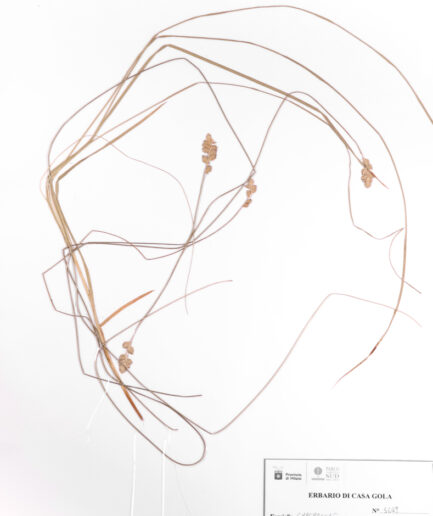
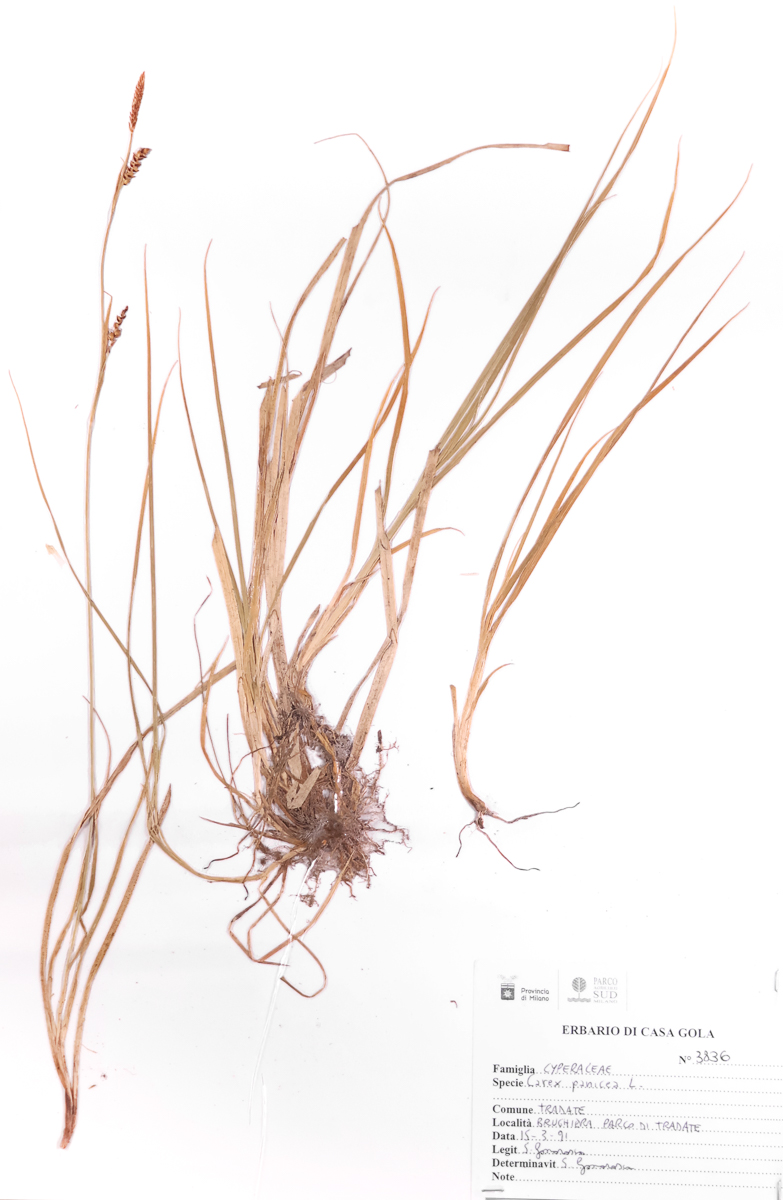
Habit and size: Perennial herbaceous plant, 20-40 cm tall, with elongated underground stolons.
Stems: Erect, stout stems, trigonous, with slightly acute angles, less or more smooth, base wrapped in brown sheaths.
Leaves: Flat, glaucous leaves, shorter than the stem, 2-4 mm wide, gradually tapering to a slender point.
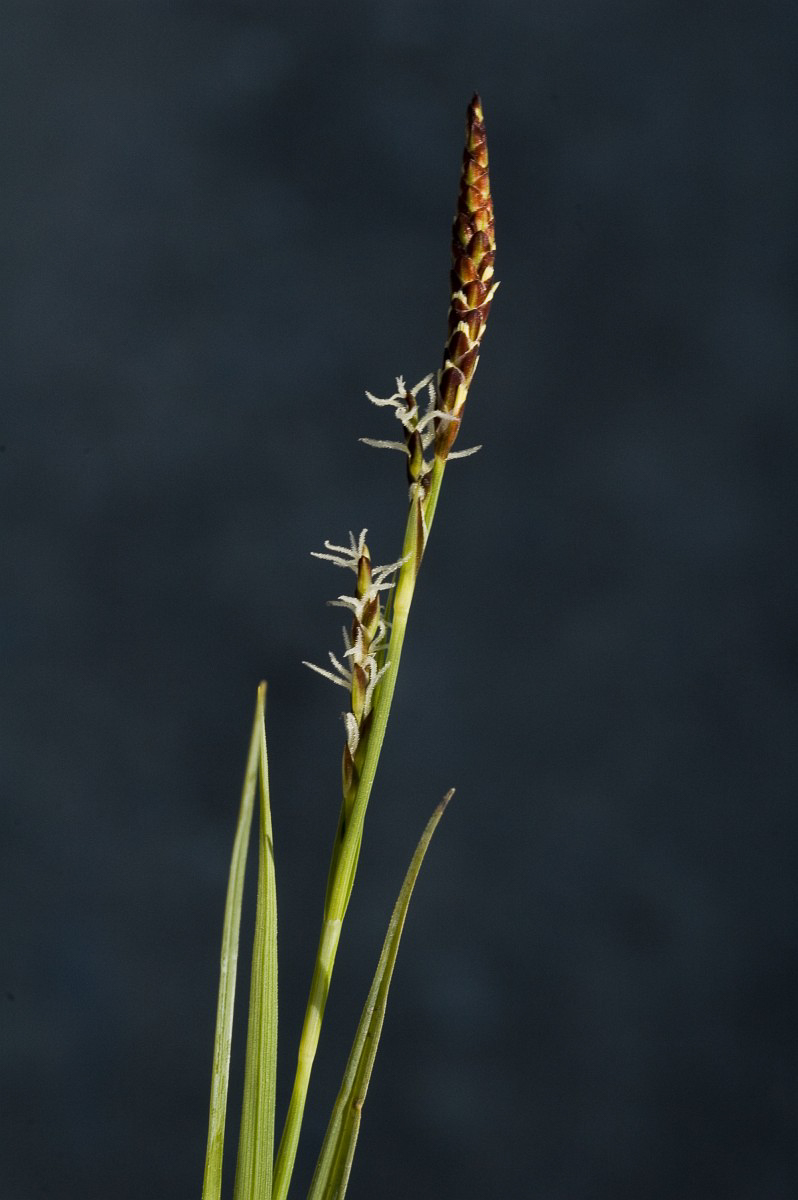
Flowers: Inflorescence composed of 1 terminal male spike and 2-3 female spikes. Upper male spike fusiform, brownish, 1.5-2 cm long; obovate glume, obtuse, light reddish-brown. Erect female spikes 2-3 cm long, with spaced basal flowers, the upper ones progressively closer; ovate-lanceolate glumes shorter than the utricles, acute or with a short mucro, smooth on the back or rarely rough in the distal part, dark reddish-brown. Elongated peduncles 0.5-3 cm long, rigid, making all spikes more or less erect or erect-spreading. Blooms between March and July.
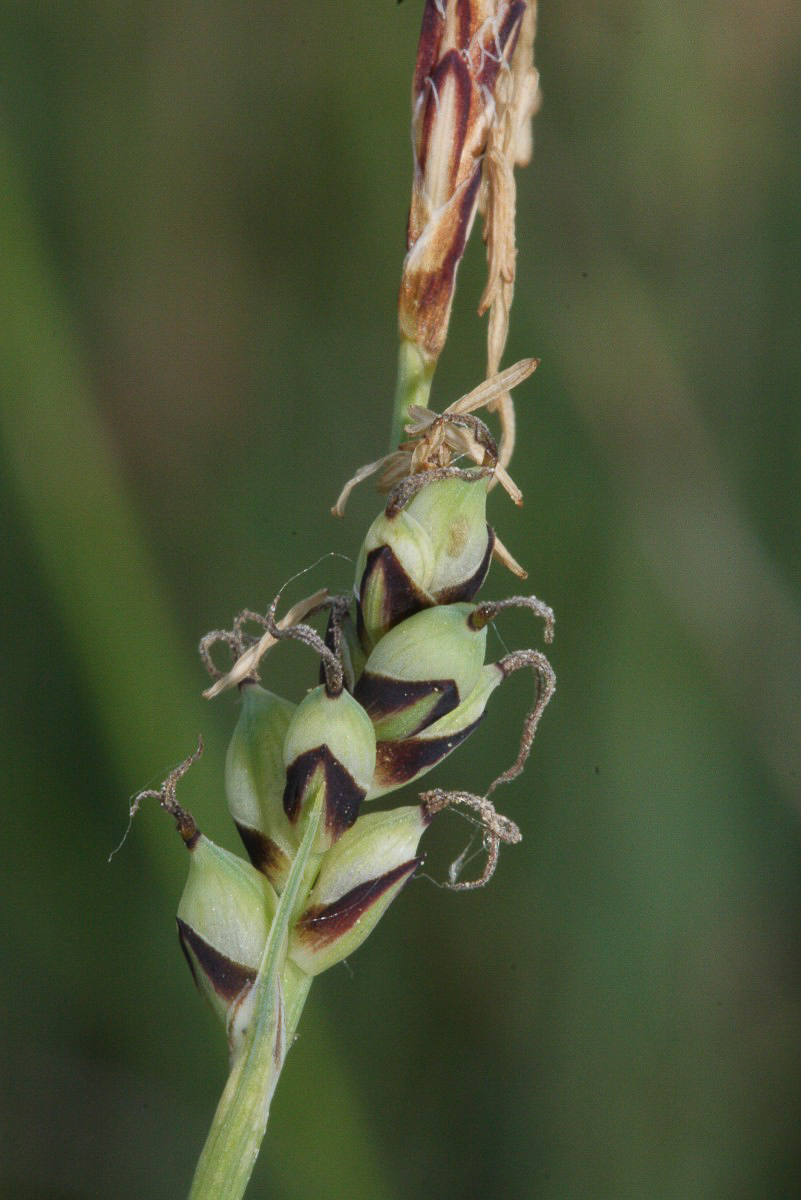
Fruits and seeds: The fruits are ellipsoid pseudanthia (utricle), 3-3.5 x 1.5 mm, suberous, broadly fusiform, trigonous, papillose, yellowish-green, variegated with purple, with a short, almost indistinct, papillose beak. Achenes are 2-2.5 x 0.9-1.2 mm, obovate or elliptic, trigonous, greenish or brownish.
DISTRIBUTION AND HABITAT
Present throughout Italy except Sicily, Campania, Basilicata, and Molise. It grows in neutral to basic swamps, low bogs, and fen meadows, between 0 and 2,200 m.
Photo: under free license from Saxifraga and Hans Boll, Jan van der Straaten, Marijke Verhagen, Rutger Barendse