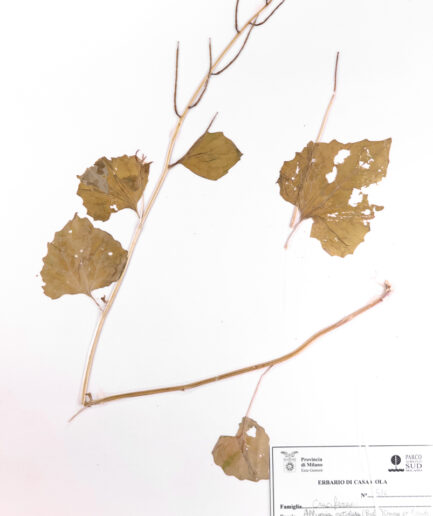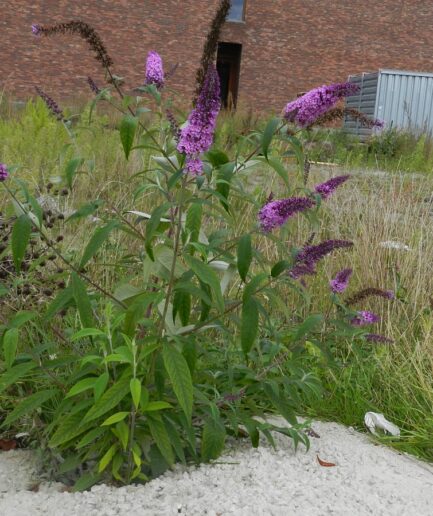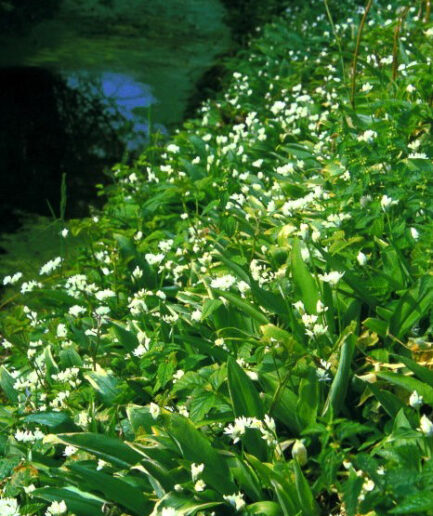




Annual ragweed
Scientific name: Ambrosia artemisiifolia L.
Family: Asteraceae
MORPHOLOGY
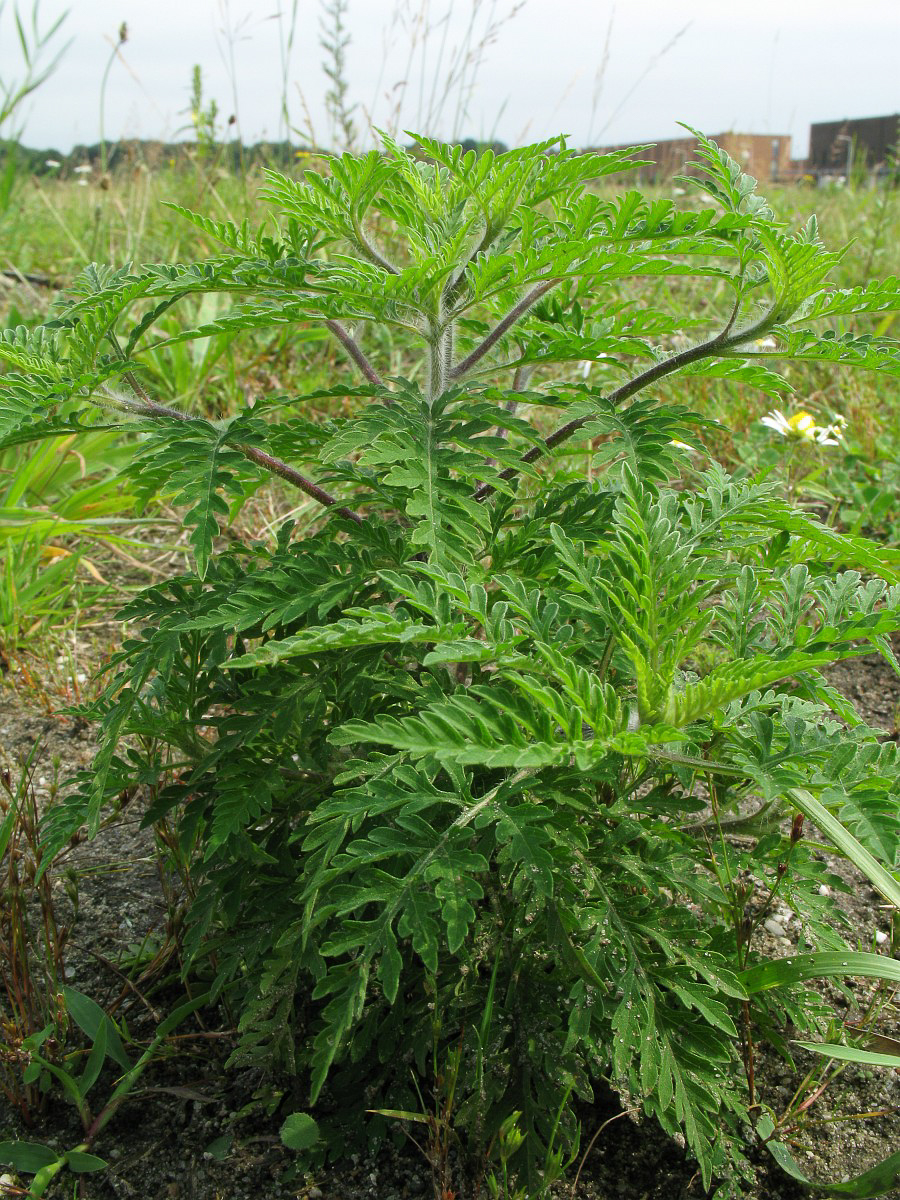
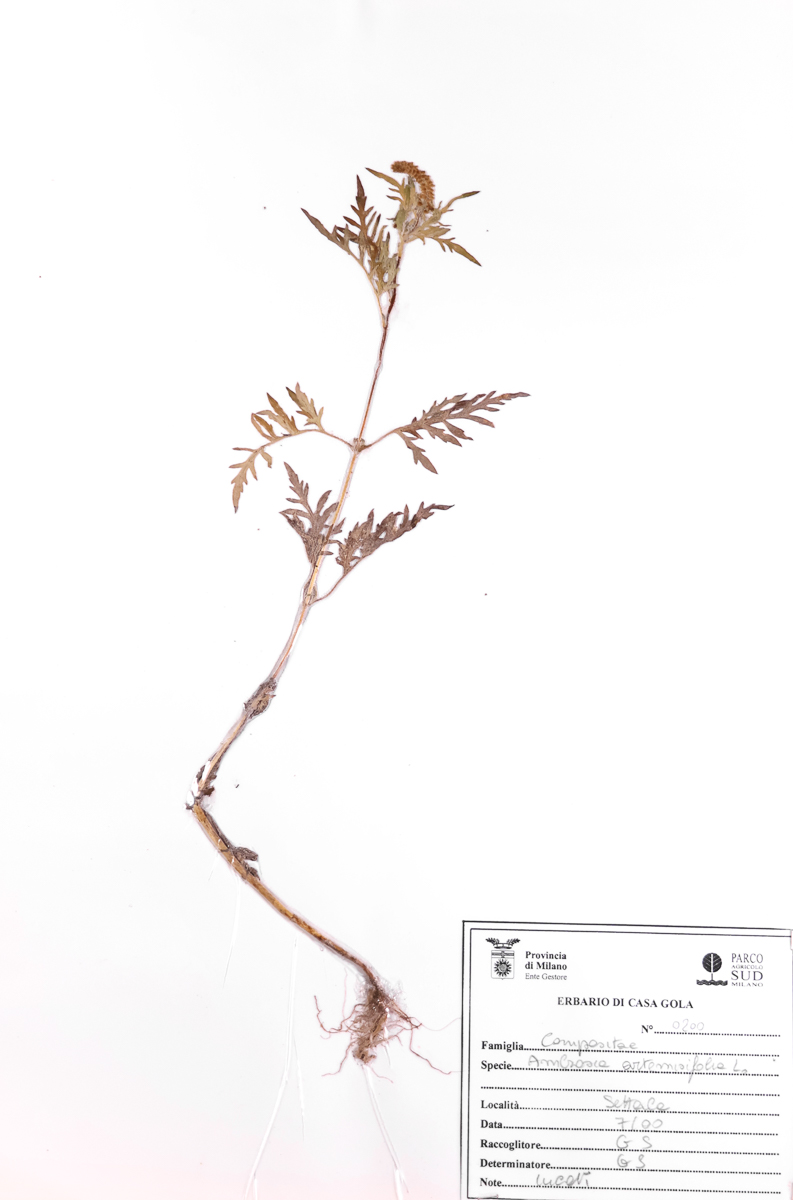
Growth habit and size: Annual herbaceous plant with a late summer vegetative cycle, with fibrous, weak taproots, branching in the upper part. Depending on the vegetation cover, height can vary from a few centimeters in competition-free soils to up to 2 m in sunflower fields.
Stem: Erect, glabrescent or hairy stems, reddish when mature, branched in the upper part.
Leaves: The leaves are highly serrated and hairy with whitish veins. The lower leaves are opposite, while upper ones are alternate, pinnate, and divided into numerous green lobes on both sides.
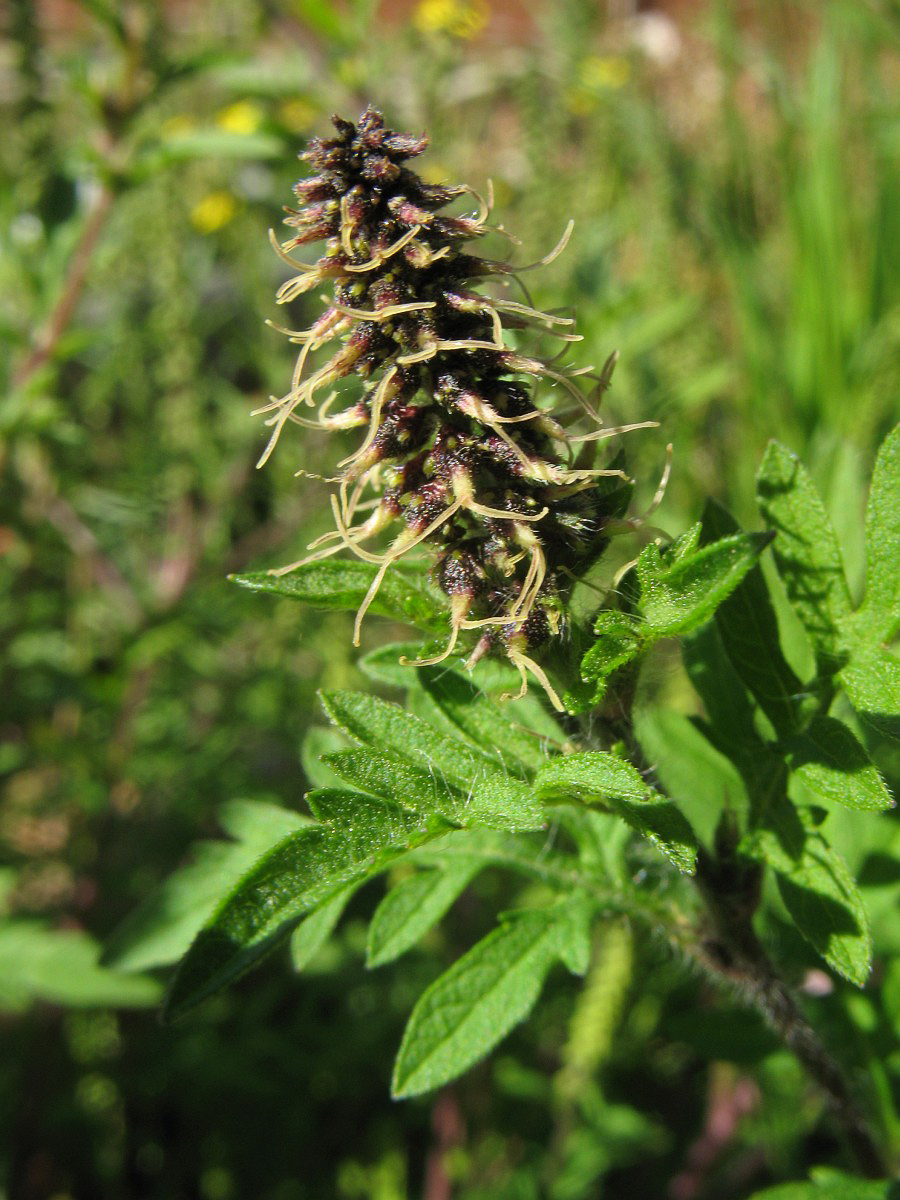
Flowers: Produces separate male and female flowers on the same plant, clustered in small heads. Under certain conditions, among regular individuals with flowers of both sexes, there may be some with exclusively female flowers. Female flowers are greenish with an inverted cone-shaped capsule, located below the male flowers at the axil of the upper leaves. Male flowers are grouped in large terminal racemes with 5-20 yellow-green tubular flowers in semi-spherical capsules. Blooms from June to September.
Fruits and seeds: The fruits are capsules with spines inserted towards the apex. It propagates by seeds.
DISTRIBUTION AND HABITAT
Non-native plant from North America, widespread throughout Italy except Sardinia, Basilicata, and Abruzzo, rarer in the south, invasive in the center-north. It colonizes areas where vegetation has been removed, often found along roadsides in construction sites, abandoned urban areas, riverbanks, disused industrial areas, and in sunflower, soybean, and maize fields. Found at altitudes from 0 to 1,000 m, with no confirmed data for higher altitudes.
INTERESTING FACTS
It all started after World War II, when wheat seeds were imported into Hungary under the Marshall Plan. Among the wheat seeds was Ambrosia artemisiifolia, which found ideal propagation conditions and, from there, it spread across Europe. Invasive and formidable in uncultivated lands and some crops, especially sunflowers, maize, and soybeans, it has a strong potential for dissemination. A single plant can produce from 3,000 to 60,000 seeds and maintain their ability to germinate in the soil for at least 40 years. Despite its very ordinary appearance and widespread distribution, it often goes unnoticed, even by herbivores. It is a strictly anemophilous plant with an exceptional ability to produce pollen and is highly allergenic. It indeed produces the most allergenic pollen of all, which is the main cause of allergic oculorhinitis and bronchial asthma in susceptible individuals. These phenomena are rapidly increasing not only due to the increase in the number of sensitive individuals, which directly correlates with the rising pollen concentrations but also due to the progressive worsening of related allergic pathologies.
It is estimated that a single Ambrosia plant can produce more than one billion pollen grains, and during flowering, pollen concentrations in the air can reach two million grains per cubic meter. After pollination and fertilization, the plant relies mainly on passive and accidental dissemination by animals and humans. Recent studies indicate that this species now produces twice the amount of pollen it did a hundred years ago, likely due to increased CO2 levels in the air. Further confirmation of Ambrosia’s sensitivity to increased carbon dioxide comes from studies conducted by the USDA (United States Department of Agriculture), where Ambrosia artemisiifolia plants in Baltimore, a city with particularly high temperatures and CO2 levels, grew better and produced more pollen compared to plants grown in rural areas. Seedlings appear between April and May, flowering begins in late July and extends until September, with peaks between August and September; this is the critical period for allergic individuals. Ambrosia allergy manifests with eye inflammation, respiratory difficulties, which in severe cases can lead to actual asthma attacks.
In Lombardy, regional ordinance 25522 of 3/29/99 established the periodic removal of this plant to prevent related allergic conditions. Similar measures have been adopted in various regions.
Photo: Under the free license of Saxifraga and Rutger Barendse, Ed Stikvoort