
Common Agrimony
Scientific Name: Agrimonia eupatoria L.
Family: Rosaceae
MORPHOLOGY
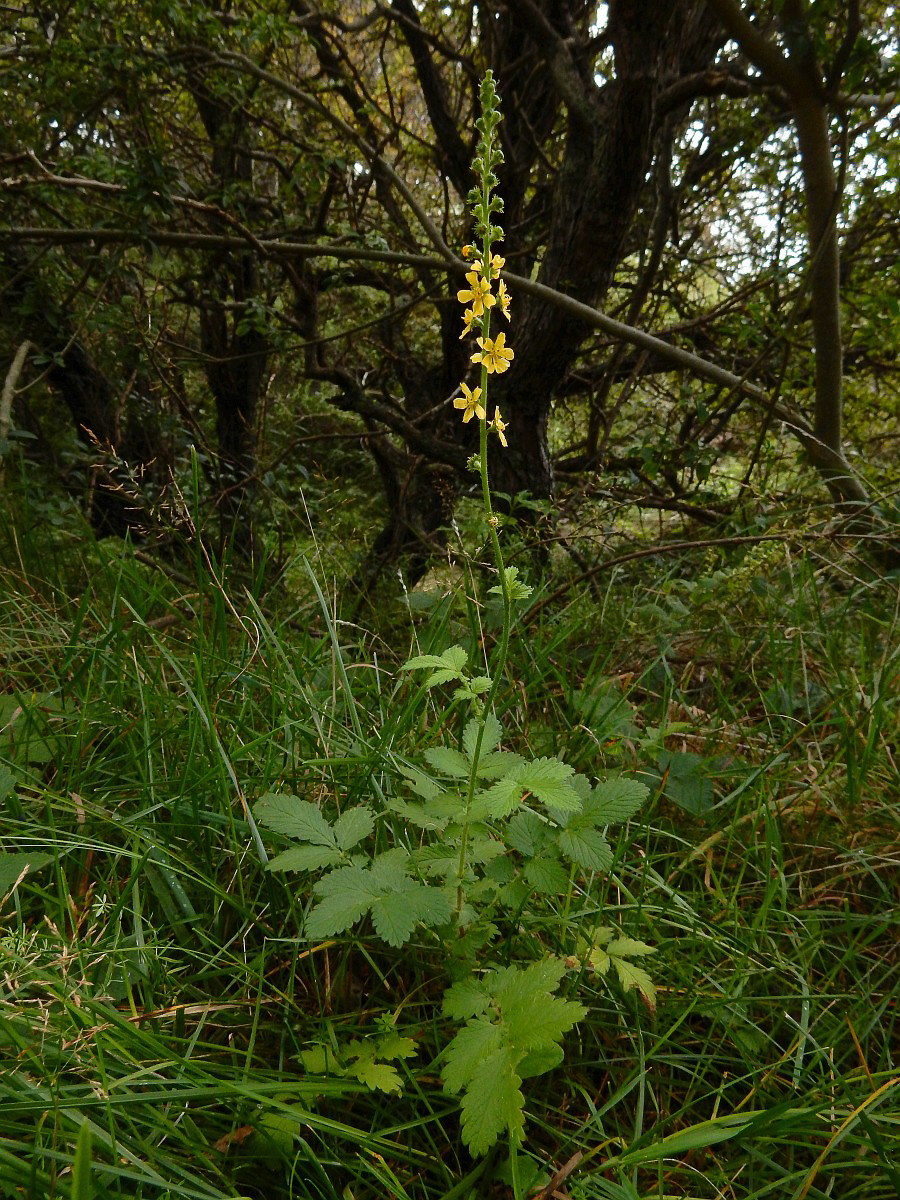
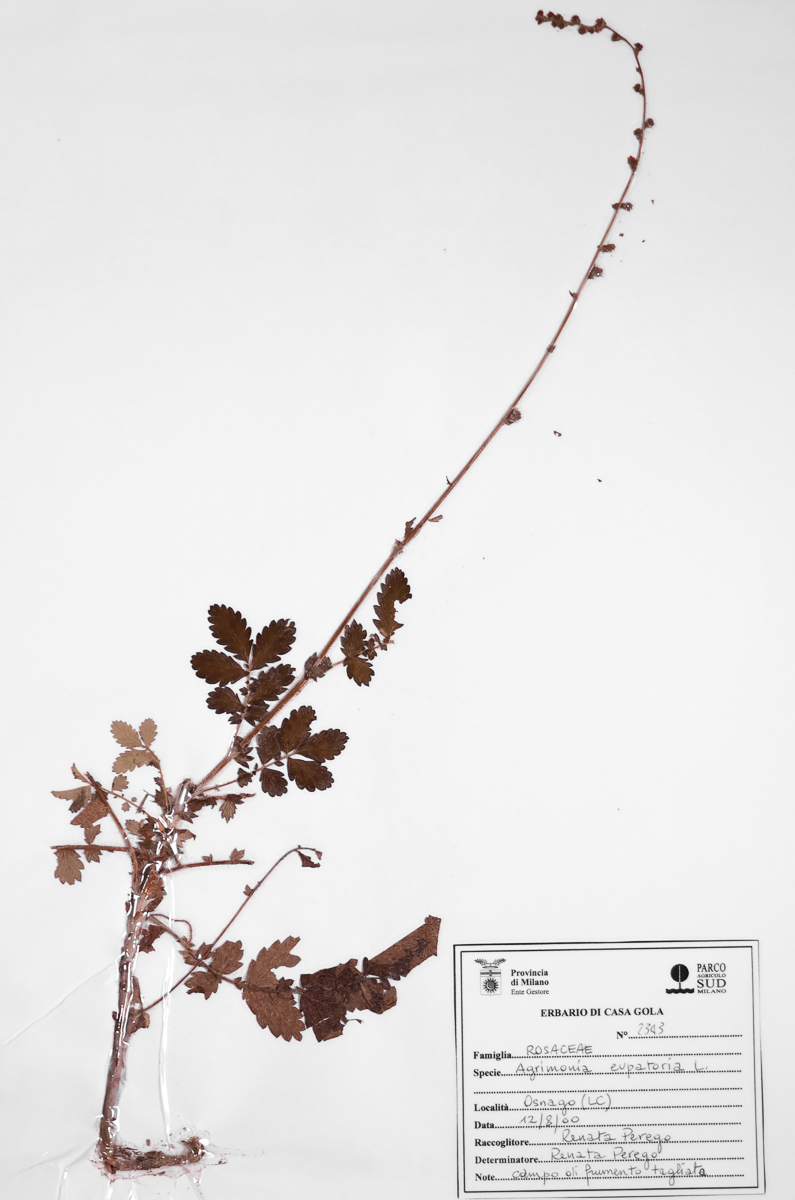
Growth habit and size: Herbaceous plant with a robust woody base, equipped with a short rhizome. It can reach up to a meter in height, although it generally does not exceed 60 cm.
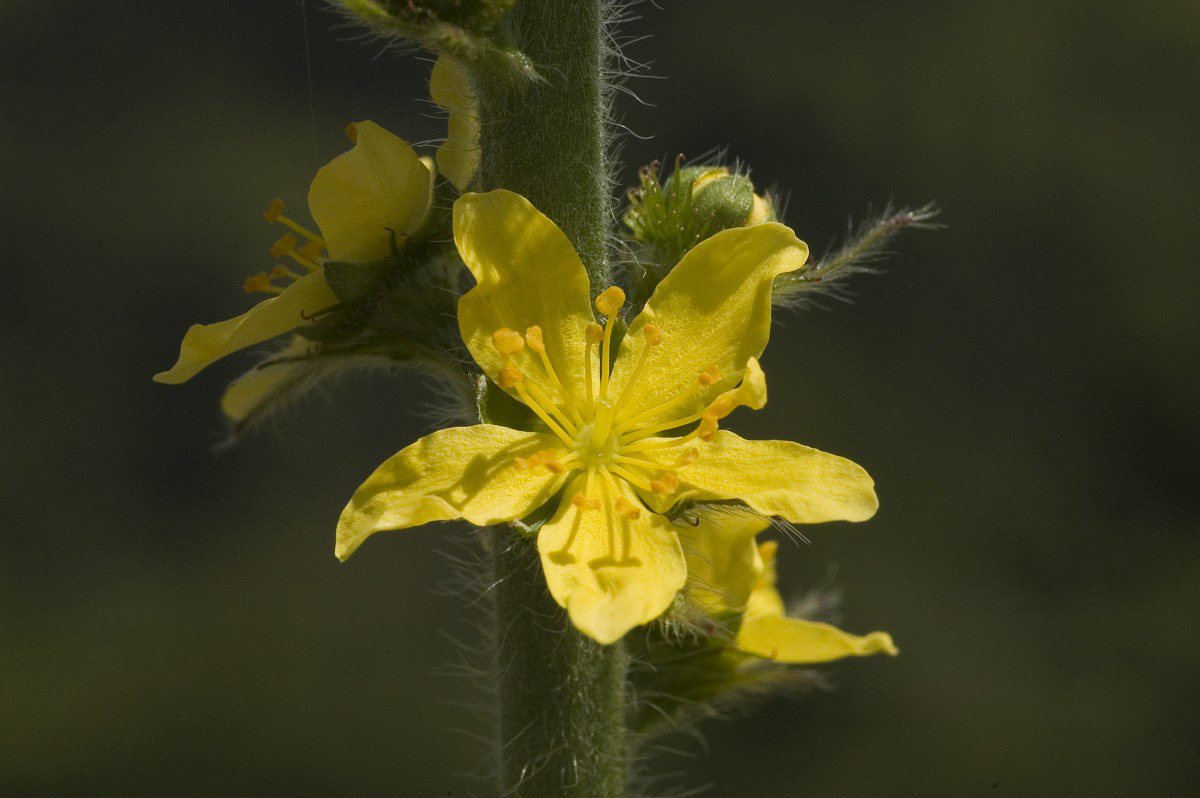
Stem: Erect, cylindrical, pubescent stems, simple or slightly branched.
Leaves: In its first year of life, this plant produces only a basal rosette. Later, as the stem appears, leaves develop on the lower part of the stem. The petiolate leaves have two stipules that wrap around the stem. They are imparipinnate, oval-shaped, with serrated margins, dark green on the upper surface and tomentose on the lower surface. The cauline leaves are generally smaller than the internodes.
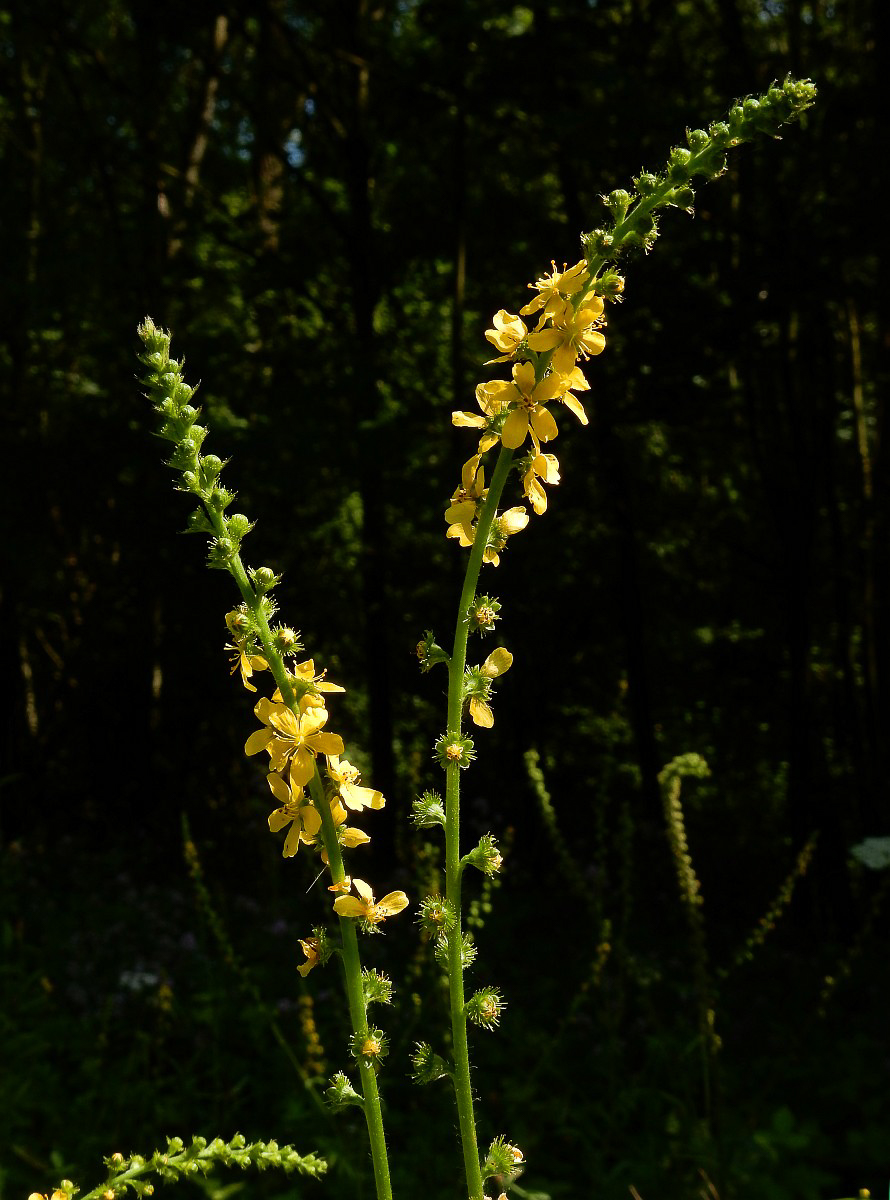
Flowers: The flowers are arranged in a simple raceme, with short peduncles. The corolla is deciduous and formed by 5 obovate-elliptic petals of an intense yellow color. It blooms from May to October.
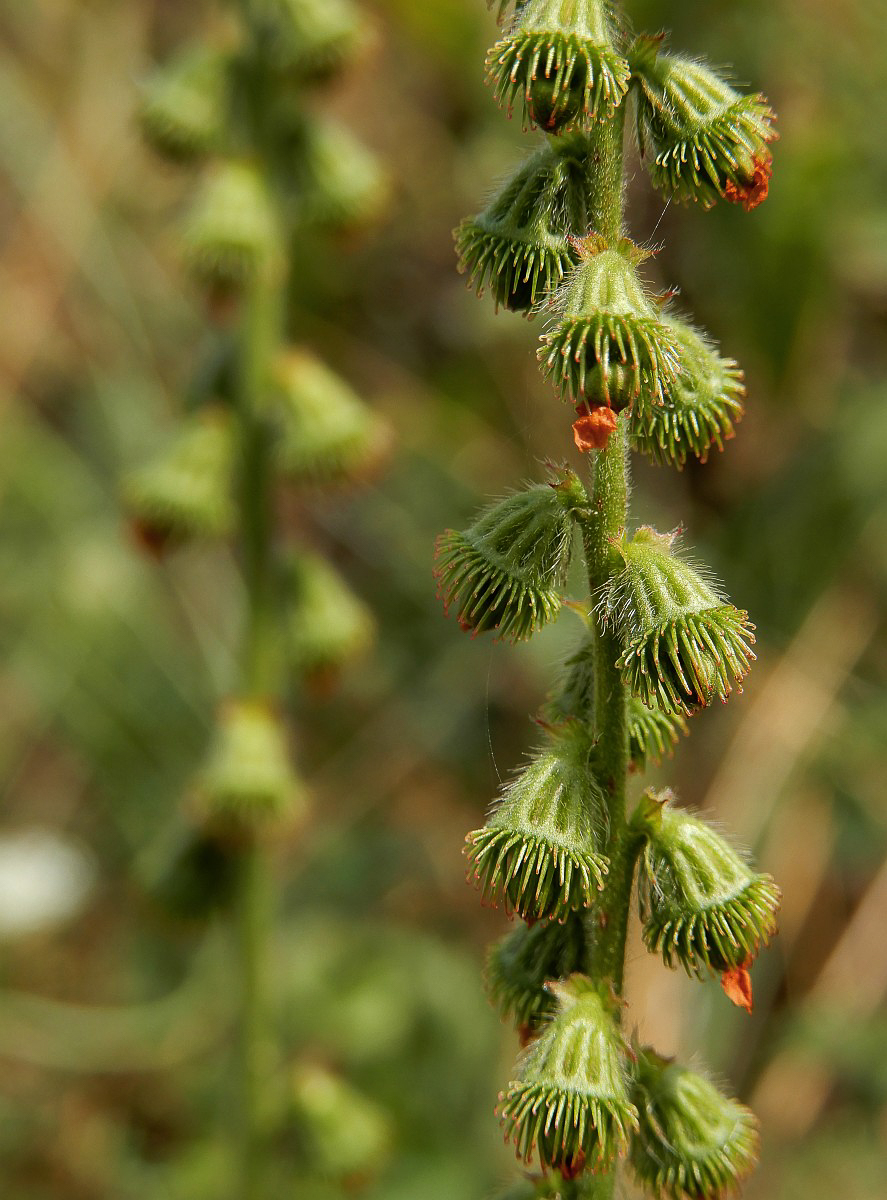
Fruits and seeds: The multiple fruits are pomes, woody and grooved, small urns longer than wide (7×3 mm), deeply grooved, crowned with spreading hooks with a cavity containing 2 achenes.
DISTRIBUTION AND HABITAT
Widespread throughout Italy from sea level up to 1,000 m, rarely up to 1,500 m. It prefers pastures and uncultivated sunny places.
USE
Bitter herb, rich in tannin, resins, and especially salicylic acid. It is slightly astringent, tonic, diuretic, anti-inflammatory, and hemostatic; it improves liver and bile functions. For internal use, it has always been used against kidney disorders, colitis, dyspepsia, food allergies, diarrhea, gallstones, cystitis, and rheumatism. For external use, it is useful for treating skin rashes, minor injuries, inflammation of the oral cavity, conjunctivitis, and hemorrhoids. In Northern Europe, its infusion, which has a pleasant taste, is used as a common stimulating tea. Agrimony flowers were once used to dye hair bright yellow. Before taking any plant-based product (medicinal or non-medicinal) for therapeutic or similar purposes, it is always advisable to consult a doctor.
INTERESTING FACTS
Large quantities of this plant’s fruits have been found in Neolithic sites. Mithridates Eupator, king of Pontus, introduced its use in herbal medicine in the 1st century B.C. It was used for various applications: snakebites, sight problems, and memory loss. It has always been used to treat wounds and was an ingredient in “eau d’arquebusade,” a French lotion originally applied to gunshot wounds.
Photo: Freely licensed by Saxifraga and Ed Stikvoort, Jan van der Straaten.