
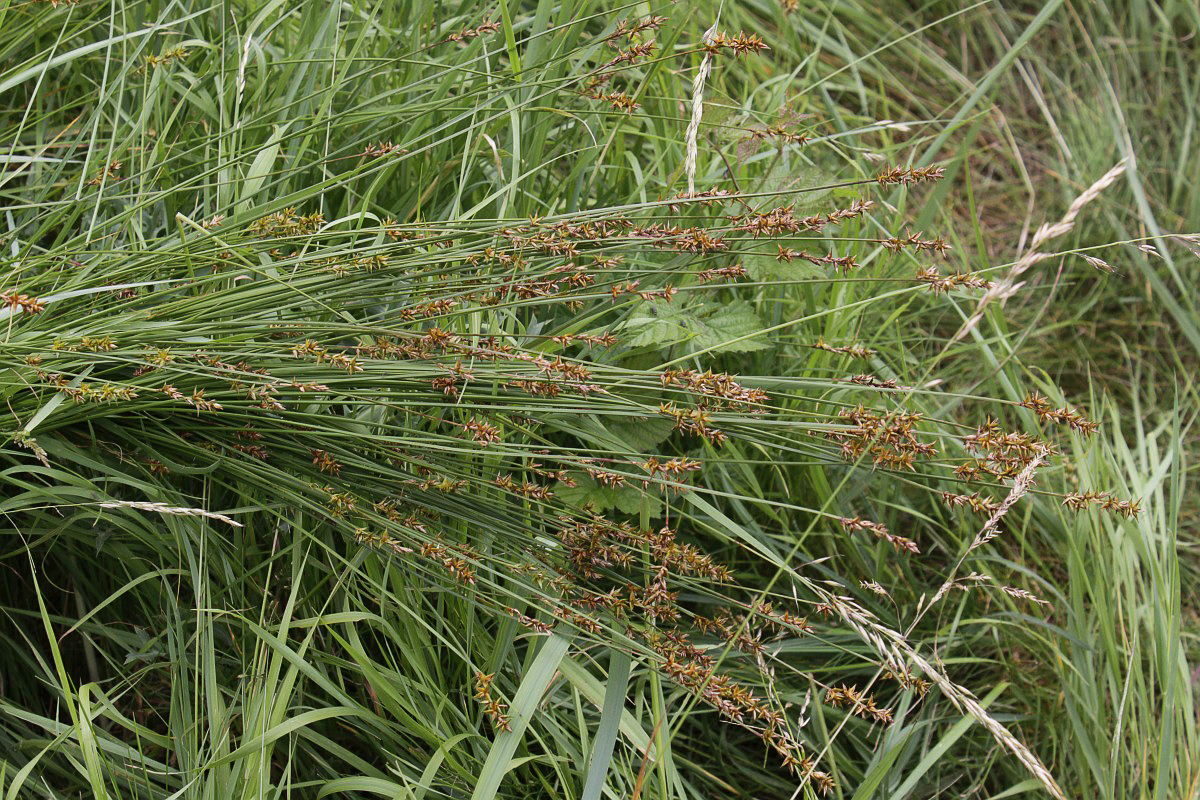
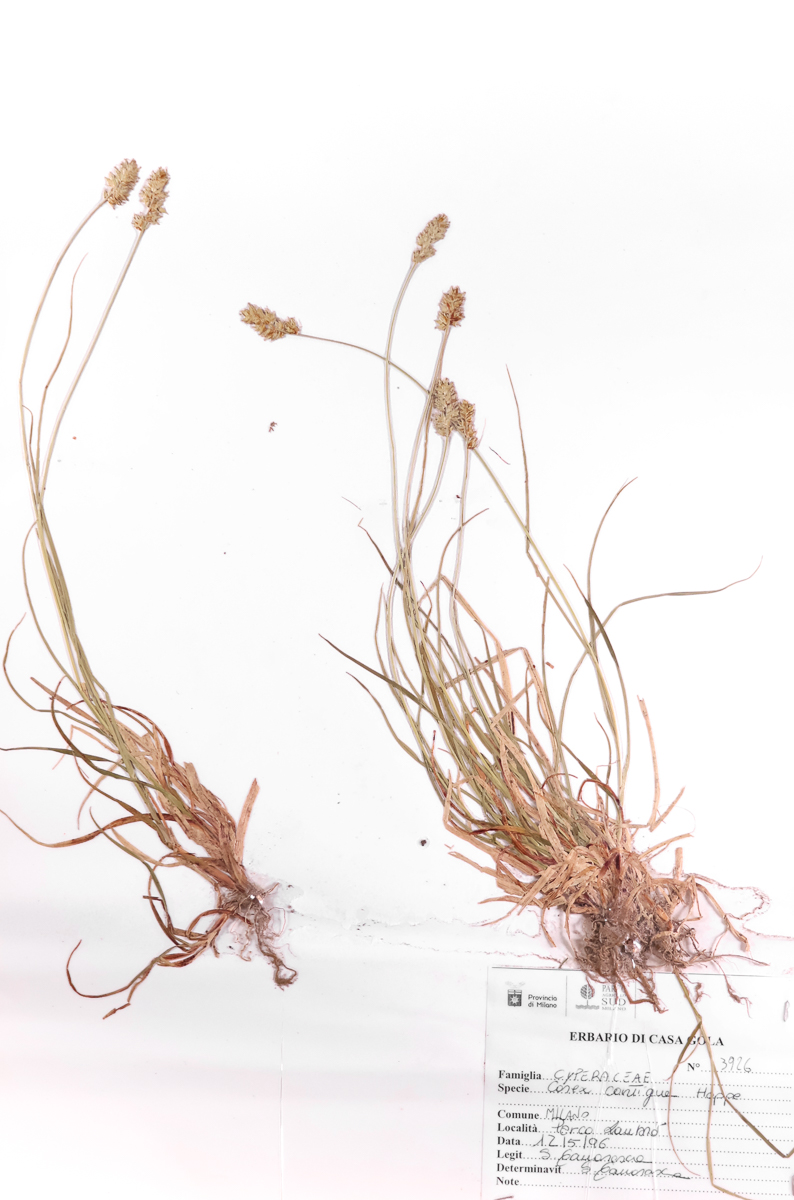

Spiked sedge
Scientific name: Carex spicata Huds.
Family: Cyperaceae
MORPHOLOGY
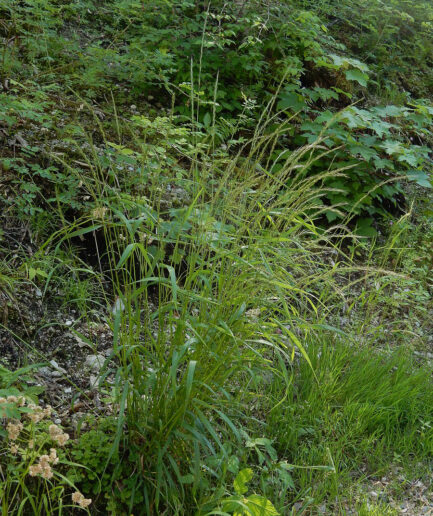
Habit and size: Perennial herbaceous plant, 30-80 cm tall, with short rhizomes, densely bushy, without stolons.
Stem: Erect stem, sharply triangular, robust, rough at the apex. Basal sheaths more or less fibrous, brown or blackish-purple.
Leaves: Flat or keeled leaves, 2-4 (4.5) mm wide, shorter than the stems.
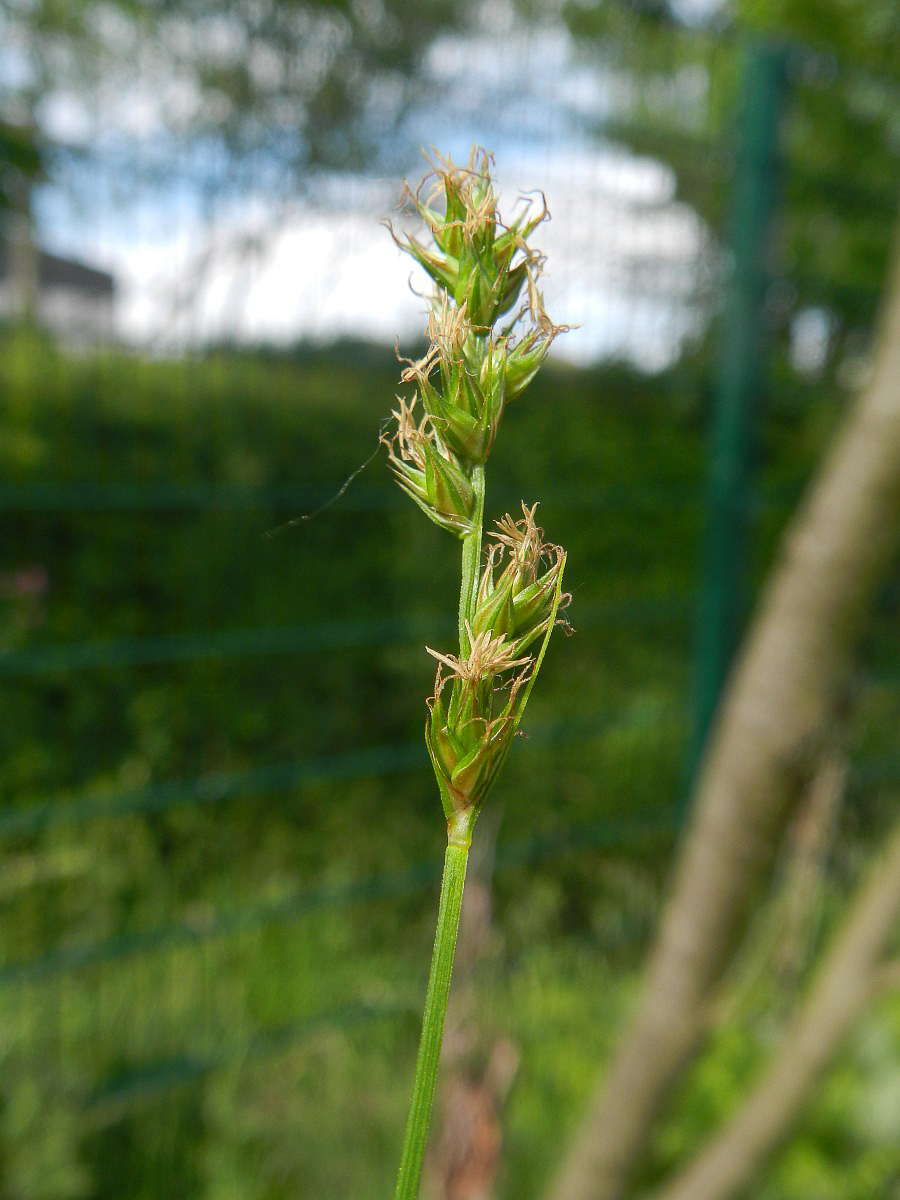
Flowers: Compact inflorescence, 2-3 (4) cm long, consisting of 3-6 (10) spikes. Spikes sessile, 5-12 mm long, androgynous, with male flowers at the apex and female flowers at the base, clustered in the upper part of the stem, sometimes the lower ones a bit separated from the others. Male glumes 3-4 mm long, lanceolate, with acute apex; female glumes 4-4.5 mm long, oval or lanceolate, light to dark brown with a green central vein, with or without a narrow scarious margin, apex acuminate or mucronate, as long as the utricle. Blooms between April and July.
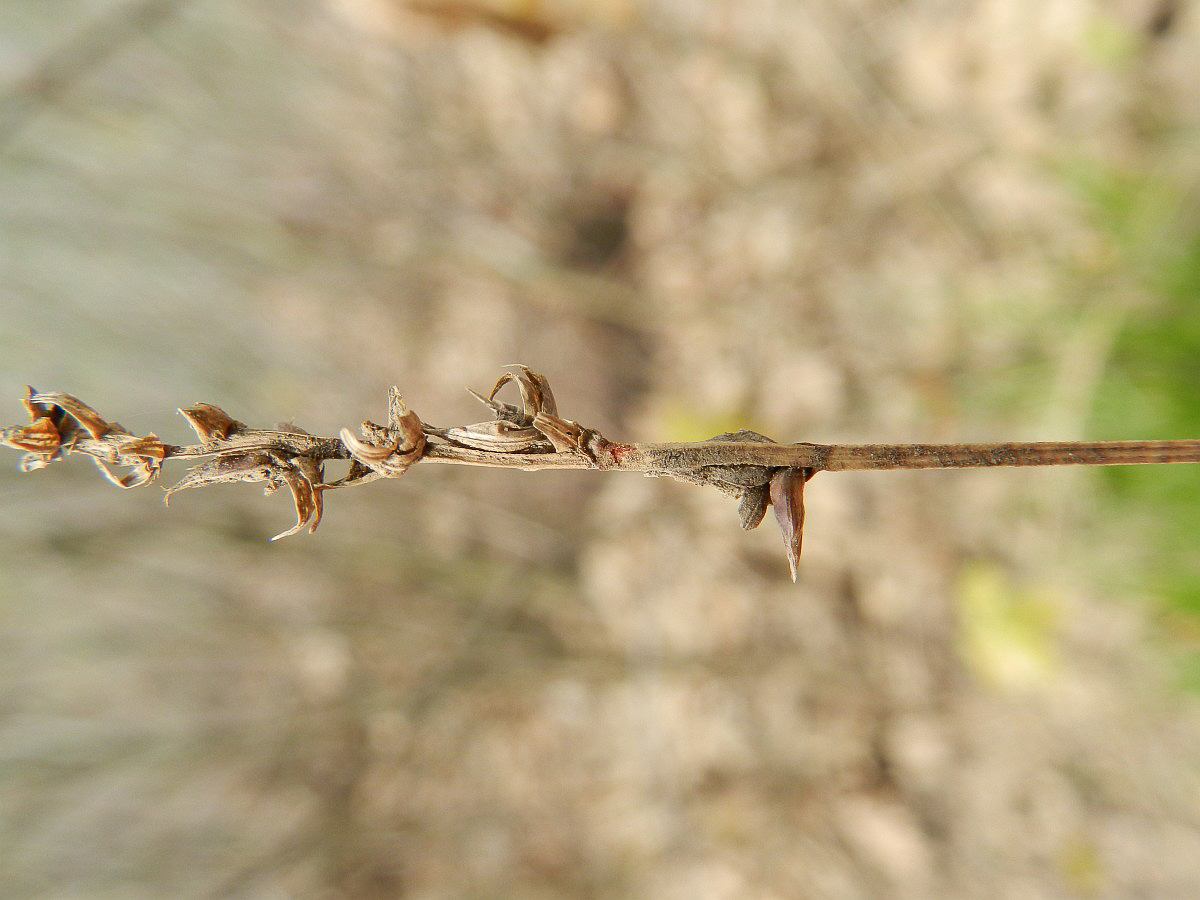
Fruits and seeds: The fruits are pear-shaped pseudanthia (utricle), glabrous, 4.2-5.5 x 1.7-2.2 mm, filled with spongy tissue in the lower third, flat-convex, with only faintly noticeable nerves, green, gradually narrowed into a bifid, scabrous-serrulate beak of 1.5-1.8 mm. Achenes 2-2.2 x 1.4-2 mm, oval or nearly orbicular, biconvex, sometimes flat-convex with persistent stylo base.
DISTRIBUTION AND HABITAT
Found throughout Italy except Sardinia, on the edge and in clearings of broad-leaved forests, shrubs, coppices. Between 0 and 1700 m.
Photo: under free license from Saxifraga and Peter Meininger, Rutger Barendse