




Yellow Anemone
Scientific name: Anemonoides ranunculoides (L.) Holub
Family: Ranunculaceae
MORPHOLOGY
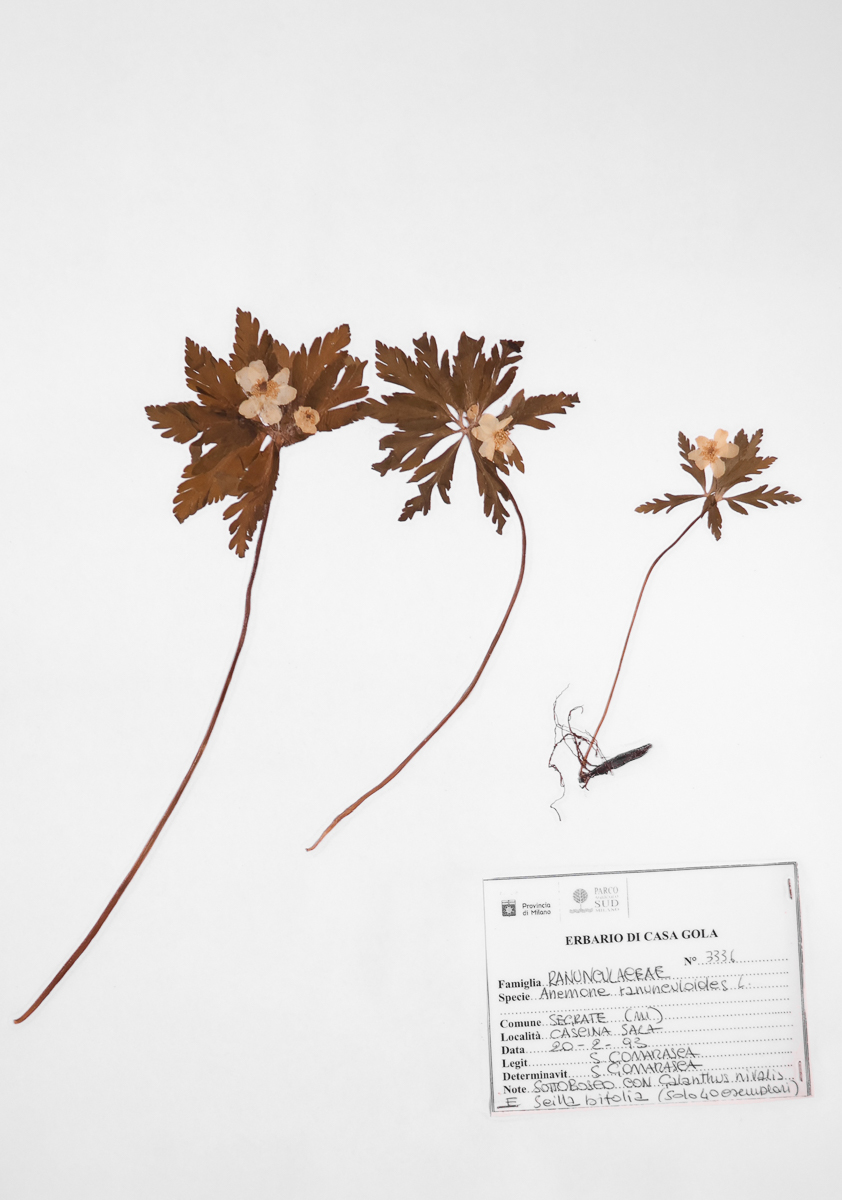
Growth habit and size: Perennial herbaceous plant with a fusiform rhizome, height between 15 and 25 cm.
Stem: Slender erect stems.
Leaves: The leaves have a palmate-parted blade divided into 3-5 lanceolate segments, irregularly incised-lobed; basal leaves are often absent, cauline leaves are leafy bracts located in the upper quarter of the stem, subsessile with an irregularly divided, dentate-lobed margin.
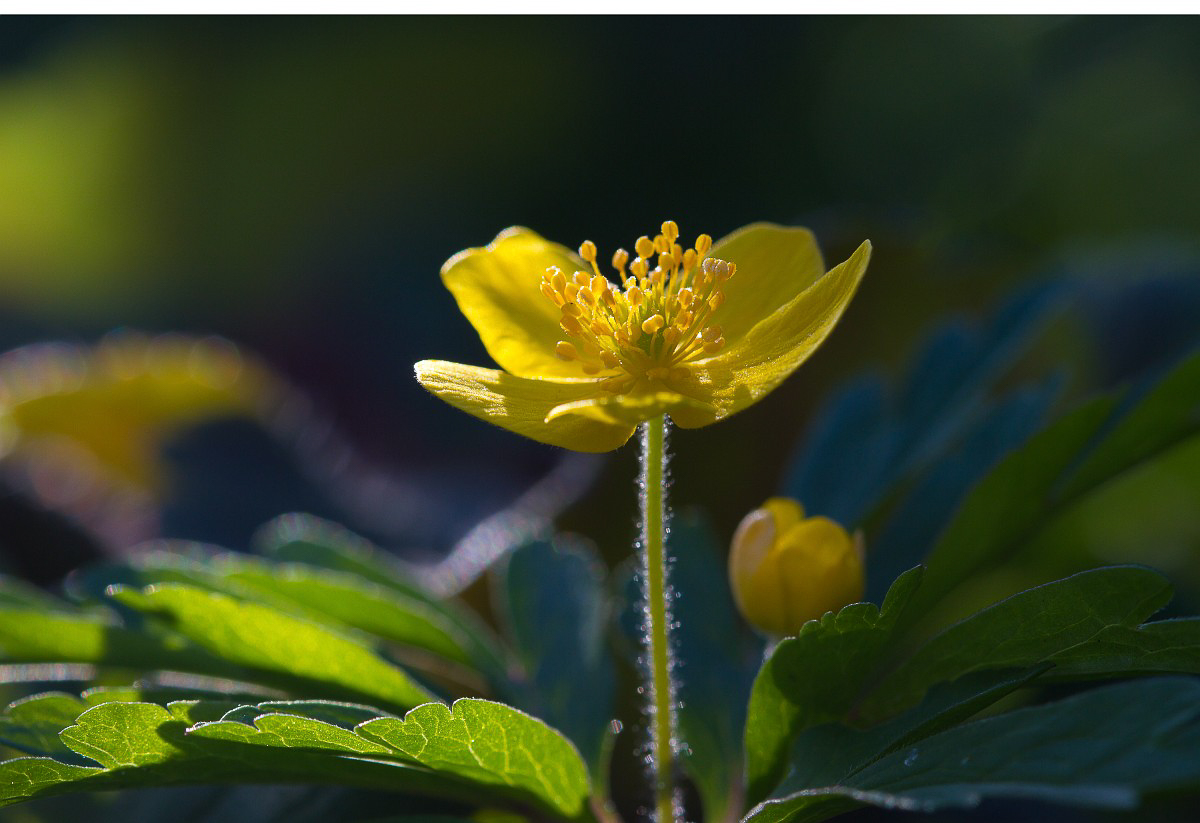
Flowers: Regular, solitary flowers or rarely 2 or more (up to 5), that bloom at the top of the scape,15-25 mm wide. The calyx consists of 5-(8) petaloid sepals, oval, bright golden-yellow, villous on the outside and soon deciduous. Blooms from January to May.
Fruits and seeds: The fruits are pubescent achenes with persistent but non-enlarging style (multiple fruits formed by free and independent achenes).
DISTRIBUTION AND HABITAT
Found throughout Italy except for the major islands and Calabria. It grows in deciduous forests (especially beech and oak forests), clearings, and shady places, at altitudes between 0 and 1,500 m.
USES
Due to its content of toxic saponins, it is considered a poisonous plant. It is used externally against joint pains and in homeopathy as an emmenagogue. Before taking any plant-based product (medicinal or non-medicinal) for therapeutic or similar purposes, it is always advisable to consult a doctor.
INTERESTING FACTS
This flower, like others of the same genus, folds downward in the evening, when it rains or when humidity increases, assuming the shape of a dome and offering the sterile part of the calyx to the water, thus protecting the stamens and pistils from moisture.
Photo: Under the free license of Saxifraga and Rob Felix, AHB