
Bindweed
Scientific name: Convolvulus arvensis L.
Family: Convolvulaceae
MORPHOLOGY
Habit and size: Perennial herbaceous plant, climbing, with a long, fragile, whitish rhizome, whose roots live long in the soil and can easily regenerate the entire plant even from a tiny fragment.
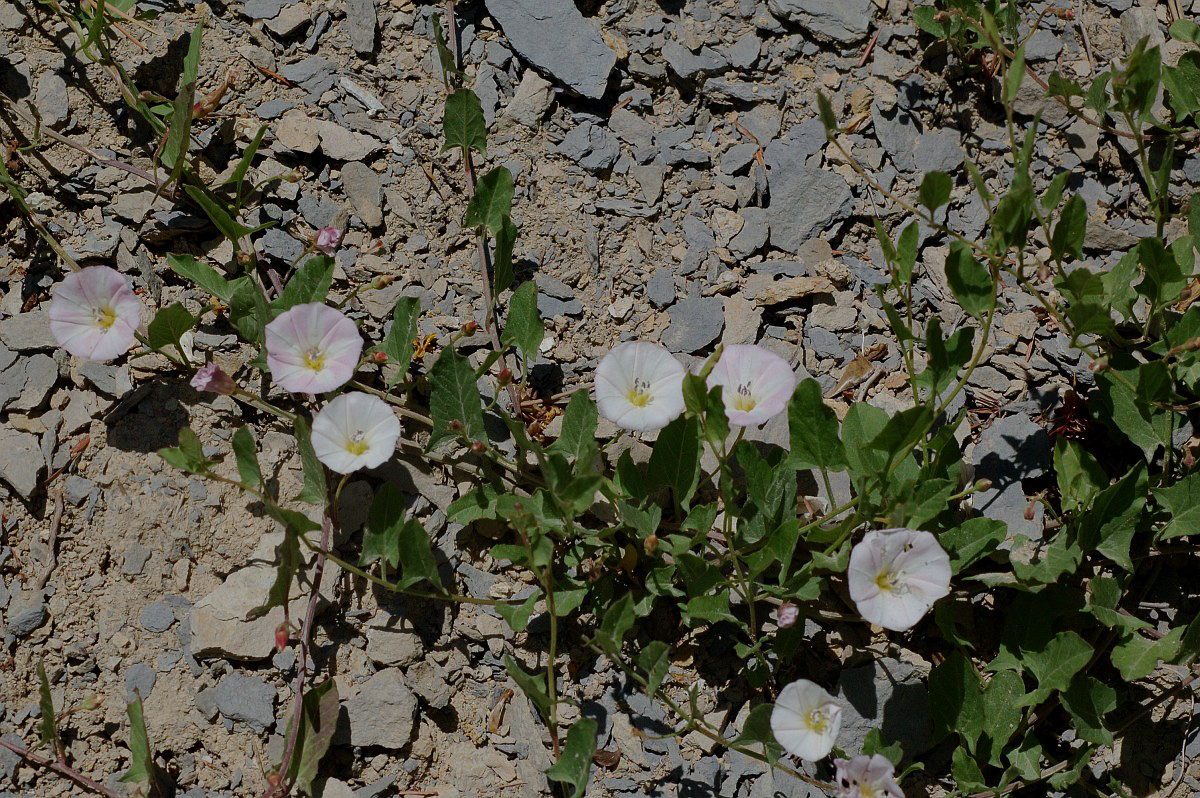
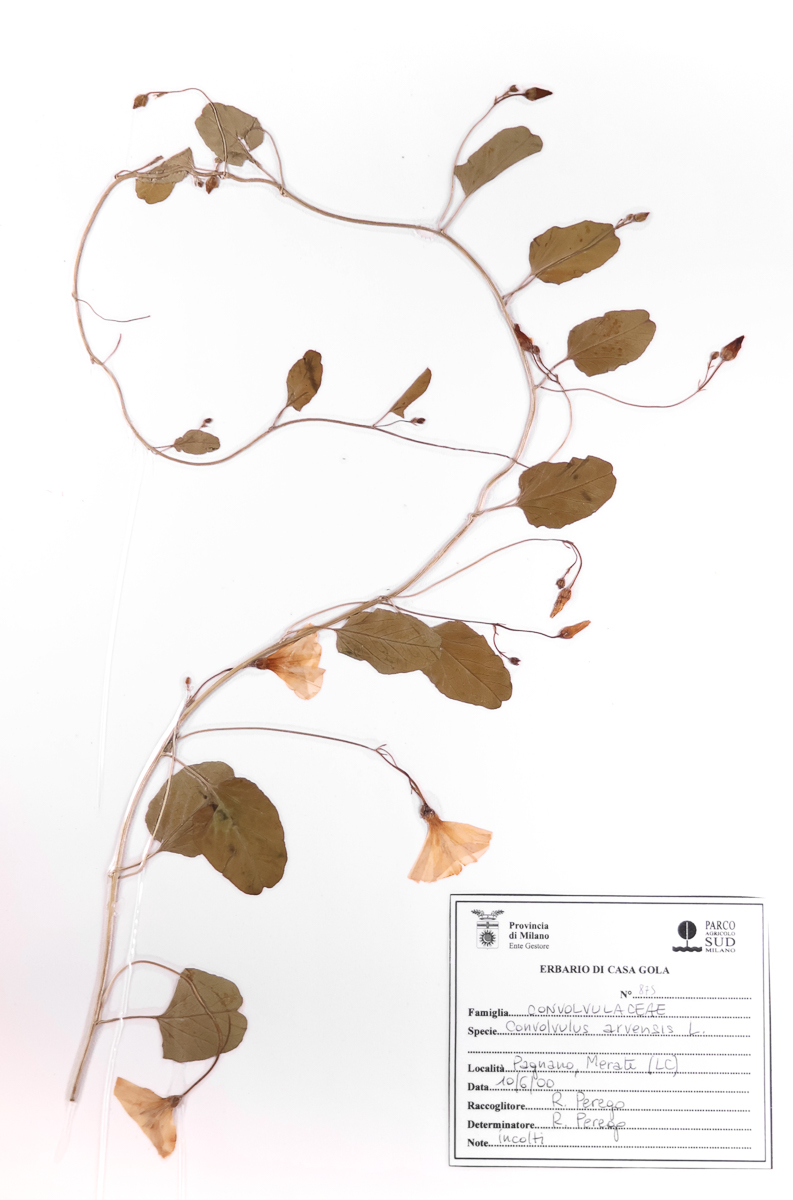
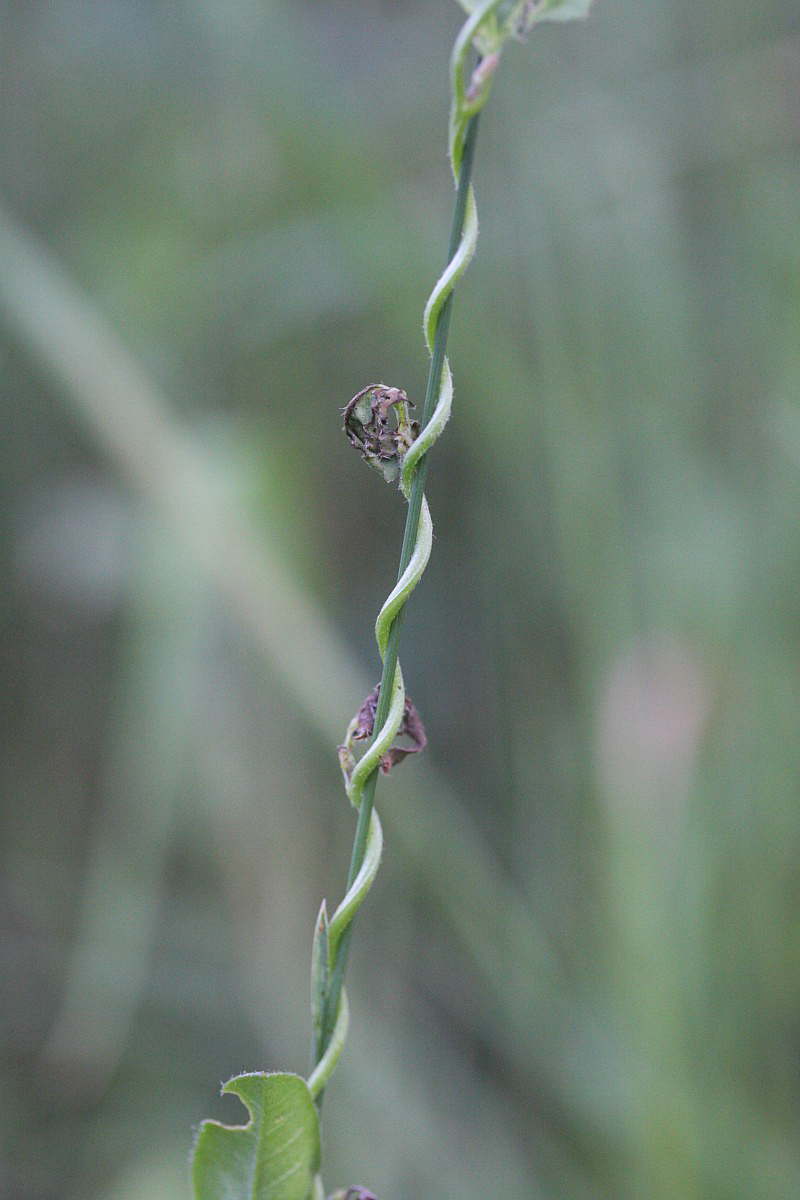
Stems: Thin stems at the base, hexagonal in section, glabrous, striated, sometimes over 1 m long, trailing, and if they find support, climbing, generally counterclockwise.
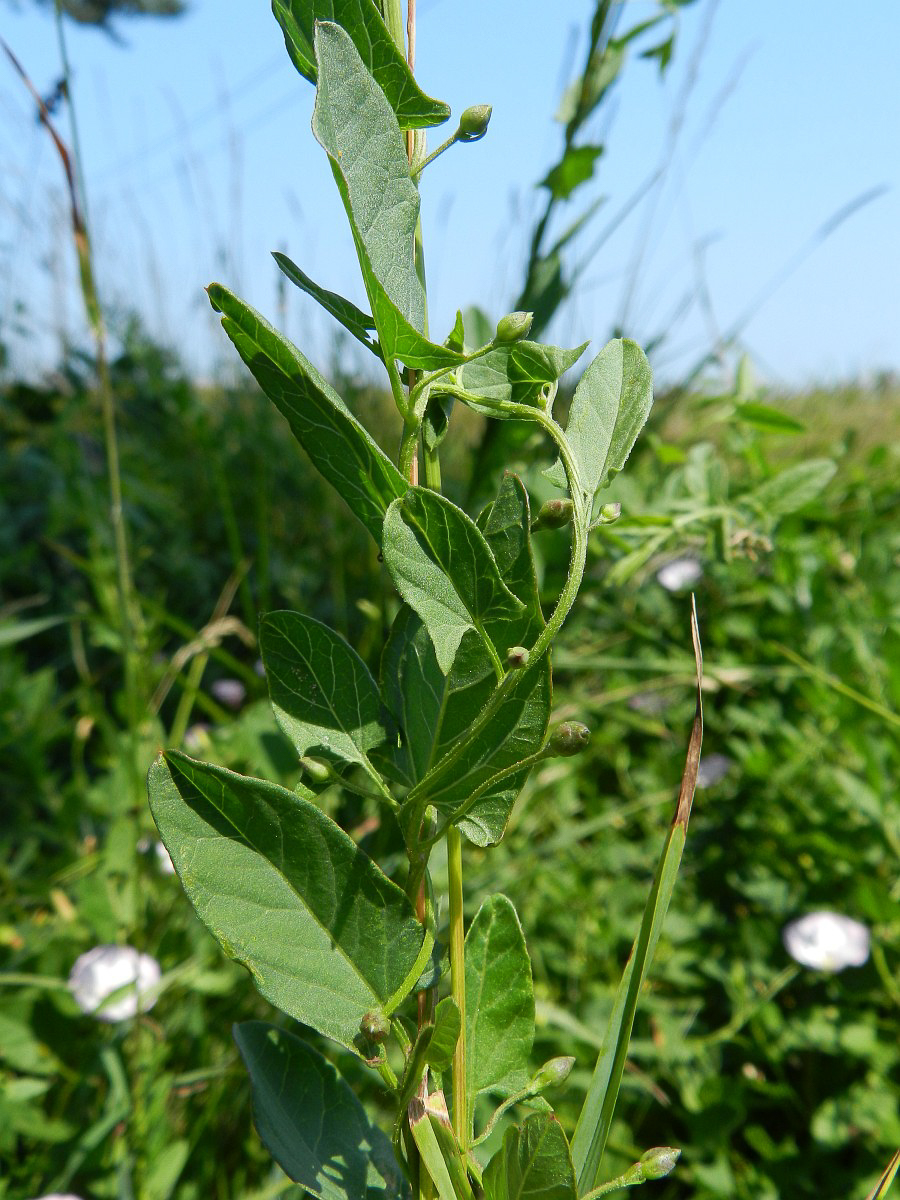
Leaves: The leaves are alternate, petiolate, with an ovate or hastate blade, entire margin, often undulating more or less revolute, apex from obtuse to subacute, sometimes mucronate. The upper ones, smaller in size, are progressively lanceolate.
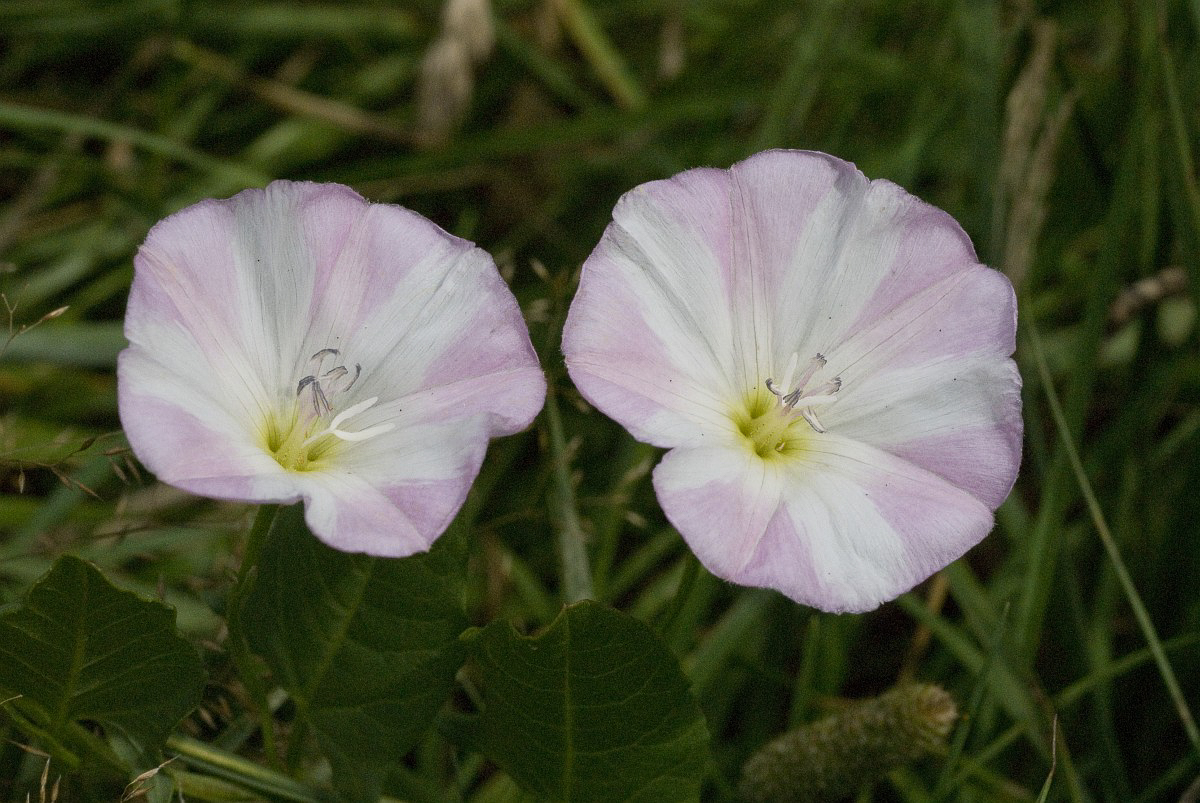
Flowers: The flowers are carried by long peduncles with 2 more or less opposite linear bracts; often solitary but sometimes paired, they bloom in the axil of the median leaves, with sepals oblanceolate with obtuse or emarginate apex, more or less pubescent on the back; corolla diameter about 3 cm, funnel-shaped, from completely whitish or pinkish, more frequently with 5 alternate longitudinal white streaks to 5 pink ones. The flowers emit a slight vanilla scent, opening towards morning and closing in the afternoon. Blooms from March to October.
Fruits and seeds: The fruits are globose, pointed, and glabrous capsules, almost always containing 4 dark seeds.
DISTRIBUTION AND HABITAT
Present throughout Italy, it grows in cultivated fields, hedges, fallow lands, meadows, road edges, gardens, fences, anthropized areas, from sea level up to 1500 m.
USE
Cholagogue, purgative, diuretic, and laxative plant due to the presence of a purgative glycoside. Useful in abdominal and hepatic dropsy, chronic constipation, and constipation due to liver insufficiency. For external use, the whole plant is used bruised to mature abscesses and boils. Before taking any plant-based product (medicinal or non-medicinal) for therapeutic or similar purposes, it is always advisable to consult with a doctor.
INTERESTING FACTS
Convolvulus arvensis is one of the most harmful and difficult-to-eliminate weeds, often carrying a virus that easily transmits to potato, tobacco, and tomato crops. In the USA, this plant has been included in the list of the most harmful weeds.
Photo: under the free license of Saxifraga and Willem van Kruijsbergen, Rutger Barendse