
Trifoglio dei prati

Nome scientifico: Trifolium pratense L.

Famiglia: Fabaceae 


MORFOLOGIA 


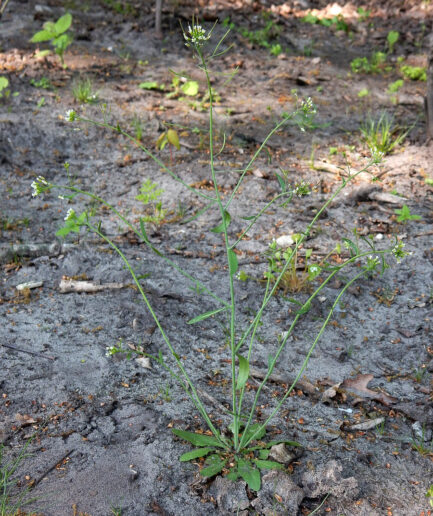
Portamento e dimensioni: pianta  perenne erbacea, anche se di longevità limitata, la sua durata, in genere, non supera i due anni; rizoma legnoso avvolto da guaine scure, sulle branche laterali sono inseriti numerosi tubercoli della lunghezza di qualche millimetro che sono in grado di fissare l’azoto atmosferico. Alta tra 10 e 60 cm


Fusto: fusti eretti, brevemente striscianti, semplici.


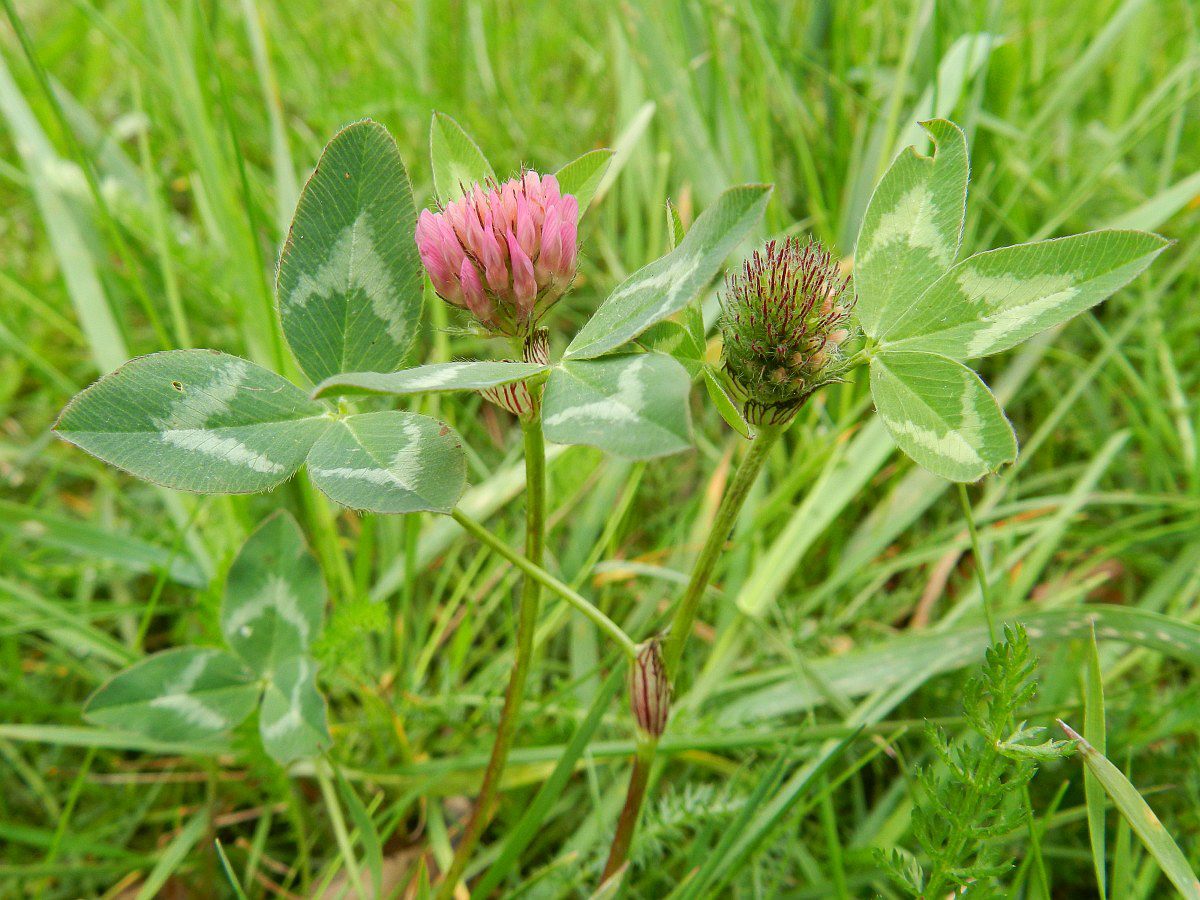
Foglie: le foglie lungamente picciolate, sono trifogliate, ovali od ellittiche, stipole allungate, con resta terminale, la pagina superiore è caratterizzata da un disegno biancastro a forma di “V”.


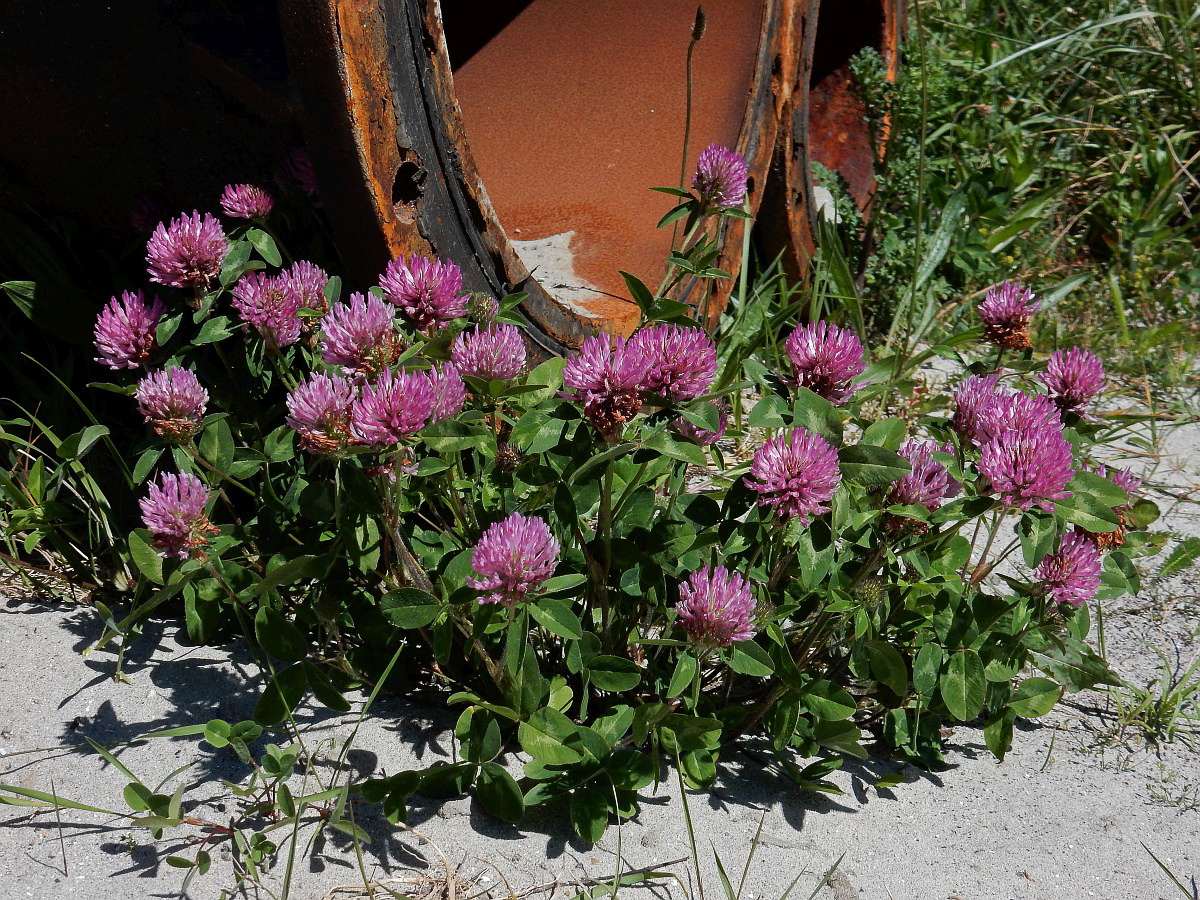
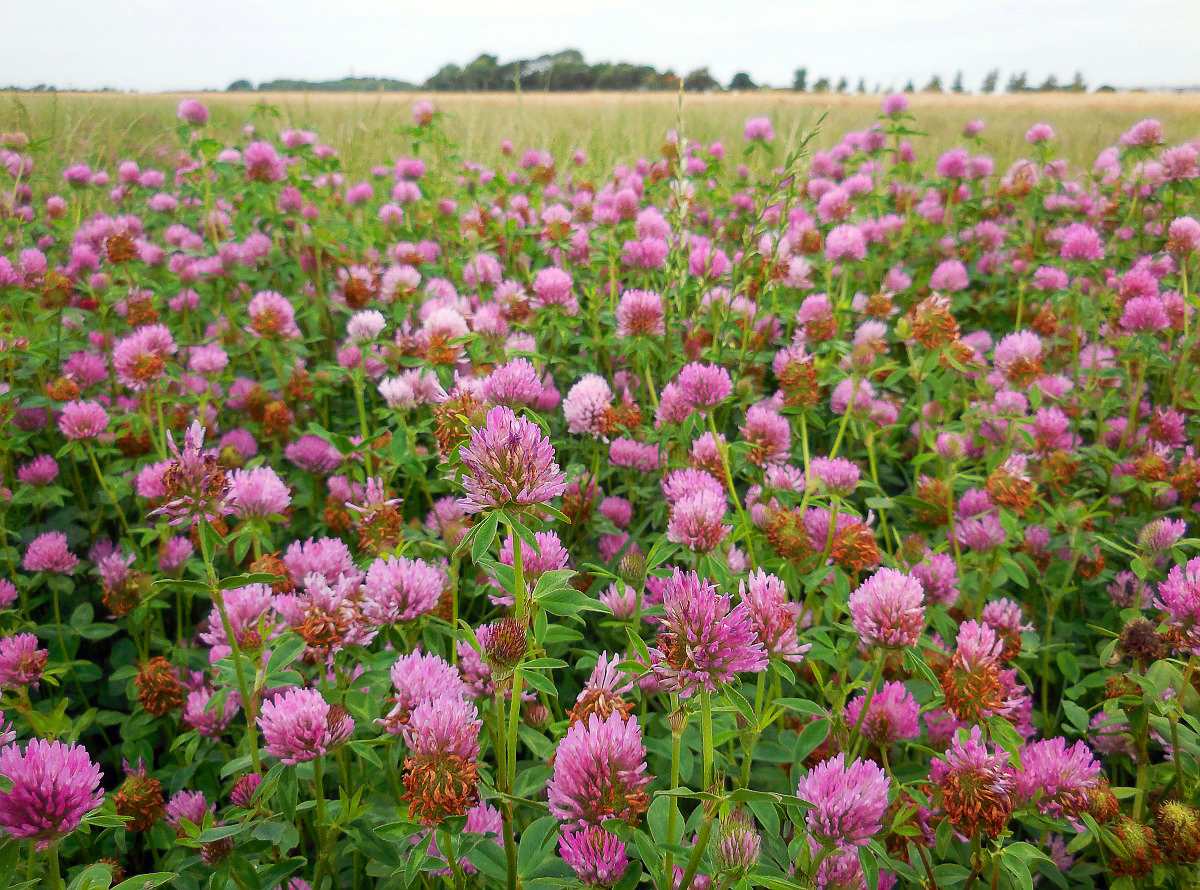
Fiori: i fiori in capolini globosi, peduncolati o subsessili, all’ascella delle foglie superiori, rosso chiaro, carminio o lattiginosi. Fiorisce tutto l’anno.


Frutti e semi: i frutti sono legumi, detti camare, indeiscenti inclusi nel calice, con pericarpo membranoso ed un unico seme ovoidale, liscio, giallognolo o marrone.


DISTRIBUZIONE E HABITAT


Presente in tutta Italia in prati, pascoli, incolti, da 0 a 2.600 m.


UTILIZZI


Erba dolciastra, rinfrescante, antispasmodica, espettorante, detergente, diuretica.

Dioscoride e Galeno, gli attribuivano la proprietà di guarire le ferite causate dal morso di serpenti velenosi. La pianta in passato fu usata come febbrifugo, tonico, diuretico, stimolante del mestruo, espettorante, antispastica, antinfiammatoria, regolatrice delle secrezioni ghiandolari e antieczematosa. Utile nella cura di tosse, bronchite, infezioni, purificatore del sangue; in India si impiega per favorire la lattazione delle puerpere e come tonico uterino: favorisce il ristabilimento dell’utero dopo il parto. Prima di assumere qualsiasi prodotto di origine vegetale (farmaco o non farmaco) per fini terapeutici o simil-terapeutici, è sempre opportuno rivolgersi preventivamente al proprio medico.

Il Trifoglio pratense o violetto è senz’altro da tempo una delle leguminose foraggere più diffuse in Europa ed in alcuni paesi del vecchio continente raggiunge estensioni di alcune centinaia di migliaia di ettari. In Italia, comunque, la coltura pura di questa leguminose da prato è andata progressivamente perdendo di interesse nel corso degli ultimi venti anni. Consumato come foraggio verde, raramente come fieno, causa la perdita delle foglie che si sbriciolano con l’essiccazione, è talmente apprezzato dal bestiame, da essersi meritato il nome di “pane del latte”.

Oltre che importante pianta foraggera, il Trifoglio rosso è impiegato nella rotazione agraria per l’arricchimento del suolo infatti i Trifogli presentano, sulle radici, dei piccoli tubercoli,contenenti dei batteri, in grado di trasformare l’abbondante azoto presente nell’aria, che le piante non assorbono direttamente, in ammonio organico, essenziale per la crescita delle stesse. Trifolium pratense è un’importante pianta mellifera, in alcuni luoghi l’unica fonte di nettare e di polline per le api nei mesi estivi, anche se i più affezionati impollinatori sembrano essere i bombi.


CURIOSITÀ


Il Trifoglio è sempre stato impiegato come motivo decorativo; nell’arte gotica le sue foglie erano raffigurate come simbolo della trinità.

La tradizione greca e romana assegnavano alla pianta il potere di guarire i morsi di serpenti e scorpioni, da sempre rappresentazioni del demonio.

Venerato dai Druidi, eletto a simbolo della Trinità e della Salvezza nell’iconografia cristiana, in Europa divenne segno di fortuna e prosperità.

Nel giorno di S. Giovanni, in Francia, le giovani fanciulle, erano solite cercare nei fiori di Trifoglio, la conferma dell’amore, come si fa con le margherite.

Negli erbari medievali veniva assegnata alla pianta la virtù terapeutica di sanare le macchie dell’occhio (leucomi), sarebbe bastato porvi sopra una polvere di foglie di trifoglio. Nello spazio di quindici giorni si era sicuri della guarigione, perché, come si può ancora leggere, “probatum est”.

Vuole la leggenda che Patrizio, il primo a portare la parola di Cristo in Irlanda, fosse riuscito a illustrare il mistero della Trinità proprio grazie al paragone con il trifoglio. Quando Patrizio venne proclamato santo, s’incominciò a rappresentare il fondatore della Chiesa d’Irlanda con un trifoglio nella mano o ricamato sulle vesti episcopali.

All’epoca della dominazione inglese, Giorgio III, cercando di assicurarsi la collaborazione della nobiltà irlandese, istituì nel 1783, l’Ordine di San Patrizio, nel cui stemma faceva bella mostra il trifoglio. In questo modo, legato alla figura di San Patrizio, il trifoglio s’impose come uno dei simboli dell’Irlanda, tanto che il 17 marzo, festa del santo e della nazione, ancora oggi si possono vedere alcuni irlandesi portare sul vestito, come vuole la tradizione, uno o più mazzetti di trifoglio.

Di non antichissima coltivazione, il trifoglio pratense giunse in Europa probabilmente attraverso la Spagna e, di qui, si estese alla Francia, alla Germania ed ai Paesi Bassi.

Già conosciuto come pianta foraggera, il Trifoglio pratense non fu però mai estesamente coltivato e assurse a pianta di primaria importanza solamente quando, introdotto in Inghilterra verso la metà del 1600, venne inserito nell’avvicendamento in sostituzione del maggese nudo. Le conseguenze di tale accorgimento furono duplici: da un lato esso provocò un sensibile aumento delle disponibilità foraggere e, dall’altro, grazie alla sua capacità azotofissatrice ed al conseguente arricchimento del tenore in azoto del terreno, consentì un incremento di tutta la produzione agraria.


Foto: su licenza gratuita di Saxifraga e Ed Stikvoort, Rutger Barendse

COD: 1307 Categoria: Tag: , , , ,
Famiglia

Fabaceae

Specie

Trifolium pratense L.

Tipologia

Pianta erbacea

Habitat

Incolti, Prati

Red Clover


Scientific name: Trifolium pratense L.
Family: Fabaceae


MORPHOLOGY


Habit and Size: Perennial herbaceous plant, although its longevity is limited, generally not exceeding two years; woody rhizome wrapped in dark sheaths, with numerous small tubercles on the lateral branches capable of fixing atmospheric nitrogen. Height between 10 and 60 cm.


Stem: Erect stems, briefly creeping, simple.


Leaves: Long-petioled leaves, trifoliate, oval or elliptical, with elongated stipules ending in a bristle, the upper surface characterized by a whitish “V”-shaped pattern.


Flowers: Flowers in globular heads, pedunculate or subsessile, at the axils of the upper leaves, light red, carmine, or milky. Blooms year-round.


Fruits and Seeds: Fruits are legumes, called camaras, indehiscent, enclosed in the calyx, with a membranous pericarp and a single ovoid seed, smooth, yellowish or brown.


DISTRIBUTION AND HABITAT

Present throughout Italy in meadows, pastures, and uncultivated lands, from 0 to 2,600 m.


USE


Sweet herb, refreshing, antispasmodic, expectorant, cleansing, diuretic. Dioscorides and Galen attributed to it the property of healing wounds caused by venomous snake bites. In the past, it was used as a febrifuge, tonic, diuretic, menstrual stimulant, expectorant, antispasmodic, anti-inflammatory, glandular secretion regulator, and anti-eczema. Useful for treating coughs, bronchitis, infections, and as a blood purifier; in India, it is used to promote lactation in nursing mothers and as a uterine tonic to help the uterus recover after childbirth. Before taking any herbal product (whether medicinal or non-medicinal) for therapeutic or similar purposes, it is always advisable to consult your doctor.
Red Clover has long been one of the most widespread forage legumes in Europe and in some countries of the old continent, it covers several hundred thousand hectares. In Italy, however, pure cultivation of this meadow legume has progressively lost interest over the past twenty years. Consumed as green fodder, rarely as hay, due to the loss of leaves that crumble upon drying, it is so highly appreciated by livestock that it has earned the name “bread of milk.”
Besides being an important forage plant, Red Clover is used in crop rotation to enrich the soil as clover plants have small nodules on their roots containing bacteria capable of transforming abundant atmospheric nitrogen, which plants do not absorb directly, into organic ammonium essential for their growth. Trifolium pratense is an important honey plant, in some places the only source of nectar and pollen for bees in the summer months, although its most loyal pollinators seem to be bumblebees.


INTERESTING FACTS


Clover has always been used as a decorative motif; in Gothic art, its leaves were depicted as a symbol of the Trinity.
Greek and Roman traditions attributed to the plant the power to heal snake and scorpion bites, always representations of the devil.
Venerated by the Druids, chosen as a symbol of the Trinity and Salvation in Christian iconography, in Europe it became a sign of luck and prosperity.
On St. John’s Day in France, young girls used to look for clover flowers as a confirmation of love, much like with daisies.
In medieval herbals, the plant was assigned the therapeutic virtue of curing eye spots (leucomas), simply by placing clover leaf powder on them. Within fifteen days, one was sure of recovery, as it could still be read, “probatum est.”
Legend has it that Patrick, the first to bring the word of Christ to Ireland, managed to illustrate the mystery of the Trinity using the comparison with the clover. When Patrick was proclaimed a saint, he began to be represented with a clover in his hand or embroidered on his episcopal vestments.
During the English domination, George III, seeking to secure the collaboration of the Irish nobility, instituted in 1783 the Order of St. Patrick, in whose emblem the clover prominently featured. Thus, associated with the figure of St. Patrick, the clover became one of the symbols of Ireland, so much so that on March 17, the feast of the saint and the nation, some Irish people still traditionally wear one or more sprigs of clover on their clothing.
Not of ancient cultivation, red clover probably arrived in Europe through Spain and from there spread to France, Germany, and the Netherlands.
Already known as a forage plant, Red Clover was never extensively cultivated until, introduced in England around the mid-1600s, it was incorporated into crop rotation as a replacement for bare fallow. The consequences of this measure were twofold: on the one hand, it caused a significant increase in forage availability, and on the other, thanks to its nitrogen-fixing ability and the consequent increase in soil nitrogen content, it allowed an increase in overall agricultural production.


Photos: freely licensed from Saxifraga and Ed Stikvoort, Rutger Barendse
Famiglia

Fabaceae

Specie

Trifolium pratense L.

Tipologia

Pianta erbacea

Habitat

Incolti, Prati