
Alpine squill
Scientific name: Scilla bifolia L.
Family: Asparagaceae
MORPHOLOGY
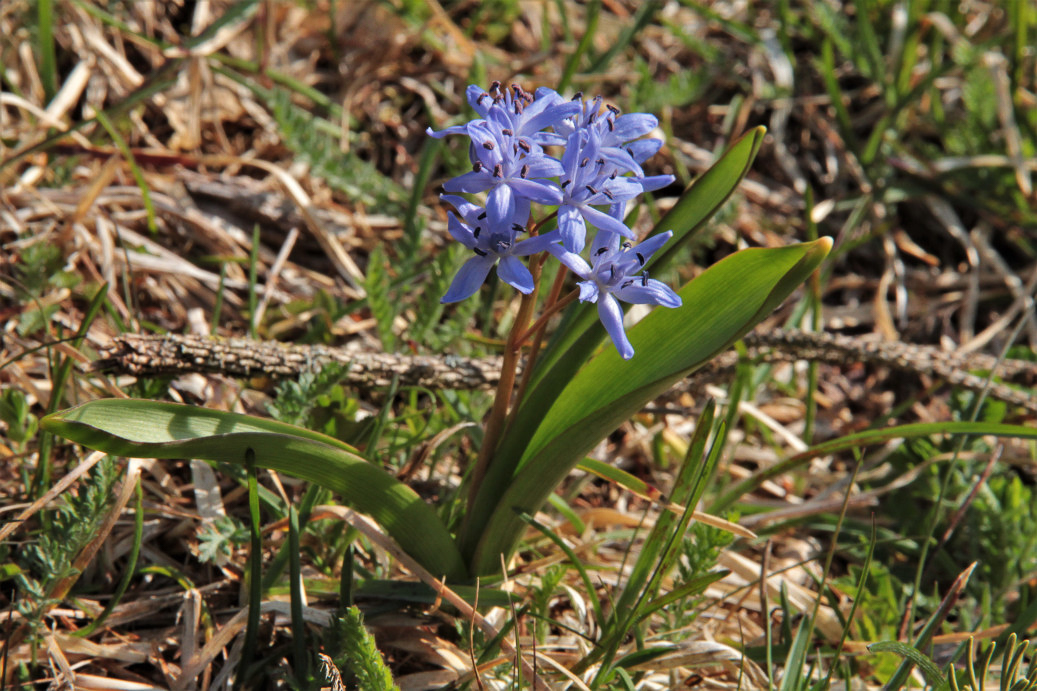
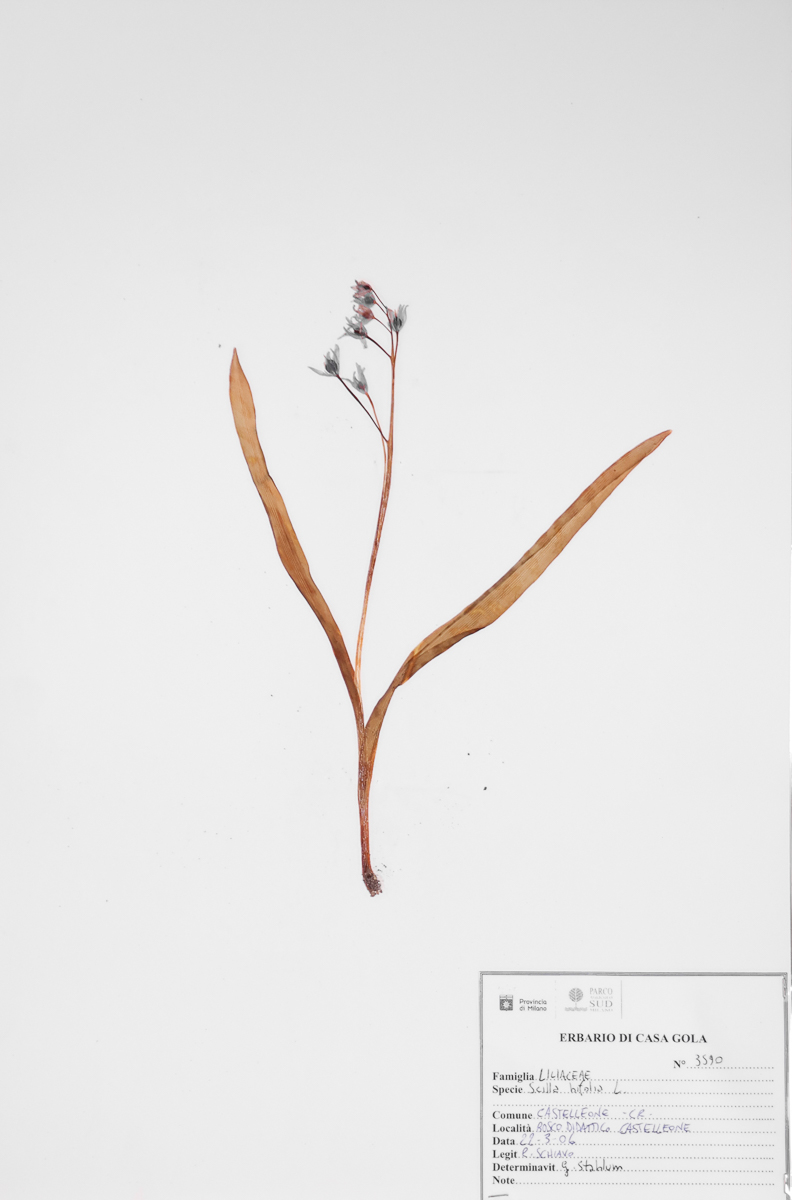
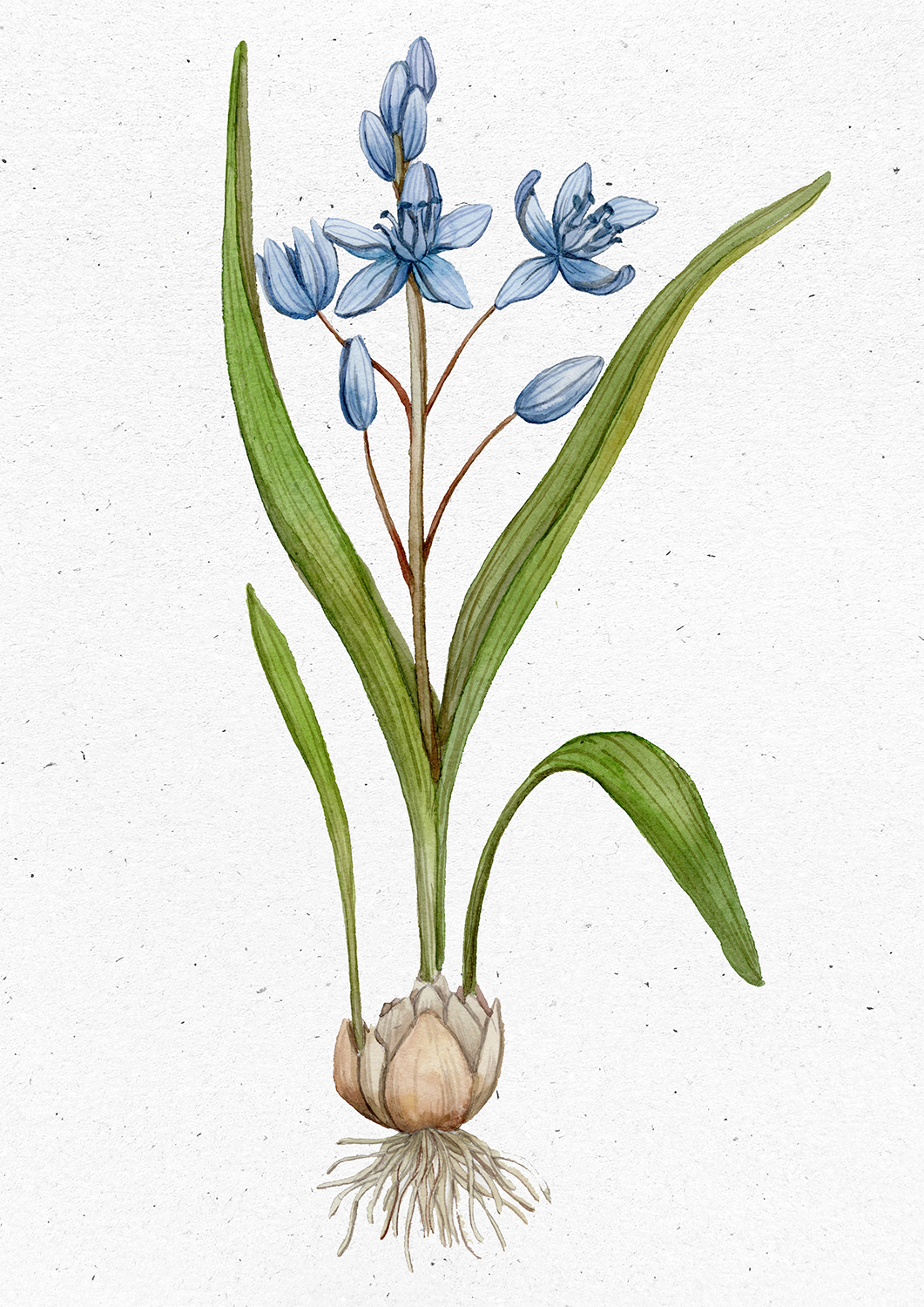
Habit and dimensions: Perennial herbaceous plant, glabrous, with an erect posture, equipped with an ovoid bulb with a diameter of 1-2 cm, buried in the substrate for 10-20 cm. It reaches a height between 5 and 20 cm.
Stem: Reddish-green stem, erect, slender, cylindrical.
Leaves: Two or more rarely three smooth, shiny, subopposite, initially erect then divergent and curved leaves emerge from the bulb. They are linear-lanceolate, channeled, obtuse at the apex, thick and robust, 0.3-1.2 cm wide and 10-12 cm long, embracing the stem up to its midsection.
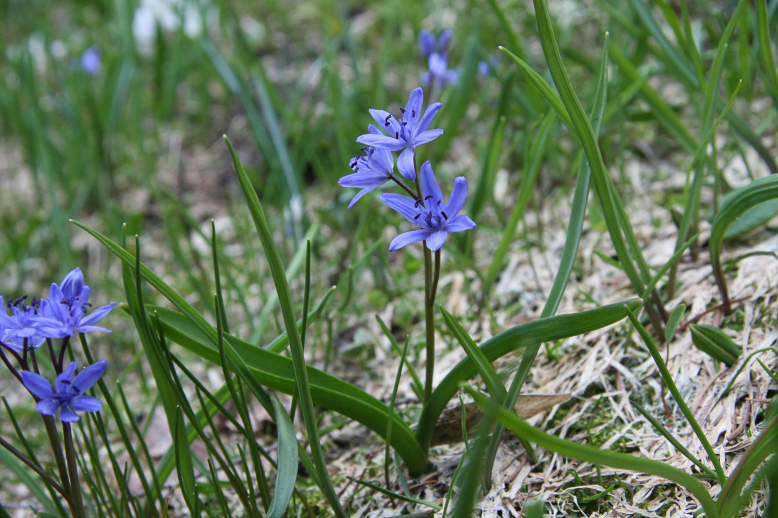
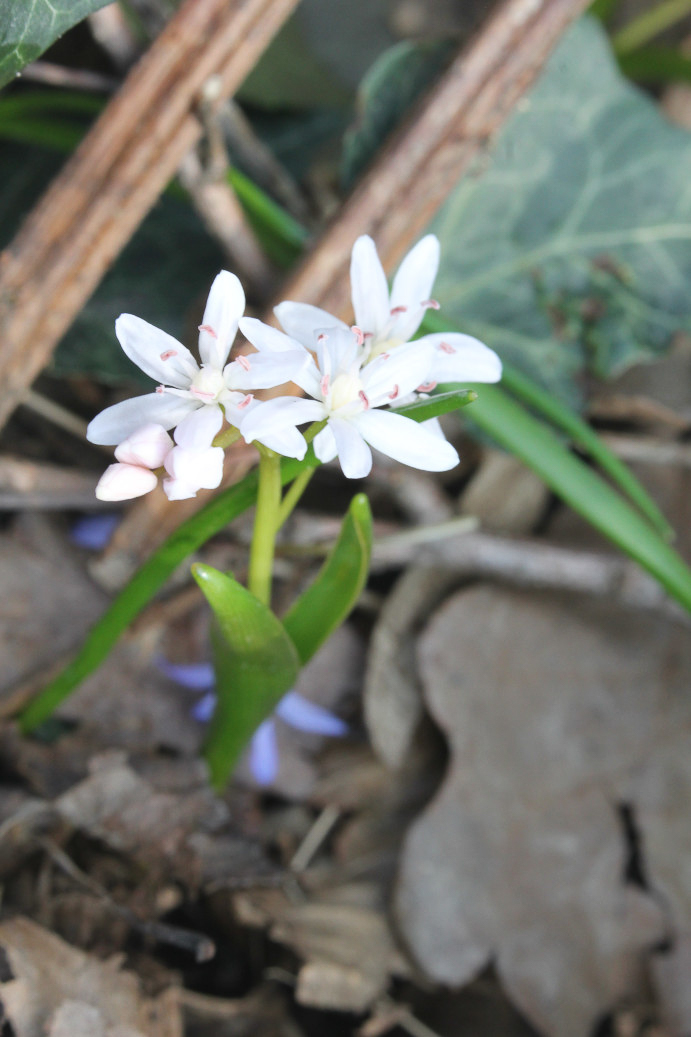
Flowers: The inflorescence consists of a sparse and short raceme, with erect, naked floral pedicels. The lower ones are 3 times longer than the flowers, while the others gradually decrease and are arranged unilaterally. Flowers are erect, numbering 2-6(-10), opening sequentially, 1 cm long with a diameter of 2 cm. They are formed by 6 oblong-lanceolate tepals, shining blue to pale lilac in color, with a whitish base, occasionally all white or reddish. It blooms from February to May.
Fruits and seeds: The fruit is a subglobose, obtuse, trigonal capsule, trilocular. Its weight causes the plant to bend until it touches the ground, releasing seeds of 2-3 mm, subrounded, smooth, with an arillate tubercle at the base, contained in numbers of 3-6 per locule.
DISTRIBUTION AND HABITAT
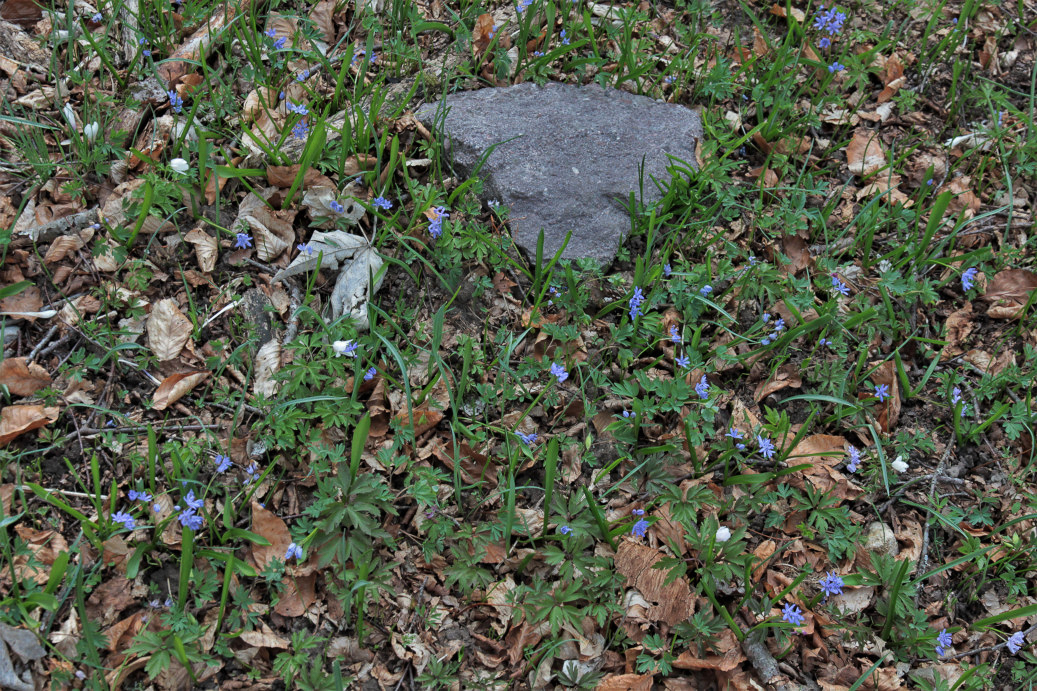
It grows throughout Italy except between 500 m and 2,000 m. However, it can be found easily in certain environments such as near the Rhone (100 m). It thrives in cool broad-leaved forests, especially beech forests, shady meadows, and moist pastures.
USE
The bulb contains active ingredients such as cardiotonic and diuretic glucosides that can be used in herbal medicine. However, if ingested, they can cause serious gastrointestinal problems. Before taking any plant-based product (medicinal or non-medicinal) for therapeutic or similar purposes, it is always advisable to consult your doctor.
INTERESTING FACTS
Its name recalls Scylla, the sea monster of Greek mythology with a woman’s body, a fish tail, and 6 dog heads. Legend has it that Scylla, a nymph in love with Glaucus, asked the witch Circe to prepare a love potion for her. However, Circe, who harbored romantic feelings for Glaucus herself, prepared a treacherous potion and poured it into a spring, advising Scylla to bathe in those waters. This bath transformed Scylla into the terrible monster, who, driven by anger and shame, hid in the Strait of Messina in front of Charybdis, from where she emerged to devour sailors.
Photos: kindly provided by Claudio Farinati