
Pratolina comune

Nome scientifico: Bellis perennis L.

Famiglia: Asteraceae


MORFOLOGIA

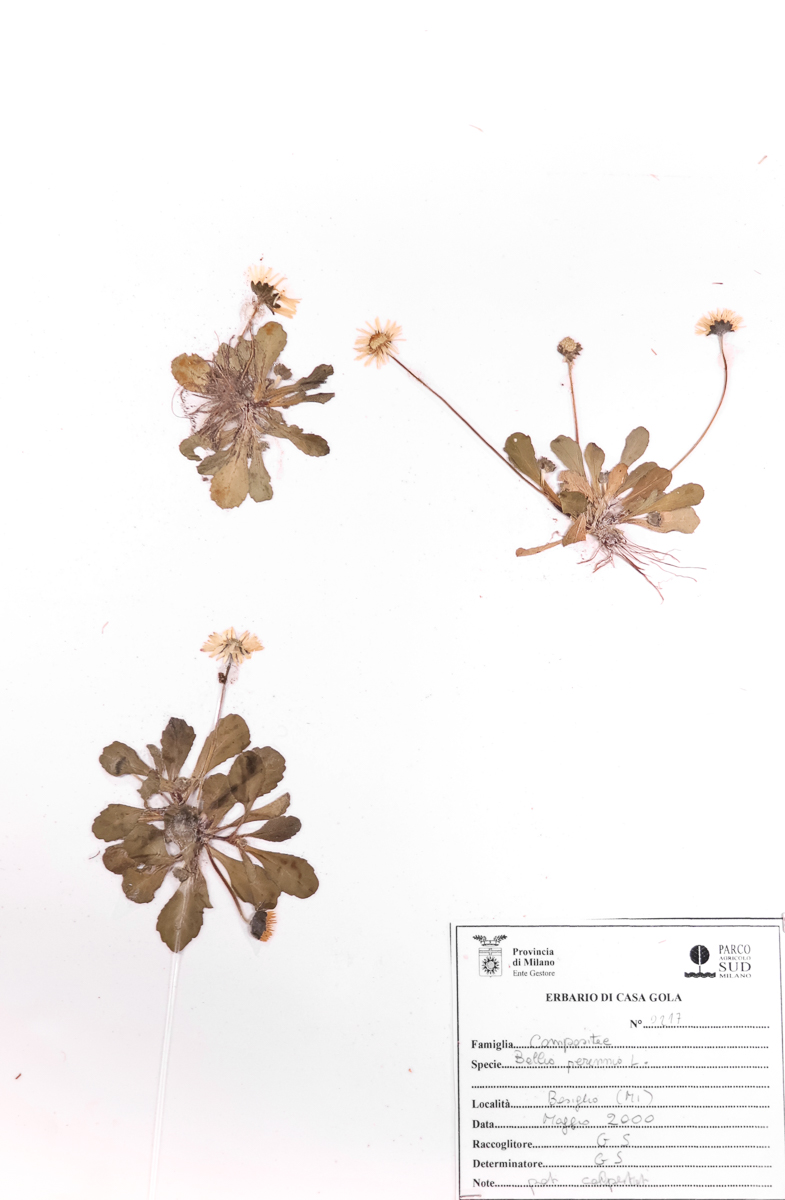
Portamento e dimensioni: pianta perenne, erbacea, rizomatosa, a crescita lenta, con fusti semplici generalmente afilli e pubescenti; altezza 5÷15 cm.

Fusto: fusti fiorali semplici afilli, pubescenti

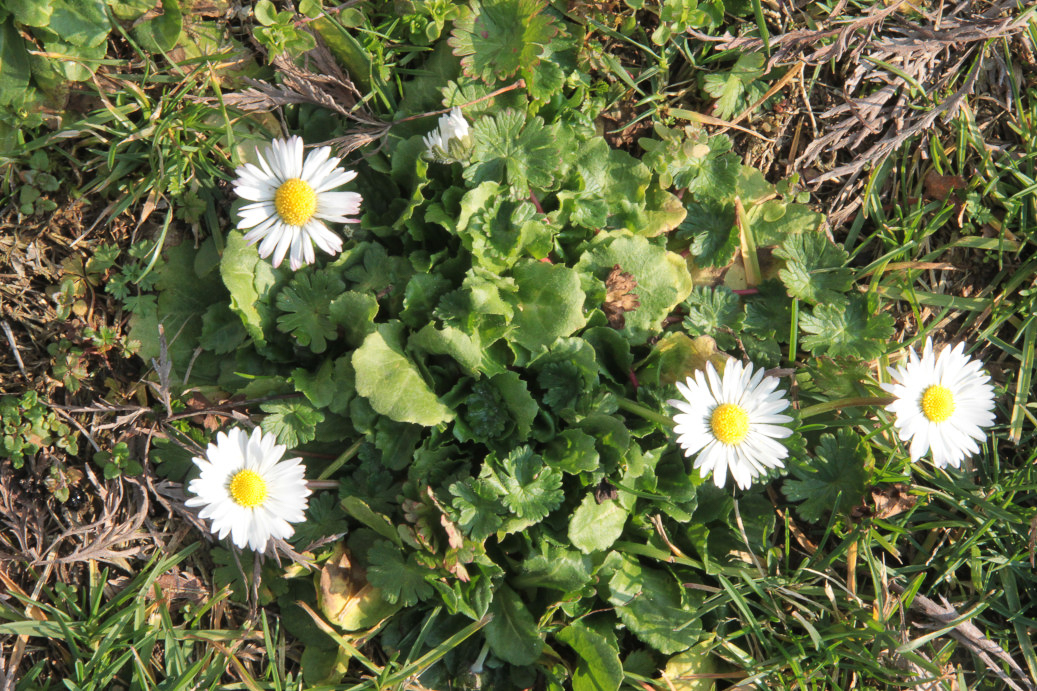
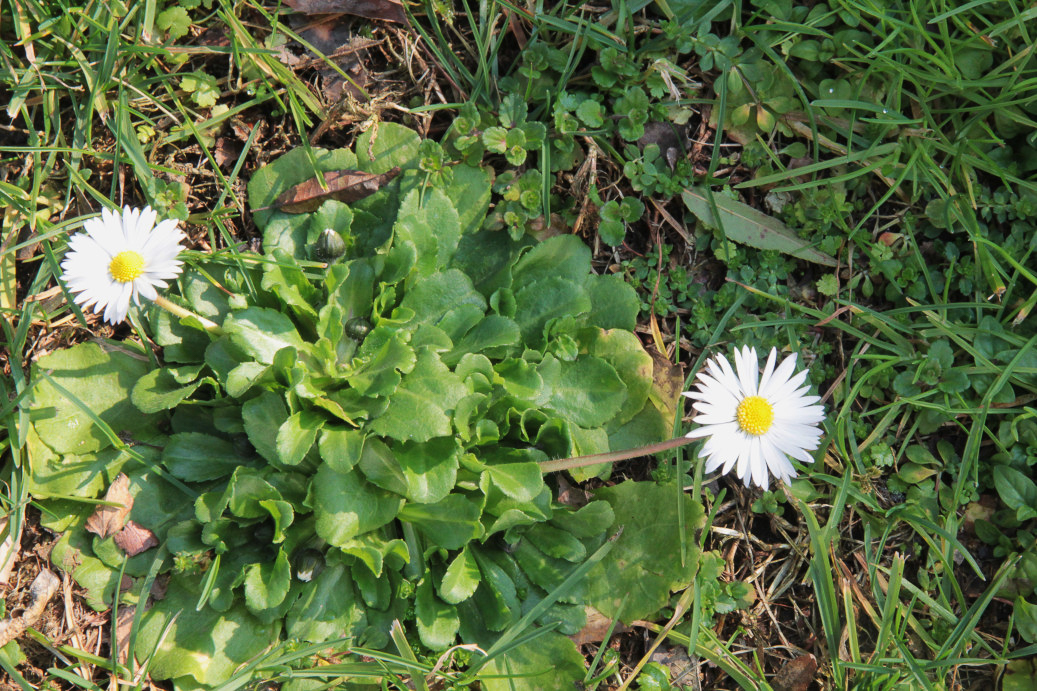
Foglie: foglie tutte inserite sul rizoma in rosetta basale, spatolate, dentellate o crenulate, si restringono bruscamente nel picciolo, pelose da giovani poi glabre

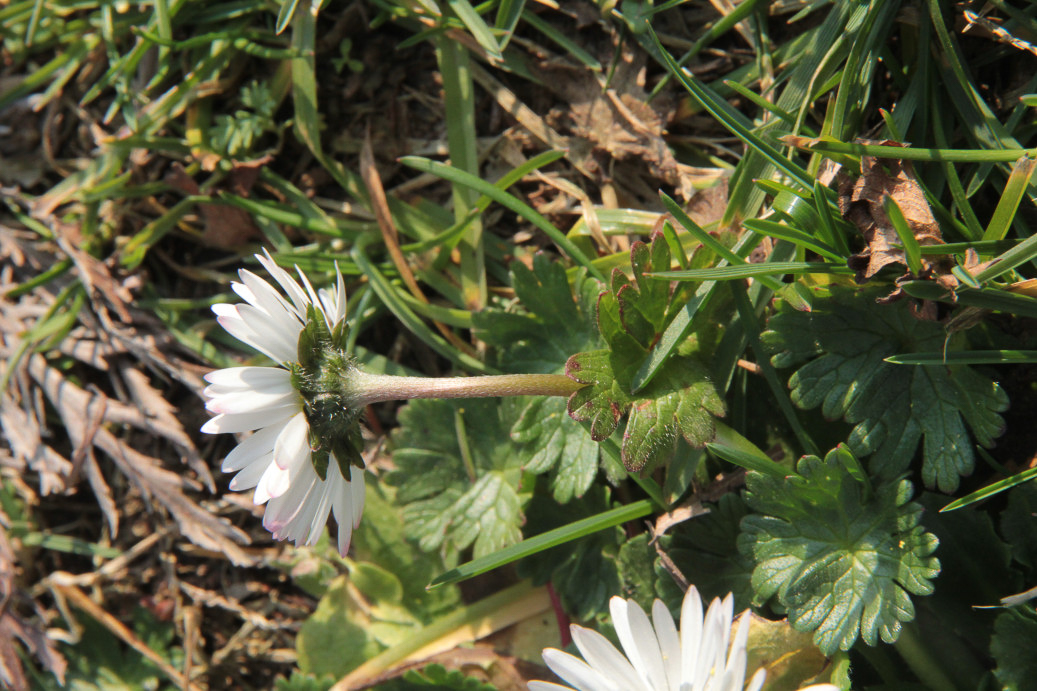
Fiori: i fiori sono capolini solitari apicali, le infiorescenze hanno un ricettacolo lungo 2 volte il diametro, convesso e conico composto da 2 file di brattee pubescenti, di forma lineare con apice ottuso, tutte della stessa lunghezza. I fiori periferici sono ligulati, bianchi, spesso sfumati di rosa carico o addirittura rosso purpureo esternamente; il disco comprende fiori ermafroditi, tubulosi, di colore giallo.  Fiorisce tutto l’anno.

Frutti e semi: i frutti sono piccoli acheni di forma ovale, senza pappo.

DISTRIBUZIONE E HABITAT


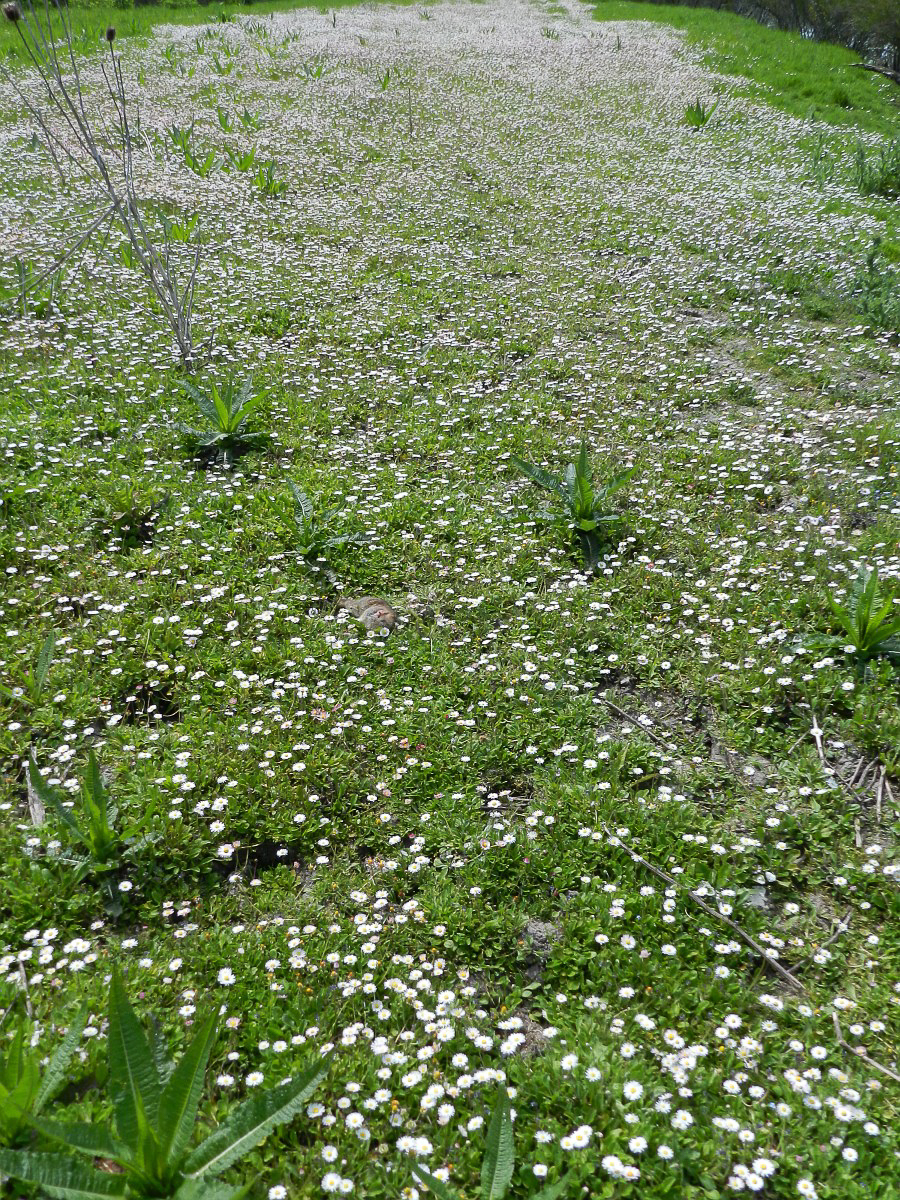
Cresce in tutta Italia dal livello del mare fino a 2.000 m. La si trova nei prati, negli incolti e in genere nei luoghi calpestati.

UTILIZZO


Pianta edibile, le foglie tenere sono commestibili, usate crude nelle insalate miste. Sono riconosciute per le loro proprietà antispasmodiche, espettoranti e vulnerarie. Per l’uso esterno, l’azione vulneraria è particolarmente evidente nella guarigione di ferite, ulcere della bocca, gengive e gola. L’acqua distillata è efficace come collirio nella congiuntivite. Prima di assumere qualsiasi prodotto di origine vegetale (medicinale o non medicinale) a fini terapeutici o simili, è sempre consigliabile consultare preventivamente il medico.

CURIOSITÀ


I fiori periferici si inclinano e chiudono durante la notte e con il tempo nuvoloso e si riaprono la mattina e quando riappare il sole. La disposizione della rosetta, appressata al suolo, evita che sia brucata dal bestiame e che sia falciata, questo permette il propagarsi della Pratolina in fitte ed estese colonie, impedendo lo svilupparsi dell’altra vegetazione erbacea. I fiori della pratolina sopportano senza danno, temperature molto rigide, in condizioni di aria secca anche sino -15 gradi. Nel linguaggio dei fiori evoca innocenza, grazia, bontà, ma dice anche “prendo tempo”, “ci penserò”, è il fiore di chi ama temporeggiare.

Nel medioevo le si attribuivano facoltà profetiche in amore, probabilmente da questo deriva il famoso “m’ama non m’ama” valido anche per la più grande Margherita comune.


Foto: Gentilmente offerte da Claudio Farinati e su licenza gratuita di Saxifraga e Rutger Barendse

Famiglia

Asteraceae

Specie

Bellis perennis L.

Tipologia

Pianta erbacea

Habitat

Incolti, Prati

Common Daisy


Scientific Name: Bellis perennis L.

Family: Asteraceae


MORPHOLOGY


Growth habit and size: Perennial herbaceous, rhizomatous plant, slow-growing, with simple stems, generally leafless and pubescent; height 5÷15 cm.


Stem: Simple leafless flowering, pubescent stems.


Leaves: All leaves inserted on the rhizome in a basal rosette, spatulate, toothed or crenulate, abruptly narrowing into the petiole, hairy when young then becoming glabrous.


Flowers: The flowers are solitary apical capitula, the inflorescences have a receptacle twice the diameter, convex and conical composed of 2 rows of pubescent bracts, linear in shape with obtuse apex, all of the same length. The peripheral flowers are ligulate, white, often tinged with deep pink or even purplish red externally; the disc comprises hermaphrodite, tubular, yellow flowers. It blooms all year round.


Fruits and seeds: The fruits are small oval achenes, without pappus.


DISTRIBUTION AND HABITAT


It grows throughout Italy from sea level to 2,000 m. It is found in meadows, fallow lands, and generally in trampled places.


USE


The tender leaves of this plant are edible, used raw in mixed salads. They are recognized for their antispasmodic, expectorant, and vulnerary properties. For external use, the vulnerary action is particularly evident in the healing of wounds, mouth ulcers, gums, and throat. The distilled water is effective as an eyewash in conjunctivitis. Before taking any plant-based product (medicinal or non-medicinal) for therapeutic purposes or similar, it is always advisable to consult a doctor.


INTERESTING FACTS


The peripheral flowers tilt and close at night and in cloudy weather and reopen in the morning and when the sun reappears. The arrangement of the rosette, pressed to the ground, prevents it from being grazed by livestock and mown, allowing the Daisy to spread in dense and extensive colonies, preventing the development of other herbaceous vegetation. Daisy flowers tolerate very cold temperatures without being damaged, even down to -15 degrees Celsius in dry air conditions. In the language of flowers, it evokes innocence, grace, kindness, but also says “I’m taking my time”, “I’ll think about it”, it’s the flower of those who love to procrastinate. In the Middle Ages, it was attributed with prophetic abilities in love, probably from which the famous “loves me, loves me not” also applies to the larger common daisy.


Photo: Kindly provided by Claudio Farinati

Famiglia

Asteraceae

Specie

Bellis perennis L.

Tipologia

Pianta erbacea

Habitat

Incolti, Prati