
Japanese Knotweed
Scientific Name: Reynoutria japonica Houtt.
Family: Polygonaceae
MORPHOLOGY
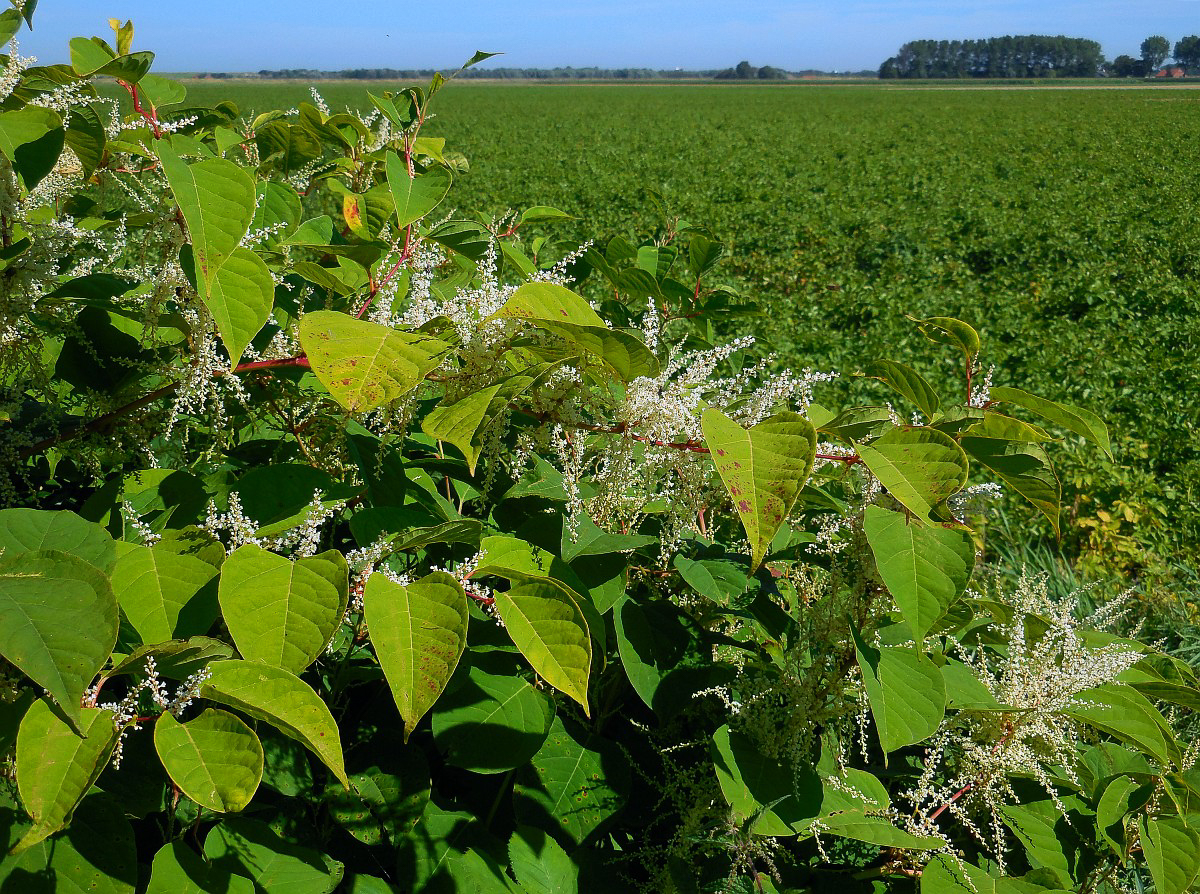
Habit and Size: Perennial herbaceous plant, more or less glabrous, rhizomatous, twining, with a highly developed and thickened root system, which extends up to about 7 m from the stump and to about 2 m in depth. It can grow from 70 cm up to 3 m tall.
Stem: Hollow, erect stem, branched, papillose, dotted with red or purple and about 2 cm in diameter.
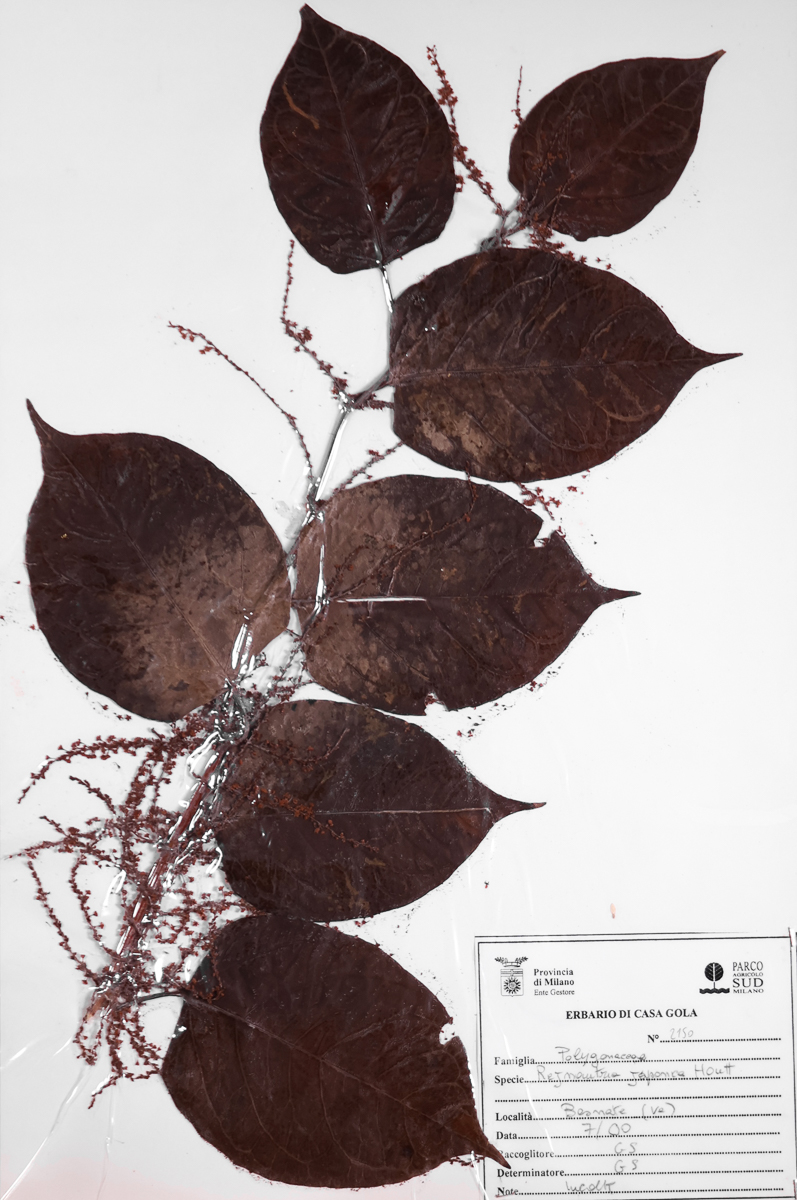
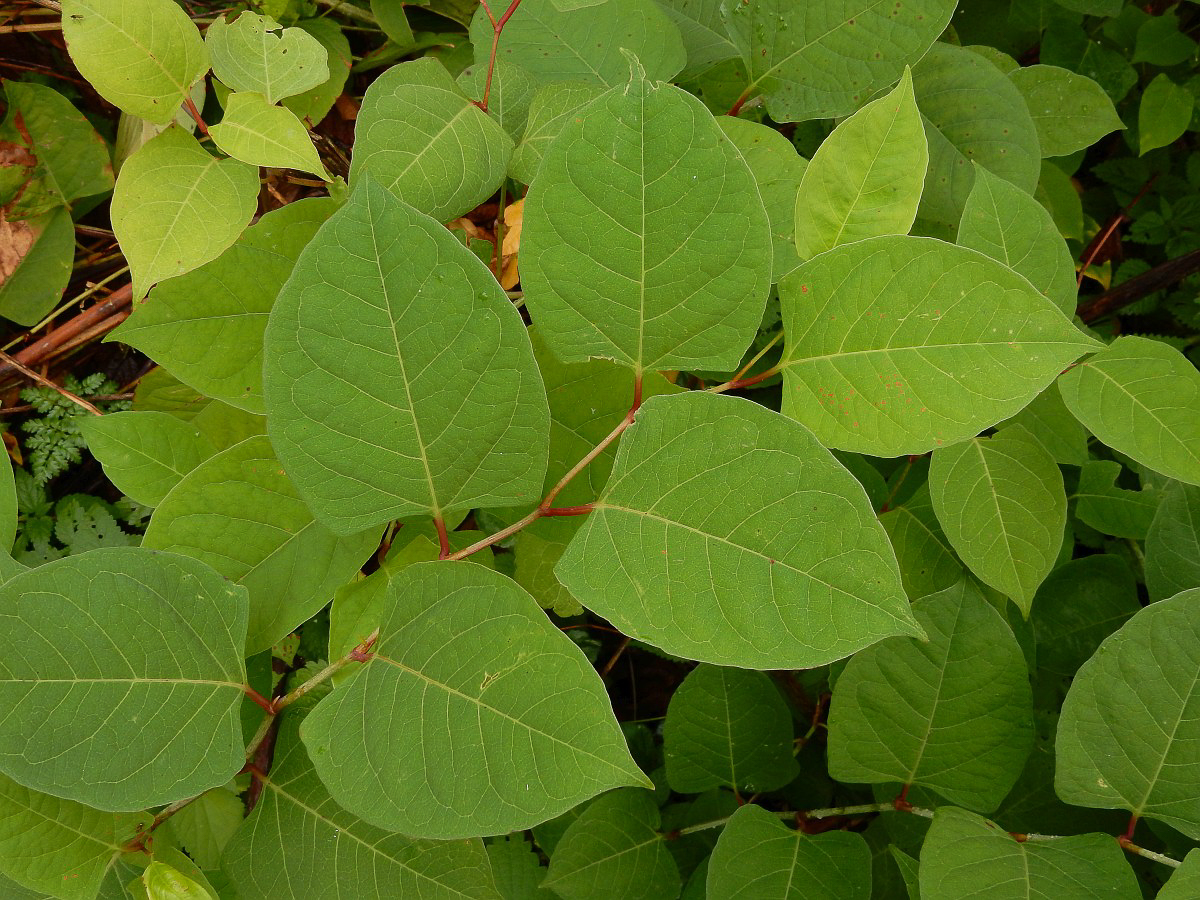
Leaves: Leathery, alternate, deciduous leaves, petiolate (1 – 3 cm and papillose), provided with a non-fringed tubular brown sheath (ochrea) produced by the fusion of stipules 4- 6 (10 mm); ovate blade with truncated base, cuspidate, acuminate apex (5) 7 – 17 x 8-12 cm and margin not ciliated; central vein evident on the lower surface and covered with small rough hairs (secondary veins less evident); at the base of the petiole, a nectariferous pit is detectable.
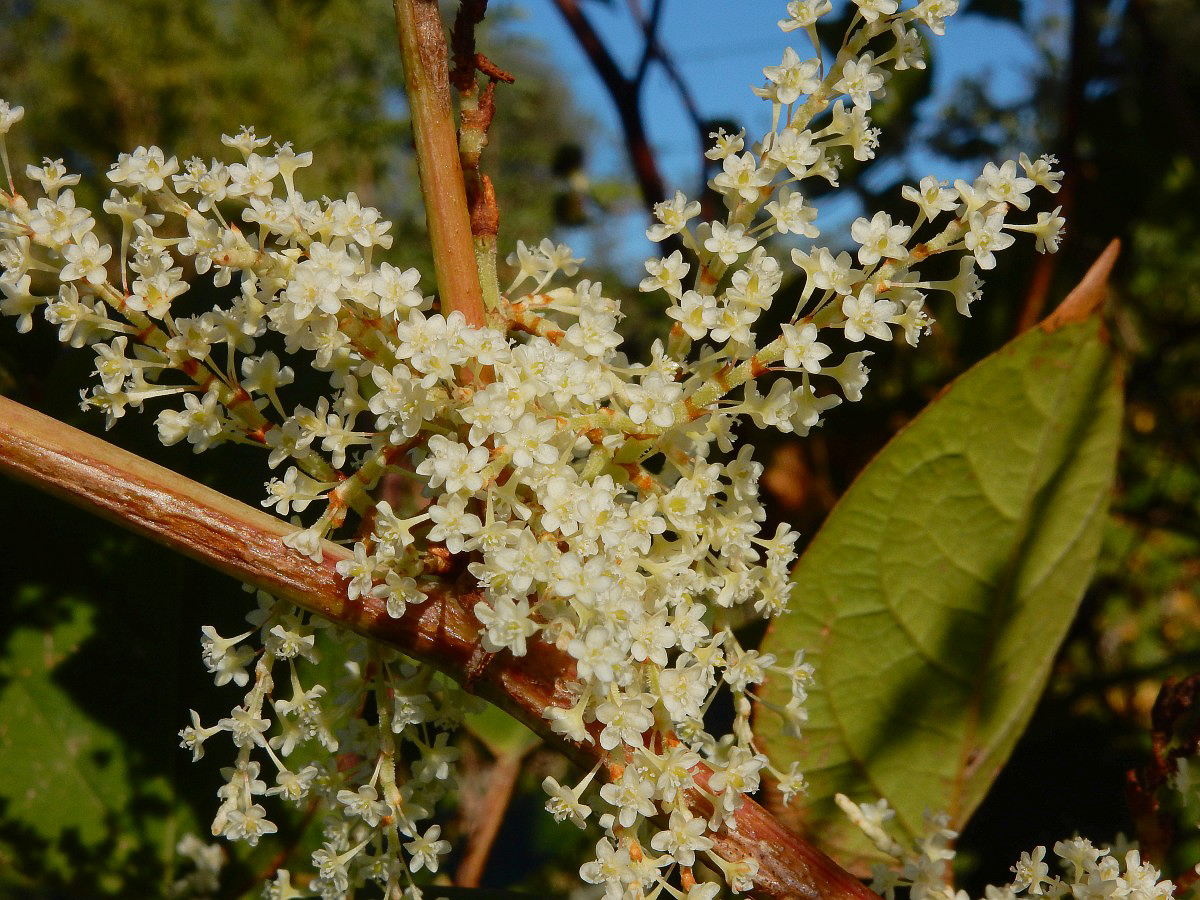
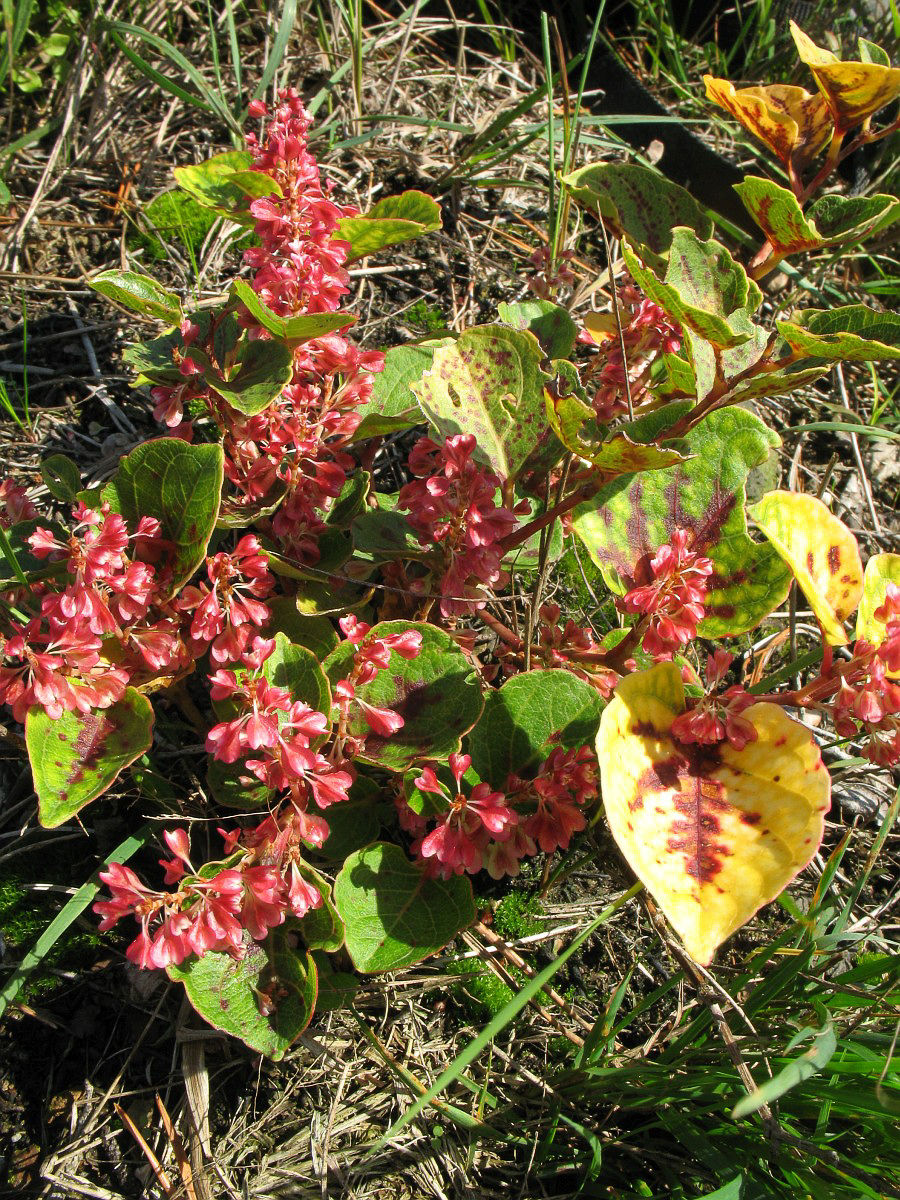
Flowers: Inflorescence located at leaf axils, or terminal; paniculate, (3)4-8(12) cm; funnel-shaped bracts of 1-2 mm; floral pedicels 3 – 4 mm long, Flowers formed by 5 white or green tepals, unisexual (both male and female flowers are present) the male ones with 8 stamens longer than the tepals; the female ones with 3 outer tepals having a slight wing (up to 2 mm) and increasing even after anthesis. Blooms from May to September.
Fruits and Seeds: The fruit is a dikele with ovoid or ellipsoid achene, trigonous, about 4 (5) x 3 mm, included in the persistent perianth, becoming blackish at maturity.
DISTRIBUTION AND HABITAT
Present in Northern Italy and the western part of the center; river and stream banks, humid alluvial soils, fallow lands from 0 to 500 m.
INTERESTING FACTS
It was introduced to England as an ornamental plant in the last century (XIX) and then spread throughout Europe as a forage plant. In Italy, the first reports date back to its introduction at the botanical garden of the University of Padua. It is listed on the IUCN (International Union for Conservation of Nature) list of the 100 most invasive species in the world because, once established, it colonizes the environment and then it’s also difficult to contain. If eradication is attempted, it must be total; a small fragment is enough to revegetate to the detriment of native plants.
Photo: under a free license from Saxifraga and Ed Stikvoort, Rutger Barendse