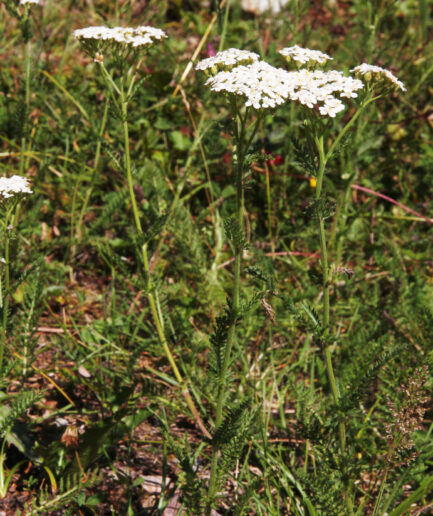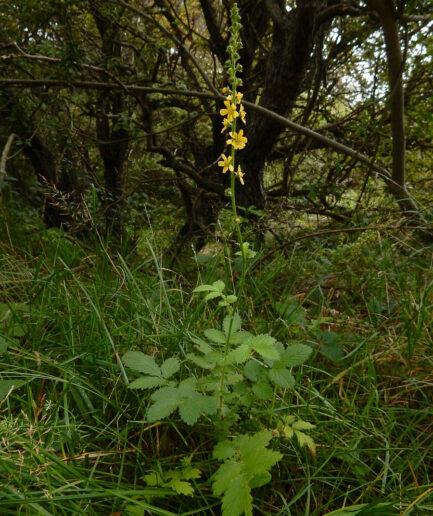

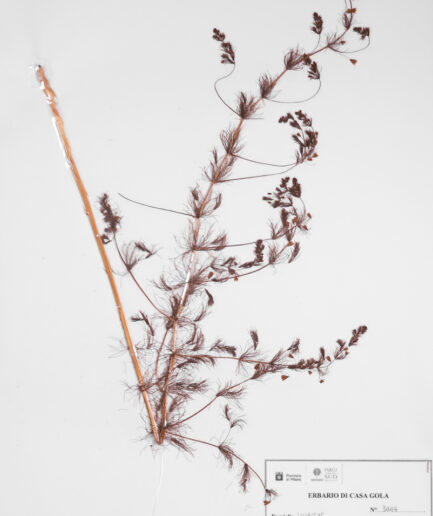
Poligono centinodia

Nome scientifico: Polygonum aviculare L.

Famiglia: Polygonaceae


MORFOLOGIA 


Portamento e dimensioni: pianta annua, erbacea, strisciante, eretta, prostrata-ascendente, molto ramificata. Altezza 10-60 cm.


Fusto: i fusti, striati, glabri, fogliosi sino in alto, costituiscono densi ciuffi aderenti al suolo, raramente sono ascendenti.


Foglie: foglie di differente conformazione ( eterofillia), accentuata soprattutto nella pianta giovane; le foglie degli assi principali sono alterne, sessili o con breve picciolo, lanceolate ellittiche o ovato-lanceolate, intere, glabre o finemente pelose, quelle dei rami estremi, ellittiche, ma minori con apice ± acuto; stipole membranose inguainanti rossastre alla base del fusto.


Fiori: i fiori a gruppi di 2÷5 all’altezza delle foglie, hanno perianzio rosato o verdastro a 5 sepali petaloidi triangolari, con segmenti lunghi 3÷4 volte il tubo. Fiorisce da febbraio a novembre.


Frutti e semi: i frutti sono acheni piriformi di 2-3 mm, trigoni, appuntiti all’apice, concavi sulle 3 facce..


DISTRIBUZIONE E HABITAT


Presente in tutta Italia in aree antropizzate, sassose, in zone di calpestio, da 0 a 1850 m 


UTILIZZI


Nella medicina popolare, per la presenza di principi attivi come:tannini, resine, olio essenziale e sostanze amare, veniva utilizzato, sotto forma di decotto, come cicatrizzante, astringente, per ulcere, antiemorragico e diuretico perché favoriva l’espulsione di piccoli calcoli del rene e della vescica.

Oggi viene più utilizzato, per il suo contenuto in tannini, come astringente e antidiarroico. Prima di assumere qualsiasi prodotto di origine vegetale (farmaco o non farmaco) per fini terapeutici o simil-terapeutici, è sempre opportuno rivolgersi preventivamente al proprio medico.


CURIOSITÀ


Infestante delle coltivazioni della bietola, dei cereali e delle colture erbacee in genere.


Foto: su licenza gratuita di Saxifraga e Ed Stikvoort, Jan van der Straaten, Rutger Barendse, Peter Meininger

Famiglia

Polygonaceae

Specie

Polygonum aviculare L.

Tipologia

Pianta erbacea

Habitat

Aree antropizzate

Knotgrass


Scientific Name: Polygonum aviculare L. 

Family: Polygonaceae


MORPHOLOGY


Habit and dimensions: Annual, herbaceous, creeping, erect, prostrate-ascending, highly branched plant. Height 10-60 cm.


Stems: The stems, striated and glabrous, leafy up to the top, form dense tufts adhering to the ground, rarely ascending.


Leaves: Leaves with different shapes (heterophylly), especially pronounced in young plants; the leaves of the main axes are alternate, sessile or with a short petiole, lanceolate-elliptic or ovate-lanceolate, entire, glabrous or finely hairy, those of the outer branches, elliptic, but smaller with ± acute apex; reddish membranous stipules sheathing at the base of the stem.


Flowers: The flowers in groups of 2-5 at the height of the leaves, have pink or greenish perianth with 5 triangular petaloid sepals, with segments 3-4 times the length of the tube. Blooms from February to November.


Fruits and seeds: The fruits are pyriform achenes, 2-3 mm, trigonous, pointed at the apex, concave on the 3 faces.


DISTRIBUTION AND HABITAT

Present throughout Italy in anthropized, rocky areas, in trampled zones, from 0 to 1850 m.


USE


In folk medicine, due to the presence of active principles such as tannins, resins, essential oils, and bitter substances, it was used, in the form of a decoction, as a cicatrizing, astringent, for ulcers, antihemorrhagic, and diuretic because it favored the expulsion of small kidney and bladder stones. Today, it is more commonly used, for its tannin content, as an astringent and antidiarrheal. Before taking any plant-based product (medicinal or non-medicinal) for therapeutic or similar purposes, it is always advisable to consult your doctor.


INTERESTING FACTS


It is a weed of beet, cereal, and herbaceous crops in general.


Photo: under the free license of Saxifraga, Ed Stikvoort, Jan van der Straaten, Rutger Barendse, Peter Meininger

Famiglia

Polygonaceae

Specie

Polygonum aviculare L.

Tipologia

Pianta erbacea

Habitat

Aree antropizzate