
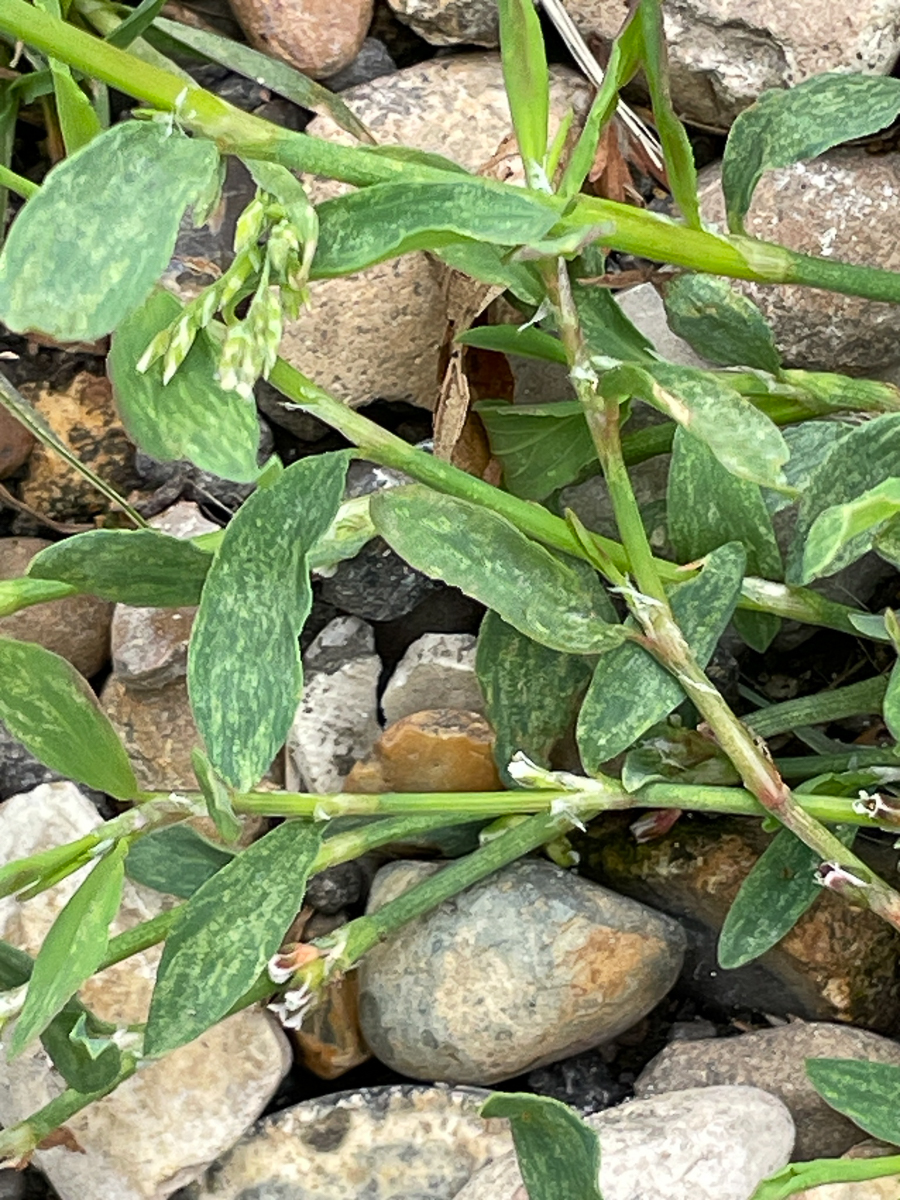
Equal-leaved knotgrass
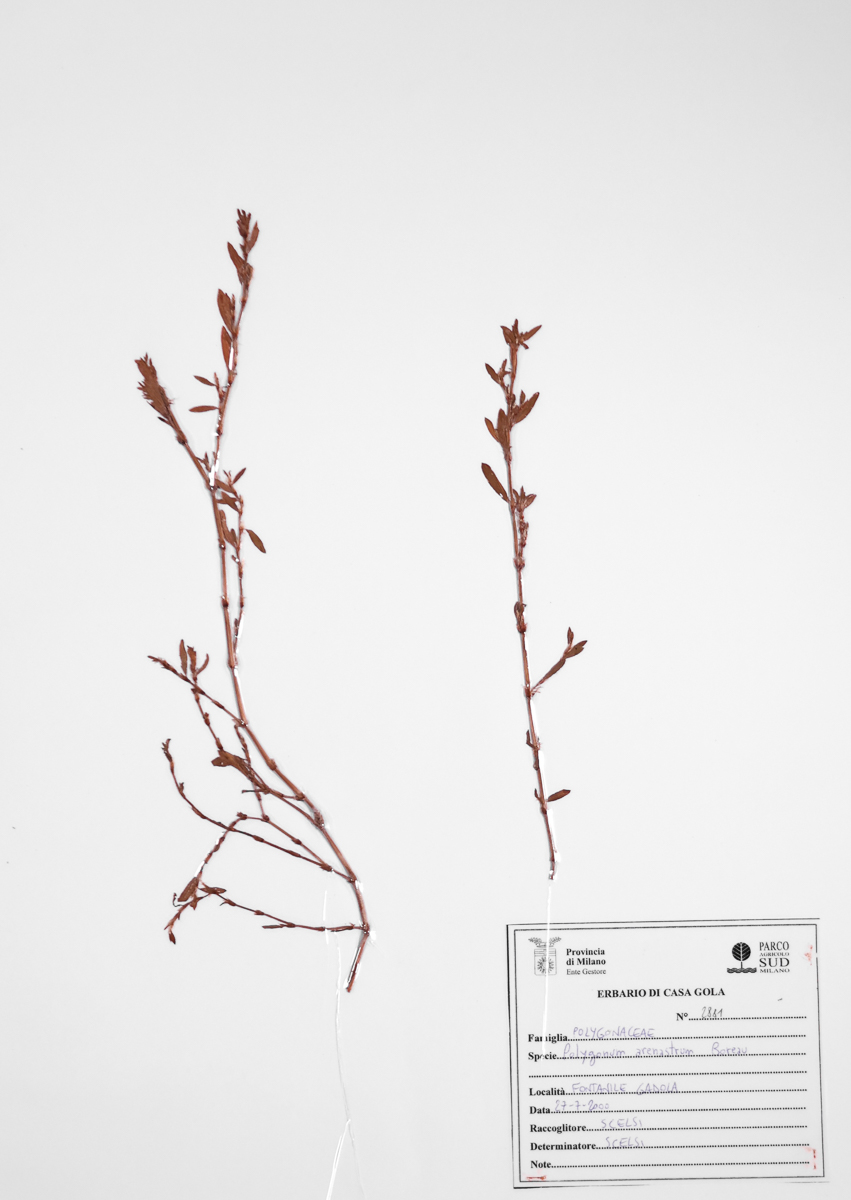
Scientific Name: Polygonum arenastrum Boreau
Family: Polygonaceae
MORPHOLOGY
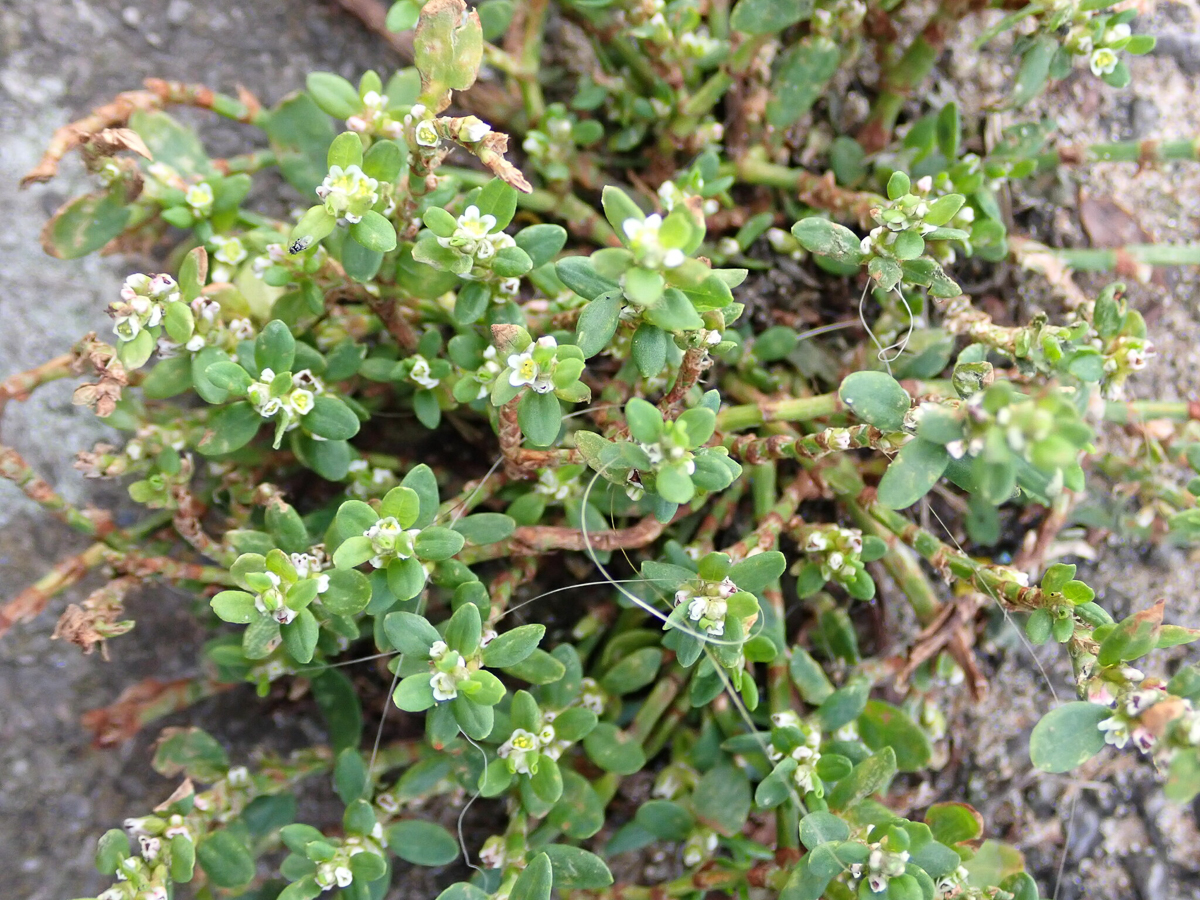
Habit and dimensions: Annual herbaceous plant, sometimes perennial and glabrous, (3) 10-50 (70) cm.
Stems: Basally branched stems with a prostrate and leafy appearance throughout their length, only some are prostrate-ascending.
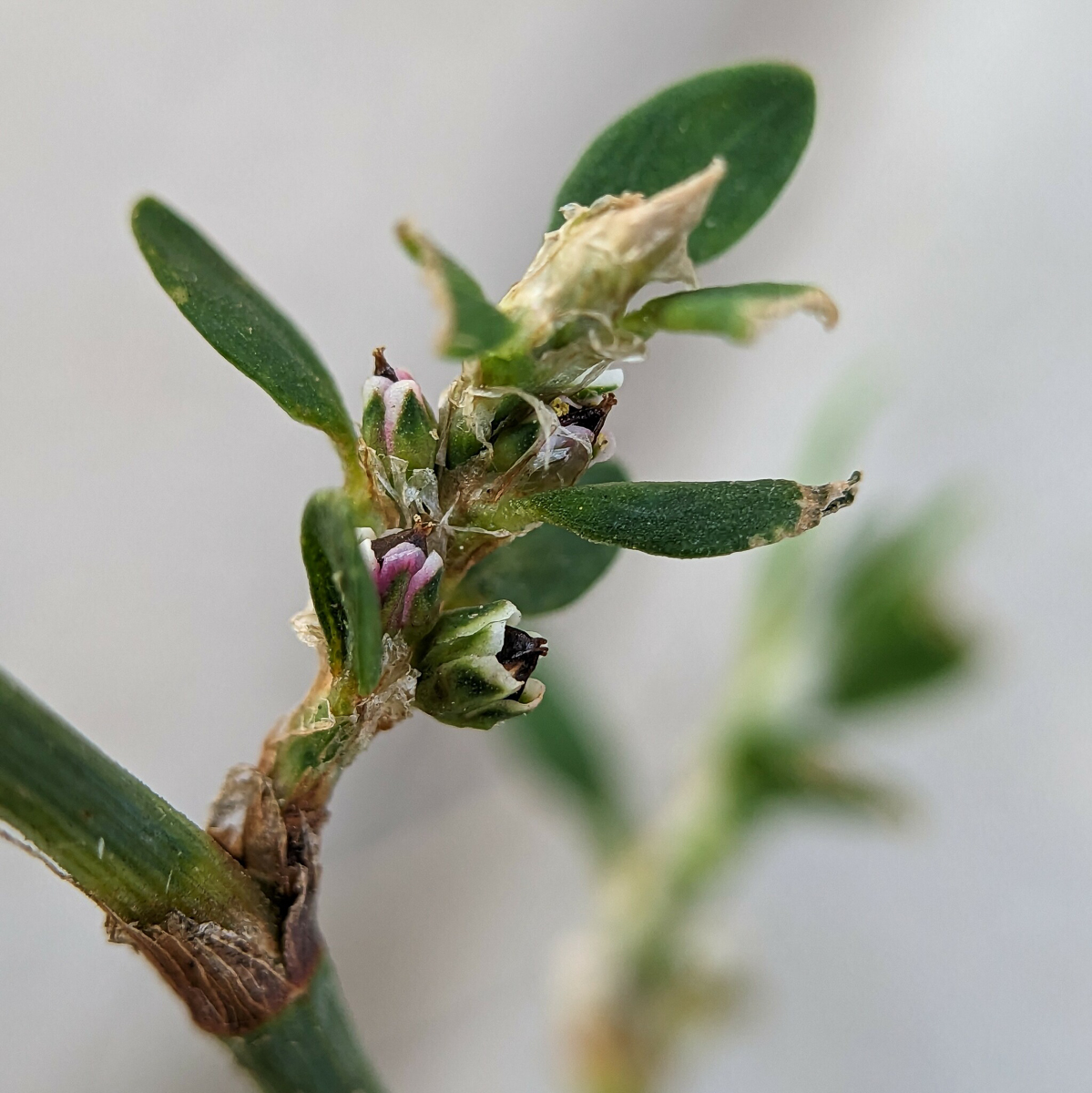
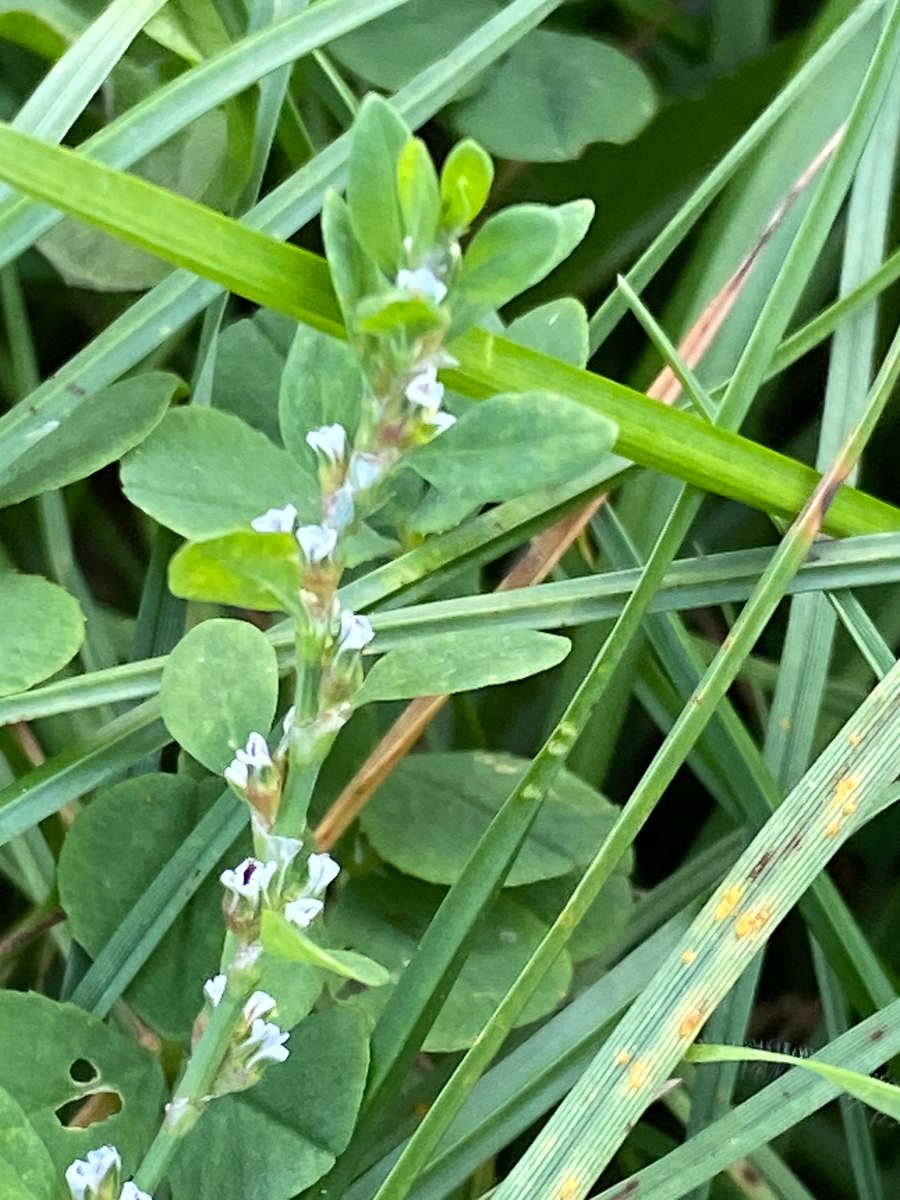
Leaves: Subsessile or sessile leaves (3) 5-15 (30) x (1) 2-5 (6) mm, more or less subequal, elliptic or elliptic-lanceolate with obtuse or rounded apex; blade with entire or denticulate margin and with lateral veins on the lower side.
Flowers: Axillary flowers 2-4 forming clusters and borne on short pedicels. Perianth (1) 1.5-2.5 mm consisting of more or less oblong segments united halfway at anthesis. Blooms from May to September.
Fruits and seeds: The fruit is a diakene of about 2 mm, trigonous with two convex sides and one narrower concave side, brownish or blackish.
DISTRIBUTION AND HABITAT
Present throughout Italy in fallow lands, trampled soils, path margins, from 0 to 1800 m.
USE
In folk medicine, due to the presence of active principles such as tannins, resins, essential oil, and bitter substances, it was used, in the form of a decoction, as a cicatrizing, astringent, for ulcers, antihemorrhagic, and diuretic because it favored the expulsion of small kidney and bladder stones. Today, it is more commonly used, for its tannin content, as an astringent and antidiarrheal. Before taking any plant-based product (medicinal or non-medicinal) for therapeutic or similar purposes, it is always advisable to consult your doctor.
Photo: under the free license of iNaturalist