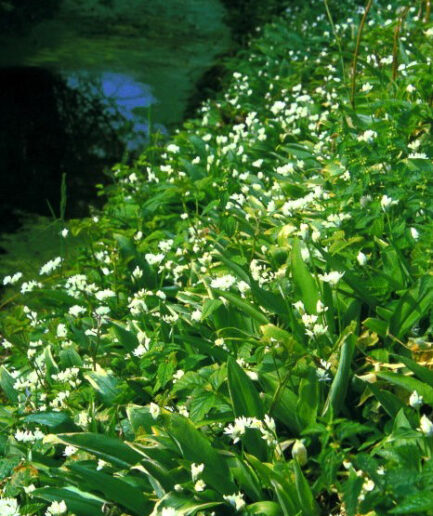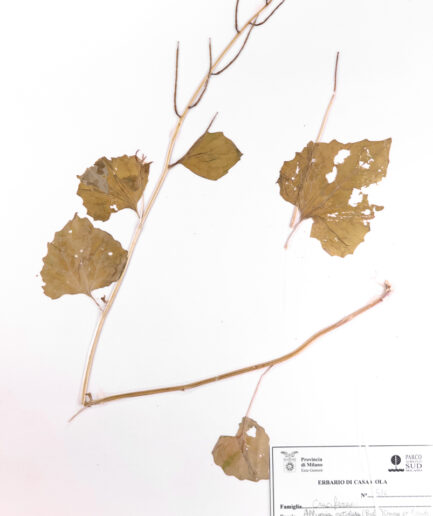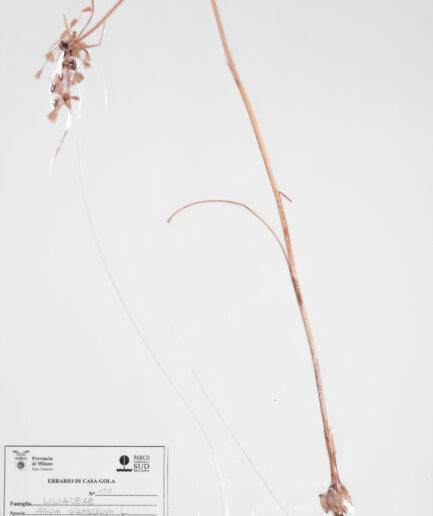

Piantaggine maggiore

Nome scientifico: Plantago major L.

Famiglia: Plantaginaceae


MORFOLOGIA

Portamento e dimensioni: pianta  perenne, erbacea con corto rizoma e numerose radichette sottili, altezza 10÷30 cm.

Fusto: fusti fiorali eretti o ascendenti oppure ginocchiati in basso e poi ascendenti.

Foglie: le foglie sono esclusivamente basali, formano rosetta e sono appressate al suolo, hanno forma ovale o ellittica allargata che si restringe alla base in un picciolo che inguaina il rizoma alla sua inserzione; hanno apice ottuso, ma talvolta acuto, superficie glabra o raramente appena pubescente, con nervature che si mantengono parallele al margine incontrandosi al picciolo e all’apice.


Fiori: l’infiorescenza è cilindrica a spiga, di colore verde-giallo-ruggine, all’apice dello scapo composta da numerosi minuscoli fiori ermafroditi  Fiorisce da febbraio a novembre.

Frutti e semi: il frutto è una capsula ovale-oblunga, detta pissidio.

DISTRIBUZIONE E HABITAT


Cresce in tutta Italia dal livello del mare fino a 1.500 m. Comune lungo i sentieri e le vie, negli incolti, tra le macerie, talora nei campi, su terreni umidi.

UTILIZZO


Erba astringente, diuretica, espettorante, facilita la guarigione ed è efficace contro le infezioni batteriche. Per uso interno in caso di diarrea, emorroidi, cistite, bronchite, catarro, sinusite, febbre da fieno, infezioni dell’orecchio, tosse secca. Per uso esterno in caso di ferite, punture d’insetti, ulcere, infiammazioni dell’occhio, herpes zoster, emorroidi e ulcere varicose, per curare le affezioni del cavo orale e per alleviare il mal di denti, ma anche per curare eritemi, scottature e irritazioni cutanee.

Quest’erba spesso viene impiegata per moderare gli effetti irritanti delle erbe che contengono olii volatili. Utile per normalizzare le pelli secche e disidratate. Prima di assumere qualsiasi prodotto di origine vegetale (farmaco o non farmaco) per fini terapeutici o simil-terapeutici, è sempre opportuno rivolgersi preventivamente al proprio medico.

In cucina si utilizzano le foglie giovani aggiunte ad altre erbe per insalate e contorni con effetto rinfrescante per l’organismo.

CURIOSITÀ


La pianta fornisce cibo per i bruchi di farfalla, conigli, cervi e galli cedroni, i semi sono apprezzati dagli uccelli.


Foto: gentilmente offerte da Claudio Farinati

Famiglia

Plantaginaceae

Specie

Plantago major L.

Tipologia

Pianta erbacea

Habitat

Aree antropizzate, Incolti

Englishman’s Foot


Scientific Name: Plantago major L.

Family: Plantaginaceae


MORPHOLOGY


Growth habit and size: A perennial herbaceous plant with a short rhizome and numerous thin roots, reaching a height of 10-30 cm.


Stem: Erect or ascending flowering stems, sometimes bent at the base and then ascending.


Leaves: Basal leaves only, forming a rosette and lying flat on the ground. They are oval or broadly elliptical, narrowing at the base into a petiole that sheaths the rhizome at its insertion. They have an obtuse apex, sometimes acute, a glabrous or rarely slightly pubescent surface, with veins that run parallel to the margin meeting at the petiole and apex.


Flowers: The inflorescence is a cylindrical spike, green-yellow-rust in color, at the top of the scape, composed of numerous tiny hermaphroditic flowers. It blooms from February to November.


Fruits and seeds: The fruit is an oval-oblong capsule known as pyxidium.


DISTRIBUTION AND HABITAT


It grows throughout Italy from sea level to 1,500 m. Common along paths and roadsides, in fallow land, among rubble, and sometimes in fields, on moist soils.


USE


Plantago major is known for its astringent, diuretic, expectorant properties, and for facilitating healing, as well as being effective against bacterial infections. Internally, it is used for diarrhea, hemorrhoids, cystitis, bronchitis, catarrh, sinusitis, hay fever, ear infections, and dry cough. Externally, it is useful for treating wounds, insect bites, ulcers, eye inflammations, shingles, hemorrhoids, and varicose ulcers, and for relieving oral cavity issues and toothache, as well as for treating erythema, burns, and skin irritations. It is often used to moderate the irritating effects of herbs containing volatile oils and to normalize dry and dehydrated skin. Before taking any plant-based products (medicinal or non-medicinal) for therapeutic or similar purposes, it is always advisable to consult a doctor. 


In cuisine, young leaves are used along with other herbs for salads and side dishes, providing a refreshing effect on the body. 


INTERESTING FACTS


The plant provides food for butterfly caterpillars, rabbits, deer, and woodcocks. The seeds are appreciated by birds.


Photo: Kindly provided by Claudio Farinati

Famiglia

Plantaginaceae

Specie

Plantago major L.

Tipologia

Pianta erbacea

Habitat

Aree antropizzate, Incolti