



Narrowleaf Plantain
Scientific Name: Plantago subulata L.
Family: Plantaginaceae
MORPHOLOGY
Habit and dimensions: A perennial plant with a woody root, reaching a height of 10-30 cm.
Stems: The plant develops short aboveground branches, sometimes subshrubby, bearing leaves in a short rosette; slender scapes, green-reddish with appressed hairiness, erect or ascending.
Leaves: Linear-filiform leaves, the lower ones reflexed, the upper ones erect-spreading, measuring about 1-1.5(3) mm wide and 2-15 cm long, keeled-trigonous with a sharp callous apex, glabrous or more often ciliate on the edge, without prominent basal sheaths.
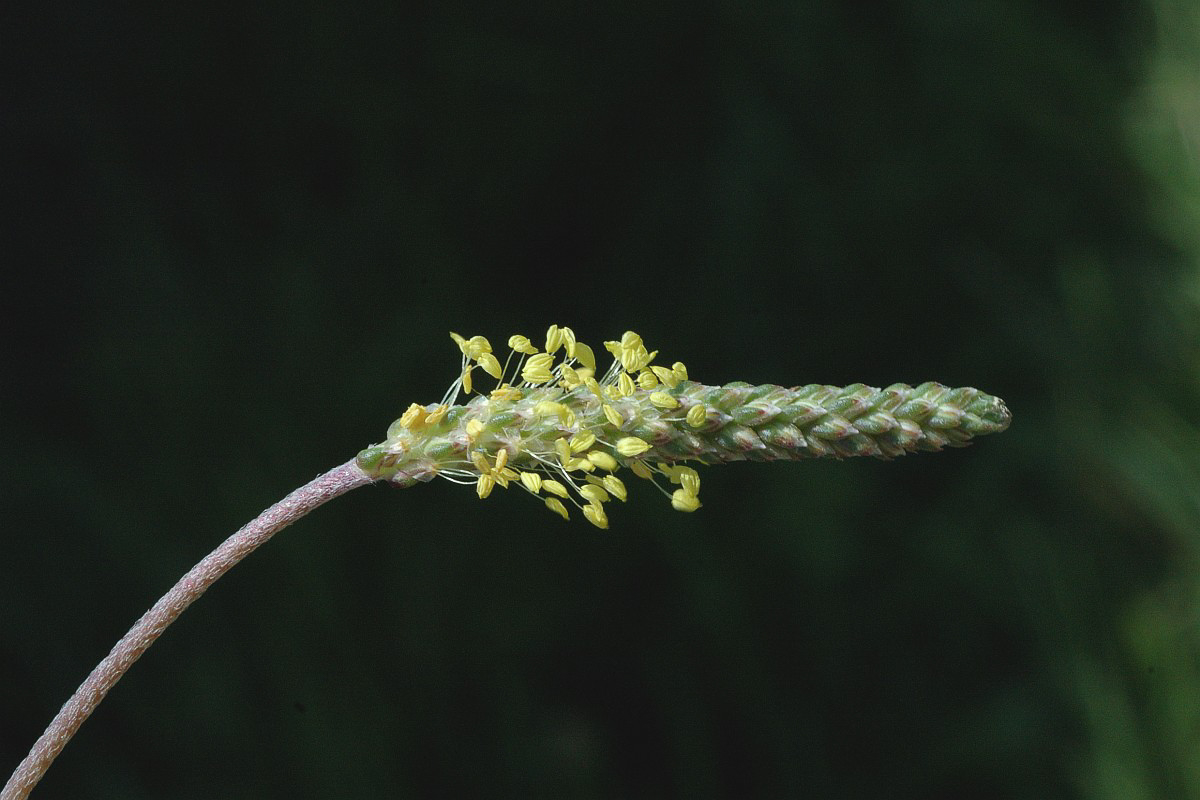
Flowers: Cylindrical spikes, measuring 3-4 x 30-80 mm, bearing hermaphrodite flowers protected by oval-lanceolate weakly keeled bracts, generally exceeding the calyx, with 4 keeled-ciliate sepals not winged, united in pairs; corolla tubular (3-4 mm) with 4 lanceolate-acute lobes measuring 0.7 x 1.5 mm. Blooms from April to July.
Fruits and seeds: Ovoid capsule fruit with 2 ellipsoid seeds.
DISTRIBUTION AND HABITAT
Present throughout Italy except for the Aosta Valley. It grows in lean meadows, dry and sunny grassy places, from 0 to 1,300 m.
USE
All species of the Plantago genus share the same medicinal properties. Roots, aerial parts, and seeds are used. Roots possess astringent properties, while aerial parts are used as anti-inflammatories, antibacterials, and antiallergics, both in respiratory and gastrointestinal disorders and in urinary tract conditions; seeds are attributed with emollient and refreshing qualities. In particular, it is used for:
- root decoction against diarrhea (internal use) and for external compresses on wounds, ulcers, and sores;
- aerial parts infusion as an anti-inflammatory and antibiotic and to treat dermatoses and allergies;
- seed decoction in intestinal inflammations and, externally, for inflammations and dermatitis;
- plaster of fresh crushed or pounded leaves against insect bites, sores, and wounds (antihemorrhagic);
- alcoholic mother tincture (internal use) as an anti-inflammatory, antibacterial, and antiallergic (respiratory, gastrointestinal, and urinary tract) and, for external use, applied locally in skin dermatitis and allergies. Before taking any plant-based product (medicinal or non-medicinal) for therapeutic or similar purposes, it is always advisable to consult your doctor beforehand.
Photo: under the free license of Saxifraga and Jan van der Straaten