
Piantaggine a foglie carenate

Nome scientifico: Plantago subulata L.

Famiglia: Plantaginaceae 


MORFOLOGIA 


Portamento e dimensioni: pianta perenne a radice legnosa, altezza 10-30 cm.


Fusto: pianta sviluppata in brevi rami epigei, talora suffruticosi, portanti le foglie in rosetta breve; scapi gracili, verdi-rossastri con pelosità appressata, eretti o ascendenti


Foglie: foglie lineari-filiformi, le inferiori riflesse, le superiori eretto-patenti, lar. 1-1,5(3) mm x 2-15 cm, carenato-trigone ad apice acuto calloso, glabre o più spesso cigliate al bordo, senza evidenti guaine basali.


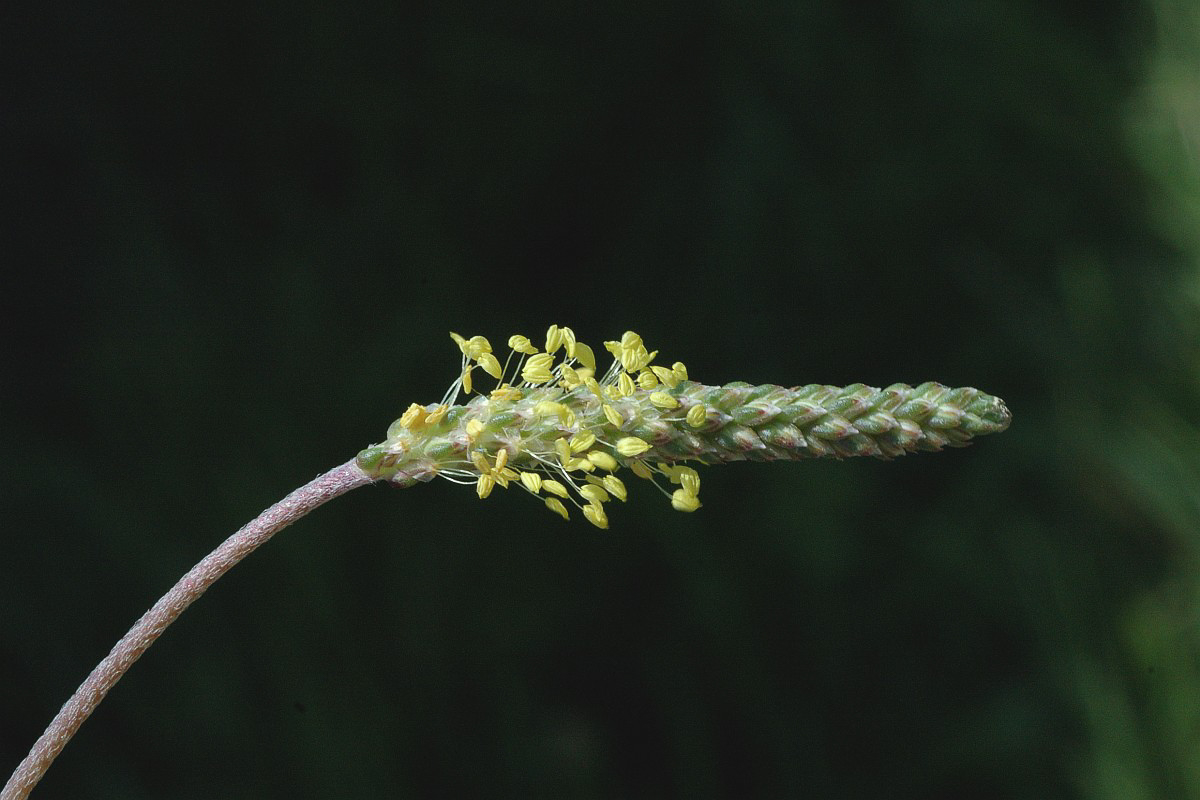
Fiori: spighe cilindriche, di 3-4 x 30-80 mm, portanti fiori ermafroditi protetti da brattee ovali-lanceolate debolmente carenate, generalmente superanti il calice, a 4 sepali carenato-cigliati non alati riuniti a 2 a 2; corolla tubolare (3-4 mm) a 4 lobi lanceolato-acuti larghi 0,7 x 1,5 mm. Fiorisce da aprile a luglio.


Frutti e semi: frutto a capsula ovoide con 2 semi ellissoidi.


DISTRIBUZIONE E HABITAT


Presente in tutta Italia tranne la Val d’Aosta. Cresce in prati magri, luoghi erbosi aridi e soleggiati, da 0 a 1.300 m.


UTILIZZI


Tutte le specie del genere Plantago condividono le medesime proprietà medicinali. Della pianta si utilizzano radici, parti aeree e semi. Le radici possiedono proprietà astringenti, mentre le parti aeree sono usate come antinfiammatori, antibatterici ed antiallergici, sia nelle affezioni dell’apparato respiratorio sia in quelle dell’apparato gastroenterico ed urinario; ai semi sono attribuite facoltà emollienti e rinfrescanti. In particolare si impiega:

– il decotto di radici contro la diarrea (uso interno) e per impacchi esterni su ferite, ulcere e piaghe;

– l’infuso di parti aeree come antinfiammatorio ed antibiotico e per curare dermatosi ed allergie;

– il decotto di semi nelle infiammazioni intestinali e, esternamente, per infiammazioni e dermatiti;

– l’impiastro di foglie fresche stropicciate o pestate contro punture d’insetti, piaghe e ferite (antiemorragico);

– la tintura madre alcolica (uso interno) come antinfiammatorio, antibatterico ed antiallergico (apparato respiratorio, gastroenterico ed urinario) e, per uso esterno, applicandola localmente nelle dermatiti ed allergie cutanee. Prima di assumere qualsiasi prodotto di origine vegetale (farmaco o non farmaco) per fini terapeutici o simil-terapeutici, è sempre opportuno rivolgersi preventivamente al proprio medico.


Foto: su licenza gratuita di Saxifraga e Jan van der Straaten

COD: 1921 Categoria: Tag: , , ,
Famiglia

Plantaginaceae

Specie

Plantago subulata L.

Tipologia

Pianta erbacea

Habitat

Prati

Narrowleaf Plantain


Scientific Name: Plantago subulata L. 

Family: Plantaginaceae


MORPHOLOGY


Habit and dimensions: A perennial plant with a woody root, reaching a height of 10-30 cm.


Stems: The plant develops short aboveground branches, sometimes subshrubby, bearing leaves in a short rosette; slender scapes, green-reddish with appressed hairiness, erect or ascending.


Leaves: Linear-filiform leaves, the lower ones reflexed, the upper ones erect-spreading, measuring about 1-1.5(3) mm wide and 2-15 cm long, keeled-trigonous with a sharp callous apex, glabrous or more often ciliate on the edge, without prominent basal sheaths.


Flowers: Cylindrical spikes, measuring 3-4 x 30-80 mm, bearing hermaphrodite flowers protected by oval-lanceolate weakly keeled bracts, generally exceeding the calyx, with 4 keeled-ciliate sepals not winged, united in pairs; corolla tubular (3-4 mm) with 4 lanceolate-acute lobes measuring 0.7 x 1.5 mm. Blooms from April to July.


Fruits and seeds: Ovoid capsule fruit with 2 ellipsoid seeds.


DISTRIBUTION AND HABITAT


Present throughout Italy except for the Aosta Valley. It grows in lean meadows, dry and sunny grassy places, from 0 to 1,300 m.


USE


All species of the Plantago genus share the same medicinal properties. Roots, aerial parts, and seeds are used. Roots possess astringent properties, while aerial parts are used as anti-inflammatories, antibacterials, and antiallergics, both in respiratory and gastrointestinal disorders and in urinary tract conditions; seeds are attributed with emollient and refreshing qualities. In particular, it is used for:

  • root decoction against diarrhea (internal use) and for external compresses on wounds, ulcers, and sores;
  • aerial parts infusion as an anti-inflammatory and antibiotic and to treat dermatoses and allergies;
  • seed decoction in intestinal inflammations and, externally, for inflammations and dermatitis;
  • plaster of fresh crushed or pounded leaves against insect bites, sores, and wounds (antihemorrhagic);
  • alcoholic mother tincture (internal use) as an anti-inflammatory, antibacterial, and antiallergic (respiratory, gastrointestinal, and urinary tract) and, for external use, applied locally in skin dermatitis and allergies. Before taking any plant-based product (medicinal or non-medicinal) for therapeutic or similar purposes, it is always advisable to consult your doctor beforehand.


Photo: under the free license of Saxifraga and Jan van der Straaten
Famiglia

Plantaginaceae

Specie

Plantago subulata L.

Tipologia

Pianta erbacea

Habitat

Prati