

European Wild Ginger
Scientific name: Asarum europaeum L.
Family: Aristolochiaceae
MORPHOLOGY
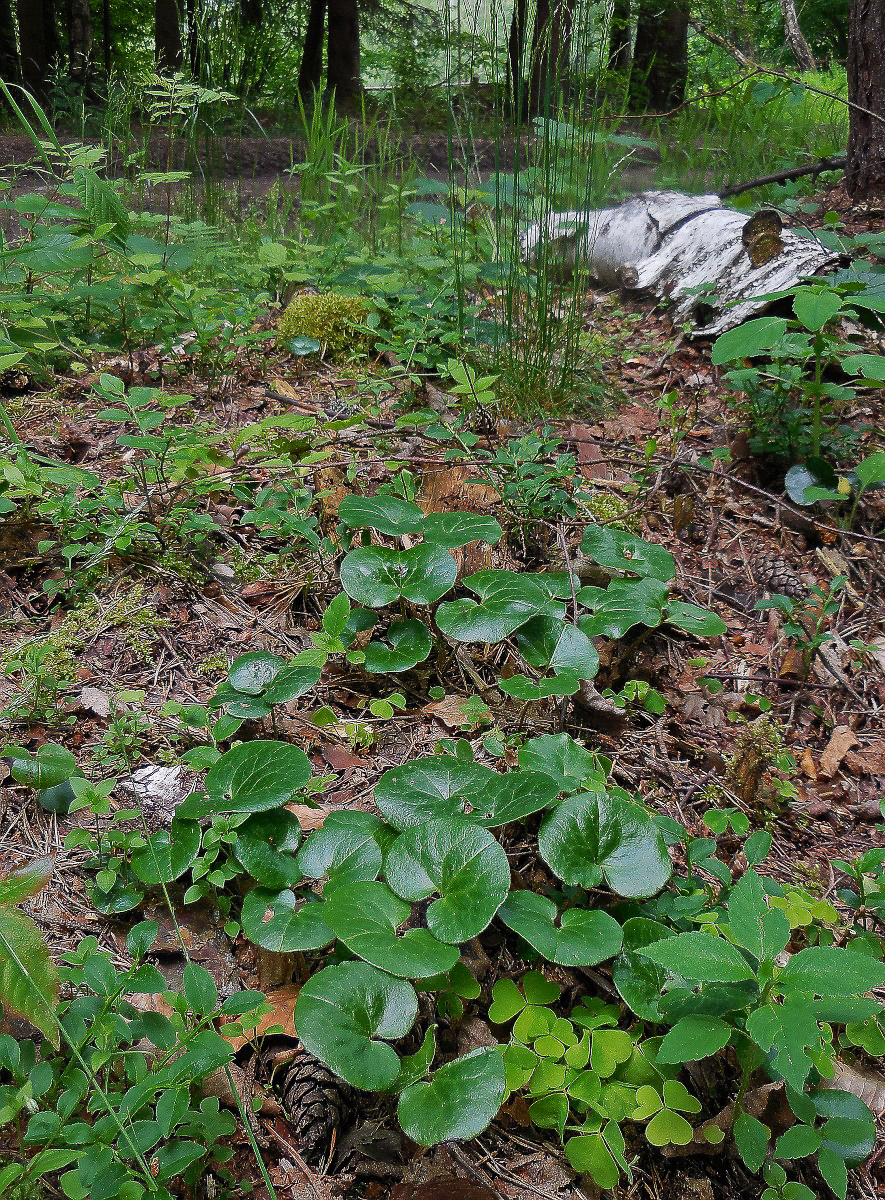
Habit and dimensions: Perennial herbaceous plant, up to 20 cm tall. Underground rhizome is brown.
Stem: Creeping and contorted stem, provided with brownish scales.
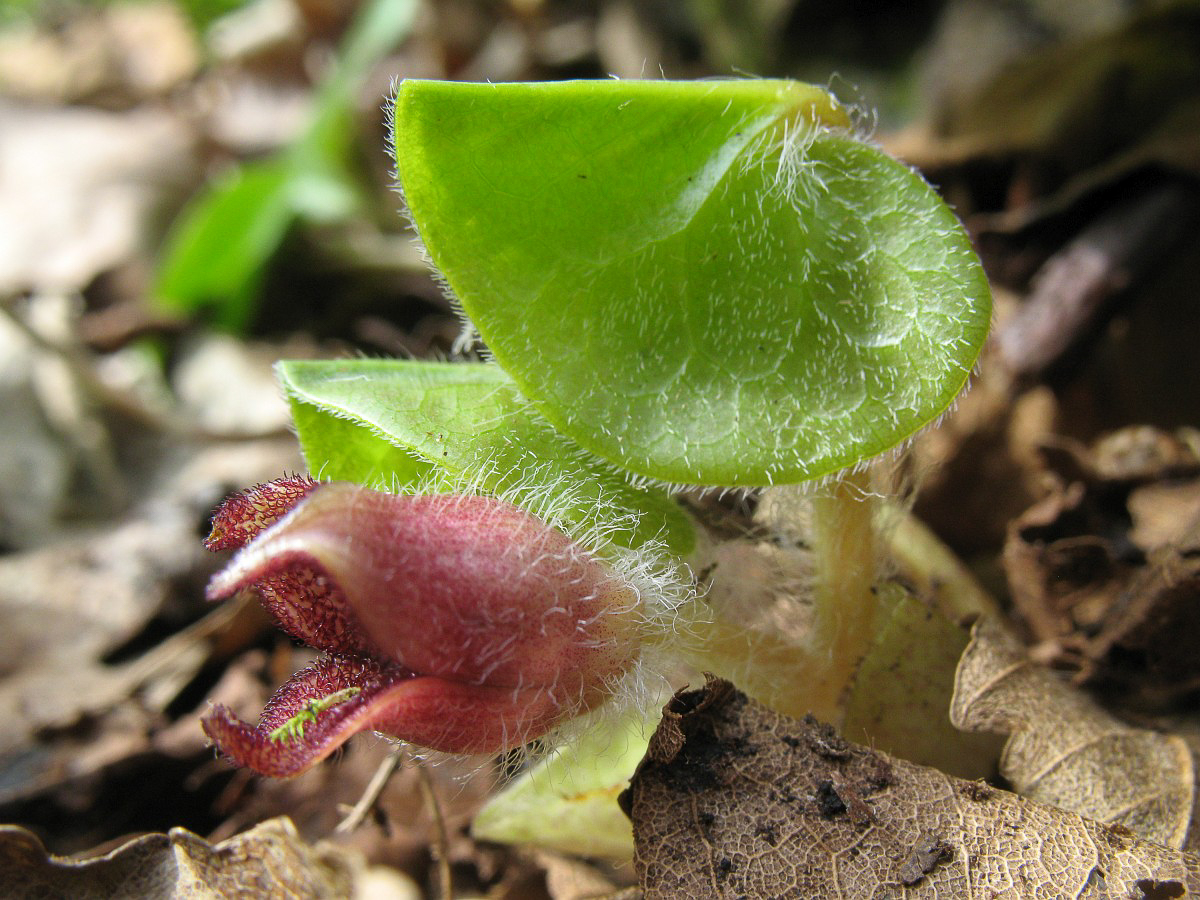
Leaves: Evergreen leaves, 3-10 cm wide, with an upright, grooved petiole, woolly due to reddish hairs. Reniform, rather leathery leaf blade, finely pubescent on the edge, glabrous on the surfaces, shiny dark green above, lighter below with reticulated veins. Entire margin, rounded apex.
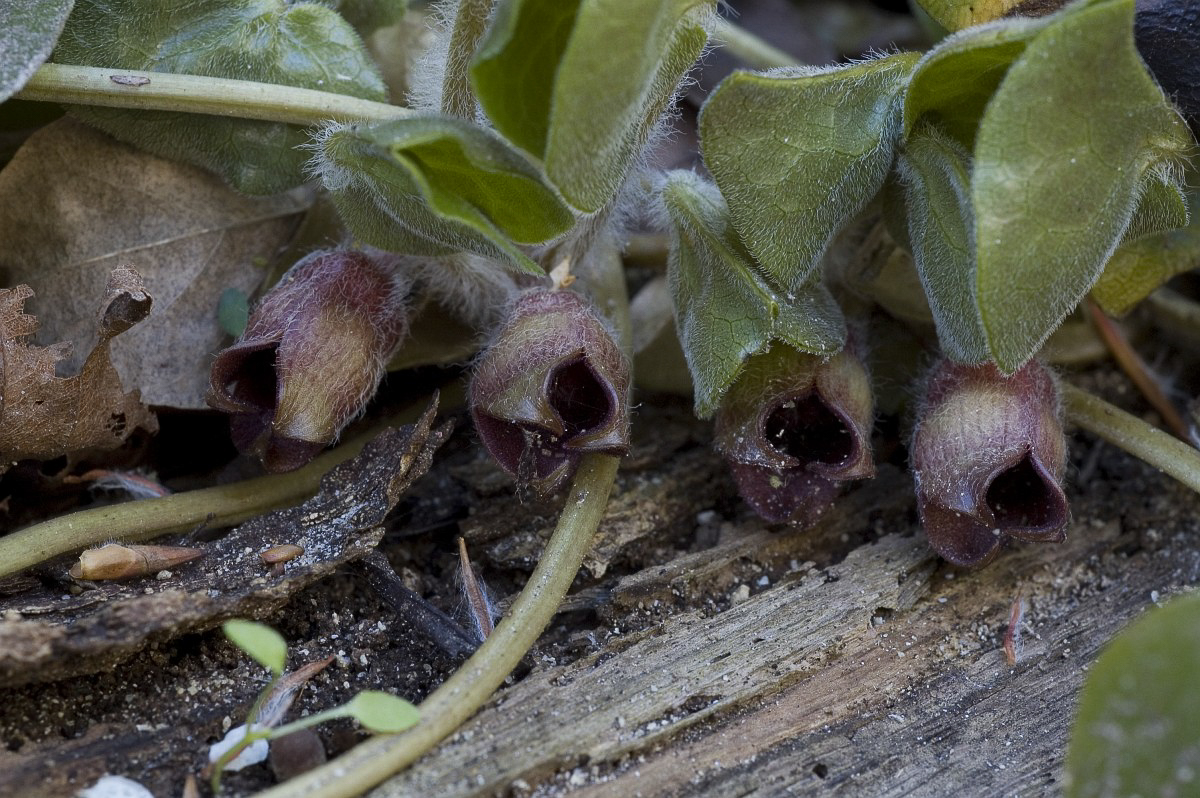
Flowers: The shortly stalked flowers emerge solitary just above the ground surface. Campanulate perianth 1 – 1.5 cm long, brownish on the outside and purple on the inside with three equal lobes. Blooms from February to May.
Fruits and seeds: The fruit is an oval and hairy capsule.
DISTRIBUTION AND HABITAT
Widespread throughout Italy except for the major islands and Apulia. It lives in broad-leaved forests, less frequently in coniferous forests and riparian thickets. It grows from 0 to 1,000 m.
USE
It is a poisonous species. The essential oil contained mainly in the root is rich in vesicatory toxic substances on the skin. If accidentally ingested, it causes vomiting, diarrhea, and severe poisoning. Fortunately, its sour and burning taste discourages ingestion. Although its use in herbal medicine is now very limited, the root and leaves have laxative, emetic, stimulating, tonic, and expectorant properties. However, the high toxicity of the plant discourages its use. Before taking any plant-based product (medicinal or non-medicinal) for therapeutic or similar purposes, it is always advisable to consult a doctor.
INTERESTING FACTS
The seed of Asarum europaeum is coated with a spongy substance highly sought after by ants, thus facilitating the dissemination of the plant.
Photo: Under a free license from Saxifraga, Ed Stikvoort, Rutger Barendse