
Millefoglio d’acqua comune

Nome scientifico: Myriophyllum spicatum L

Famiglia: Haloragaceae 


MORFOLOGIA 


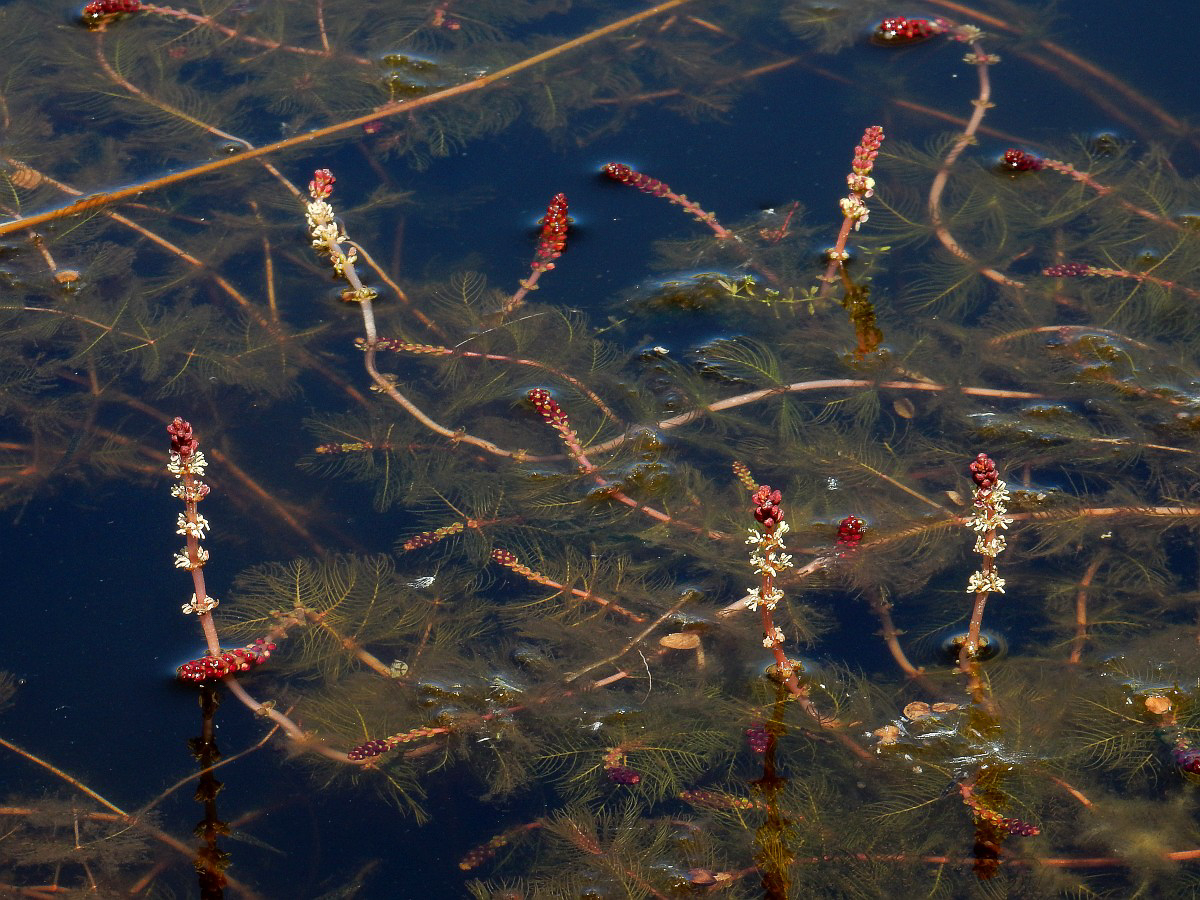
Portamento e dimensioni: pianta Idrofita perenne monoica, rizomatosa, radicata sul fondo, lunga da 30 a 300 cm; 


Fusto: fusti molli, cilindrici, fluttuanti, sommersi, poco ramificati, verdi, o più spesso rossastri.


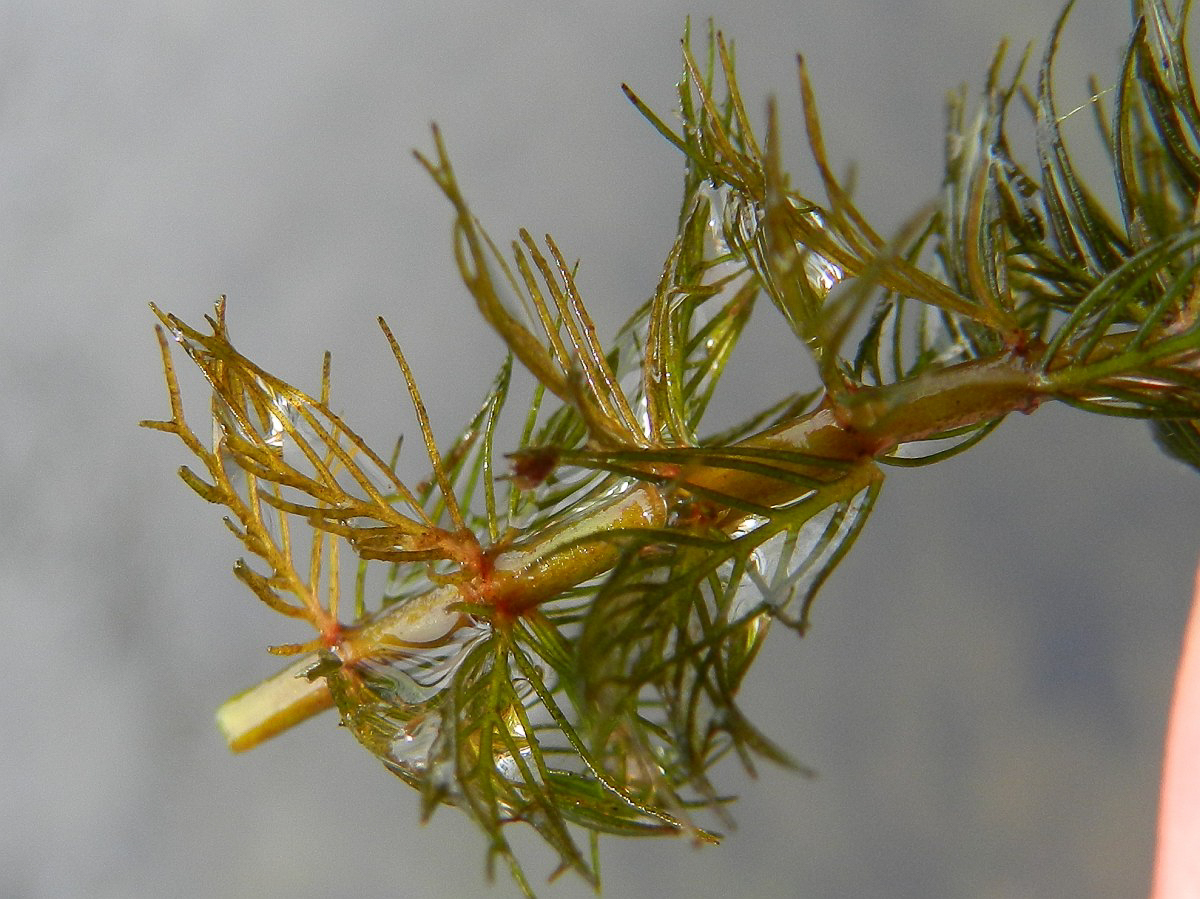
Foglie: foglie pennate (10-35 mm), riunite in (3)4(5) verticilli, completamente divise fino alla nervatura centrale in 15-35 fragili segmenti filiformi ± opposti.


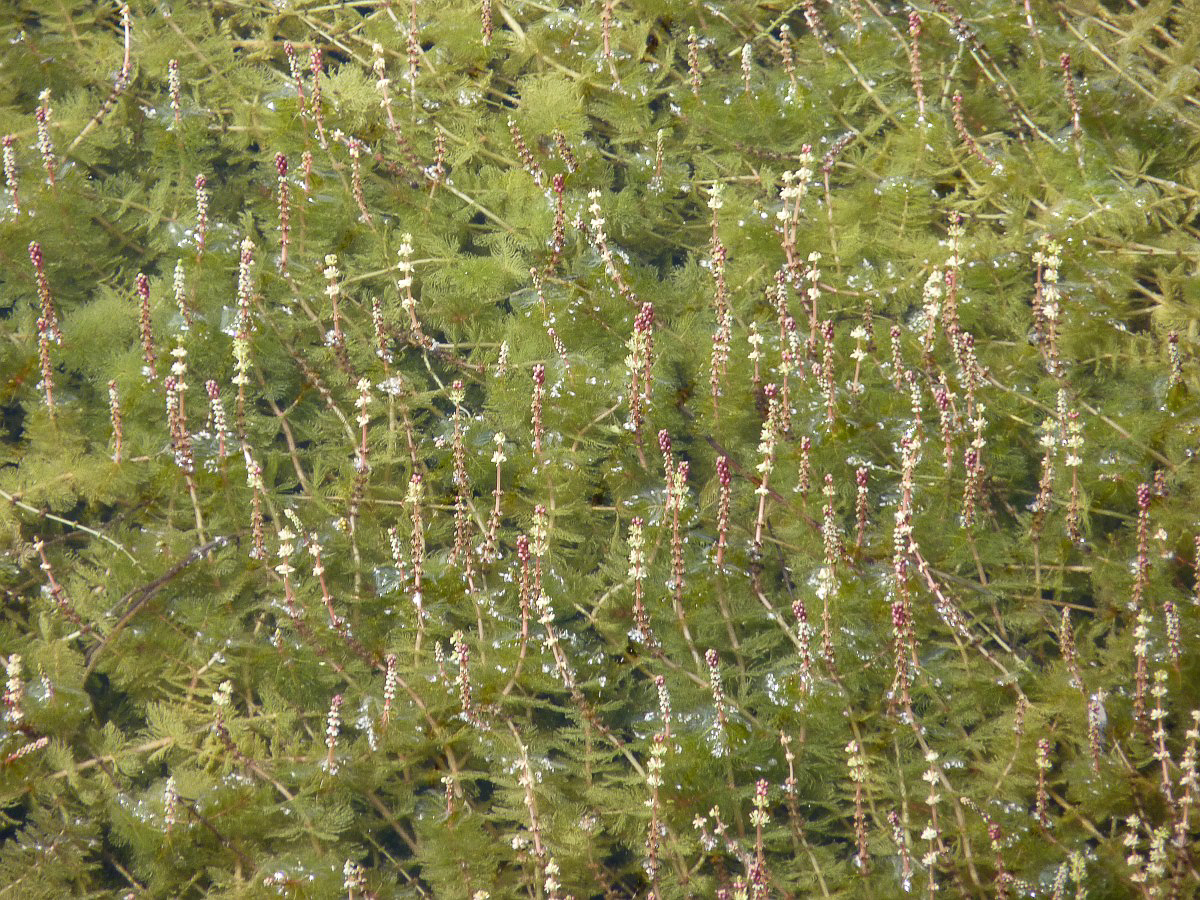
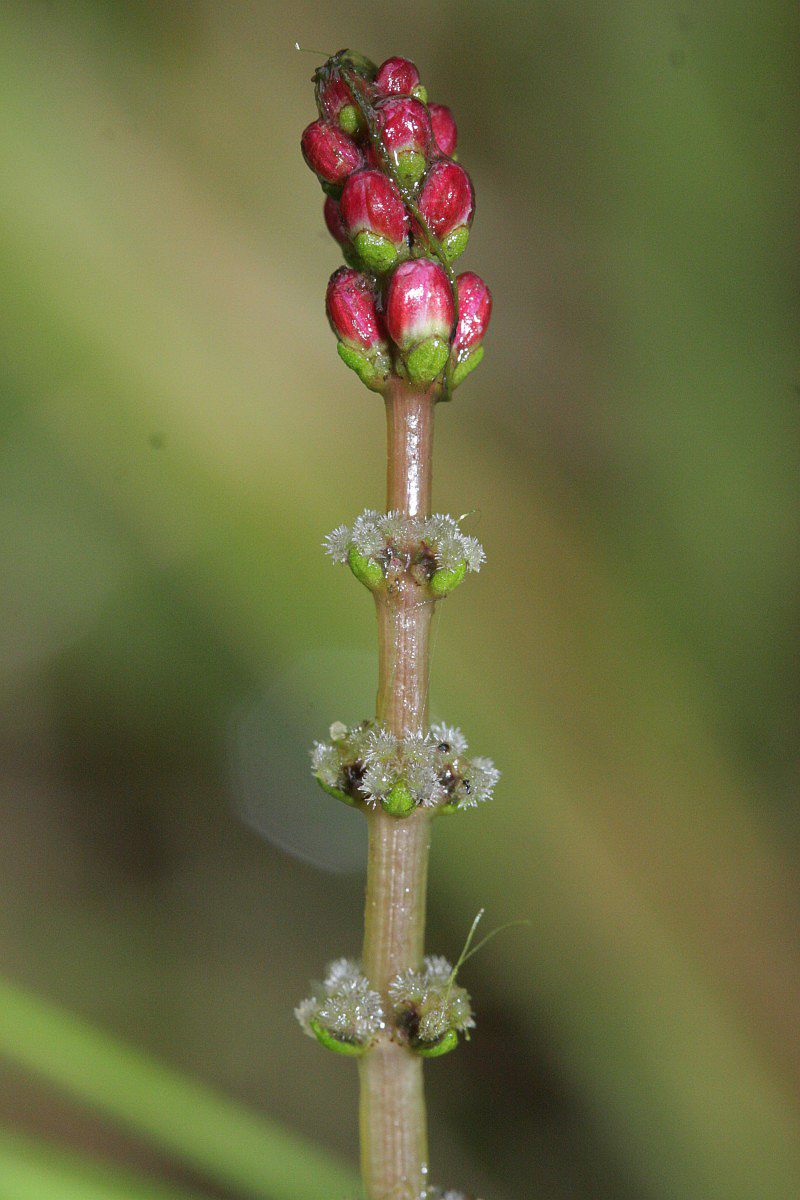
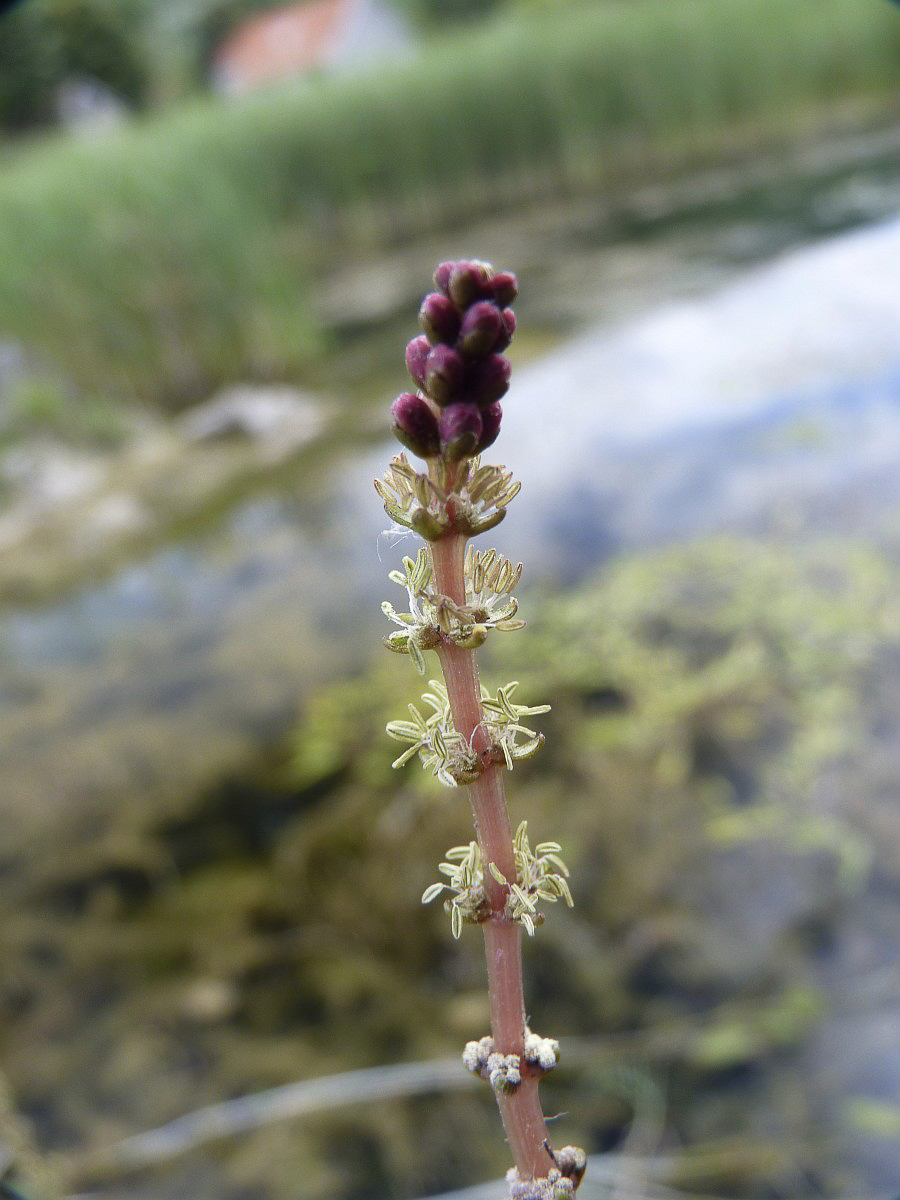
Fiori: infiorescenza terminale spiciforme, afilla, eretta ed emersa, lunga 4-15 cm, con minuscoli fiori tetrameri, unisessuali, disposti in 3-4 glomeruli verticillati e distanziati all’ascella di piccole brattee lineari ed intere, lunghe 1,5 mm, nettamente più corte dei fiori. Fiori maschili disposti in alto e quelli femminili in basso. Sepali ca 0,3 mm o assenti, triangolari. Petali di color rosso, rosa o bianco, di 1,8-2,6 x 1-1,3 mm nei fiori maschili, poco visibili e spesso assenti in quelli femminili.  Fiorisce da maggio a settembre.


Frutti e semi: il frutto (2,5-3 mm) è un drupa subsferica schizocarpica, composta da 4 mericarpi monospermi.


DISTRIBUZIONE E HABITAT


Presente in tutta Italia tranne la Val d’Aosta e il Molise in acque dolci stagnanti o lentamente fluenti fra 0 e 1.500 m.


CURIOSITÀ

La pianta si riproduce anche vegetativamente tramite i frammenti radicanti dei fusti e può talvolta risultare molto invasiva formando delle praterie immerse molto estese.


Foto: su licenza gratuita di Saxifraga e Jasenka Topic, Rutger Barendse, Ed Stikvoort

Famiglia

Haloragaceae

Specie

Myriophyllum spicatum L.

Tipologia

Pianta acquatica

Habitat

Fontanili, Zone umide

Eurasian Watermilfoil


Scientific Name: Myriophyllum spicatum L.

Family: Haloragaceae


MORPHOLOGY


Habit and dimensions: Perennial monoecious hydrophyte, rhizomatous, rooted on the bottom, ranging from 30 to 300 cm in length.


Stem: Soft, cylindrical, floating, submerged stems, sparsely branched, green, or more often reddish.


Leaves: Pinnate leaves (10-35 mm), arranged in (3)4(5) whorls, completely divided to the midrib into 15-35 fragile, ± opposite filiform segments.


Flowers: Terminal spicate inflorescence, leafless, erect and emergent, 4-15 cm long, with tiny tetramerous, unisexual flowers, arranged in 3-4 verticillate and spaced clusters in the axils of small linear and entire bracts, 1.5 mm long, clearly shorter than the flowers. Male flowers arranged at the top and female ones at the bottom. Sepals about 0.3 mm or absent, triangular. Petals red, pink, or white, 1.8-2.6 x 1-1.3 mm in male flowers, barely visible and often absent in female ones. Blooms from May to September.


Fruits and seeds: The fruit (2.5-3 mm) is a sub-spherical schizocarpic drupe composed of 4 monospermous mericarps.


DISTRIBUTION AND HABITAT

Present throughout Italy except for Valle d’Aosta and Molise, in stagnant or slowly flowing freshwater at elevations between 0 and 1,500 m.

Interesting Facts The plant also reproduces vegetatively through rooting stem fragments and can sometimes be very invasive, forming extensive submerged meadows.


Photo: Not subject to licensing by Saxifraga and Jasenka Topic, Rutger Barendse, Ed Stikvoort

Famiglia

Haloragaceae

Specie

Myriophyllum spicatum L.

Tipologia

Pianta acquatica

Habitat

Fontanili, Zone umide