
Eurasian Watermilfoil
Scientific Name: Myriophyllum spicatum L.
Family: Haloragaceae
MORPHOLOGY
Habit and dimensions: Perennial monoecious hydrophyte, rhizomatous, rooted on the bottom, ranging from 30 to 300 cm in length.
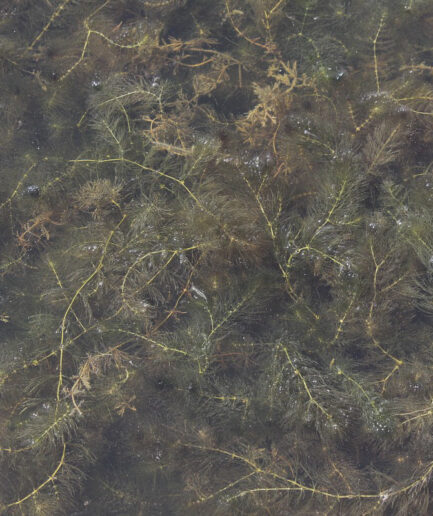
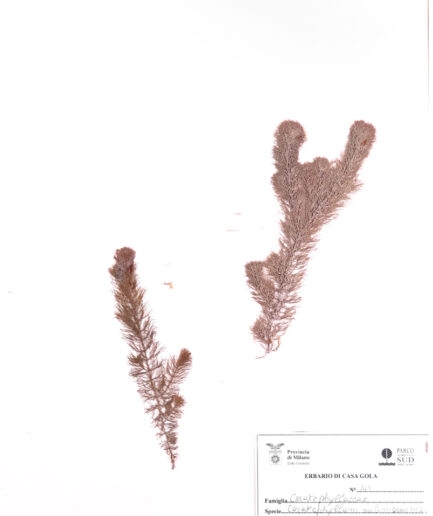
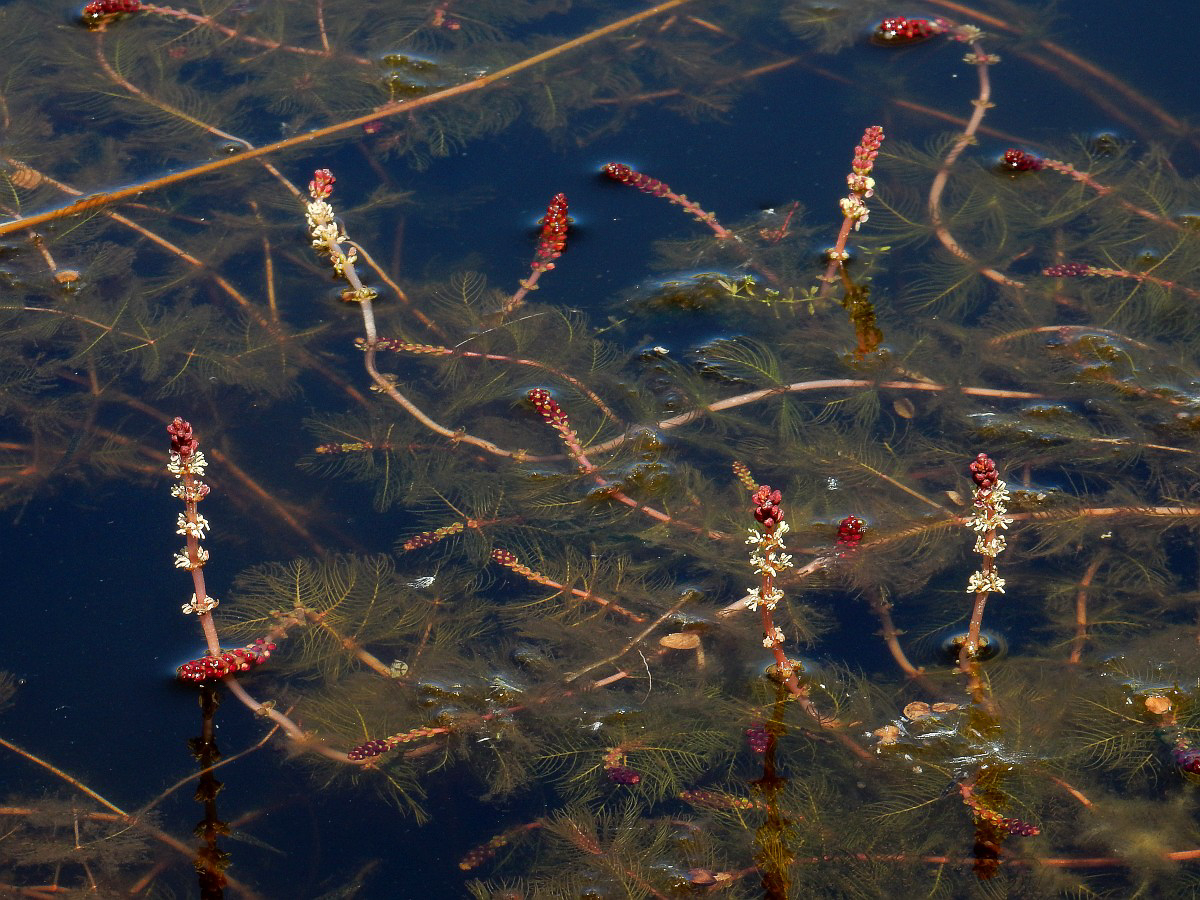
Stem: Soft, cylindrical, floating, submerged stems, sparsely branched, green, or more often reddish.
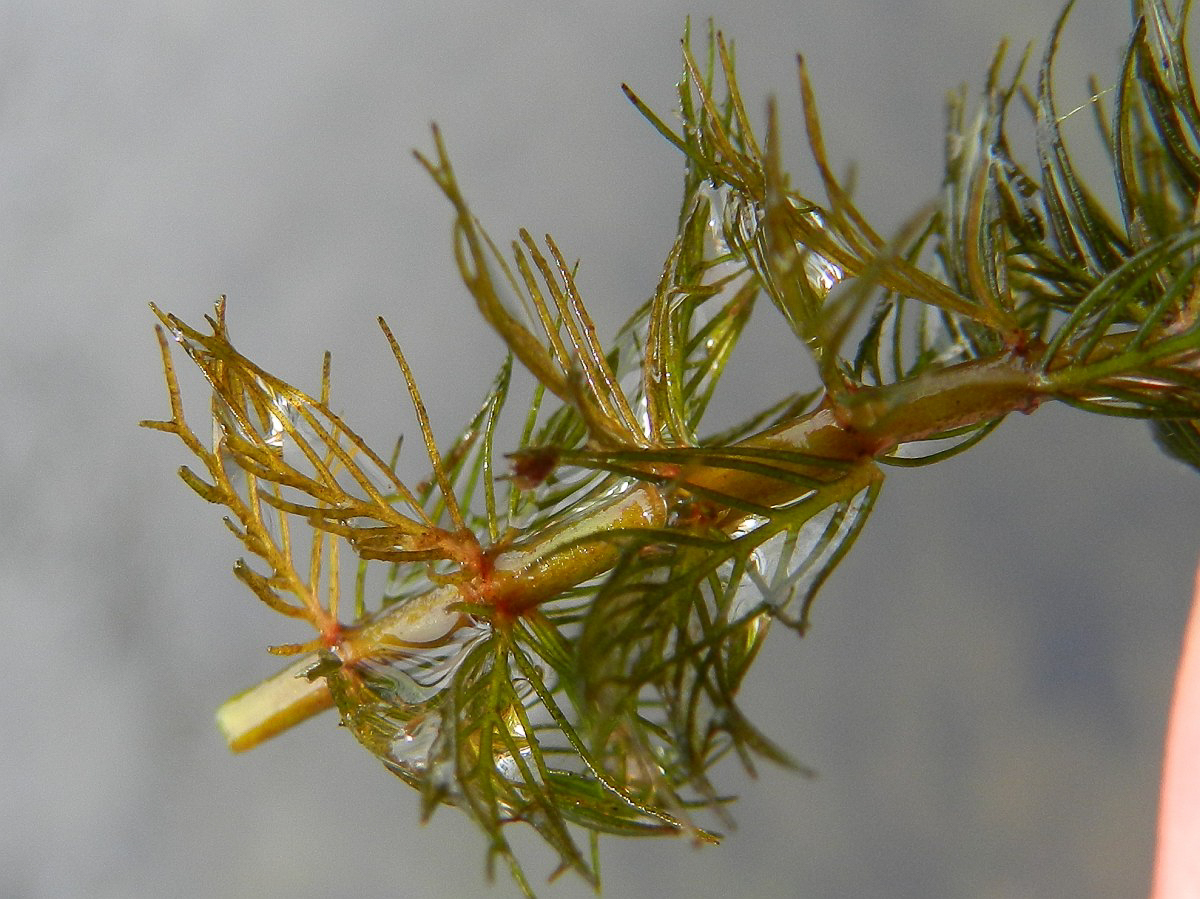
Leaves: Pinnate leaves (10-35 mm), arranged in (3)4(5) whorls, completely divided to the midrib into 15-35 fragile, ± opposite filiform segments.
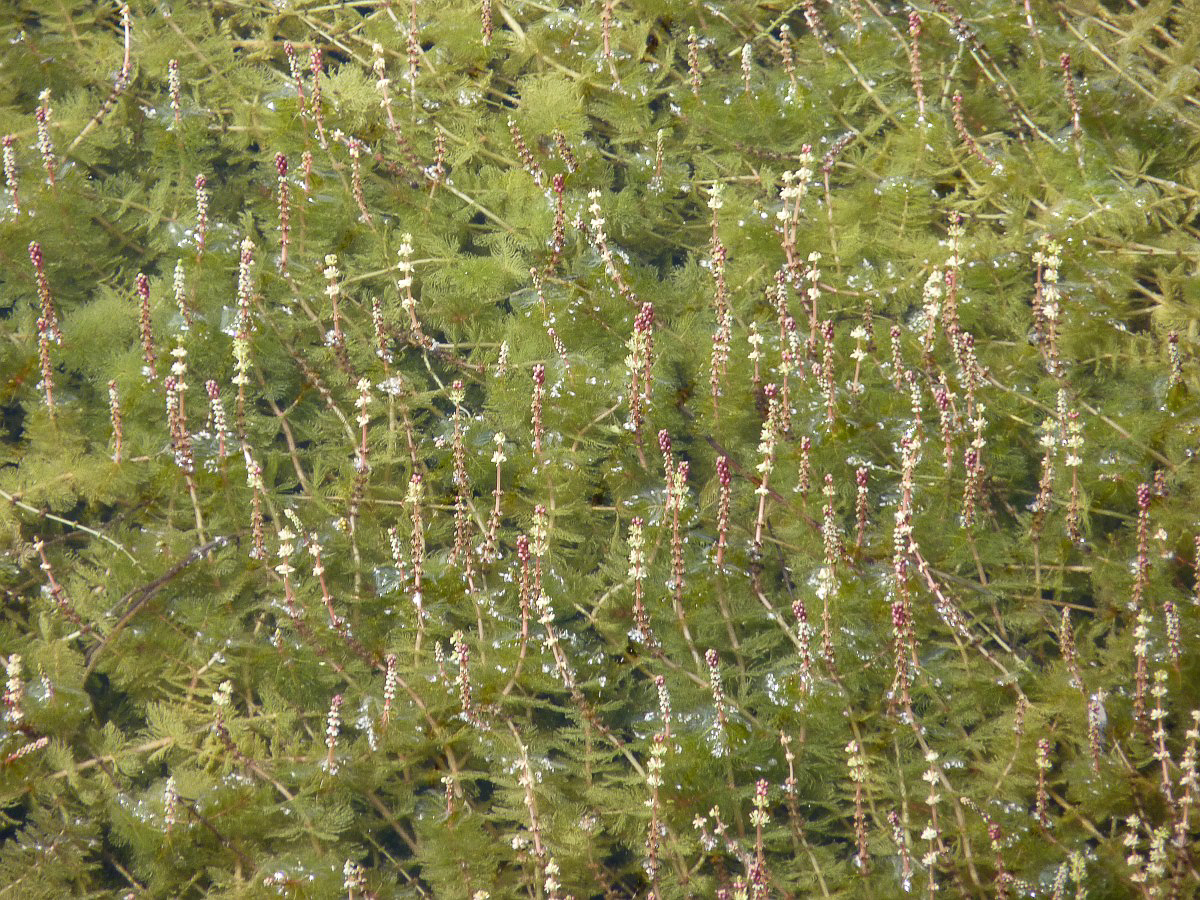
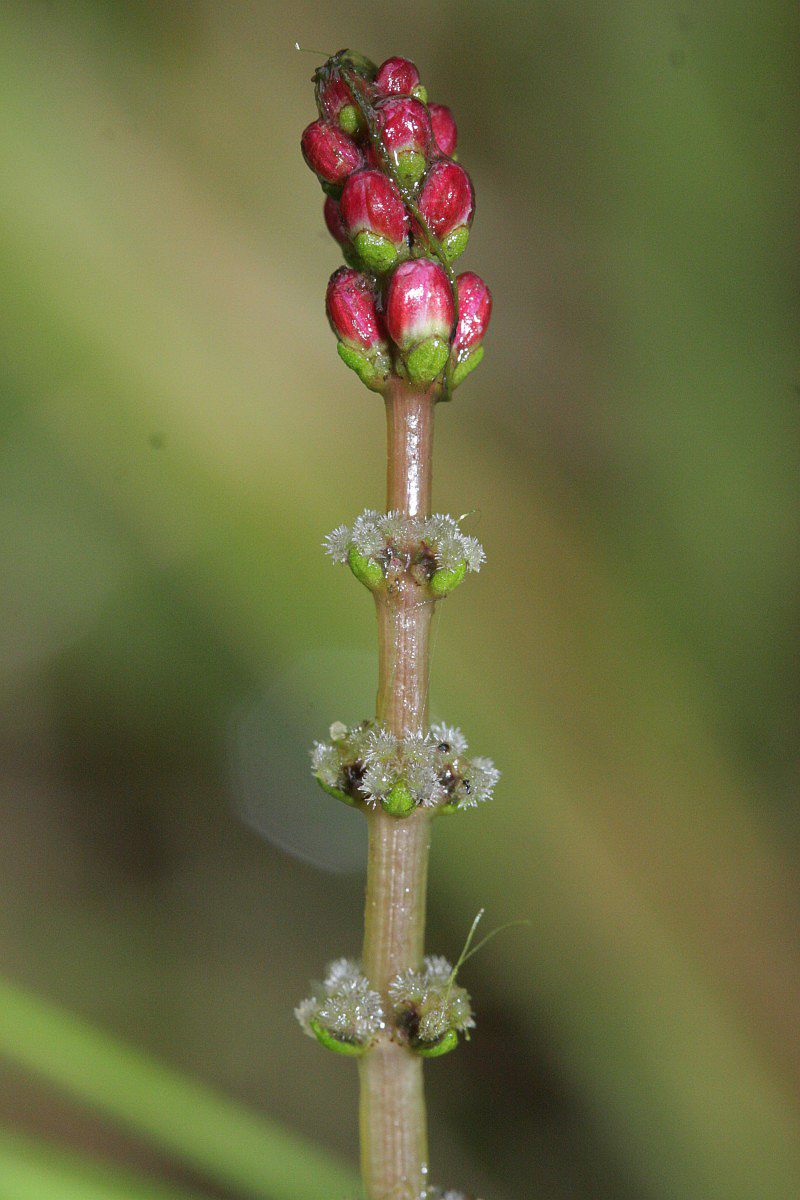
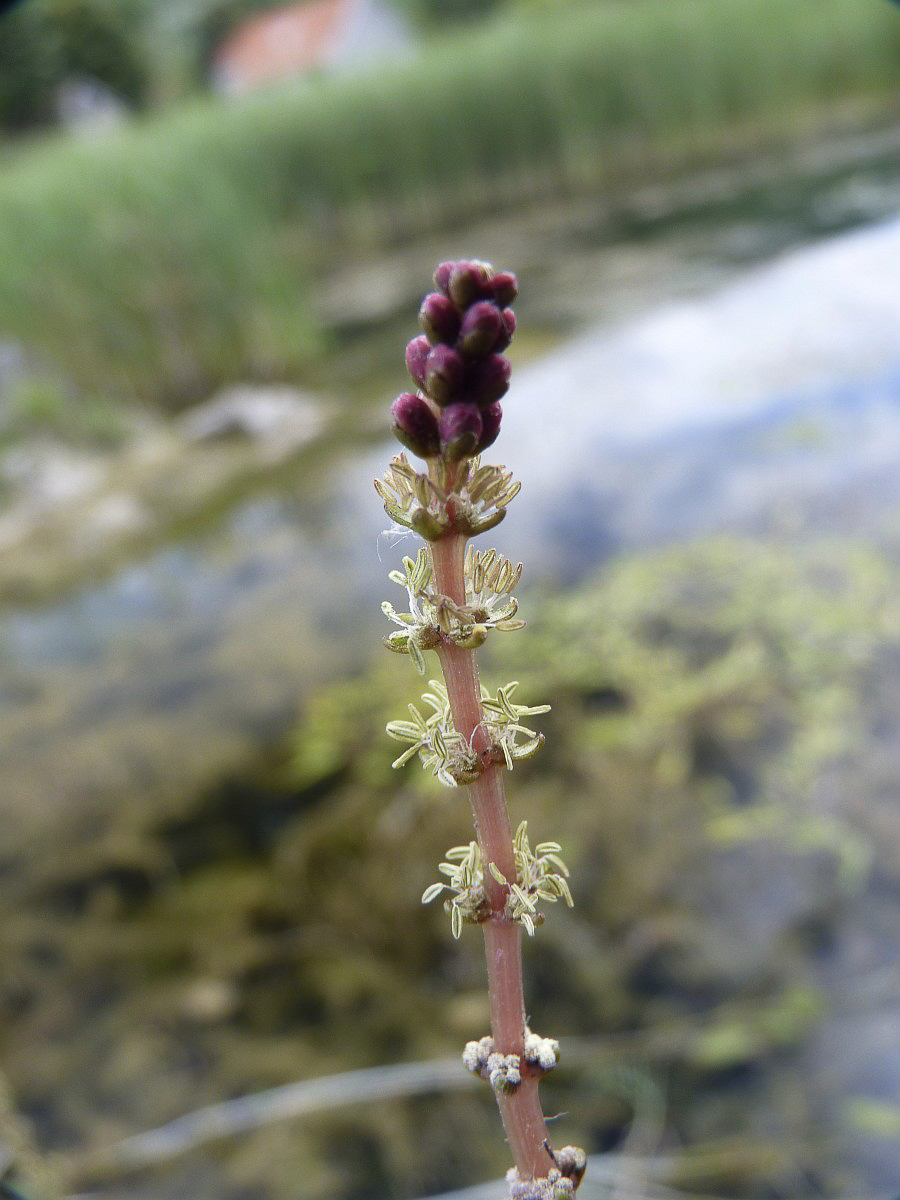
Flowers: Terminal spicate inflorescence, leafless, erect and emergent, 4-15 cm long, with tiny tetramerous, unisexual flowers, arranged in 3-4 verticillate and spaced clusters in the axils of small linear and entire bracts, 1.5 mm long, clearly shorter than the flowers. Male flowers arranged at the top and female ones at the bottom. Sepals about 0.3 mm or absent, triangular. Petals red, pink, or white, 1.8-2.6 x 1-1.3 mm in male flowers, barely visible and often absent in female ones. Blooms from May to September.
Fruits and seeds: The fruit (2.5-3 mm) is a sub-spherical schizocarpic drupe composed of 4 monospermous mericarps.
DISTRIBUTION AND HABITAT
Present throughout Italy except for Valle d’Aosta and Molise, in stagnant or slowly flowing freshwater at elevations between 0 and 1,500 m.
Interesting Facts The plant also reproduces vegetatively through rooting stem fragments and can sometimes be very invasive, forming extensive submerged meadows.
Photo: Not subject to licensing by Saxifraga and Jasenka Topic, Rutger Barendse, Ed Stikvoort