
Prickly Lettuce (or Escarole)
Scientific Name: Lactuca sativa L.
Family: Asteraceae
MORPHOLOGY
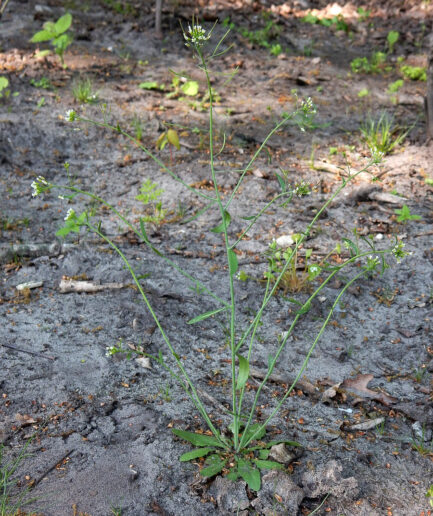
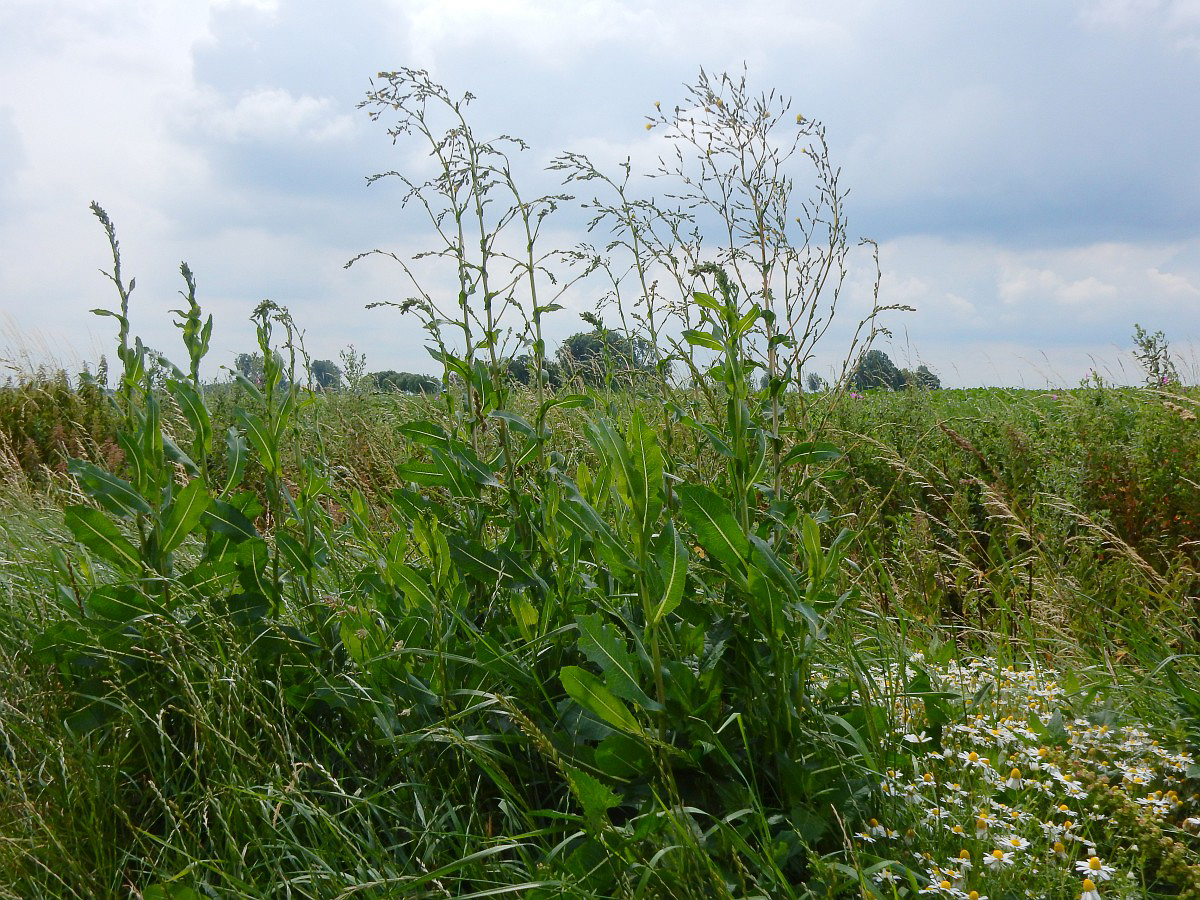
Habit and dimensions: An annual or biennial herbaceous plant, typically reaching heights of 50-100 cm, but sometimes exceeding 2 m, covered in sharp bristles and containing white latex.
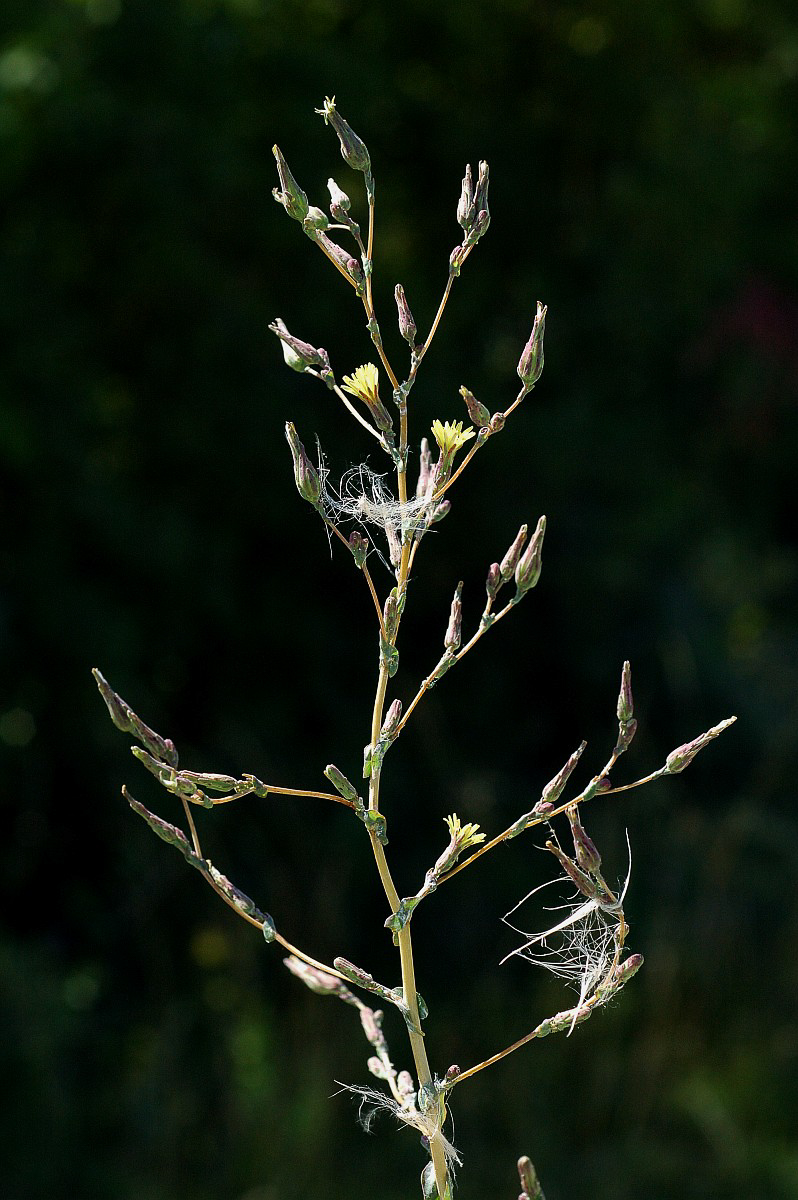
Stem: The stem is erect, sturdy, semi-lignified, and yellowish-white (resembling bone), rigid, hollow, usually glabrous but often hairy at the base, and branched at the apex into a terminal panicle.
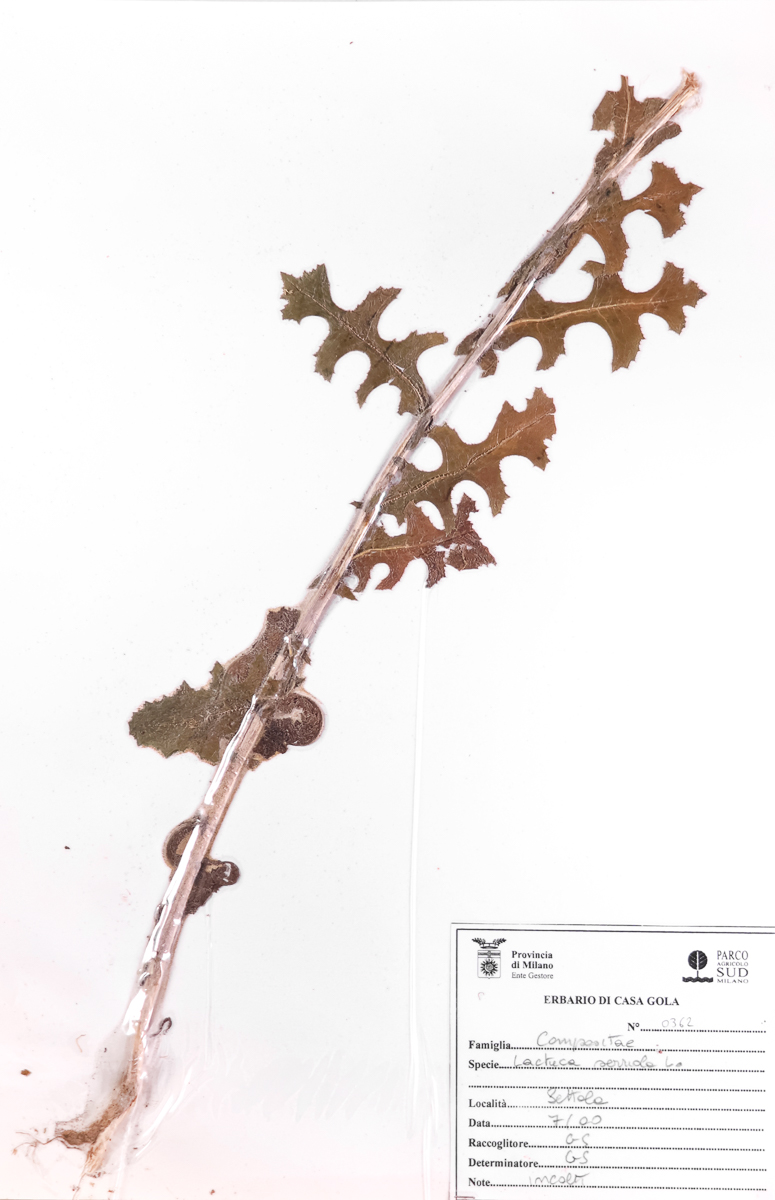
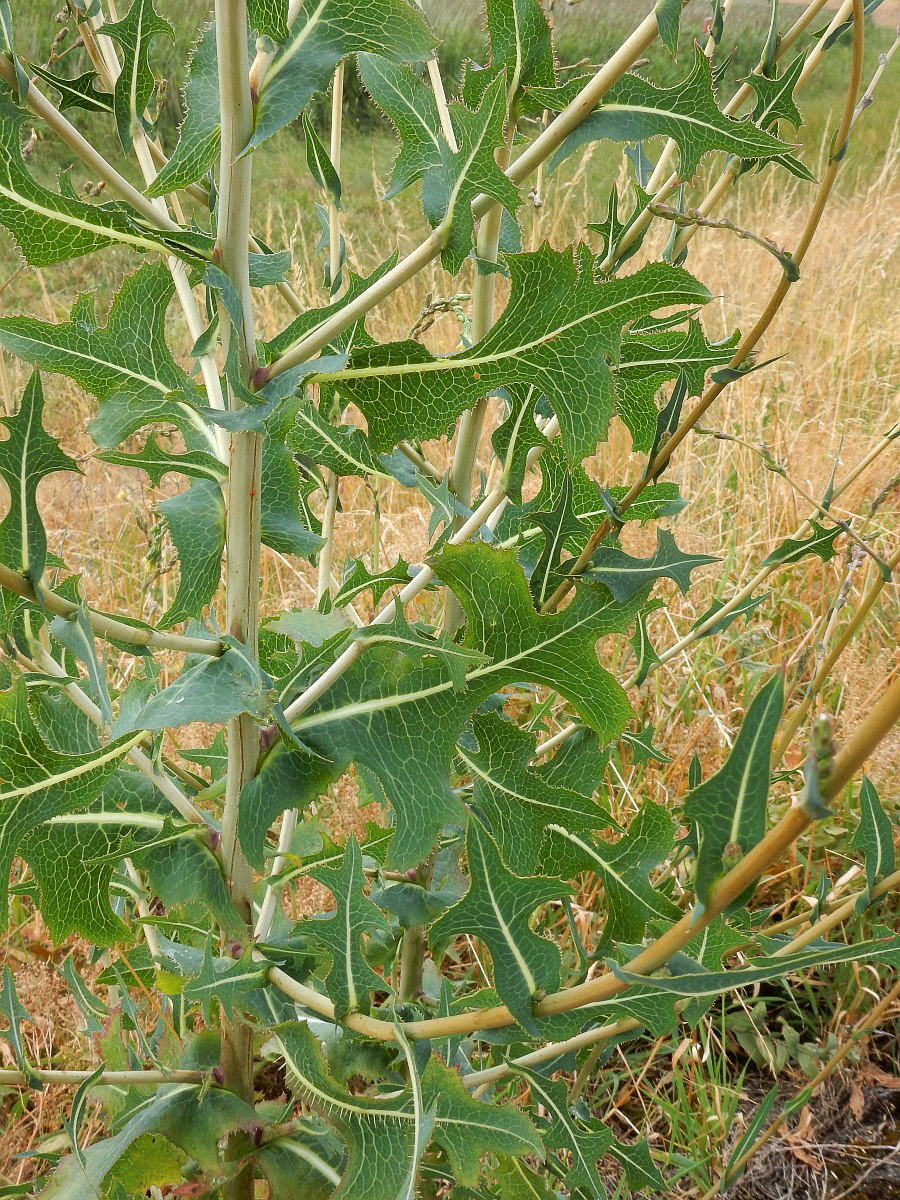
Leaves: The pinnately veined leaves, with glossy glaucous green color, are rigid, glabrous, but prickly and bristly at the margins and along the central vein on the dorsal side. The basal leaves form a flattened rosette on the ground, lanceolate in profile, with obtuse apex and dentate margins, with deeper incisions towards the base tapering into a winged petiole, while the alternate cauline leaves are lanceolate with sinuous margins and lobes, sessile, clasping the stem with two small auricles at the base.
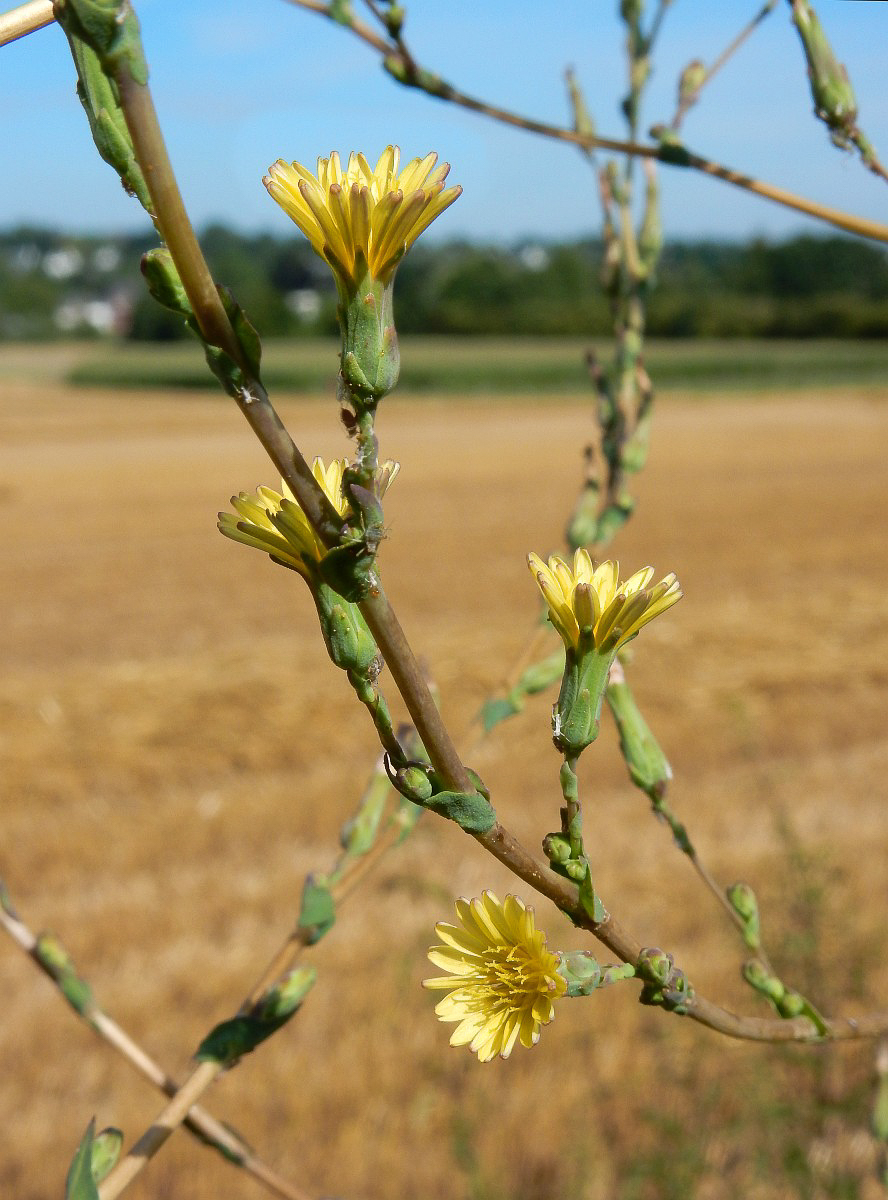
Flowers: The numerous flower heads, with all ligulate yellow flowers, are borne on swollen peduncles and arranged in large terminal panicles, enclosed in a pear-shaped involucre formed by spirally arranged scales in several series. Sepals are absent. Blooms from June to September.
Fruits and seeds: The fruit is a compressed, grayish, and ciliate achene, measuring 3 mm, with a beak as long as or slightly longer than the achene, whitish, topped with a white pappus.
DISTRIBUTION AND HABITAT
Found throughout Italy in uncultivated areas, sunny slopes, along roadsides, and old walls, from sea level up to 800 m.
USE
Its bitter white latex, thickened in the air, lactucarium of the pharmacopoeia, has been used as a soothing agent for respiratory tract irritations, as a nervous sedative, an anaphrodisiac, and an anti-insomnia agent, for its antispasmodic and hypnotic properties, thanks to its active principles such as lactucin, mannitol, asparagine, acids, and enzymes. Warm lettuce poultices, mixed with oil, were used to relieve bruises and heal skin irritations and hematomas. Oily substances extracted from the achenes are useful in industry. Before taking any plant-based product (medicinal or non-medicinal) for therapeutic or similar purposes, it is always advisable to consult a physician. The young rosettes of the first year, when the bitter and active principles are less pronounced, can be consumed, boiled, or even raw in salads, mixed with other herbs.
INTERESTING FACTS
Especially individuals growing in very sun-exposed areas have the tendency to orient their leaf lobes, twisting them at the base, in a north-south direction and tilting them vertically so that the pages face east-south, to escape direct and poorly tolerated sunlight. Thus, at noon, they receive the sun’s rays on the margin and only in the morning and evening on the leaf. This peculiarity has earned them the common name “compass herb.”
Photo: Not subject to licensing by Saxifraga, Peter Meininger, Ed Stikvoort, Jan van der Straaten.