
Fienarola annuale

Nome scientifico: Poa annua L.

Famiglia: Poaceae 


MORFOLOGIA 


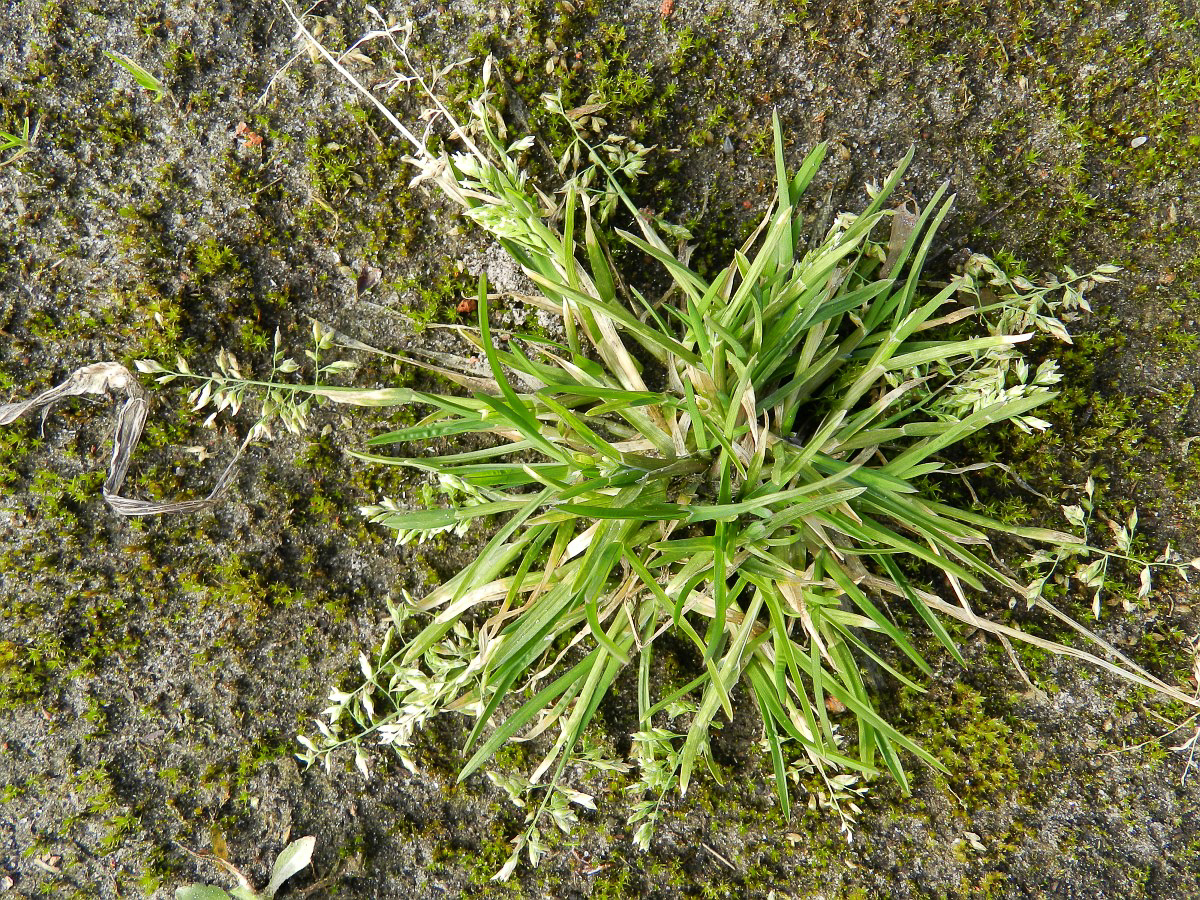
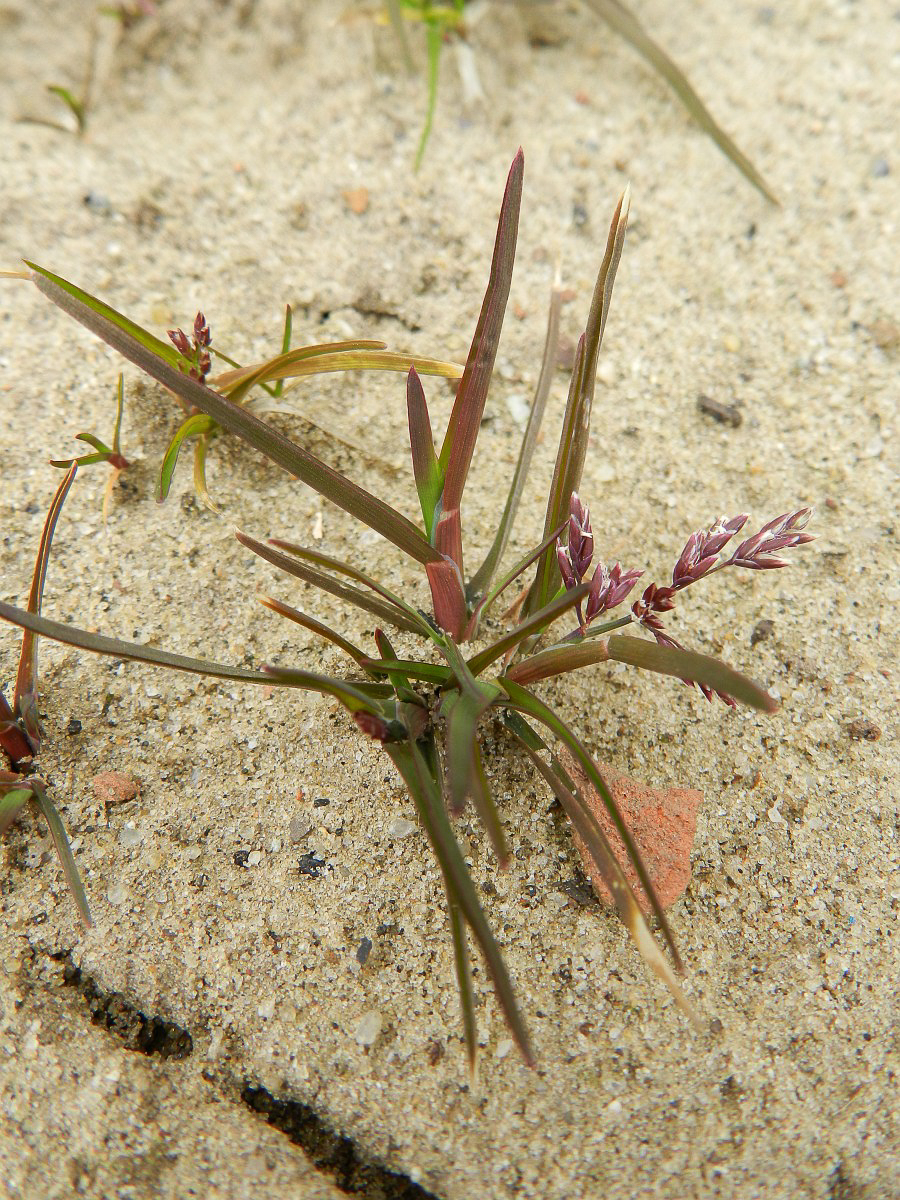
Portamento e dimensioni: pianta di aspetto molto variabile, annuale o perenne a vita breve, alta 5-30 cm, di colore verde più o meno brillante.


Fusto:  fusti cilindrici o quasi, non ingrossati alla base, fascicolati, per lo più ginocchiati-ascendenti, raramente radicanti ai nodi inferiori.


Foglie: foglie con guaina liscia e compressa, lamina sottile di 2-3 mm e ligula tronca di 0,5 mm, che però diventa più evidente (1 mm e oltre) nei getti sterili.


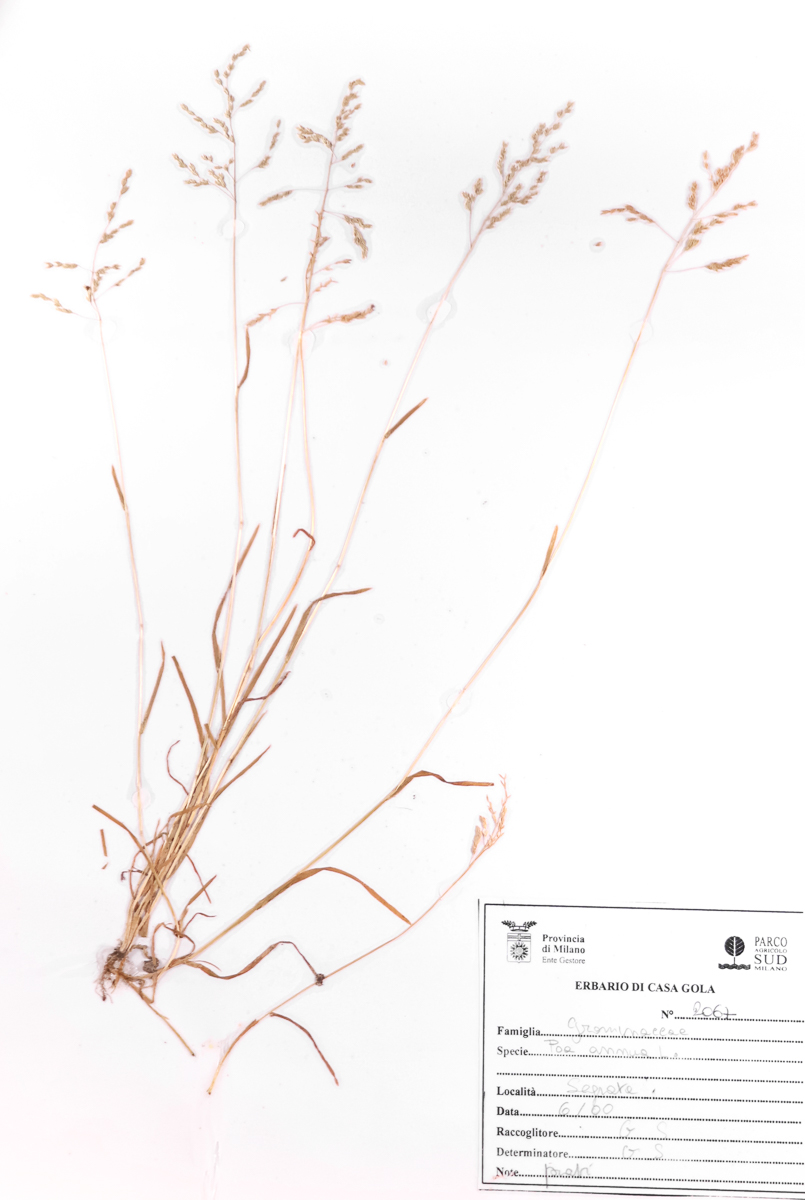
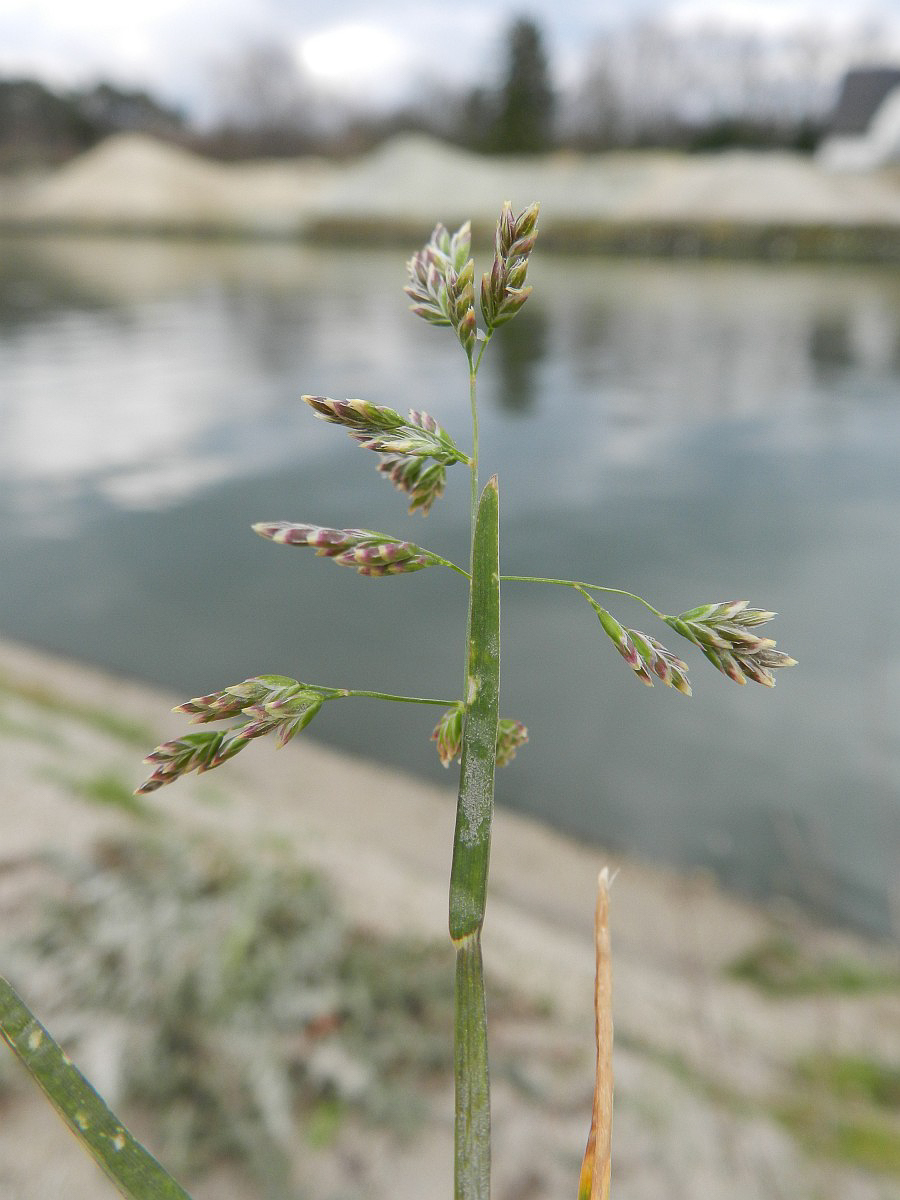
Fiori: pannocchia piramidale o lassa, povera, ampia, unilaterale, lunga 1,5-2 volte la propria larghezza, verde-rossastra, con rami inferiori appaiati, lisci, dopo l’antesi patenti. Spighette ovali-lanceolate, di 3-10 mm con 3-5 fiori strettamente embricati. Fiorisce tutto l’anno.


Frutti e semi: i frutti sono cariossidi


DISTRIBUZIONE E HABITAT


Presente in tutta Italia in incolti, orti, bordi di vie, frequente tra le crepe dell’asfalto e le giunzioni dei marciapiedi. Da 0 a 2.000 m, raramente fino a 2.700 m.


UTILIZZI


Nonostante la Poa annua sia una delle cinque piante più diffuse al mondo, l’unico utilizzo conosciuto per questa pianta sembra essere l’impiego nella realizzazione dei tappeti erbosi, soprattutto per i campi da golf.


CURIOSITÀ


Il polline di questa pianta è allergogeno.


Foto: su licenza gratuita di Saxifraga e Rutger Barends, Jan van der Straaten

COD: 2067 Categoria: Tag: , , ,
Famiglia

Poaceae

Specie

Poa annua L

Tipologia

Pianta erbacea

Habitat

Aree antropizzate, Incolti

Annual meadow grass


Scientific Name: Poa annua L. 

Family: Poaceae


MORPHOLOGY


Habit and dimensions: A plant with a highly variable appearance, annual or short-lived perennial, ranging from 5 to 30 cm in height, with a more or less bright green color.


Stems: Cylindrical or nearly cylindrical stems, not swollen at the base, clustered, mostly kneeling-ascending, rarely rooting at the lower nodes.


Leaves: Leaves with smooth and compressed sheath, thin blade of 2-3 mm, and truncate ligule of 0.5 mm, which becomes more prominent (1 mm and beyond) in sterile shoots.


Flowers: Pyramid-shaped or loose panicle, sparse, wide, unilateral, 1.5-2 times its own width, green-reddish, with paired lower branches, smooth, spreading after anthesis. Spikelets are oval-lanceolate, 3-10 mm long with 3-5 closely appressed flowers. Blooms all year round.


Fruits and seeds: The fruits are caryopses.


DISTRIBUTION AND HABITAT


Present throughout Italy in uncultivated land, gardens, roadside edges, frequently found between asphalt cracks and sidewalk joints. From 0 to 2,000 m, rarely up to 2,700 m.


USE


Despite Poa annua being one of the five most widespread plants in the world, the only known use for this plant seems to be its use in the creation of turfgrass, especially for golf courses.


INTERESTING FACTS


The pollen of this plant is allergenic.


Photo: under the free license of Saxifraga and Rutger Barends, Jan van der Straaten

Famiglia

Poaceae

Specie

Poa annua L

Tipologia

Pianta erbacea

Habitat

Aree antropizzate, Incolti