
Euforbia acre

Nome scientifico: Euphorbia esula L.

Famiglia: Euphorbiaceae 


MORFOLOGIA 


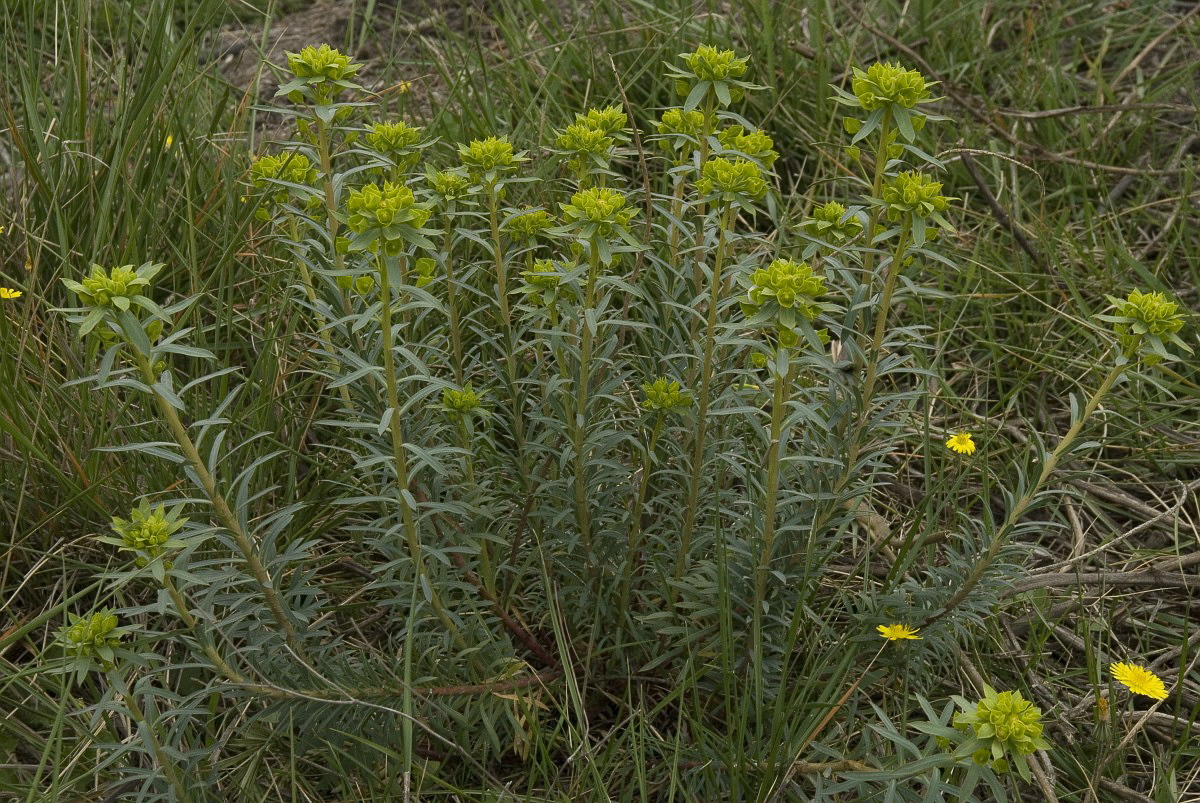
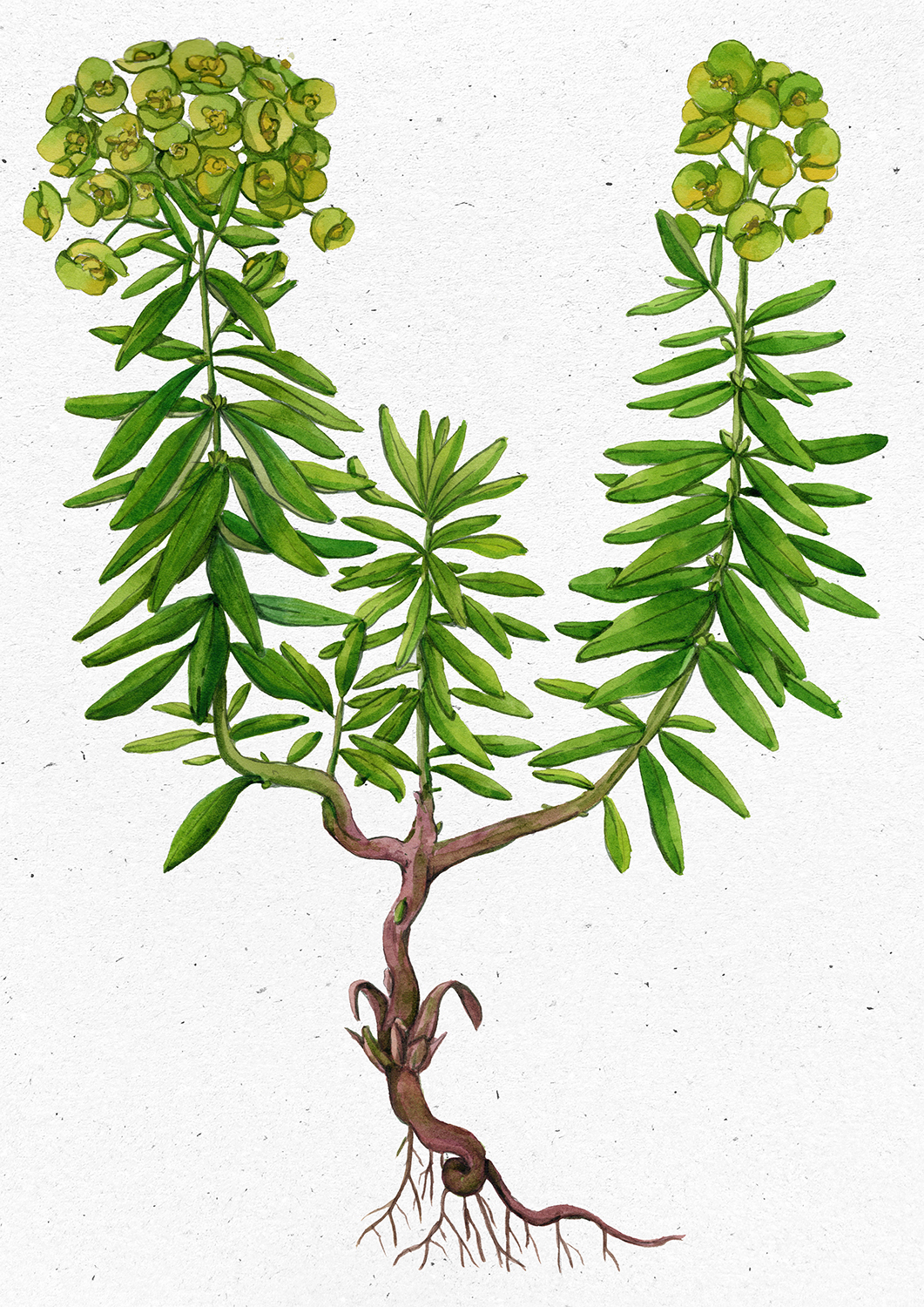
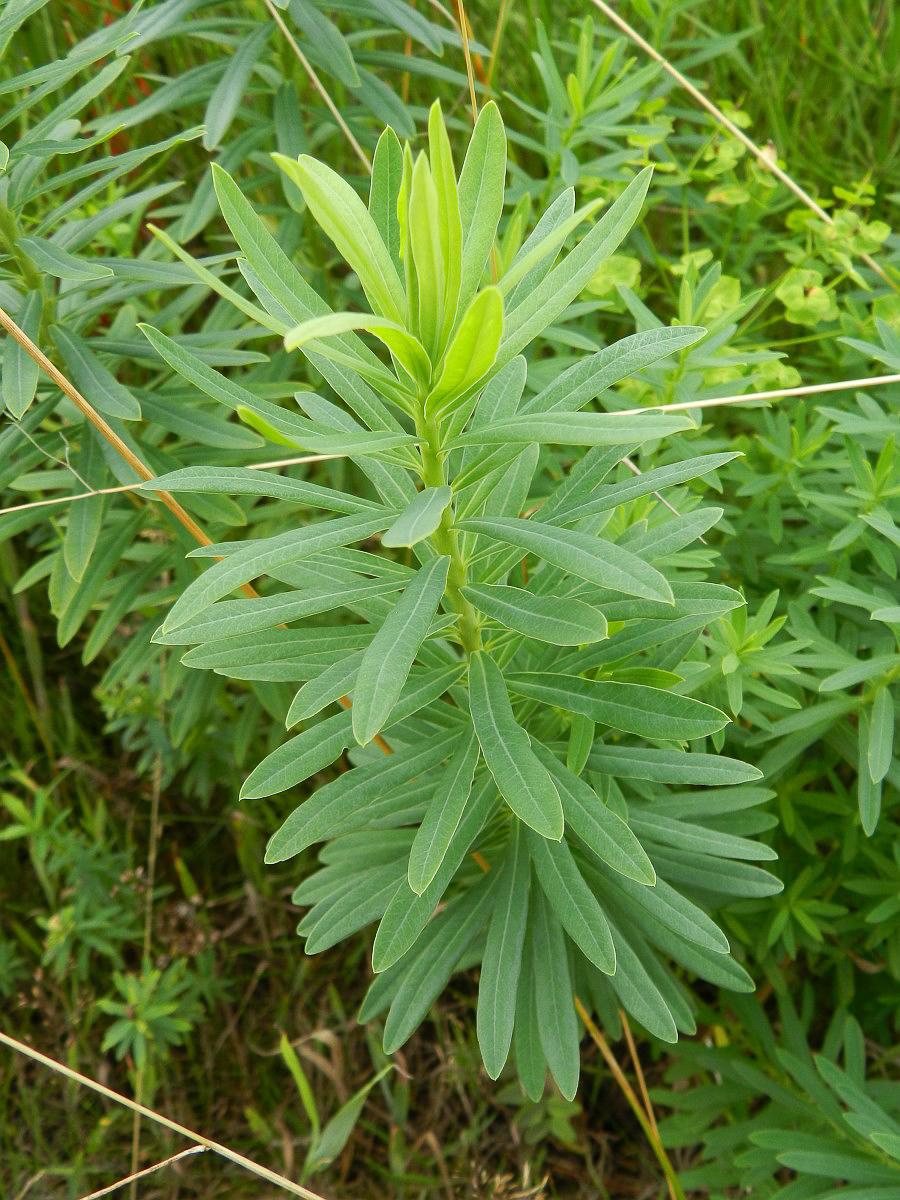
Portamento e dimensioni: pianta erbacea perenne, laticifera, alta 30-100 cm, con rizoma esile, flessuoso.


Fusto: fusti robusti, eretti o ascendenti, un po’ legnosi alla base, da semplici a molto ramosi; rami spesso terminanti con piccole ombrelle.


Foglie: foglie alterne da lineari-spatolate a obovate, di colore verde-grigiastro, normalmente di 2-8 x 40-60 mm, intere, ristrette alla base o cuneate, con apice acuto, ottuso, arrotondato o emarginato. Foglie cauline sterili più grandi, normalmente maggiori di 3-4 cm di lunghezza con stomi uniformi o assenti nella pagina superiore. 


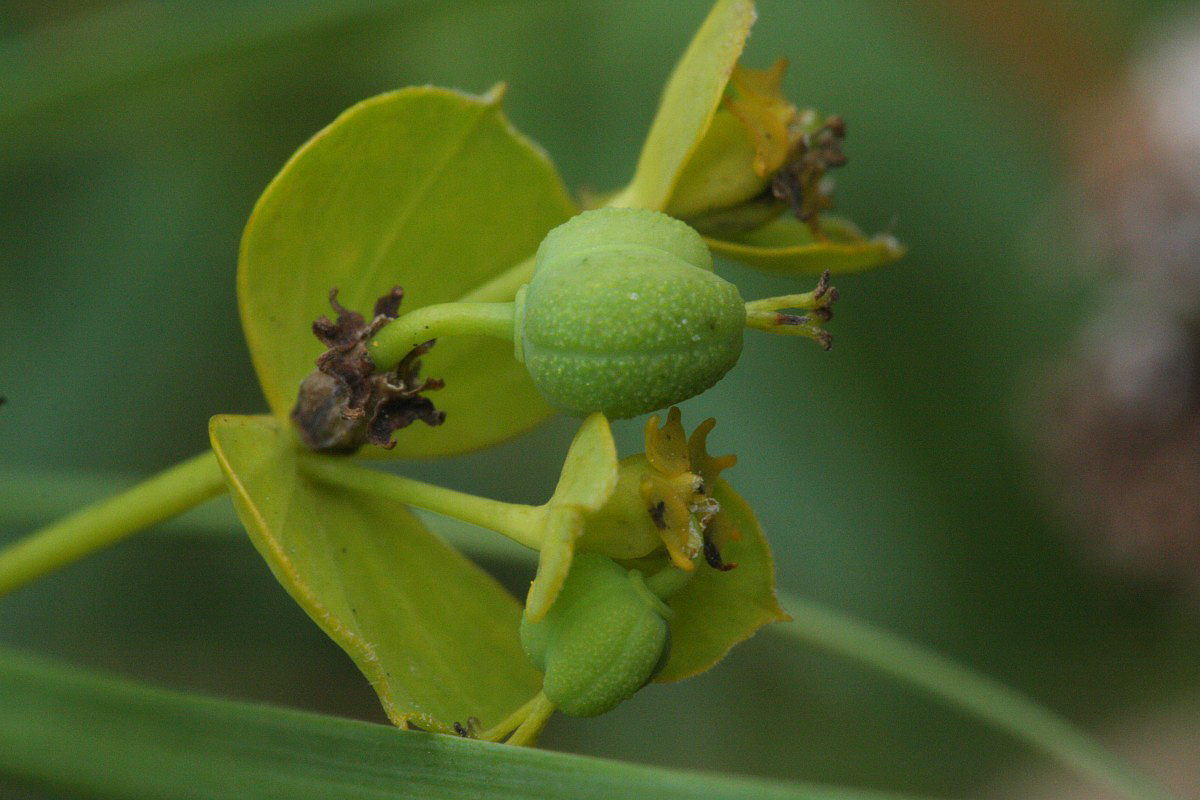
Fiori: infiorescenza pseudo-ombrella biforcata con 7-13 raggi. Brattee pleiocasiali più corte e larghe rispetto alle foglie più vicine; le brattee dicasiali rombiche, triangolari o reniformi con base cordata o cuneata e apice ottuso o arrotondato, talvolta mucronate. Ciazio ermafrodita, subsessile o con peduncolo di 1-3 mm, glabro, talvolta peloso alla base.  Fiorisce da  aprile ad agosto.


Frutti e semi: il frutto è una capsula schizocarpica di 3-4 x 2,5-3,2 mm, subovoide, con cocchi arrotondati, granulati nel dorso. Semi di 2-2,5 x 1,4-1,7 mm, subovoidi, lisci, bruno-rossastri a maturità.


DISTRIBUZIONE E HABITAT


Presente dalla Toscana in su più Umbria, Abruzzi e Campania. Vegeta nei prati, margine dei boschi e delle strade, coltivi da 0 a 1.000 m


UTILIZZI


Il latice contenuto nei fusti e nelle foglie di tutte le Euphorbia è un liquido molto irritante a contatto con la pelle e in particolar modo per gli occhi. Per le sue proprietà caustiche era usato in passato per bruciare calli e verruche e con i semi, dopo averli schiacciati, si produceva un succo oleoso utilizzato come forte purgante. Prima di assumere qualsiasi prodotto di origine vegetale (farmaco o non farmaco) per fini terapeutici o simil-terapeutici, è sempre opportuno rivolgersi preventivamente al proprio medico.


Foto: su licenza gratuita di Saxifraga e Willem van Kruijsbergen, Jan van der Straaten, Rutger Barendse

Famiglia

Euphorbiaceae

Specie

Euphorbia esula L.

Tipologia

Pianta erbacea

Habitat

Boschi e boscaglie, Coltivazioni, Prati

Green spurge


Scientific Name: Euphorbia esula L. 

Family: Euphorbiaceae


MORPHOLOGY


Habit and size: Perennial herbaceous plant, latex-bearing, 30-100 cm tall, with a slender, flexuous rhizome.


Stem: Robust, erect, or ascending stems, somewhat woody at the base, ranging from simple to highly branched; often ending with small umbels.


Leaves: Alternate leaves, ranging from linear-spatulate to obovate, grayish-green, typically 2-8 x 40-60 mm, entire, narrowed at the base or cuneate, with acute, obtuse, rounded, or emarginate apices. Sterile cauline leaves are larger, usually exceeding 3-4 cm in length, with uniform stomata or absent on the upper surface.


Flowers: Pseudoumbel bifurcate inflorescence with 7-13 rays. Pleiocasial bracts shorter and wider than the nearest leaves; dicasyal bracts rhomboid, triangular, or reniform with cordate or cuneate base and obtuse or rounded apex, sometimes mucronate. Hermaphroditic cyathium, subsessile, or with a peduncle of 1-3 mm, glabrous, sometimes hairy at the base. Blooms from April to August.


Fruits and seeds: The fruit is a schizocarpic capsule measuring 3-4 x 2.5-3.2 mm, subovoid, with rounded, granulate cocci on the dorsal side. Seeds are 2-2.5 x 1.4-1.7 mm, subovoid, smooth, reddish-brown at maturity.


DISTRIBUTION AND HABITAT


Found from Tuscany upwards, including Umbria, Abruzzo, and Campania. It grows in meadows, forest margins, roadsides, and cultivated fields from 0 to 1,000 m.


USE


The latex contained in the stems and leaves of all Euphorbia species is a highly irritating liquid upon contact with the skin and particularly the eyes. In the past, due to its caustic properties, it was used to burn calluses and warts, and the crushed seeds were used to produce an oily juice employed as a strong purgative. Before taking any plant-based product (medicine or non-medicine) for therapeutic or similar purposes, it is always advisable to consult a medical professional.


Photo: courtesy of Saxifraga, Willem van Kruijsbergen, Jan van der Straaten, Rutger Barendse

Famiglia

Euphorbiaceae

Specie

Euphorbia esula L.

Tipologia

Pianta erbacea

Habitat

Boschi e boscaglie, Coltivazioni, Prati