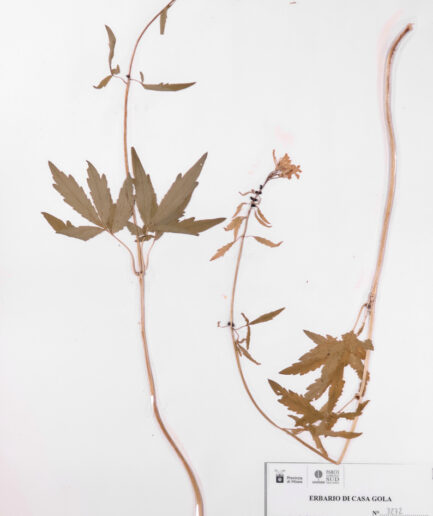

Carice di Paira

Nome scientifico: Carex pairae F.W.Schultz

Famiglia: Cyperaceae 


MORFOLOGIA


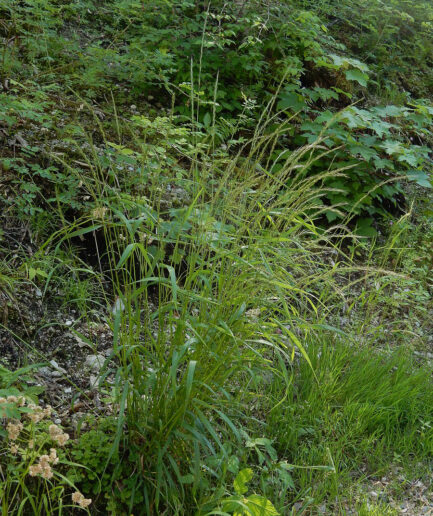
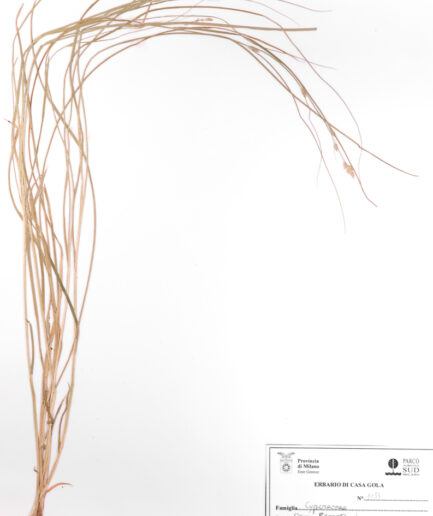
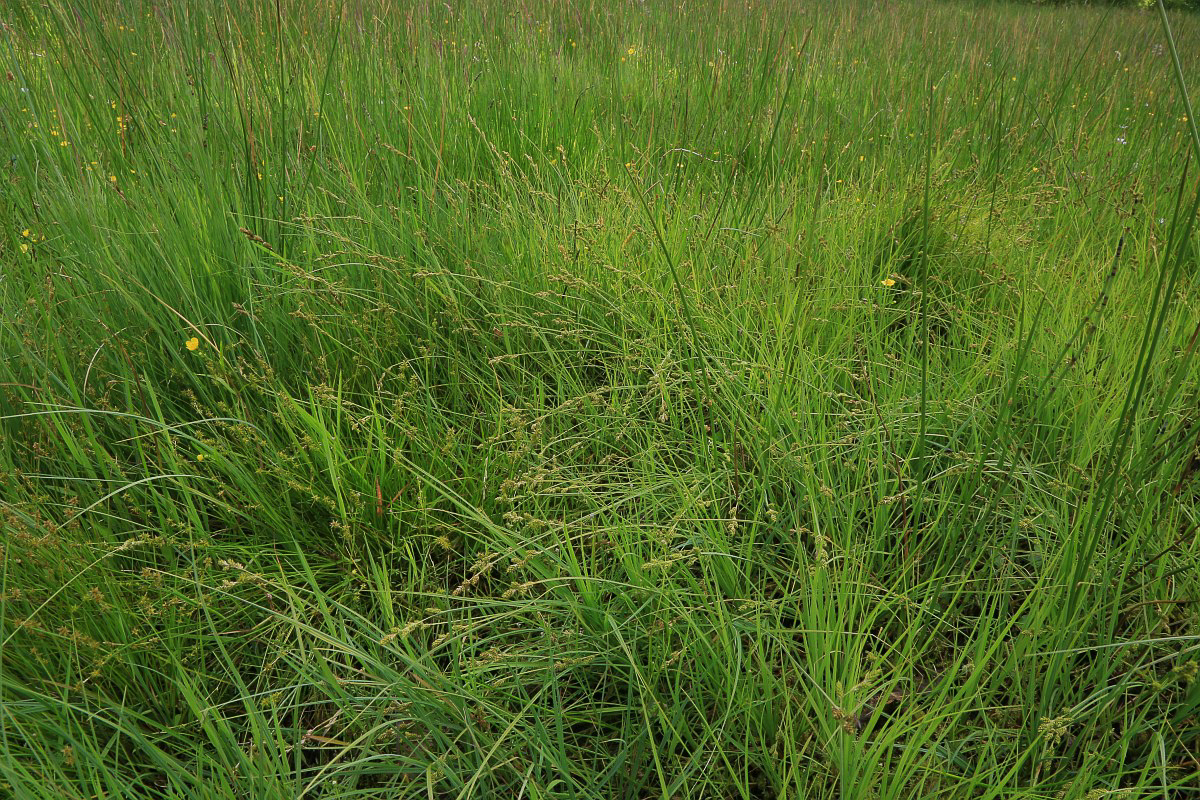
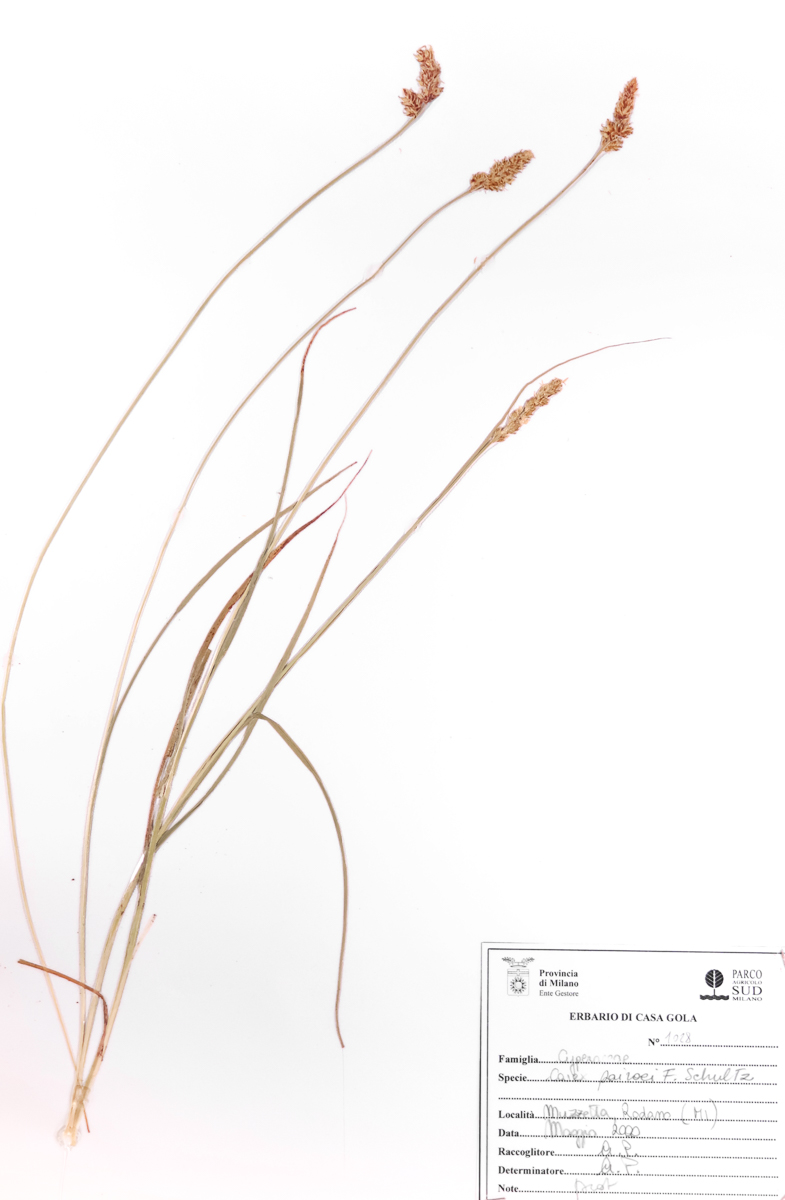
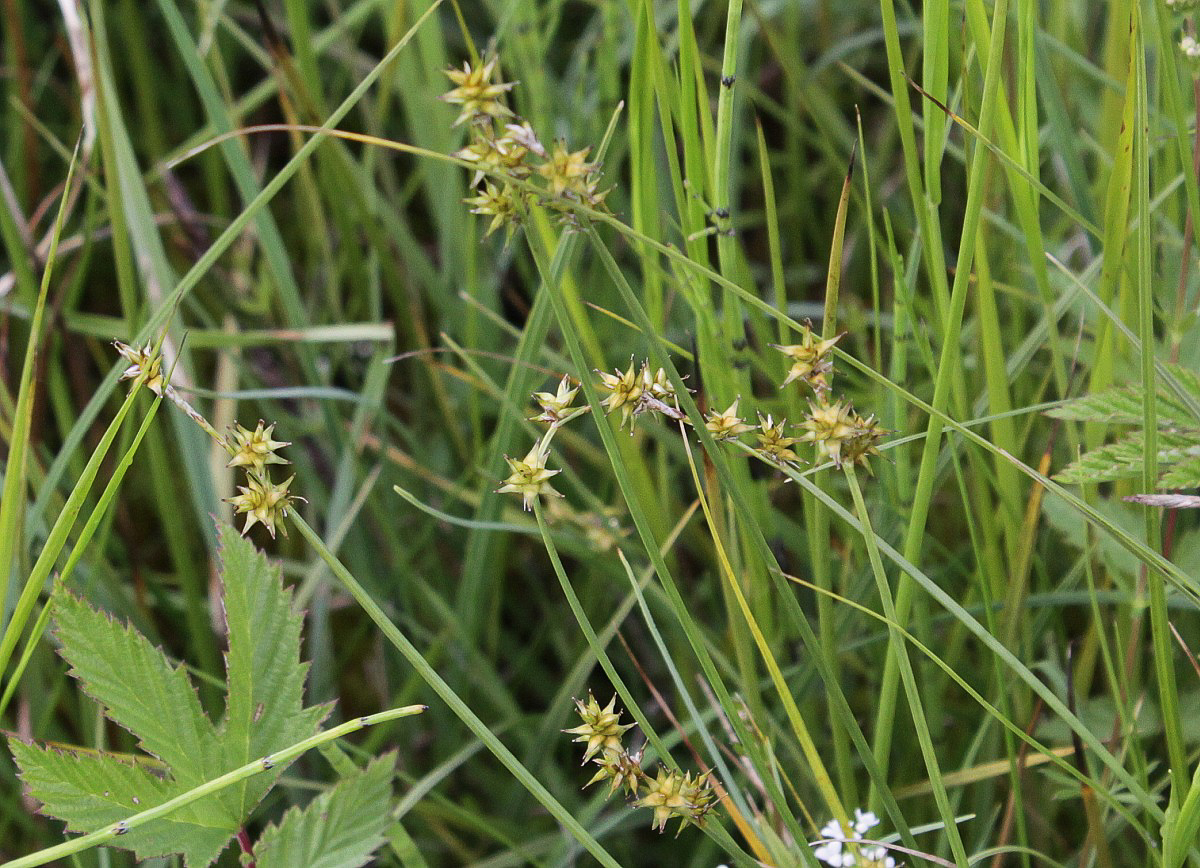
Portamento e dimensioni: pianta erbacea perenne alta 20-60 cm, con rizoma corto e robusto, formante cespi fino a 30 cm di diametro.


Fusto: fusto sottile, acutamente trigono, con un diametro max di 1 mm, generalmente lievemente ricurvo o sinuoso, scabroso nella parte superiore. Guaine basali più o meno fibrose di colore brunastro.


Foglie: foglie piane, larghe 2-4 mm, lunghe circa la metà del fusto, leggermente scabrose ai margini.


Fiori: infiorescenza semplice 1-3,5 (5) cm, in spiga oblunga, composta da (2) 3-8 spighe raggruppate.

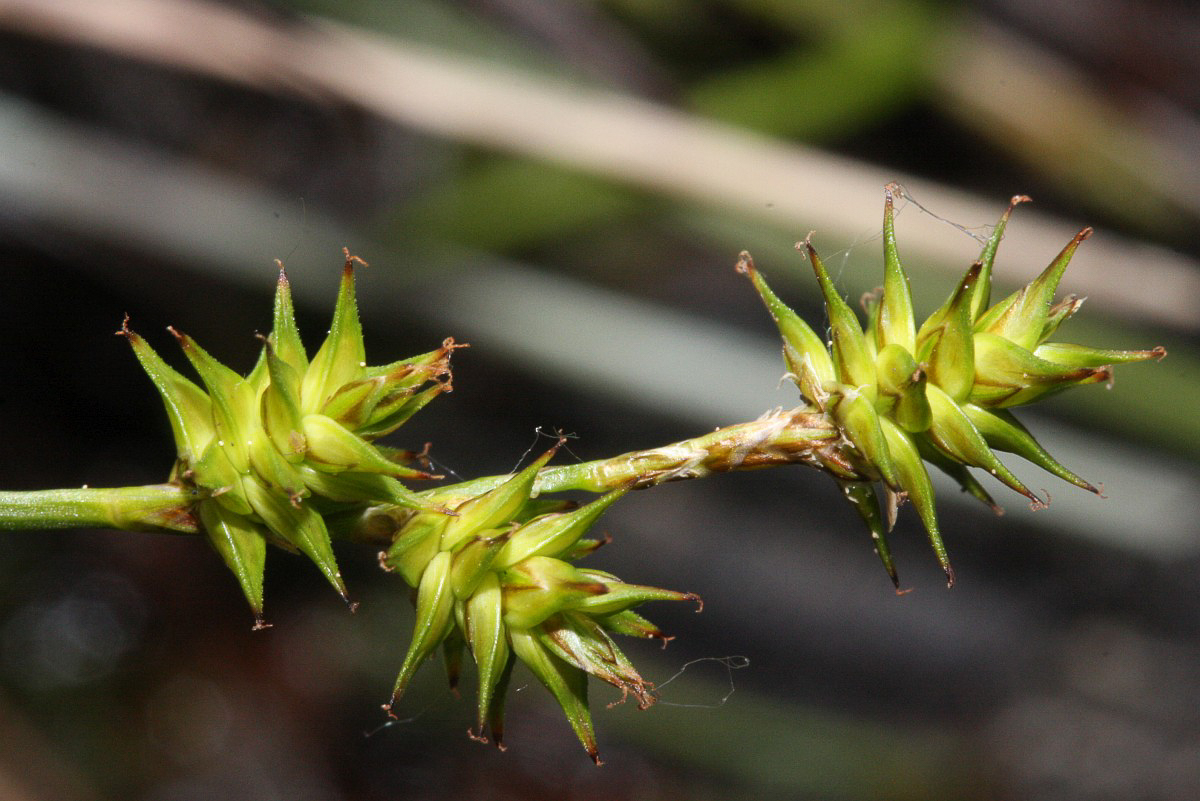
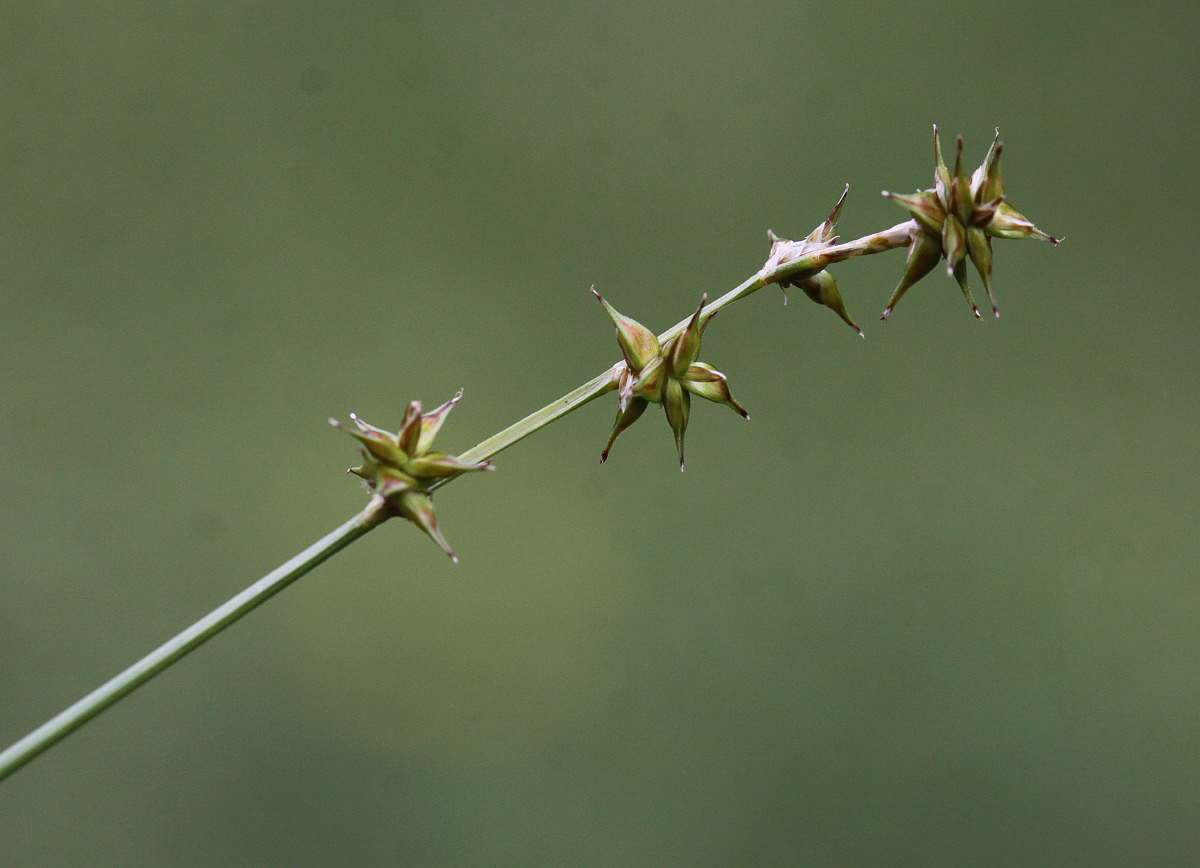
Spighe stellate, addensate in alto, sessili, sovrapposte, con fiori femminili alla base e fiori maschili all’apice, spesso interamente femminili. lunghe 5-12 mm. Glume maschili 3-4 mm, lanceolate-ellittiche, di colore verde-ialino o bruno chiaro e nervatura centrale verde, con apice acuto; glume femminili 3-4,5 mm, ovali, di colore bruno-chiaro con apice acuto, di lunghezza inferiore o uguale agli otricelli. Fiorisce tra marzo e luglio.


Frutti e semi: i frutti sono pseudanteci (otricelli) ellittici, senza ali, lunghi 3-4,5 mm, eretto patenti alla fruttificazione, lucidi, di colore da giallo verde a bruno o bruno nerastro a maturità, gradualmente ristretti in un becco bifido di (0,3) 0,5-0,8 (1) mm. Acheni (2) 2,2-2,6 (3) mm, ellittici o oblunghi, biconvessi, raramente piano-convessi, con base dello stilo persistente.


DISTRIBUZIONE E HABITAT


Presente in tutta Italia tranne le isole maggiori, Campania, Puglia e Umbria. Cresce nelle siepi, cespugli, cedui, margini di strade, viottoli di campagna, periferie di abitati, a ridosso di muri, tra  0 e 1.500 m


Foto: su licenza gratuita di Saxifraga e Hans Boll, Rutger Barendse, Peter Meininger

Famiglia

Cyperaceae

Specie

Carex pairae F. Schultz

Tipologia

Pianta erbacea

Habitat

Aree antropizzate, Boschi e boscaglie

Paira’s rough sedge


Scientific name: Carex pairae F.W.Schultz 

Family: Cyperaceae


MORPHOLOGY


Habit and size: Perennial herbaceous plant, 20-60 cm tall, with a short and robust rhizome, forming tufts up to 30 cm in diameter.


Stem: Thin stem, sharply trigonous, with a maximum diameter of 1 mm, generally slightly curved or sinuous, rough in the upper part. Basal sheaths are more or less fibrous, brownish.


Leaves: Leaves are flat, 2-4 mm wide, about half the length of the stem, slightly rough at the edges.


Flowers: Simple inflorescence, 1-3.5 (5) cm, in elongated spike, composed of (2) 3-8 grouped spikes. Spikes are dense, sessile, overlapping, with female flowers at the base and male flowers at the apex, often entirely female. They are 5-12 mm long. Male glumes are 3-4 mm, lanceolate-elliptic, light greenish or light brown with a green central vein, with an acute apex; female glumes are 3-4.5 mm, oval, light brown with an acute apex, shorter or equal in length to the utricles. Blooms between March and July.


Fruits and seeds: The fruits are ellipsoid pseudanthia (utricle), without wings, 3-4.5 mm long, erect-spreading at fruiting, shiny, ranging from yellow-green to brown or dark brown at maturity, gradually narrowed into a bifid beak of (0.3) 0.5-0.8 (1) mm. Achenes are (2) 2.2-2.6 (3) mm, ellipsoid or oblong, biconvex, rarely plano-convex, with a persistent stylar base.


DISTRIBUTION AND HABITAT


Present throughout Italy except the major islands, Campania, Puglia, and Umbria. It grows in hedges, thickets, woods, road margins, country lanes, outskirts of settlements, along walls, between 0 and 1,500 m.


Photo: under free license from Saxifraga and Hans Boll, Rutger Barendse, Peter Meininger

Famiglia

Cyperaceae

Specie

Carex pairae F. Schultz

Tipologia

Pianta erbacea

Habitat

Aree antropizzate, Boschi e boscaglie