
Paira’s rough sedge
Scientific name: Carex pairae F.W.Schultz
Family: Cyperaceae
MORPHOLOGY
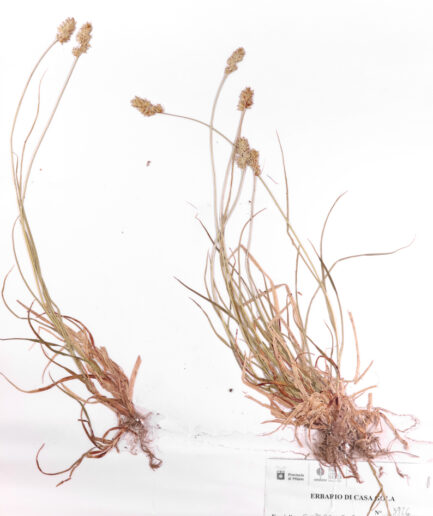
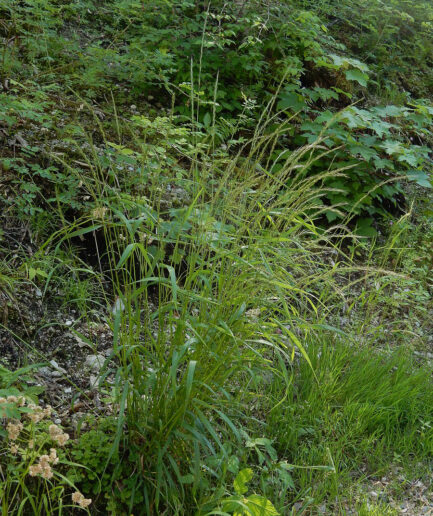
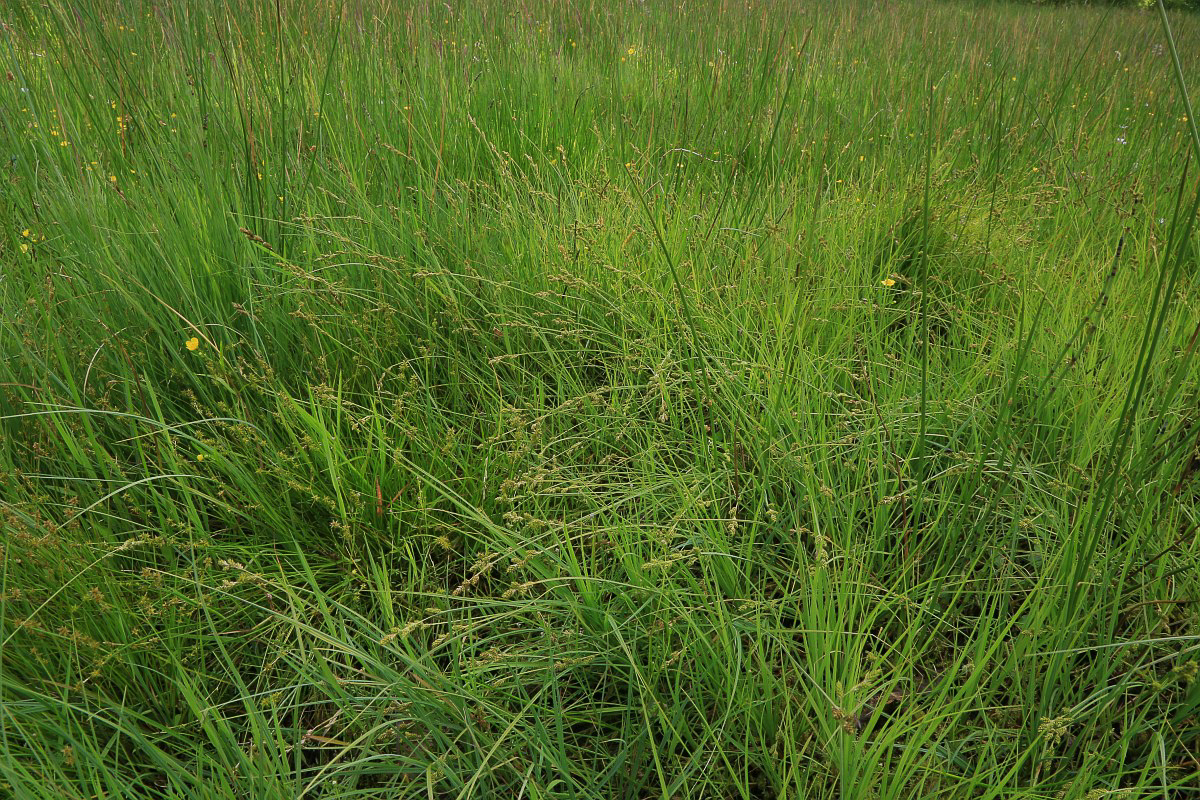
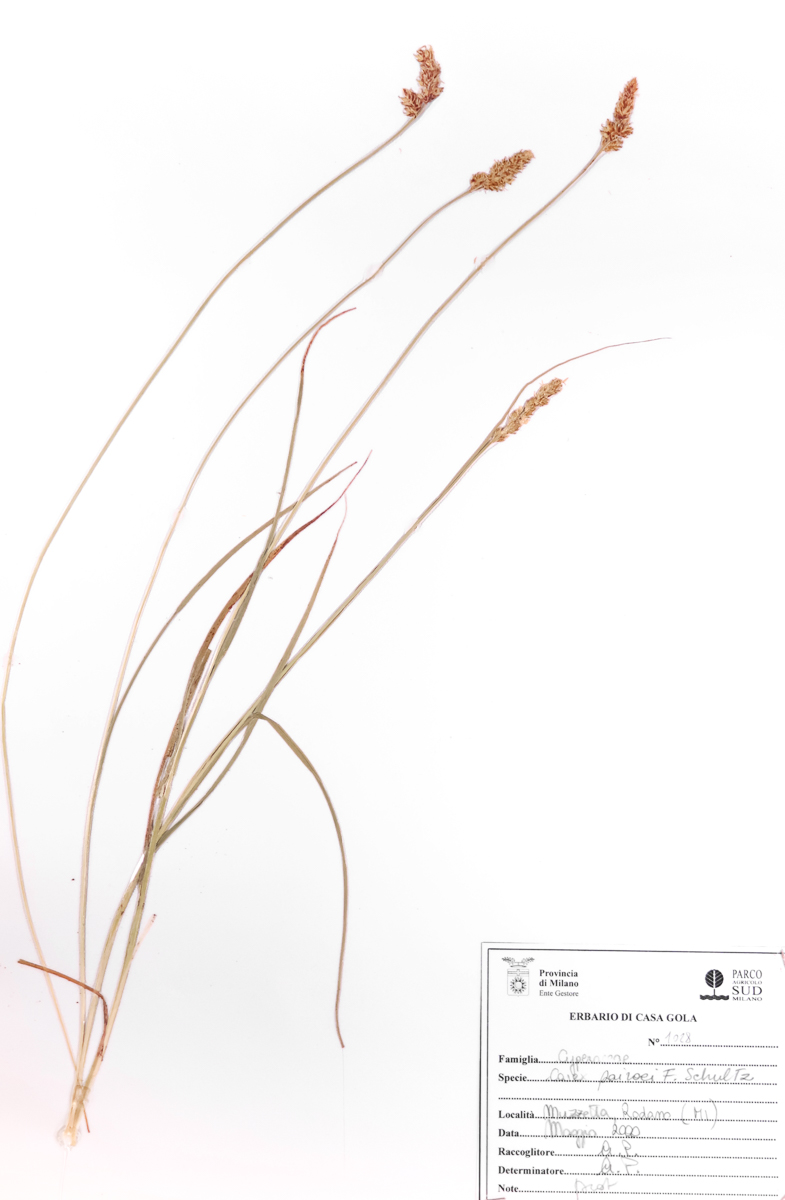
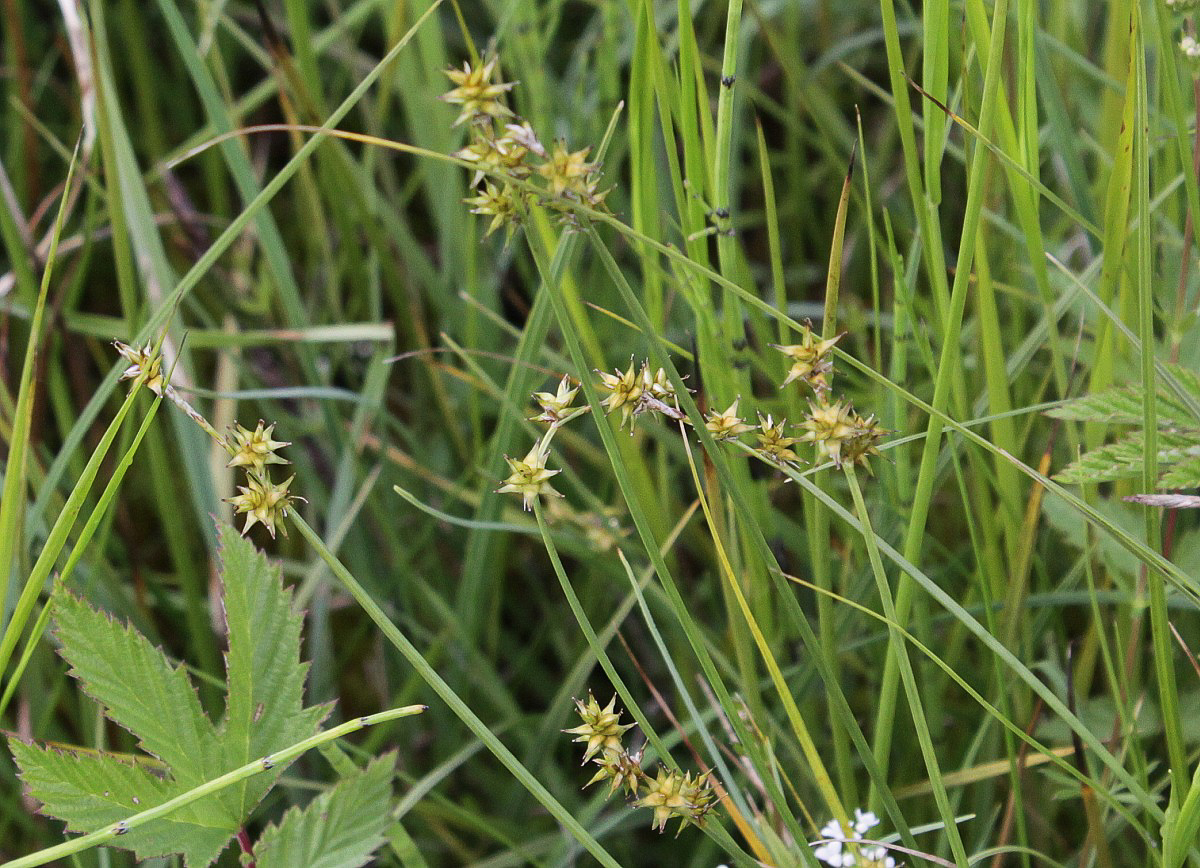
Habit and size: Perennial herbaceous plant, 20-60 cm tall, with a short and robust rhizome, forming tufts up to 30 cm in diameter.
Stem: Thin stem, sharply trigonous, with a maximum diameter of 1 mm, generally slightly curved or sinuous, rough in the upper part. Basal sheaths are more or less fibrous, brownish.
Leaves: Leaves are flat, 2-4 mm wide, about half the length of the stem, slightly rough at the edges.
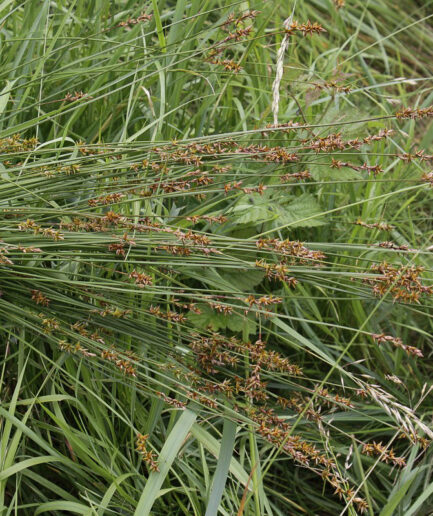
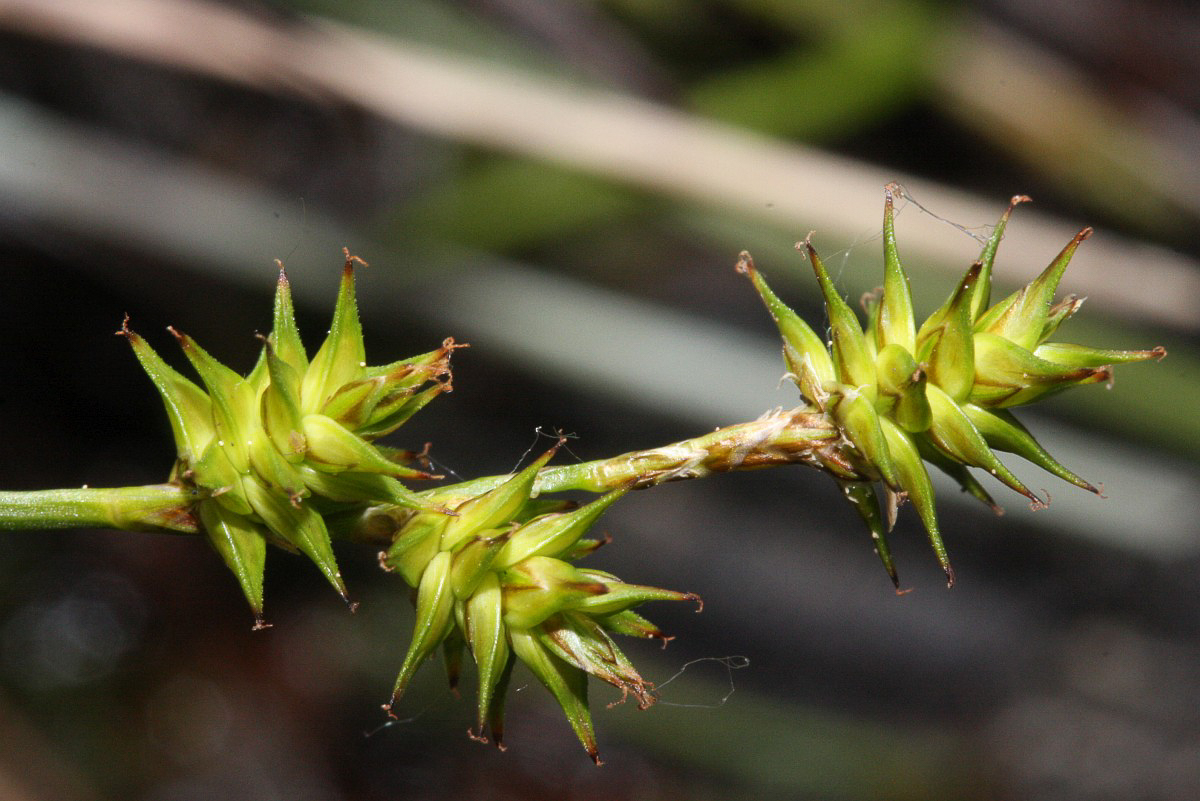
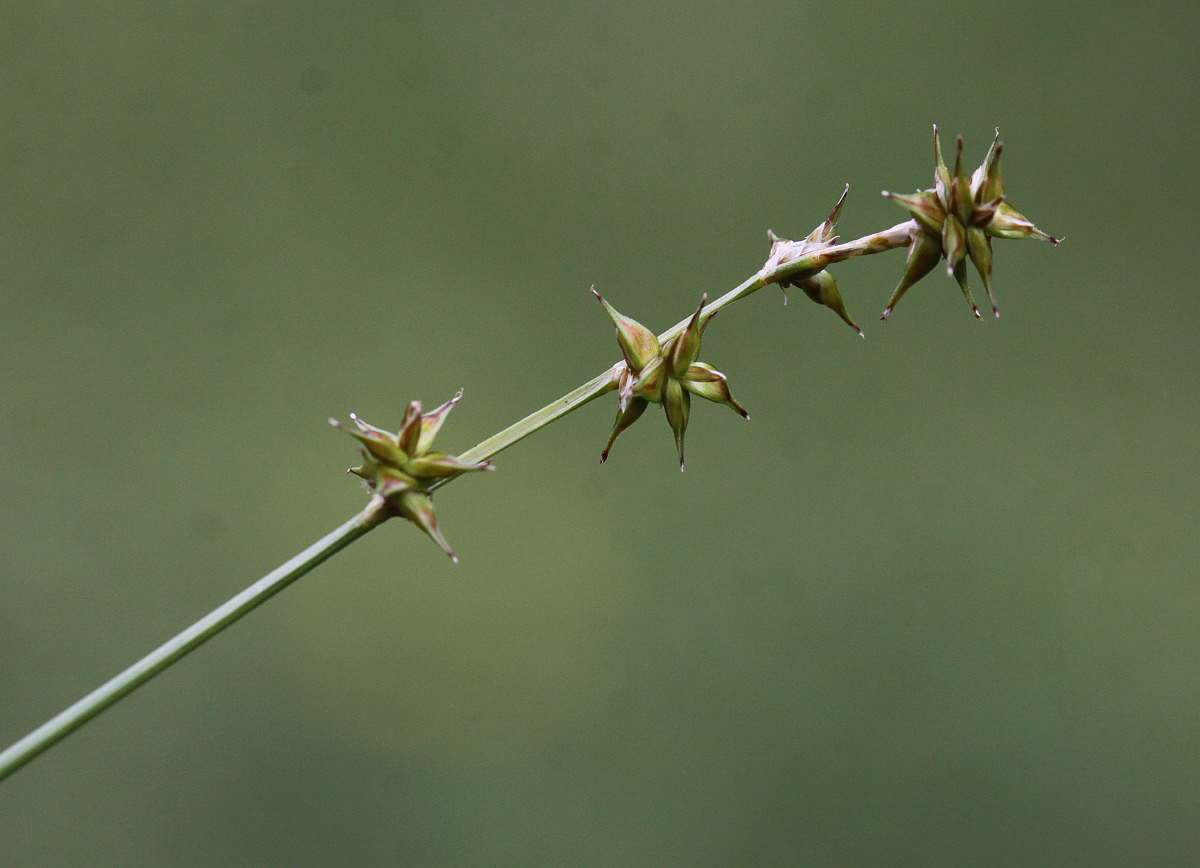
Flowers: Simple inflorescence, 1-3.5 (5) cm, in elongated spike, composed of (2) 3-8 grouped spikes. Spikes are dense, sessile, overlapping, with female flowers at the base and male flowers at the apex, often entirely female. They are 5-12 mm long. Male glumes are 3-4 mm, lanceolate-elliptic, light greenish or light brown with a green central vein, with an acute apex; female glumes are 3-4.5 mm, oval, light brown with an acute apex, shorter or equal in length to the utricles. Blooms between March and July.
Fruits and seeds: The fruits are ellipsoid pseudanthia (utricle), without wings, 3-4.5 mm long, erect-spreading at fruiting, shiny, ranging from yellow-green to brown or dark brown at maturity, gradually narrowed into a bifid beak of (0.3) 0.5-0.8 (1) mm. Achenes are (2) 2.2-2.6 (3) mm, ellipsoid or oblong, biconvex, rarely plano-convex, with a persistent stylar base.
DISTRIBUTION AND HABITAT
Present throughout Italy except the major islands, Campania, Puglia, and Umbria. It grows in hedges, thickets, woods, road margins, country lanes, outskirts of settlements, along walls, between 0 and 1,500 m.
Photo: under free license from Saxifraga and Hans Boll, Rutger Barendse, Peter Meininger