



Spring Snowflake
Scientific name: Leucojum vernum L.
Family: Amaryllidaceae
MORPHOLOGY
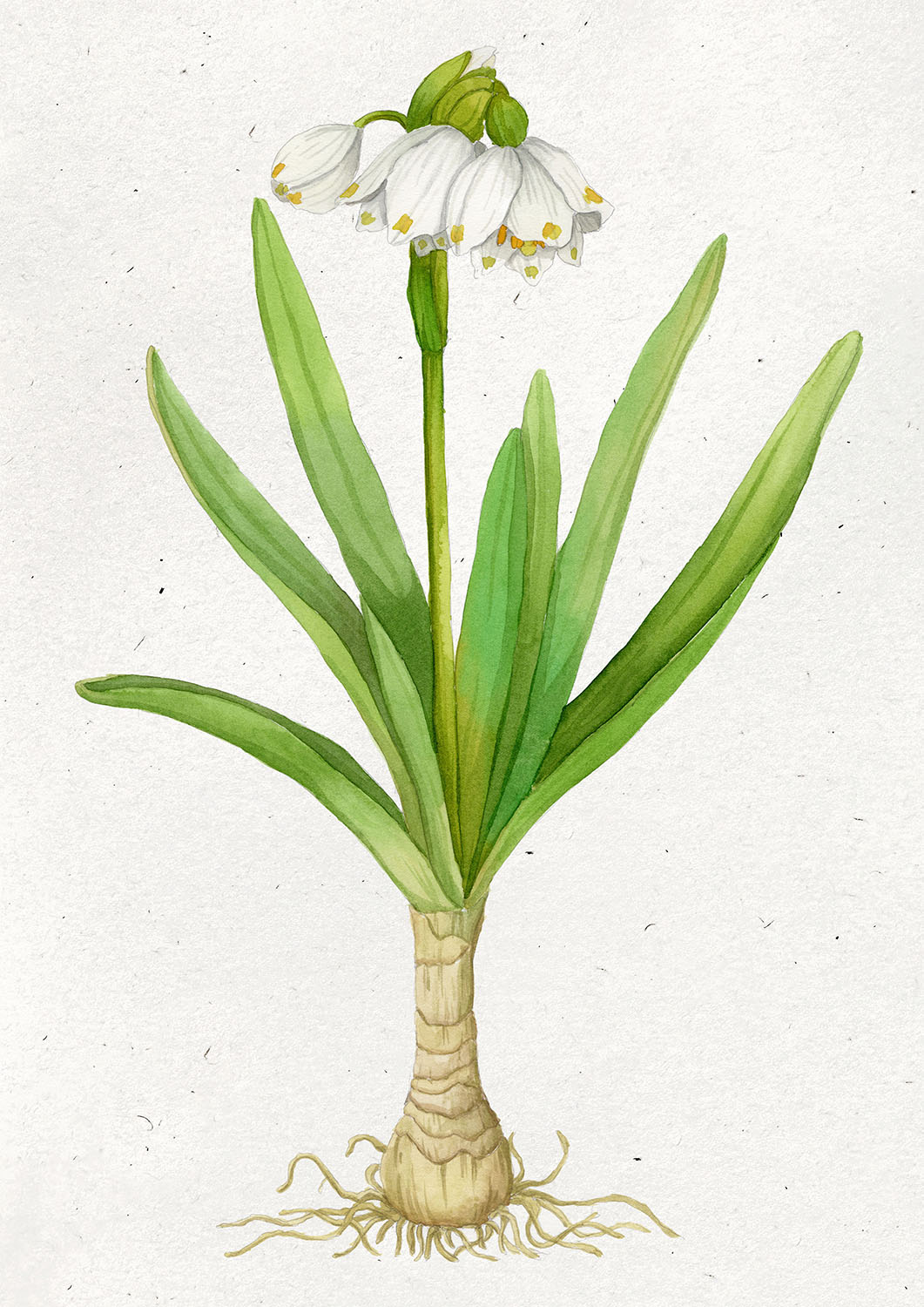
Growth habit and size: Perennial herbaceous bulbous plant, 10-30 cm tall; the bulb is subspherical (12-30 mm in diameter), wrapped in whitish tunics.
Stem: Compressed, bifurcated.
Leaves: All basal leaves are shorter than the scape and have a narrowly linear blade, 5-12 mm wide, dark green (shiny on the upper surface).
Flowers: Normally solitary, occasionally two per scape, carried on a recurved peduncle, bell-shaped, with 6 tepals, 15-22 mm long, white with a green spot. It blooms from January to April.
Fruits and seeds: The fruit is a pear-shaped capsule (major diameter 16/17 mm), fleshy and dark green, divided into three chambers, containing numerous light brownish-yellow, oblong seeds.
DISTRIBUTION AND HABITAT
The species is progressively becoming rare, especially in plain areas, but remains relatively common in several mountainous regions of Northern Italy. It is found in alder woods, along watercourses, and the margins of marshes, ponds, and ditches, from 0 to 1,200 m. Indifferent to the substrate.
USE
The use of Leucojum vernum L. in traditional phytopharmacology is documented in the literature, with its main use linked to the emetic and antineuralgic properties of its extracts. These properties find partial confirmation in modern pharmacology, as galantamine is a potent acetylcholinesterase inhibitor (acetylcholine plays a fundamental role in the transmission of nerve impulses, including those related to painful stimuli). However, the high toxicity of the plant, capable of inducing severe gastrointestinal and neurological symptoms, makes its domestic use highly inadvisable.
Before taking any plant-based product (medicinal or non-medicinal) for therapeutic or similar purposes, it is always advisable to consult a doctor.
Photo: Kindly provided by Claudio Farinati