
Borsapastore comune

Nome scientifico: Capsella bursa-pastoris (L.) Medik.

Famiglia: Brassicaceae 


MORFOLOGIA


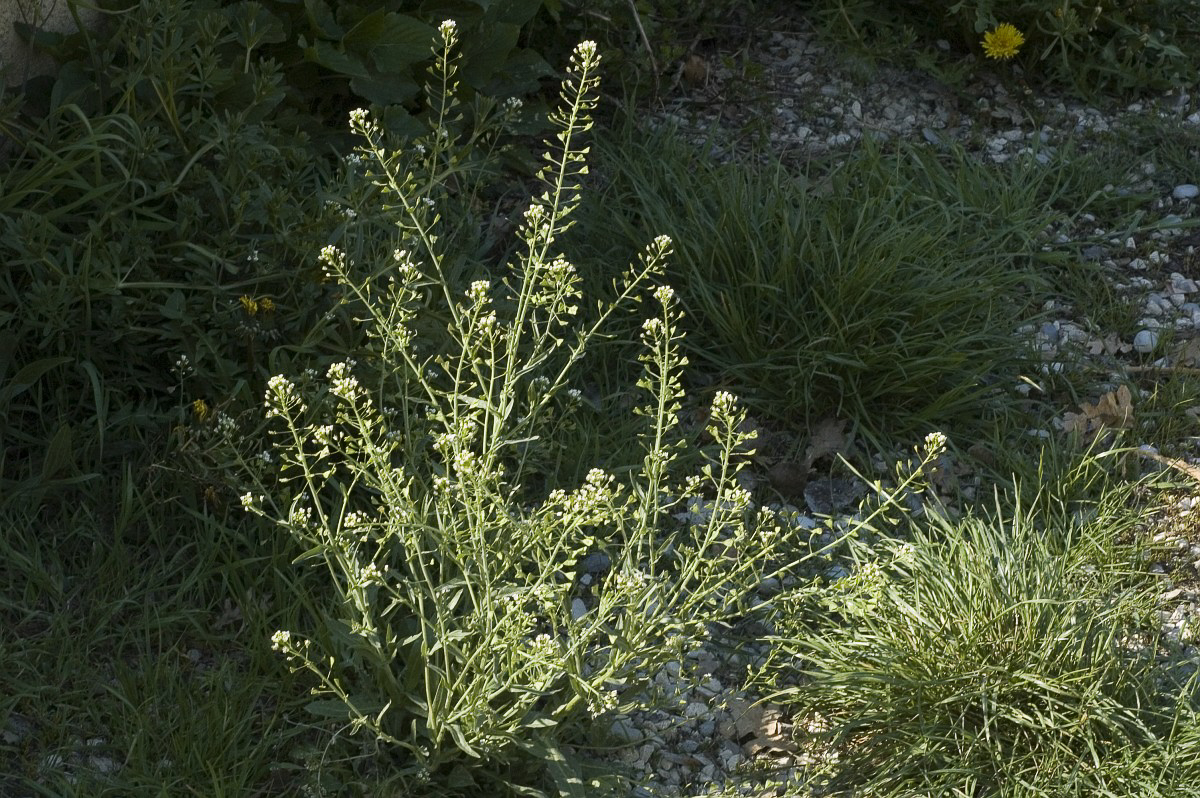
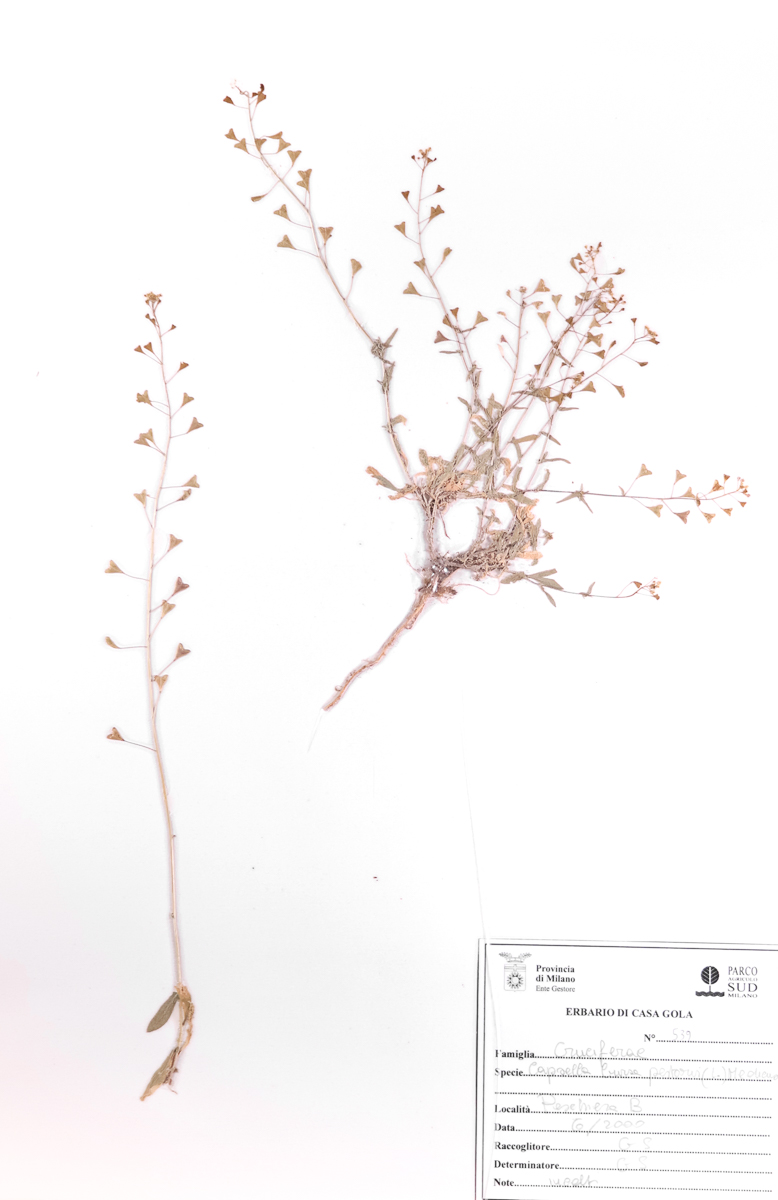
Portamento e dimensioni: pianta annuale o biennale, erbacea, di aspetto estremamente variabile, con radice legnosa a fittone, altezza 10÷60 cm. La pianta se stropicciata emana un forte odore di solforato.


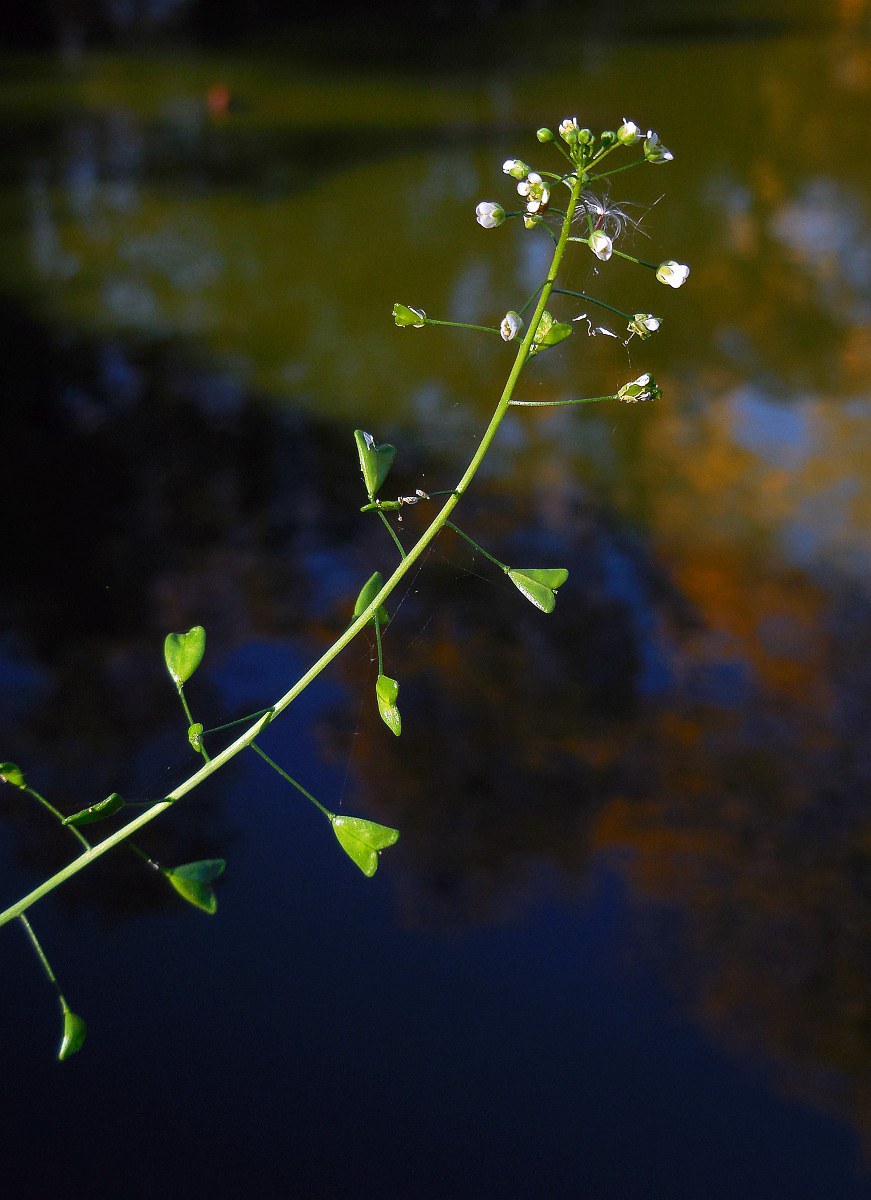
Fusto: fusti eretti, esili, ramificati glabri o coperti di corti peli.   


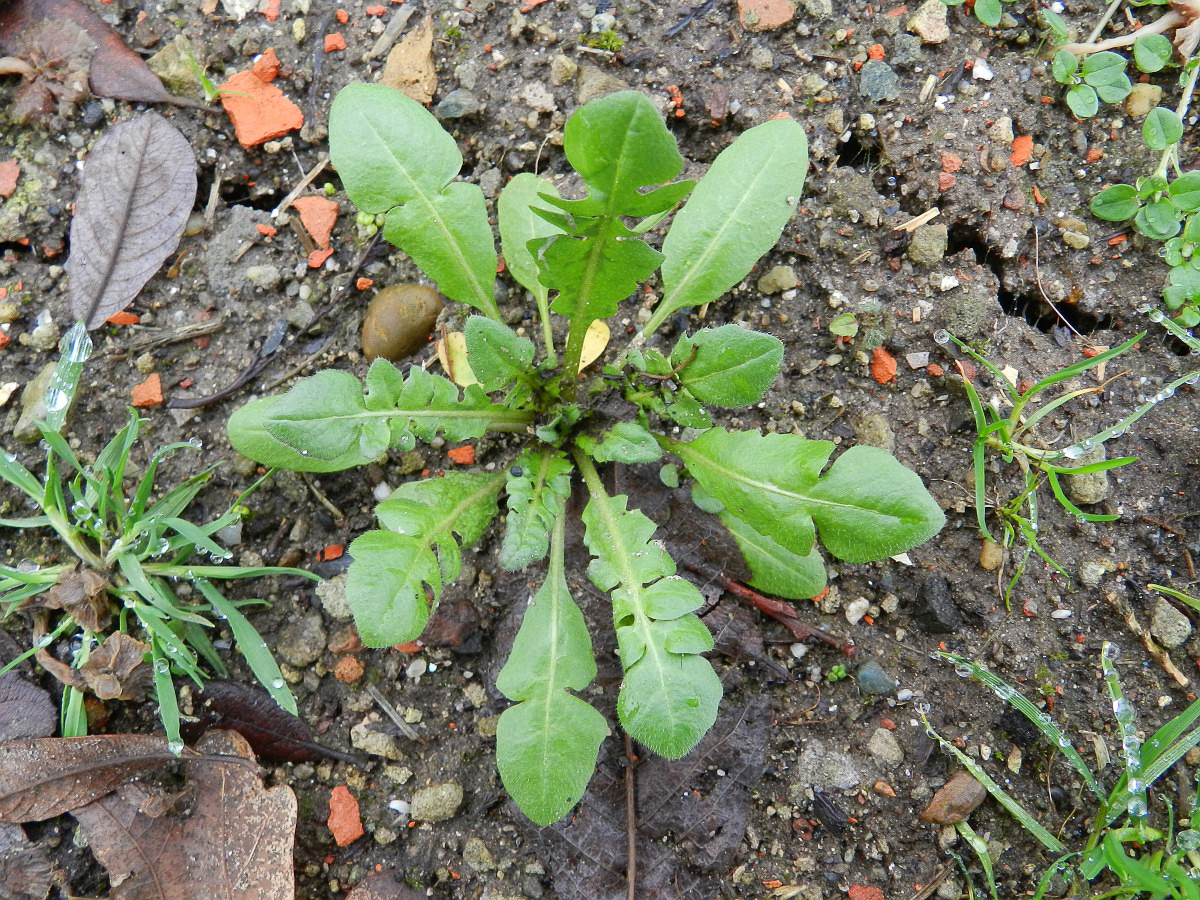
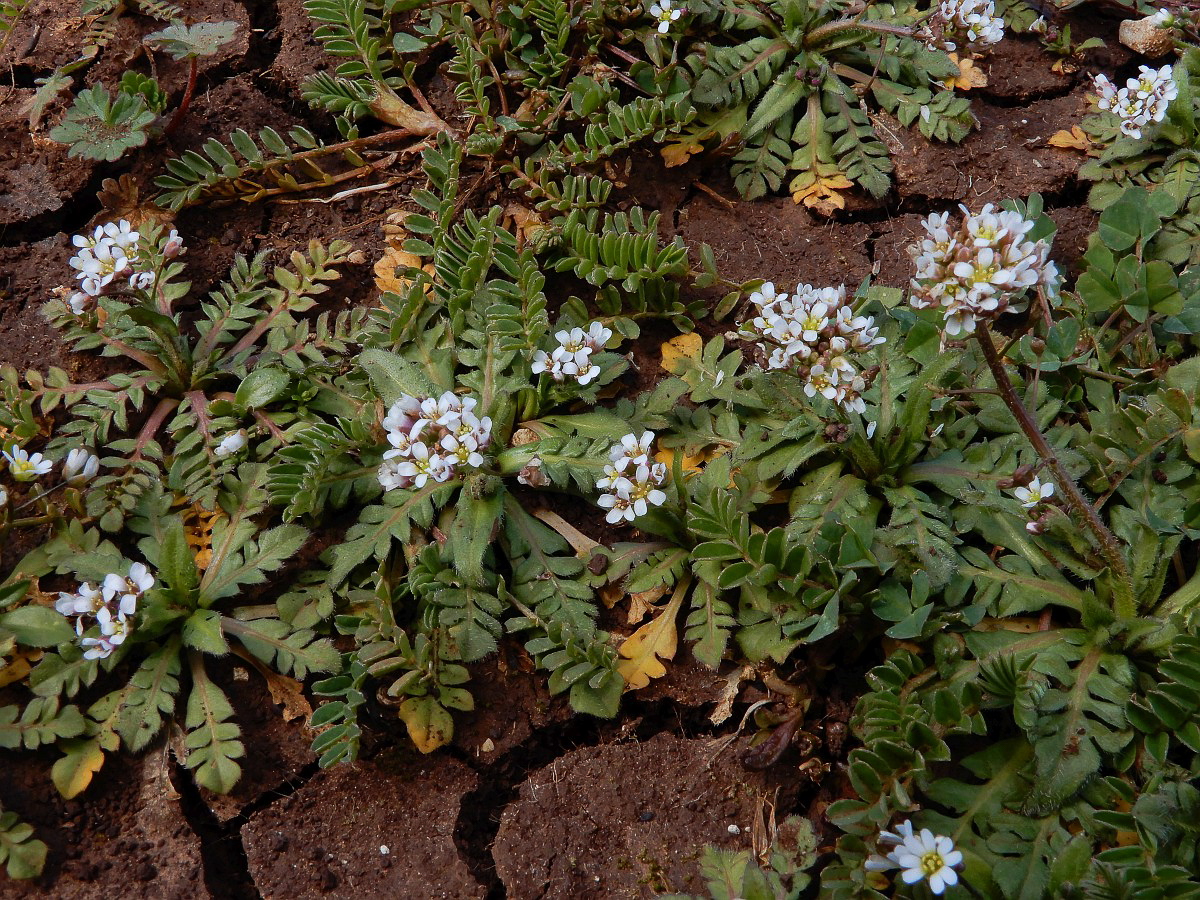
Foglie: Le foglie hanno forma estremamente variabile, le basali riunite in rosetta, hanno un breve picciolo, sono lanceolato-lobate, dentate o intere, le cauline sono sessili, hanno forma sagittata e sono amplessicauli, progressivamente intere, glabre.


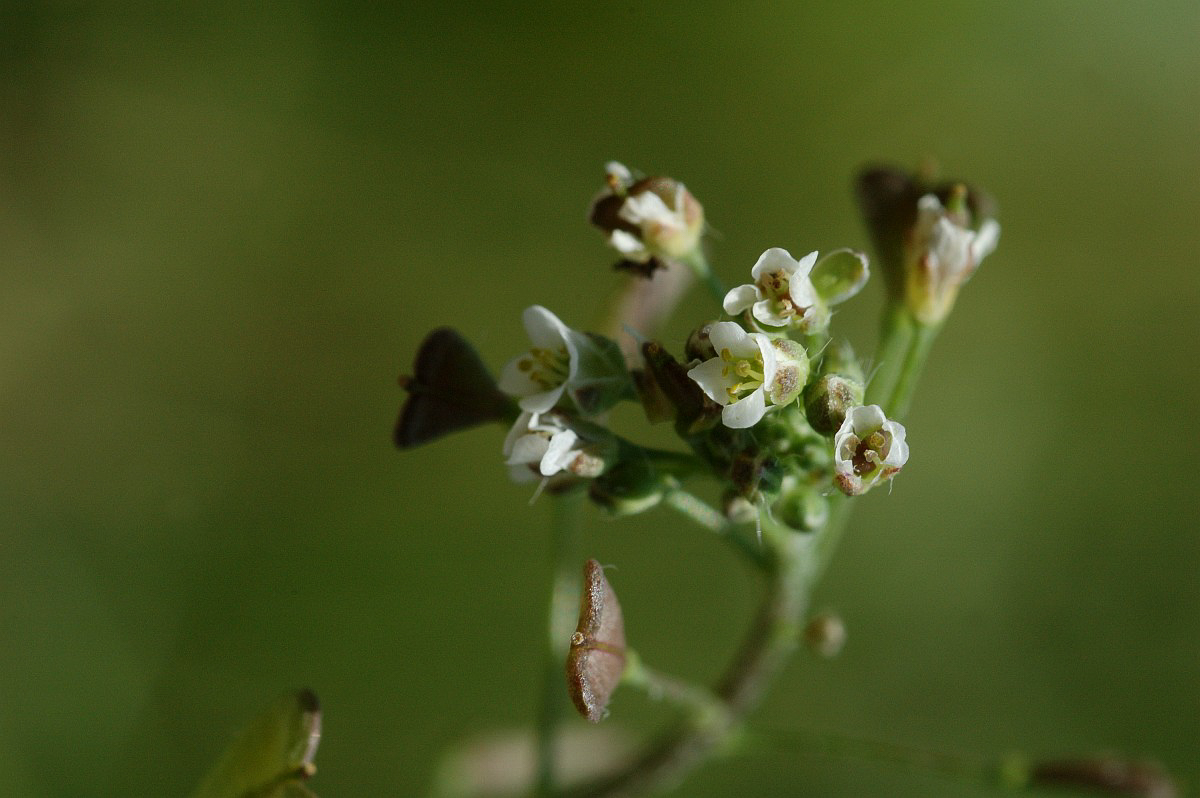
Fiori: i fiori sono ermafroditi, riuniti in piccoli grappoli terminali su racemi senza foglie; di colore bianco, hanno calice composto da 4 sepali verdi, ovali, aperti. La corolla è composta da 4 petali bianchi, opposti, più lunghi dei sepali del calice. Fiorisce tutto l’anno.


Frutti e semi: i frutti sono siliquette appiattite, cuoriformi, con i lati rettilinei o leggermente convessi; contengono piccoli semi oblunghi di colore marrone. 


DISTRIBUZIONE E HABITAT


Presente in tutta Italia. Cresce in luoghi molto umidi, allagati perennemente. Adattandosi ad ogni tipo di clima vegeta negli orti, nelle vigne, lungo i vecchi muri, negli incolti, nei luoghi coltivati, nelle radure dei boschi;  Generalmente fra 0 e 1.800 m ma anche sino a 2.600 m.


UTILIZZI


Utile nelle metrorragie e nelle menorragie di lieve entità, della pubertà e della menopausa; capace di frenare e regolare i flussi mestruali troppo abbondanti. In questi casi agisce a livello della muscolatura uterina, favorendone la contrazione e determinando, come conseguenza, un freno all’emorragia in corso e di riflesso regolarizza la cadenza del ciclo mestruale, soprattutto nei soggetti con mestruazioni abbondanti e dolorose. Utile anche nella cura delle epistassi, delle diarree, delle emorroidi e delle varici. Lo stelo fresco, tritato e macerato per 24 ore nell’aceto può essere applicato sulle infezioni cutanee. Dopo la scoperta degli alcaloidi della Segale cornuta il suo impiego è stato abbandonato a causa della scarsa affidabilità dei suoi effetti, che dipendono dall’età del preparato. Prima di assumere qualsiasi prodotto di origine vegetale (farmaco o non farmaco) per fini terapeutici o simil-terapeutici, è sempre opportuno rivolgersi preventivamente al proprio medico.

Pur essendo commestibile, la Capsella si consuma generalmente con altre insalate rustiche, in particolare si accompagna bene con il radicchio selvatico. In alcune località viene mangiata anche cotta.


CURIOSITÀ


Si tratta di specie a più cicli: i semi cadono appena nascono, per cui la si può trovare fiorita tutto l’anno. Dai semi, in tempo di carestia, si estraeva olio. In botanica la pianta viene inoltre usata come organismo modello per lo studio della morfogenesi, mentre l’industria ne ricava insetticidi. Per migliaia di anni la Borsa del pastore è stata impiegata come alimento: i semi di questa pianta sono stati ritrovati nello stomaco dell’uomo di Tollund, (ca. 500 a.C.- 400 d.C.) e negli insediamenti neolitici di Çatal Hüyük , importante centro abitato dell’epoca neolitica sito nella regione di Konya in Turchia, che risalgono al 6.000 a.C. I semi di C. bursa-pastoris, quando si inumidiscono secernono un fluido viscoso in grado di catturare insetti ma, sebbene sia stata dimostrata la produzione di enzimi digestivi e la capacità di assorbimento degli elementi organici intrappolati sulla superficie, ancora non si conoscono i vantaggi che potrebbe trarre la pianta da questa situazione.


Foto: su licenza gratuita di Saxifraga e Jan van der Straaten, Rutger Barendse, Ed Stikvoort

Famiglia

Brassicaceae

Specie

Capsella bursa-pastoris (L.) Mediens

Tipologia

Pianta erbacea

Habitat

Aree antropizzate, Incolti

Shepherd’s purse


Scientific name: Capsella bursa-pastoris (L.) Medik. 

Family: Brassicaceae


MORPHOLOGY


Habit and dimensions: Annual or biennial herbaceous plant, extremely variable in appearance, with a woody taproot, reaching a height of 10÷60 cm. The plant emits a strong sulfur-like odor when crushed.


Stems: Erect, slender, branched, glabrous or covered with short hairs.


Leaves: The leaves vary greatly in shape, with basal leaves forming a rosette, short petiolate, lanceolate-lobate, dentate, or entire; cauline leaves are sessile, arrow-shaped, and clasping, progressively becoming entire and glabrous.


Flowers: Hermaphrodite flowers are grouped in small terminal clusters on leafless racemes; they are white, with a calyx composed of 4 green, open oval sepals. The corolla consists of 4 white petals, opposite, longer than the calyx sepals. It blooms throughout the year.


Fruits and seeds: The fruits are flattened, heart-shaped silicles, with straight or slightly convex sides, containing small brownish oblong seeds.


DISTRIBUTION AND HABITAT


Present throughout Italy. It grows in very humid, perennially flooded places. Adapting to various climates, it thrives in vegetable gardens, vineyards, along old walls, in uncultivated areas, cultivated fields, and clearings in forests; generally found between 0 and 1,800 m but also up to 2,600 m.


USE


Useful in cases of mild metrorrhagia and menorrhagia, both in puberty and menopause; capable of slowing down and regulating excessively heavy menstrual flows. In these cases, it acts on the uterine musculature, promoting contraction and consequently reducing ongoing bleeding, thereby regulating the menstrual cycle, especially in individuals with heavy and painful menstruation. Also useful in treating nosebleeds, diarrhea, hemorrhoids, and varicose veins. The fresh stem, chopped and macerated for 24 hours in vinegar, can be applied to skin infections. After the discovery of ergot alkaloids, its use has been abandoned due to the unreliable effects, which depend on the age of the preparation. Before taking any plant-based product (medicinal or non-medicinal) for therapeutic or similar purposes, it is always advisable to consult a doctor. Although edible, Shepherd’s Purse is generally consumed with other rustic salads, particularly complementing wild chicory. In some areas, it is also eaten cooked.


INTERESTING FCTS


It is a species with multiple cycles: the seeds are dispersed as soon as they mature, so the plant can be found in bloom throughout the year. In times of famine, oil was extracted from the seeds. In botany, the plant is also used as a model organism for studying morphogenesis, while the industry derives insecticides from it. For thousands of years, Shepherd’s Purse has been used as food: the seeds of this plant have been found in the stomach of the Tollund Man (ca. 500 BC-400 AD) and in the Neolithic settlements of Çatal Hüyük, an important Neolithic settlement located in the region of Konya in Turkey, dating back to 6000 BC. The seeds of C. bursa-pastoris secrete a viscous fluid when moistened, capable of trapping insects. Although the production of digestive enzymes and the ability to absorb organic elements trapped on the surface have been demonstrated, the advantages that the plant could derive from this situation are still unknown.


Photo: Used under a free license from Saxifraga and Jan van der Straaten, Rutger Barendse, Ed Stikvoort.
Famiglia

Brassicaceae

Specie

Capsella bursa-pastoris (L.) Mediens

Tipologia

Pianta erbacea

Habitat

Aree antropizzate, Incolti