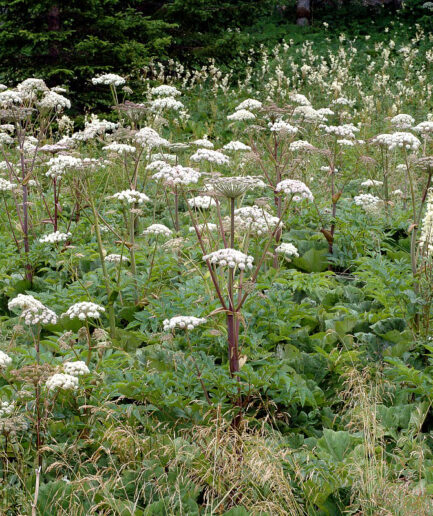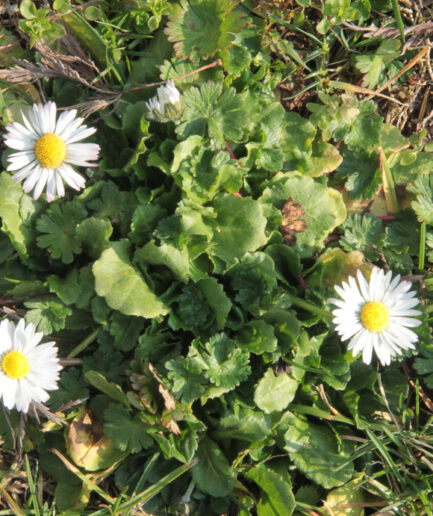

Shepherd’s purse
Scientific name: Capsella bursa-pastoris (L.) Medik.
Family: Brassicaceae
MORPHOLOGY
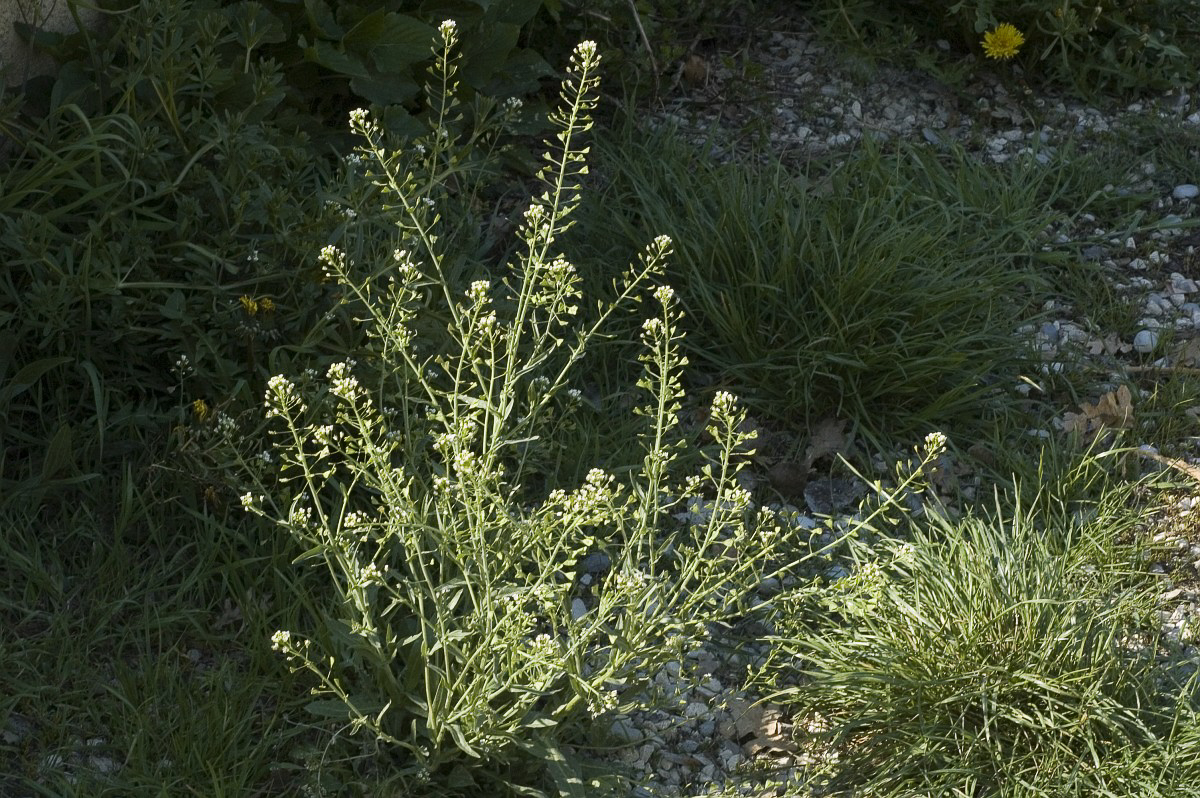
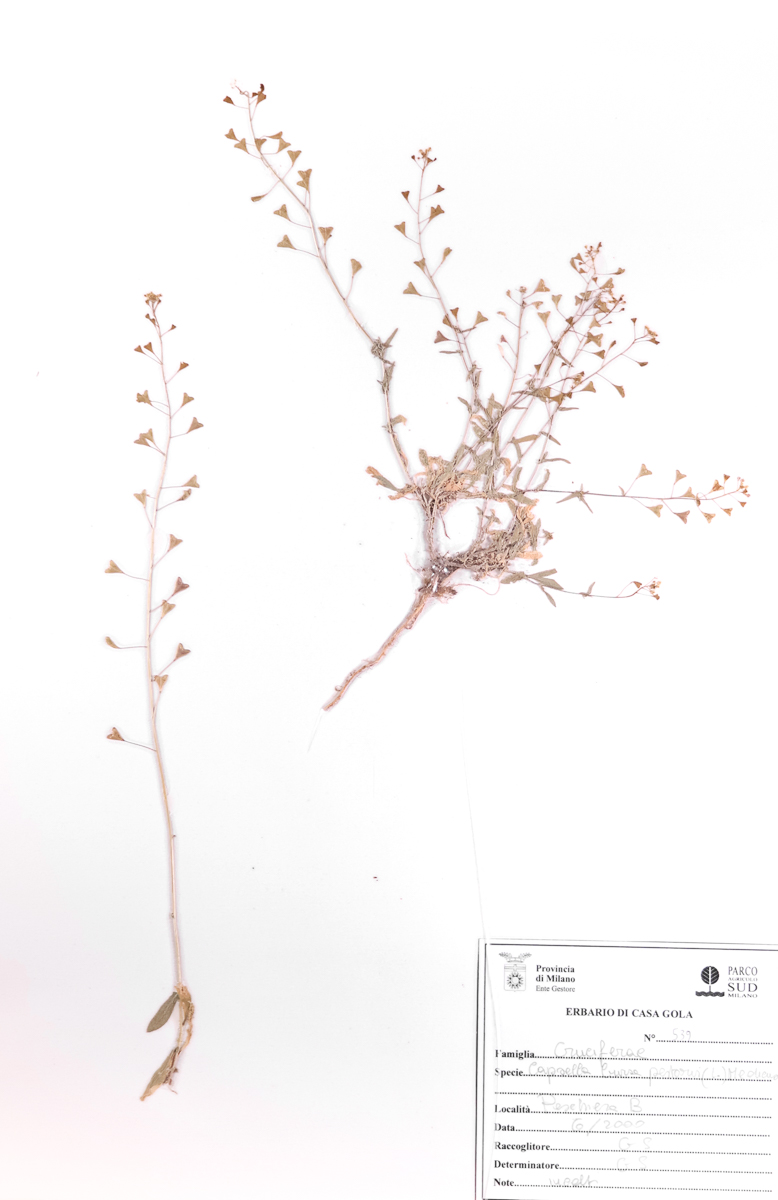
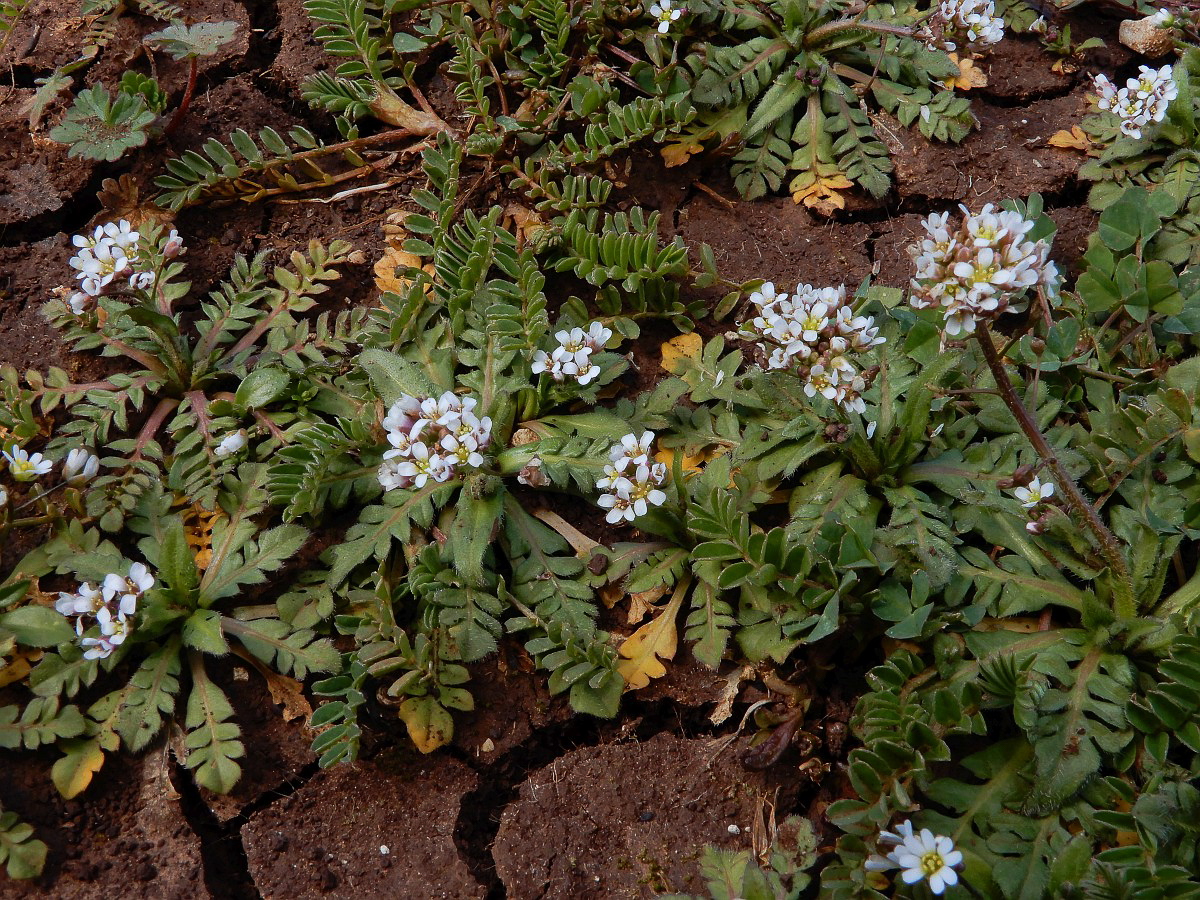
Habit and dimensions: Annual or biennial herbaceous plant, extremely variable in appearance, with a woody taproot, reaching a height of 10÷60 cm. The plant emits a strong sulfur-like odor when crushed.
Stems: Erect, slender, branched, glabrous or covered with short hairs.
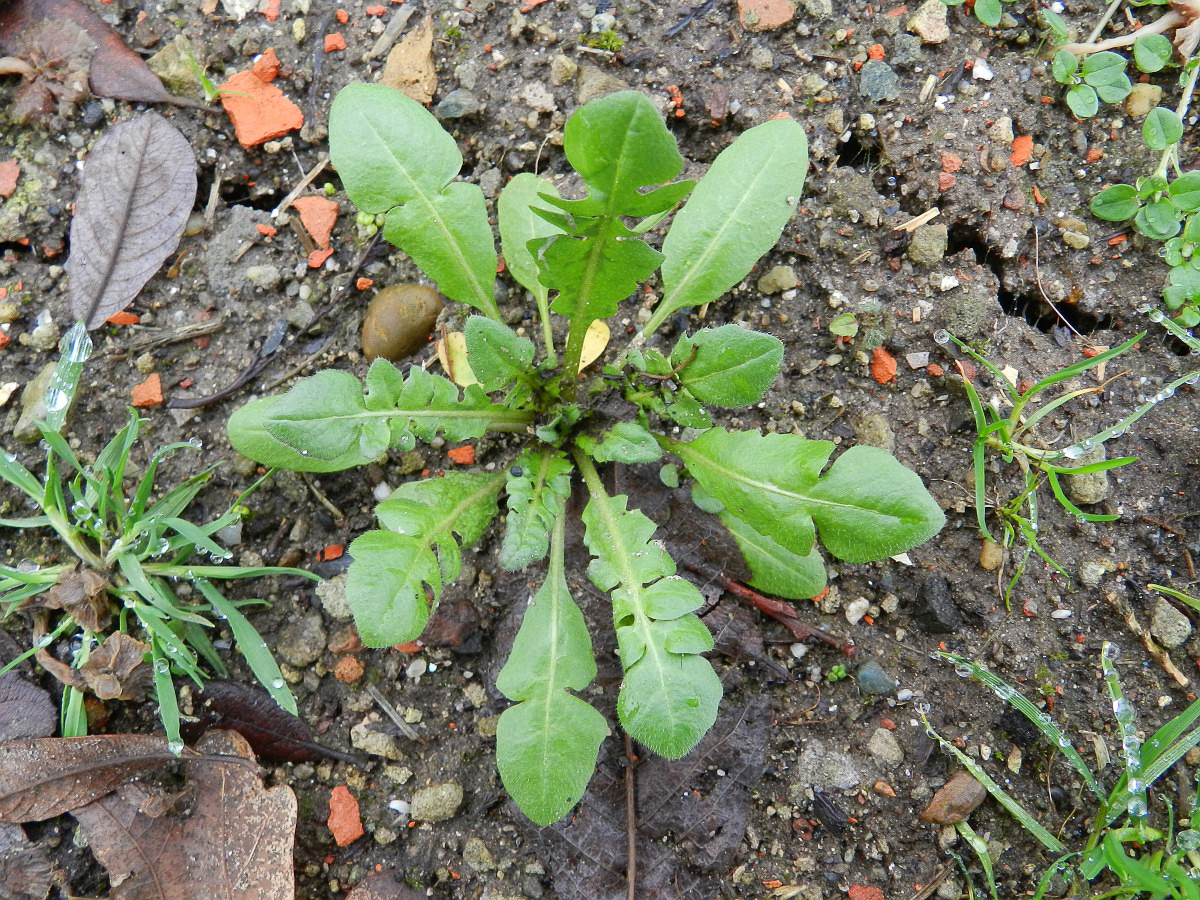
Leaves: The leaves vary greatly in shape, with basal leaves forming a rosette, short petiolate, lanceolate-lobate, dentate, or entire; cauline leaves are sessile, arrow-shaped, and clasping, progressively becoming entire and glabrous.
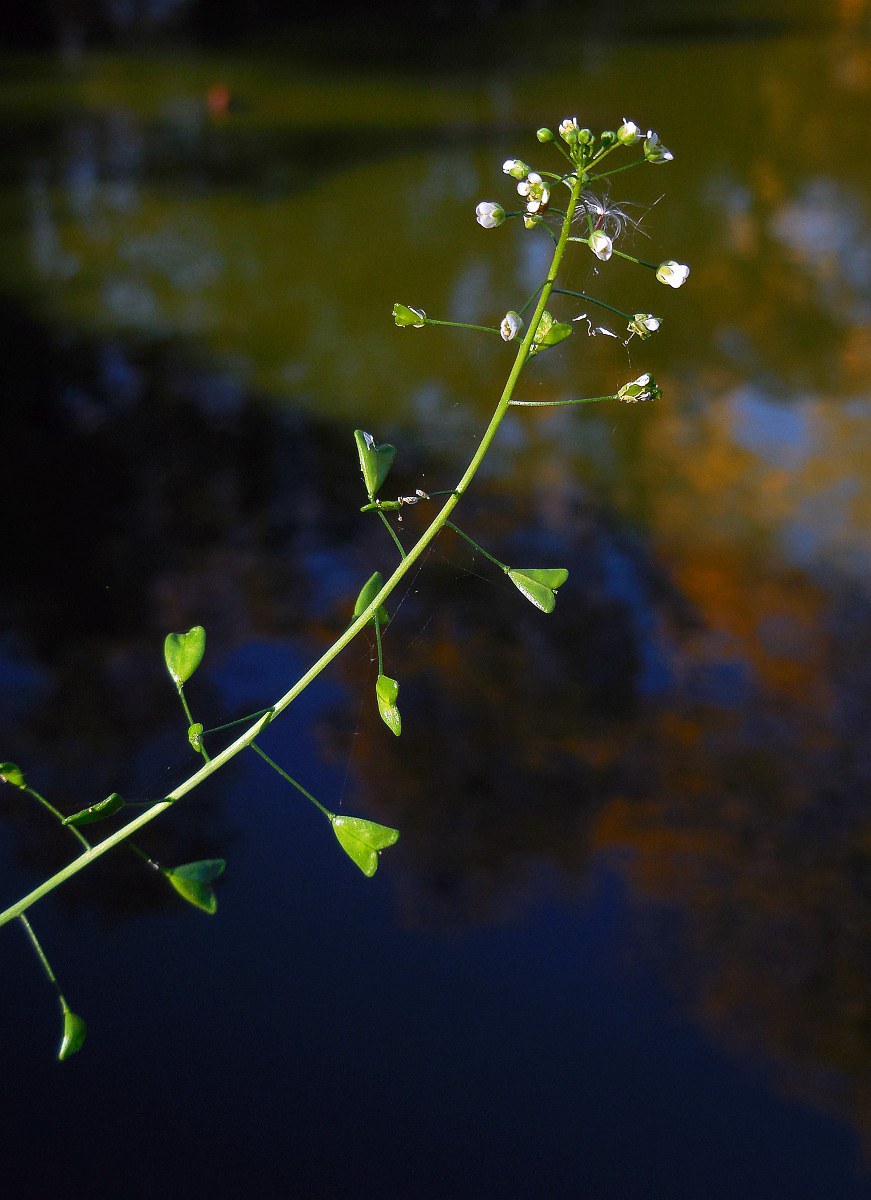
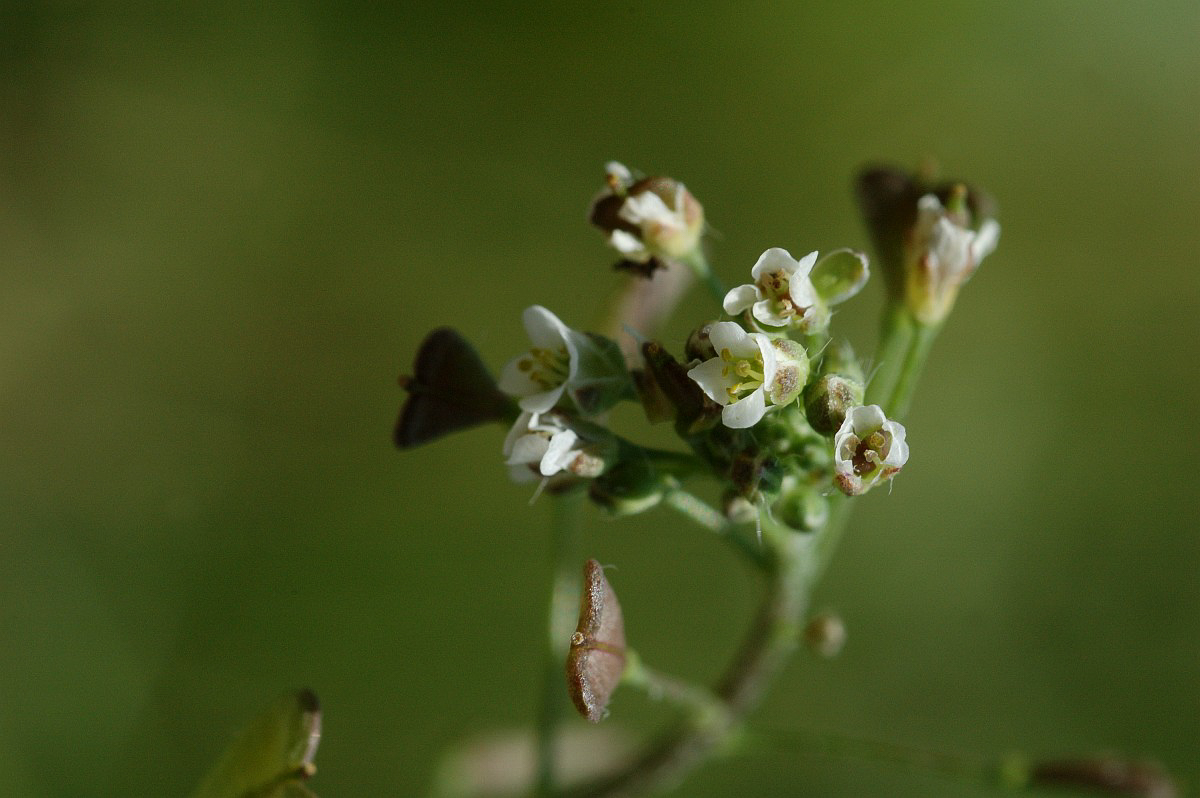
Flowers: Hermaphrodite flowers are grouped in small terminal clusters on leafless racemes; they are white, with a calyx composed of 4 green, open oval sepals. The corolla consists of 4 white petals, opposite, longer than the calyx sepals. It blooms throughout the year.
Fruits and seeds: The fruits are flattened, heart-shaped silicles, with straight or slightly convex sides, containing small brownish oblong seeds.
DISTRIBUTION AND HABITAT
Present throughout Italy. It grows in very humid, perennially flooded places. Adapting to various climates, it thrives in vegetable gardens, vineyards, along old walls, in uncultivated areas, cultivated fields, and clearings in forests; generally found between 0 and 1,800 m but also up to 2,600 m.
USE
Useful in cases of mild metrorrhagia and menorrhagia, both in puberty and menopause; capable of slowing down and regulating excessively heavy menstrual flows. In these cases, it acts on the uterine musculature, promoting contraction and consequently reducing ongoing bleeding, thereby regulating the menstrual cycle, especially in individuals with heavy and painful menstruation. Also useful in treating nosebleeds, diarrhea, hemorrhoids, and varicose veins. The fresh stem, chopped and macerated for 24 hours in vinegar, can be applied to skin infections. After the discovery of ergot alkaloids, its use has been abandoned due to the unreliable effects, which depend on the age of the preparation. Before taking any plant-based product (medicinal or non-medicinal) for therapeutic or similar purposes, it is always advisable to consult a doctor. Although edible, Shepherd’s Purse is generally consumed with other rustic salads, particularly complementing wild chicory. In some areas, it is also eaten cooked.
INTERESTING FCTS
It is a species with multiple cycles: the seeds are dispersed as soon as they mature, so the plant can be found in bloom throughout the year. In times of famine, oil was extracted from the seeds. In botany, the plant is also used as a model organism for studying morphogenesis, while the industry derives insecticides from it. For thousands of years, Shepherd’s Purse has been used as food: the seeds of this plant have been found in the stomach of the Tollund Man (ca. 500 BC-400 AD) and in the Neolithic settlements of Çatal Hüyük, an important Neolithic settlement located in the region of Konya in Turkey, dating back to 6000 BC. The seeds of C. bursa-pastoris secrete a viscous fluid when moistened, capable of trapping insects. Although the production of digestive enzymes and the ability to absorb organic elements trapped on the surface have been demonstrated, the advantages that the plant could derive from this situation are still unknown.
Photo: Used under a free license from Saxifraga and Jan van der Straaten, Rutger Barendse, Ed Stikvoort.