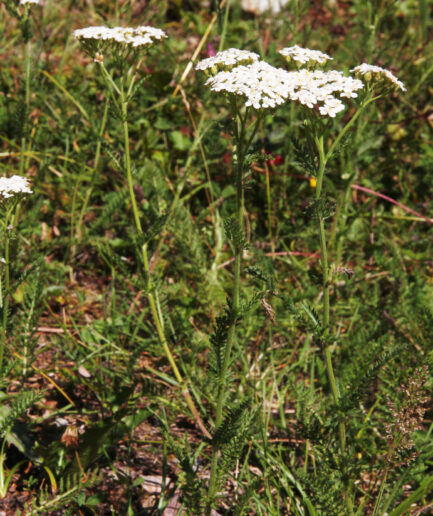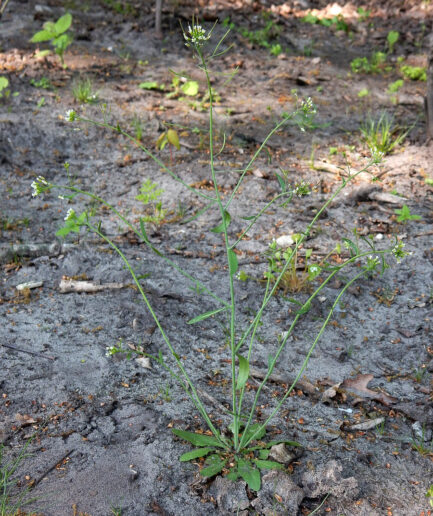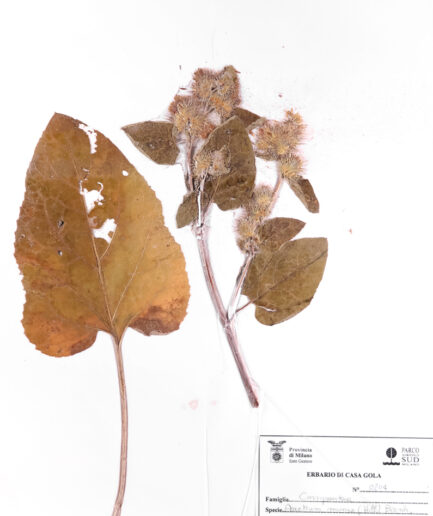



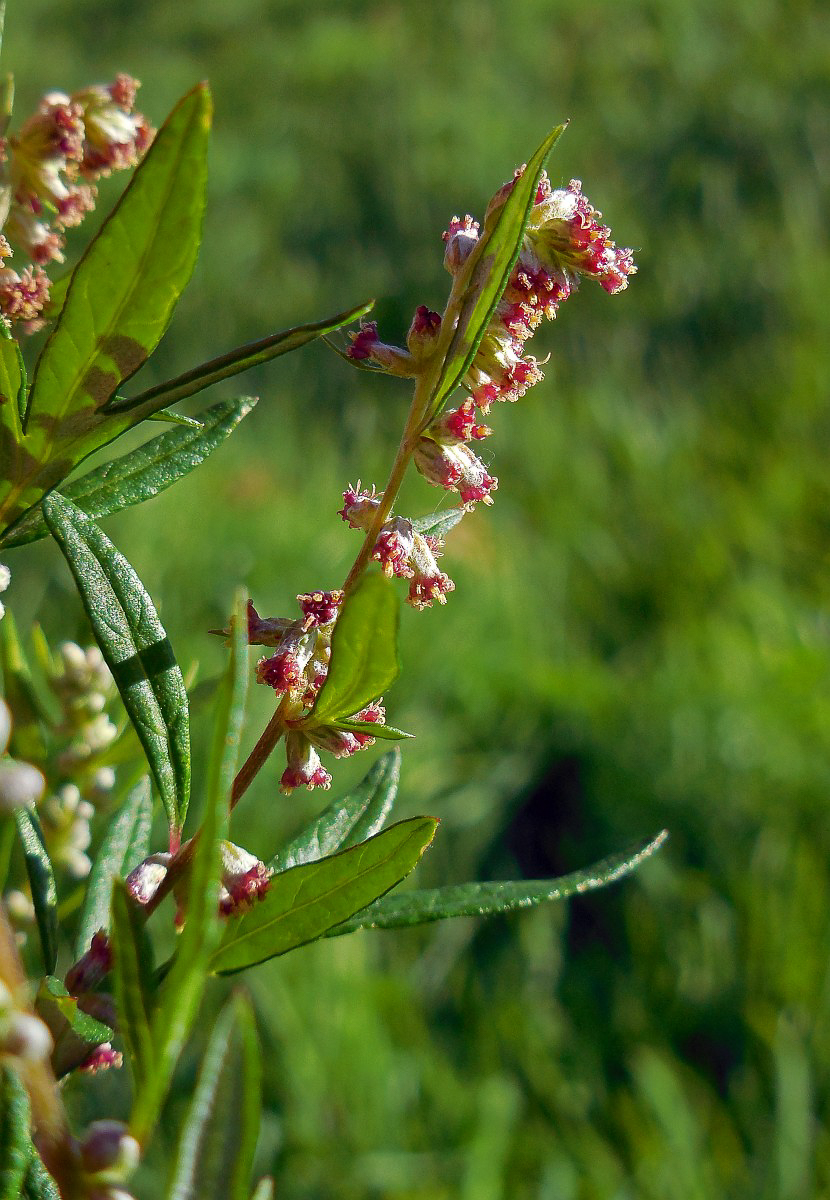


Common mugwort
Scientific name: Artemisia vulgaris L.
Family: Asteraceae
MORPHOLOGY
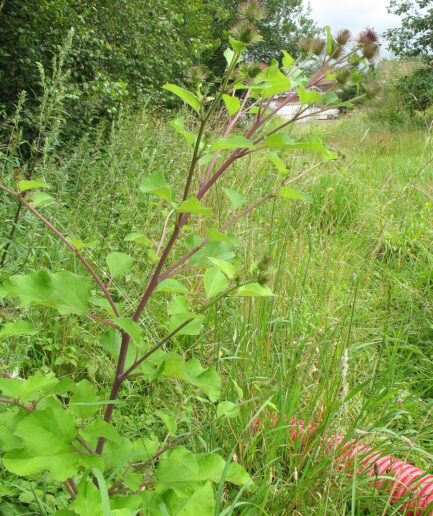
Growth habit and size: Perennial, bushy herbaceous plant, without stolons with a faint scent of “vermouth.” Short, oblique, woody root. Height between 50 to 150 cm.
Stem: Erect, reddish, striated, very branched.
Leaves: Alternate, pinnatifid leaves with toothed first-order segments, oval, lanceolate, incised-dentate lobes, green and glabrous above, whitish and tomentose below. Lower leaves have 2-4 toothed lobes per side, semi-clasping, with a blade 4-6 mm wide in the apical portion, reduced to the rachis in the basal portion, upper leaves reduced and linear.
Flowers: Tubular flowers, yellow-reddish in color, grouped in subsessile ovoid heads in a wide leafy pyramidal panicle, tomentose or densely woolly involucre, glandular corolla. Blooms from June to October.
Fruits and seeds: Glabrous oblong achenes, pointed, smooth, without pappus.
DISTRIBUTION AND HABITAT
Widespread throughout Italy, it grows in grassy fallow lands, rubble, generally synanthropic, at altitudes between 0 and 1,000 m and sometimes beyond.
USE
The plant has bitter-tonic, emmenagogue, sedative, and digestive properties, used for treating dysmenorrhea and amenorrhea, menstrual irregularities, intestinal parasitosis, anorexia, and dyspepsia. Flowering tops (collected in July-August), leaves, and roots are used, containing essential oils (linalool, cineole, beta-thujone, alpha and beta-pinene, borneol, nerolidol, myrcene), sesquiterpene lactones (vulgarin), flavonoids, coumarin derivatives, triterpenes. The roots are also indicated for the central nervous system in cases of overstimulation and general fatigue (popular uses and traditions attribute antiepileptic properties to the plant). In homeopathy, it is a remedy for neuralgia, convulsions in children, uterine contractions and spasms, profuse menstruation. In popular use, the infusion is tonic and febrifuge; a cup after meals is digestive; the decoction is anti-inflammatory, depurative, hypotensive, laxative, anthelmintic, and depurative. It is still used as a bitter-aromatic base for many aperitifs and digestive liqueurs, and non-alcoholic beverages. Before taking any plant-based product (medicinal or non-medicinal) for therapeutic or similar purposes, it is always advisable to consult a doctor.
INTERESTING FACTS
In ancient Rome, it was worn on the body, in the form of a crown, to ward off spirits and evil influences; it is considered one of the herbs of St. John: “on the eve of St. John, pulling up the roots, you will find charcoal underneath, the powder of which immediately cures epilepsy”. A popular tradition holds that putting mugwort leaves in shoes in the morning allows one to walk many kilometers without fatigue. Icobaldo Rebaudengo in his “Farmacopea cerusica” (1772) wrote about menstrual cycles: “take the leaves of Artemisia, Melissa, Matricaria, and Sabina, boil them in water until the volume is reduced by one-fifth, strain the decoction, and the patient drinks three to four glasses during the day…”. The leaves were also used as a flavoring in beer, later replaced by hops. This plant repels insects.
Photo: Under a free license from Saxifraga, Ed Stikvoort, Rutger Barendse, Peter Meininger