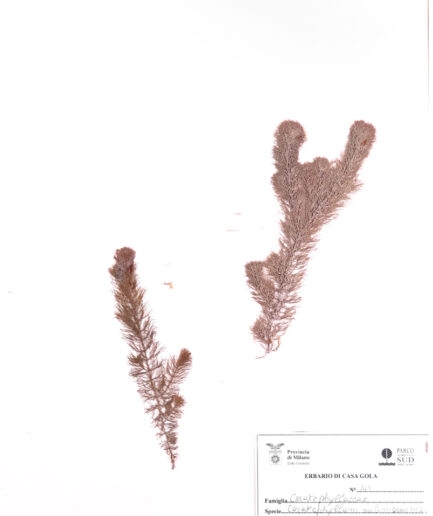



Celery-leaved buttercup
Scientific Name: Ranunculus sceleratus L.
Family: Ranunculaceae
Morphology
Habit and Size: Annual plant, reaching up to 50 cm in height.
Stem: Erect stem, glabrous, highly branched and multiflorous.
Leaves: Basal leaves palmately divided, petiolate, lower cauline leaves similar to basal ones, upper ones mostly sessile, entire, and linear-lanceolate.
Flowers: Flowers with 5 reflexed sepals and 5 entirely yellow petals. Blooms from March to June.
Fruits and Seeds: The fruits are numerous achenes, obovate, apiculate, approximately 100, forming a conical or cylindrical spike exceeding the petals already during flowering.
DISTRIBUTION AND HABITAT
Present throughout Italy except for the Aosta Valley, along ditches and banks, from sea level to 1,000 m.
USE
The plant is poisonous in all its parts. It contains a juice that causes skin irritations upon contact. According to some, heat would destroy the toxins it contains. Despite this, Ranunculus sceleratus is used as an antirheumatic, antispasmodic, and emmenagogue. Before taking any plant-based product (medicinal or non-medicinal) for therapeutic or similar purposes, it is always advisable to consult your doctor.
Photo: under a free license from Saxifraga, Willem van Kruijsbergen, Jan van der Straaten, Ed Stikvoort, Hans Boll