

American maple
Scientific name: Acer negundo
Family name: Sapindaceae
MORPHOLOGY
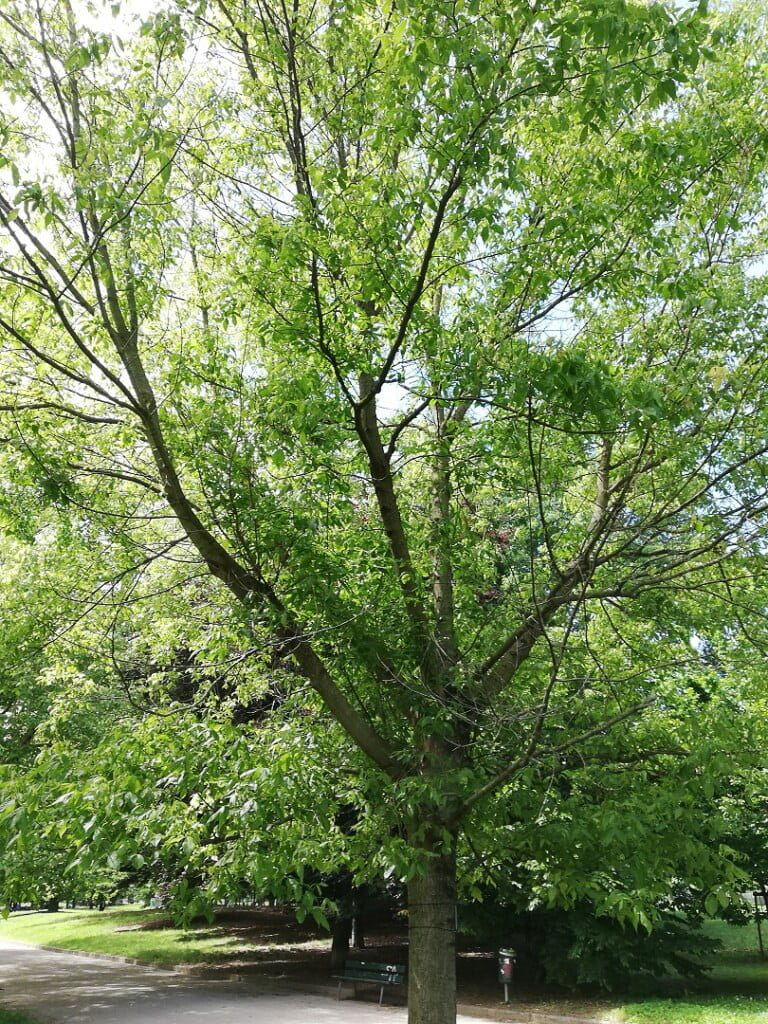
Growth habit and size: Deciduous tree that reaches a maximum height of 20 m. It grows very rapidly, has a short lifespan, and has a globose, extensive crown.
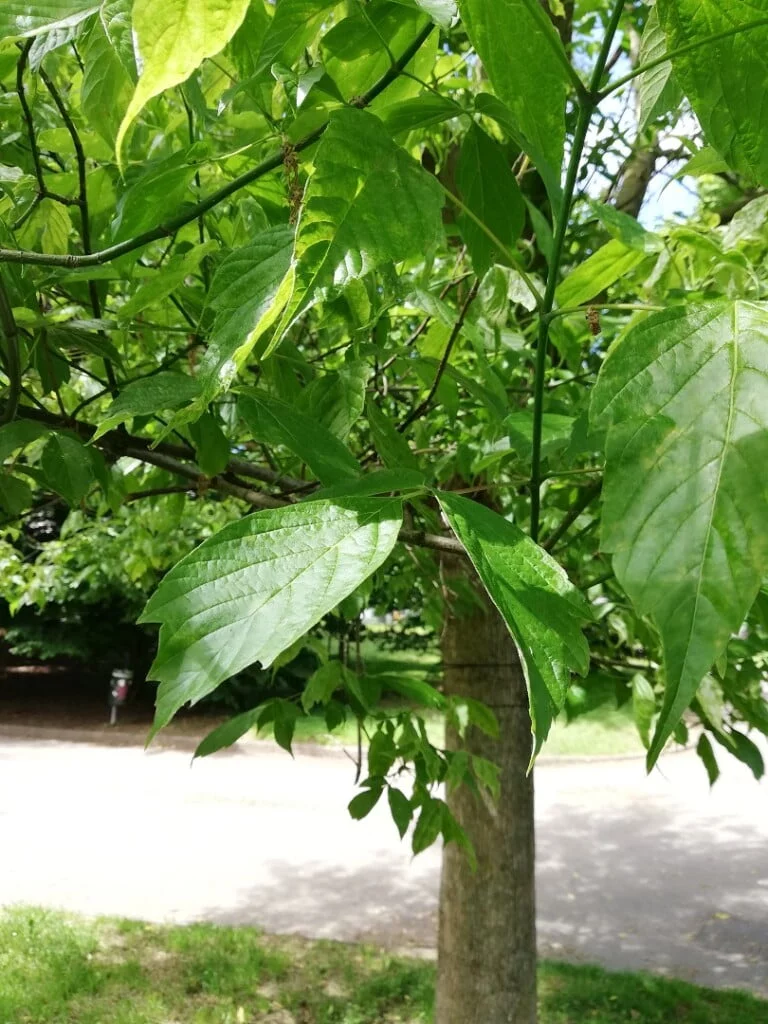
Bark: Olive green in young specimens, turning brownish gray with deep vertical fissures as it ages.
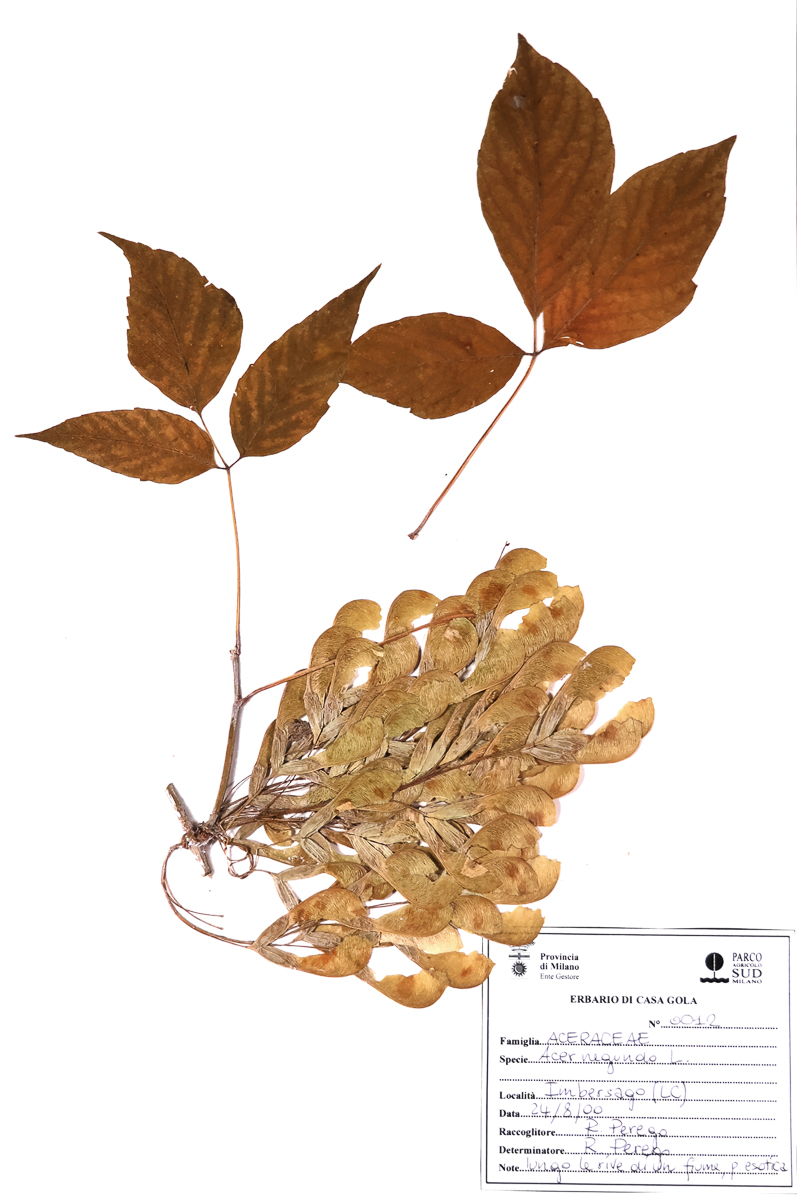
Leaves: Odd-pinnate and compound, consisting of 3-5 lanceolate leaflets each with toothed margins.
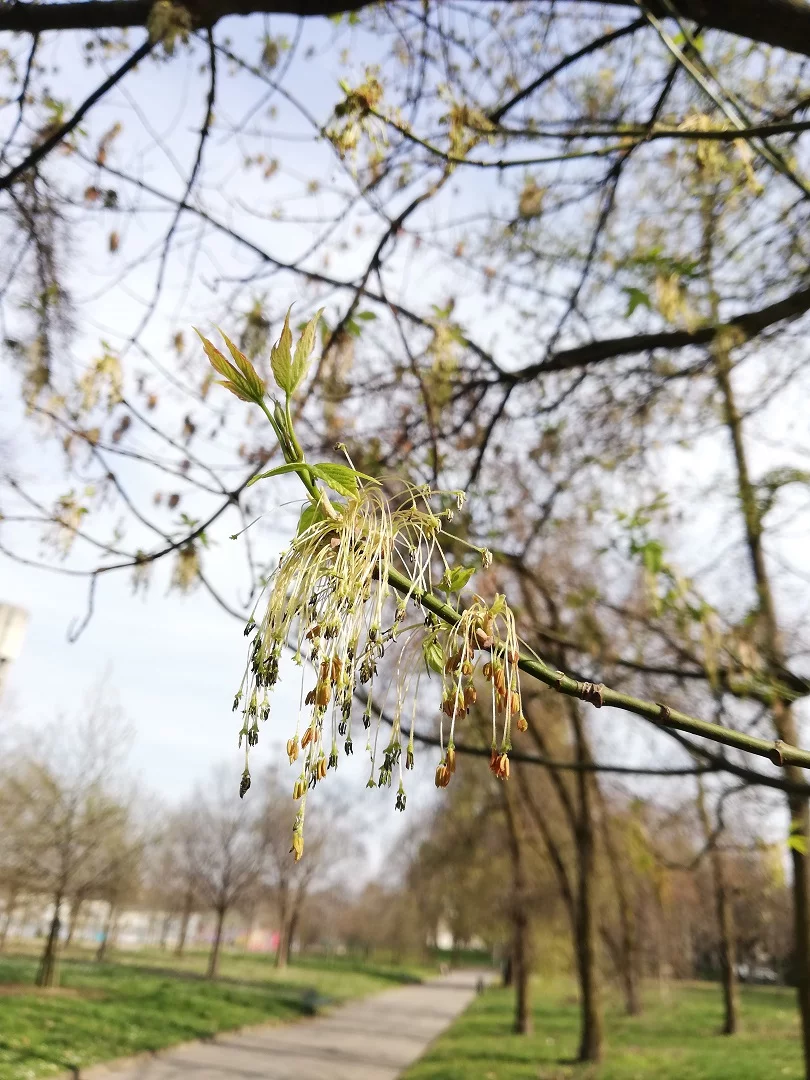
Flowers: Male flowers are small, yellow-green, and clustered in pendulous corymbs, while female flowers are grouped in spikes called catkins. Flowers appear before the leaves, around early April.
Fruits and seeds: Grayish, double samaras with long and divergent wings forming a V shape.
DISTRIBUTION AND HABITAT
Native to North America, introduced to Europe in the late 1600s. Due to the wind dispersal of its seeds, it is considered an invasive alien weed. A pioneer species, it is used for stabilizing screes and slopes, is undemanding and is highly adaptable. It withstands both drought and frost well.
USE
The wood of the American maple, which is light and brittle, is not widely used in carpentry. It is extensively used as an ornamental plant and is visited by bees for pollen and nectar. There are numerous varieties with different leaf colors.
INTERESTING FACTS
As with other maples, the sap is sugary, but not enough to make it a preferred species for maple syrup production. The species name negundo is generally traced back to the Sanskrit word nirgundi, which refers to a tree with leaves like those of the maple.
The 2016 APG IV classification does not recognize the family Aceraceae as a valid grouping and assigns the species included in it, including the American maple, to the family Sapindaceae.
Photo: Courtesy of Valentina Gussoni