
Carice di primavera

Nome scientifico: Carex caryophyllea Latourr.

Famiglia: Cyperaceae 


MORFOLOGIA


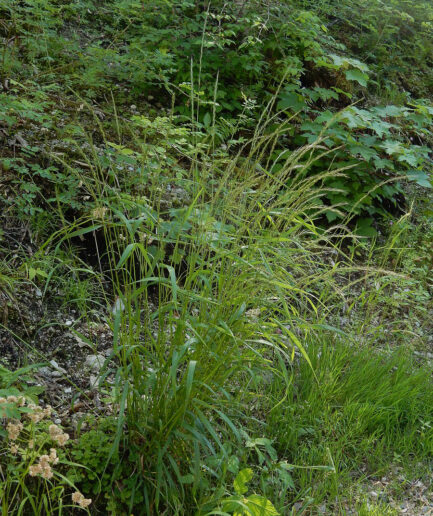
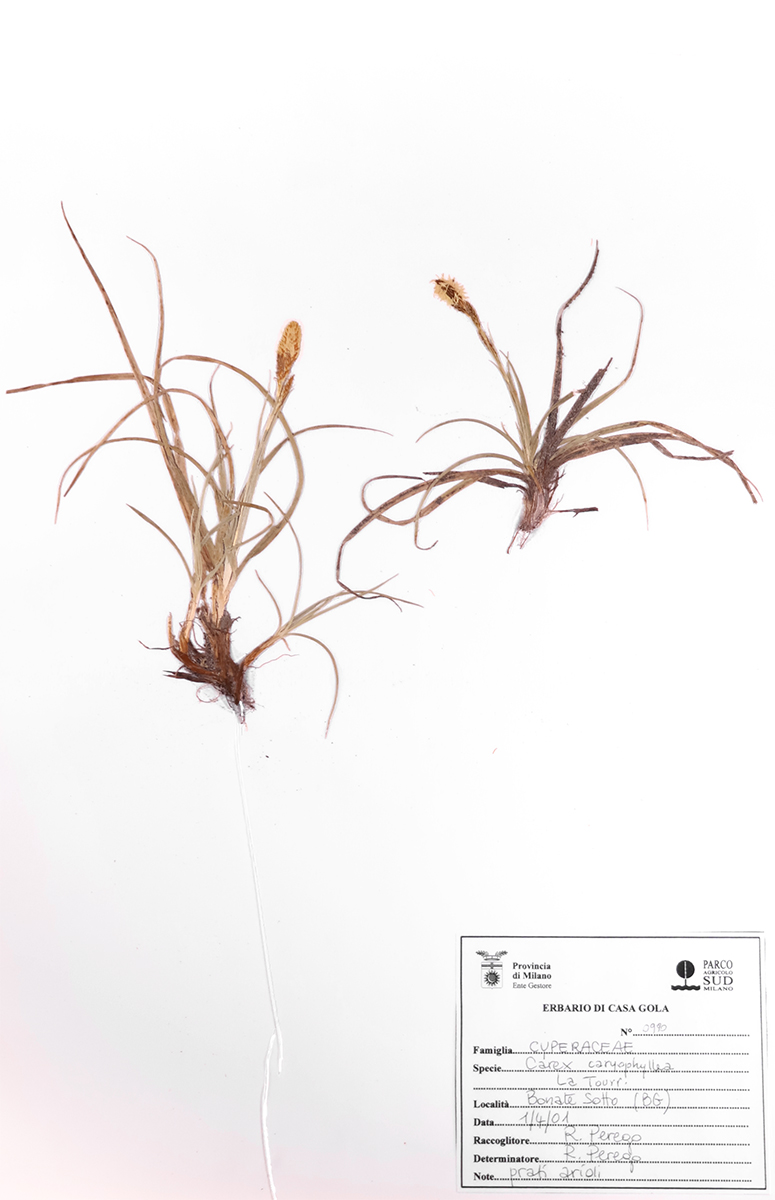
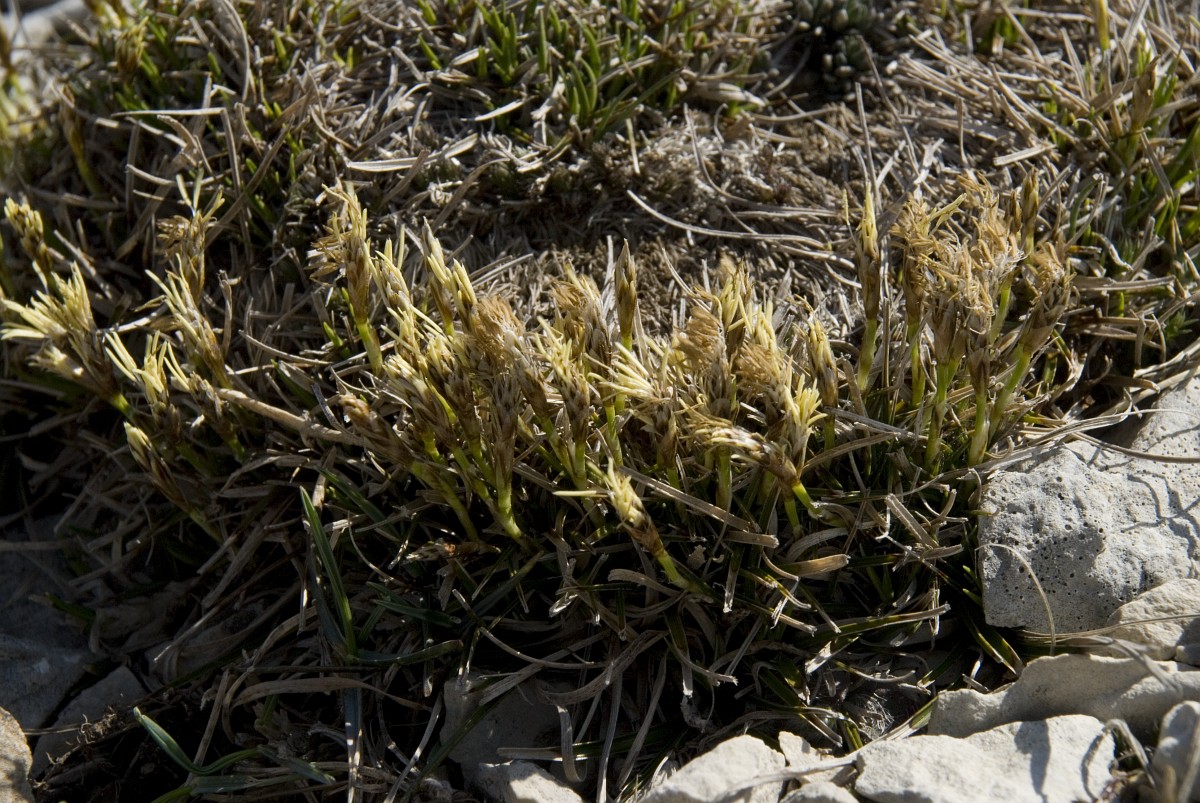
Portamento e dimensioni: pianta erbacea perenne alta 10-40 cm, con lunghi rizomi, formante cespuglietti lassi con brevi stoloni laterali.


Fusto: fusto robusto, ottusamente trigono, liscio, più o meno scabro nella parte superiore. Guaine basali brune, squamiformi, intere o più o meno fibrose.


Foglie: foglie piane larghe 1,5-4,5 mm, più o meno rigide, opache, più brevi del fusto, scabre ai margini nella parte superiore.


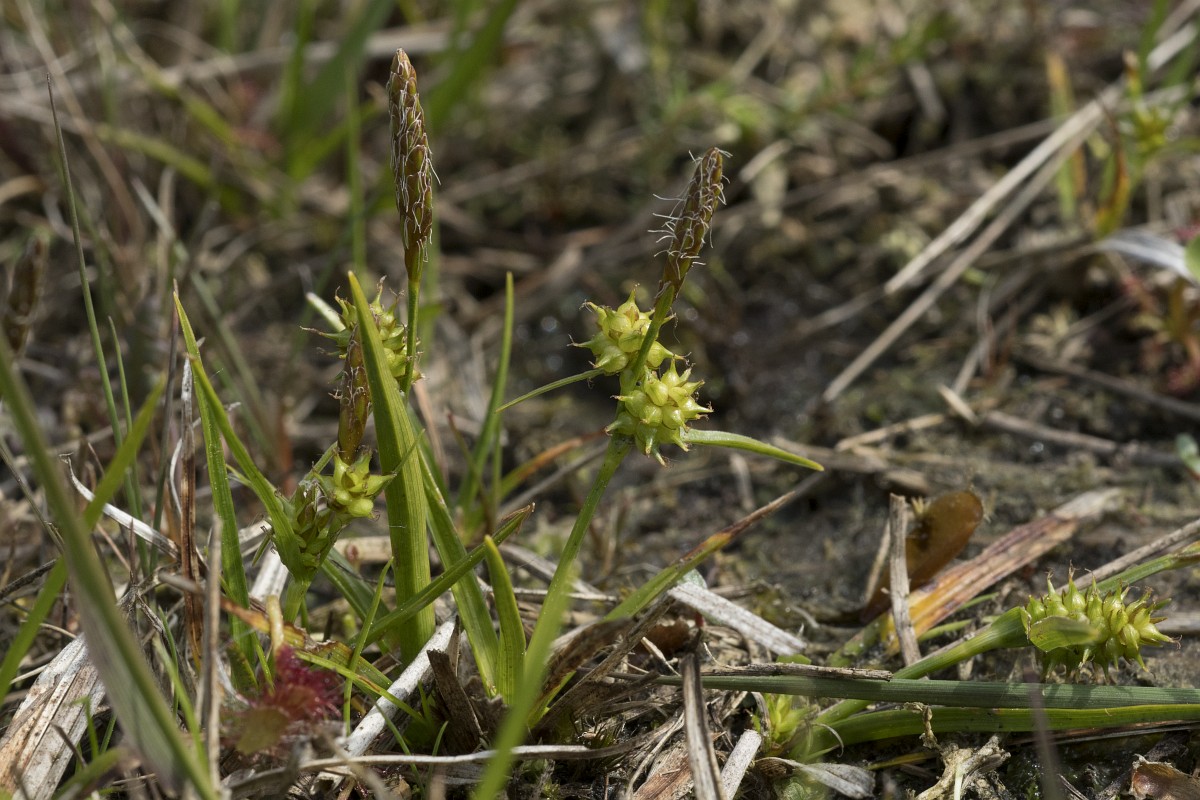
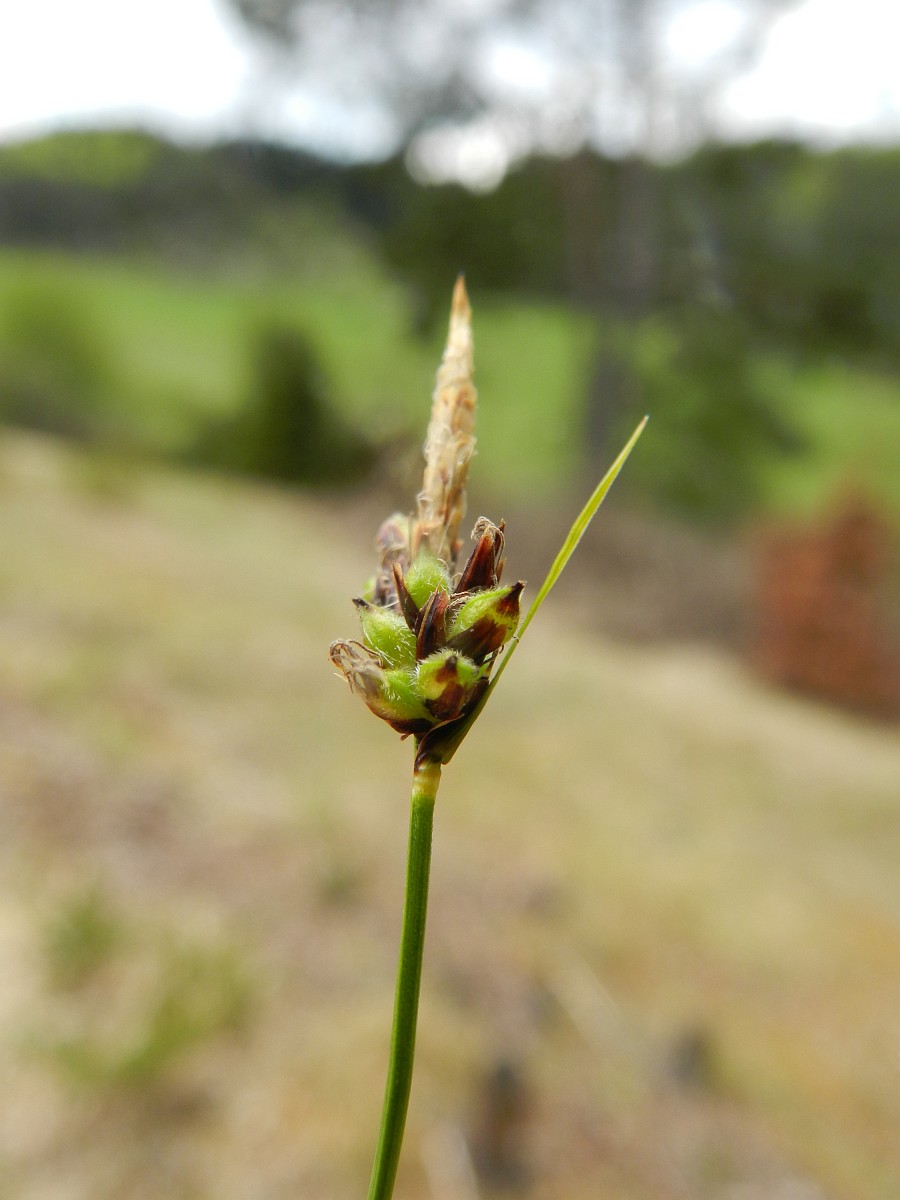
Fiori: infiorescenza compatta brunastra lunga 1,5-4 cm, formata da 1 spiga apicale maschile e (1) 2-3 (8) spighe inferiori femminili. Spiga maschile tipicamente clavata o oblunga, lunga 1-2 cm; gluma glabra, oblunga, bruna o bruno rossastra, senza margine scarioso, apice acuto o subacuto, o brevemente aristato. Spighe femminili sessili, erette, ovoidali, lunghe 0,5-2 cm, raggruppate sotto la spiga maschile; glume glabre, largamente ovali, senza margine scarioso, con apice acuto, mucronato o aristato, di colore bruno o bruno rossastro, più brevi o uguali agli otricelli. Fiorisce tra febbraio e maggio.


Frutti e semi: i frutti sono pseudanteci (otricelli) di (2)2,5-3(3,5) x 1,2-1,7 mm, suberetti, dal contorno obovato, trigoni, con nervi poco percettibili, brevemente pubescenti, verdi o bruni, con un becco in genere un poco bidentato. Acheni di 1,7-2,1 x 1-1,6 mm, ellittici od obovati, trigoni, di colore bruno scuro.


DISTRIBUZIONE E HABITAT


Presente in tutta Italia in prati e pascoli 0 e 2.000 m


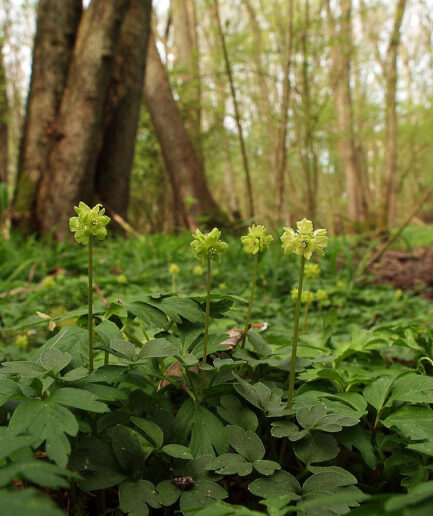
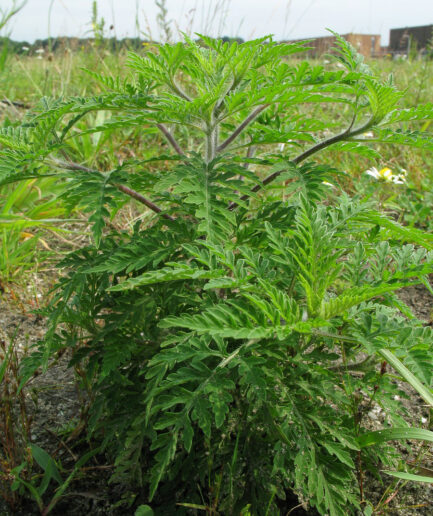
Foto: su licenza gratuita di Saxifraga e Willem van Kruijsbergen, Jan van der Straaten, Rutger Barendse

COD: 990 Categoria: Tag: , ,
Famiglia

Cyperaceae

Specie

Carex caryophyllea Latourr

Tipologia

Pianta erbacea

Habitat

Prati

Spring Sedge


Scientific name: Carex caryophyllea Latourr. 

Family: Cyperaceae


MORPHOLOGY


Habit and size: Perennial herbaceous plant, 10-40 cm tall, with long rhizomes, forming loose clumps with short lateral stolons.


Stem: Robust stem, obtusely triangular, smooth, more or less rough in the upper part. Basal sheaths brown, squamiform, entire or more or less fibrous.


Leaves: Flat leaves, 1.5-4.5 mm wide, ± rigid, opaque, shorter than the stem, rough at the margins in the upper part.


Flowers: Compact brownish inflorescence, 1.5-4 cm long, consisting of 1 apical male spike and (1) 2-3 (8) lower female spikes. Male spike typically club-shaped or oblong, 1-2 cm long; glume glabrous, oblong, brown or reddish-brown, without a scarious margin, apex acute or subacute, or shortly awned. 

Female spikes sessile, erect, ovoid, 0.5-2 cm long, clustered below the male spike; glume glabrous, broadly oval, without a scarious margin, with acute, mucronate, or awned apex, brown or reddish-brown, shorter or equal to the utricles. Blooms between February and May.


Fruits and seeds: The fruits are pseudanthia (utricle) of (2)2.5-3(3.5) x 1.2-1.7 mm, suberect, obovate-triangular, with scarcely perceptible nerves, shortly pubescent, green or brown, with a beak usually slightly bidentate. Achenes 1.7-2.1 x 1-1.6 mm, elliptic or obovate, trigonous, dark brown.


DISTRIBUTION AND HABITAT


Found throughout Italy in meadows and pastures between 0 and 2,000 m.


Photo: under free license from Saxifraga and Willem van Kruijsbergen, Jan van der Straaten, Rutger Barendse

Famiglia

Cyperaceae

Specie

Carex caryophyllea Latourr

Tipologia

Pianta erbacea

Habitat

Prati