
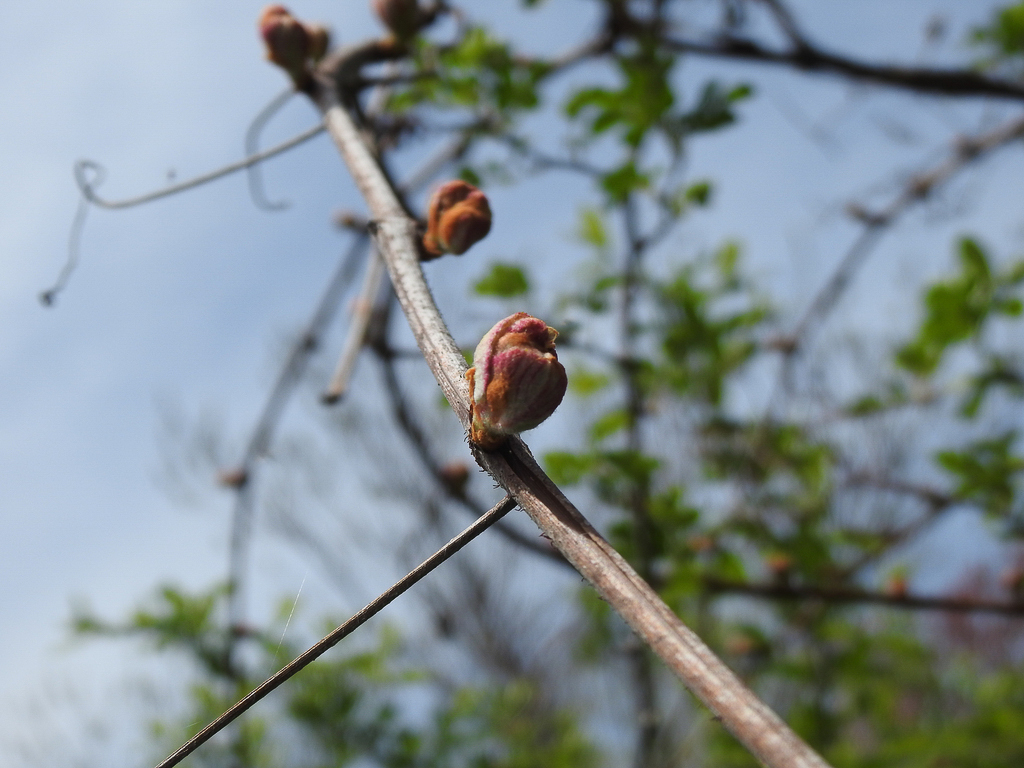
Vitis labrusca
Scientific name: Vitis labrusca L.
Family name: Vitaceae
MORPHOLOGY
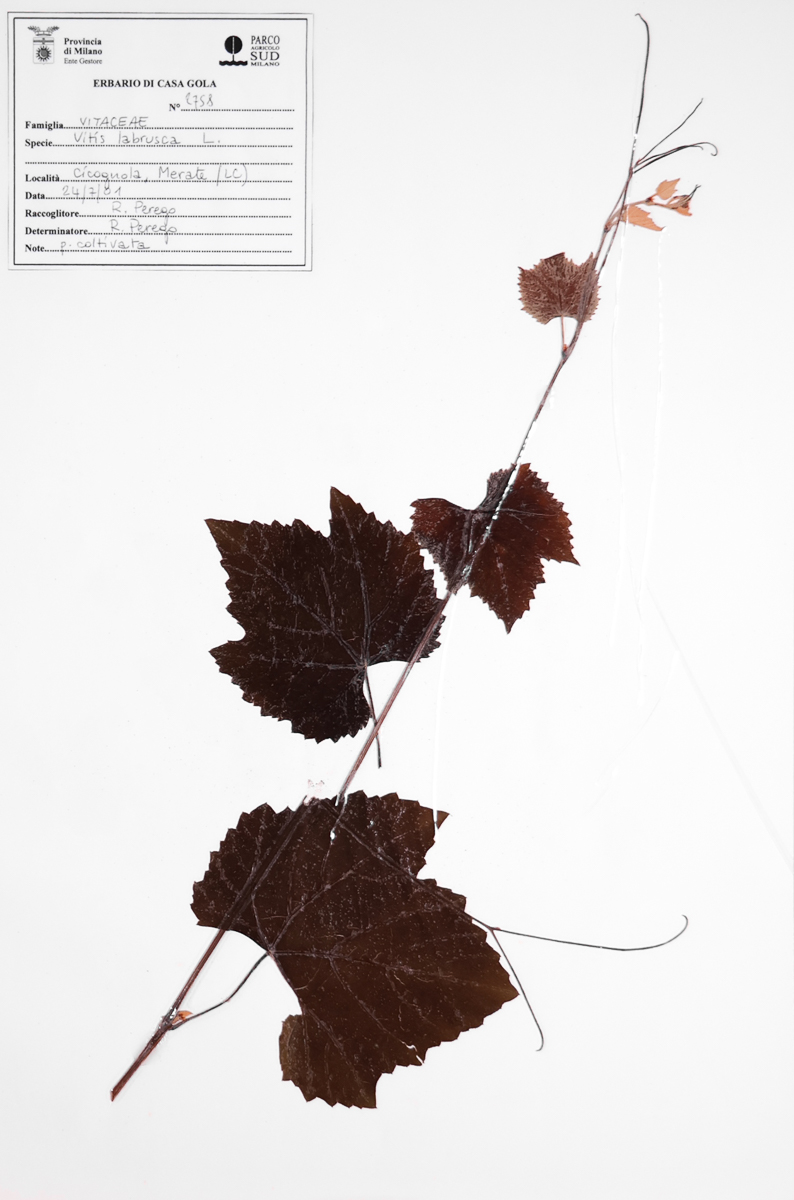
Habit and dimensions: a climbing shrub that requires support structures to develop. It attaches to these supports using spiral tendrils.
Bark: brown and fissured. Young branches are herbaceous but become woody over time, at which point they are called canes.
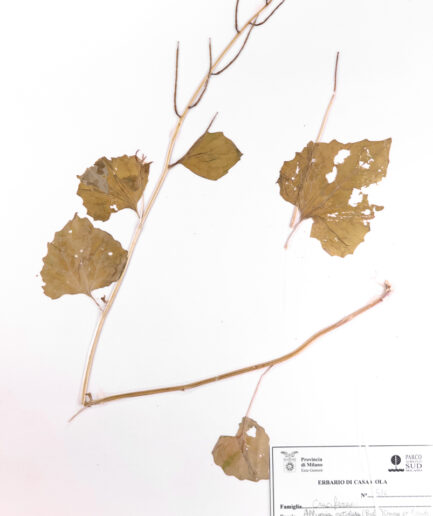
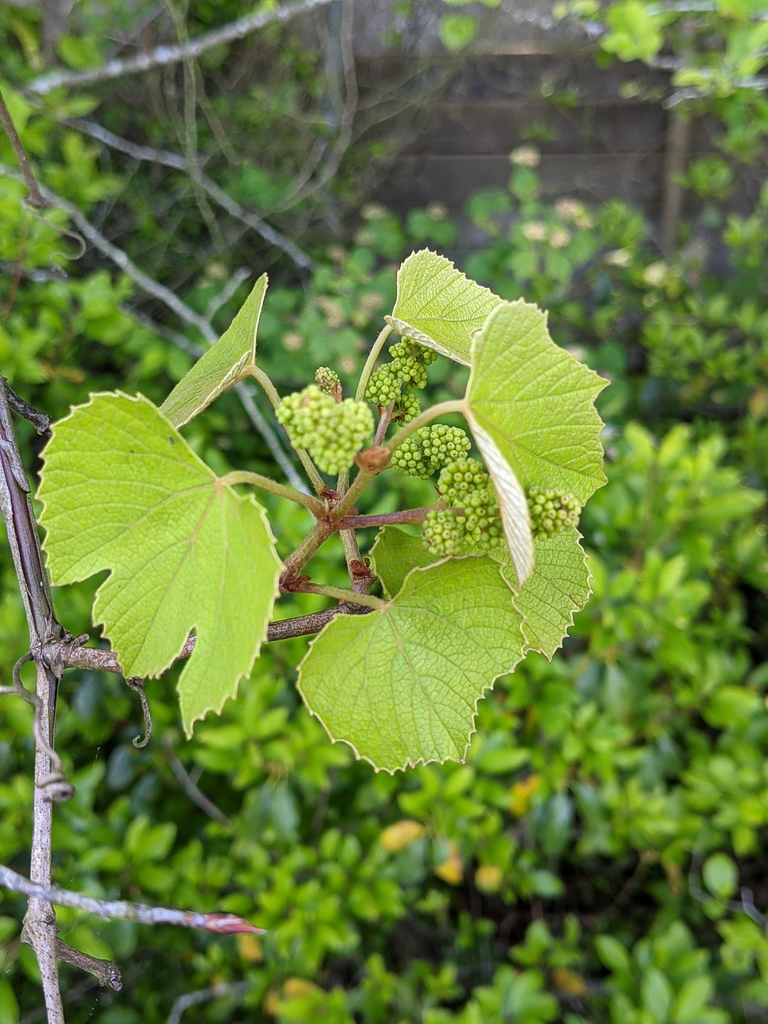
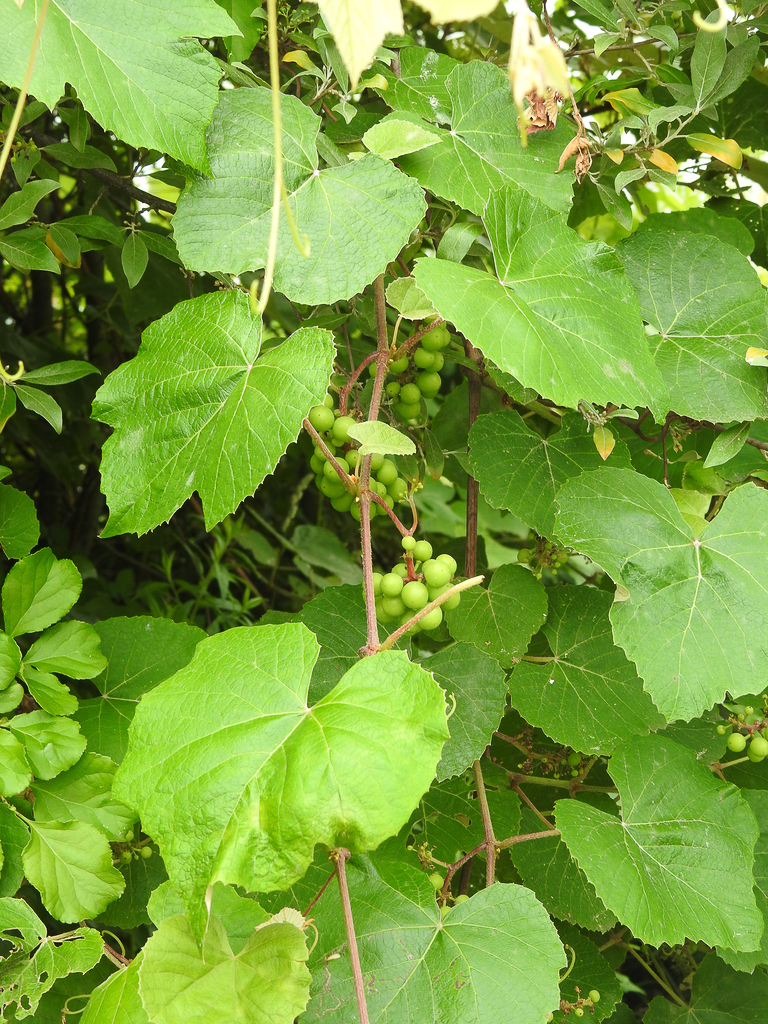
Leaves: large and thick, with dense hair on the underside. They are palmate with 3 or 5 lobes and have irregularly toothed margins.
Flowers: clustered in dense inflorescences, appearing from May to June.
Fruits and seeds: ellipsoidal or spherical berries, known as grapes, with thick skins and firm, sweet flesh.
DISTRIBUTION AND HABITAT
Native to the eastern United States, belonging to the group of American vines. It was imported to Europe as rootstock for the European vine. Widespread throughout almost all of Italy at low altitudes, not exceeding 800 meters above sea level, Vitis labrusca prefers humid climates and acidic, calcareous soils. It is highly resistant to drought and diseases.
USE
The fruits are edible.
Some varieties of this species, including the Isabella variety from which Concord grapes are obtained, have been marginally cultivated for subsequent winemaking. However, the fermented products of this grape cannot be called “wine”: according to Italian laws and European regulations, the term “wine” can only be applied to fermented products of the species Vitis vinifera, the European vine.
INTERESTING FACTS
The term Labrusca comes from Latin and means “wild.” Although the name is similar, Vitis labrusca has nothing in common with the European vine varieties called Lambrusco.
Photo: Courtesy of INaturalist under a free license.