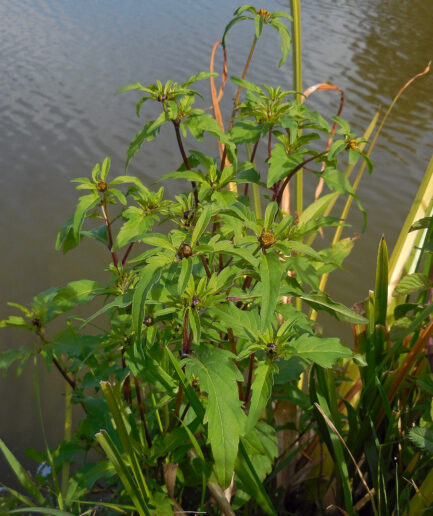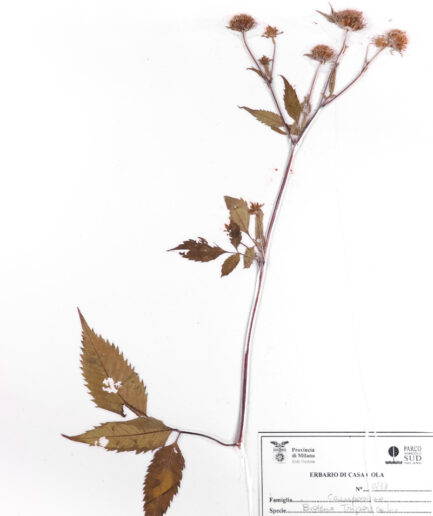



Canada Goldenrod
Scientific Name: Solidago canadensis L.
Family: Asteraceae
MORPHOLOGY
Habit and Size: Perennial herbaceous plant with a taproot, reaching heights between 50 and 180 cm (up to 200 cm).
Stem: Hairy stem (velvety towards the inflorescence). Each plant produces 10 to 20 stems.
Leaves: Alternate and petiolate leaves. Lanceolate-linear shape (even the lower ones) with an acute apex and serrated edges (8-10 teeth per side). The blade is three-veined. Upper leaves are progressively smaller, thinner, and with entire margins. Leaf size: width 2-3 cm; length 7-15 cm.
Flowers: Inflorescences are terminal pedunculated capitula of the radiate type, grouped in unilateral racemes. Blooms from June to September.
Fruits and Seeds: The fruits are achenes with pappus.
DISTRIBUTION AND HABITAT
Invasive alien species, cultivated for ornamental purposes and then naturalized, it is found in central-northern Italy in marshes, hygrophilous forests, moist fallow lands, banks, and embankments; also in ruderal environments, roadsides, and abandoned areas; it grows between 0 and 800 m.
USE
It has analgesic, antiseptic, astringent, hemostatic, and antipyretic properties. The root can also be used as a poultice for burns. A tea made from the flowers can be used to treat diarrhea and fever. Before taking any plant-based product (medicinal or non-medicinal) for therapeutic or similar purposes, it is always advisable to consult your doctor beforehand. In some areas, the leaves of Canada Goldenrod are considered edible; the seeds can also be used in times of famine.
INTERESTING FACTS
In Italy, this species is predominantly used in gardening. With its size and abundant terminal inflorescences, it can decorate large areas of gardens in a striking manner.
Photo: under free license from Saxifraga and Rutger Barendse, Ed Stikvoort, Jan van der Straaten