

Common Bladderwort
Scientific name: Utricularia vulgaris L.
Family: Lentibulariaceae
MORPHOLOGY
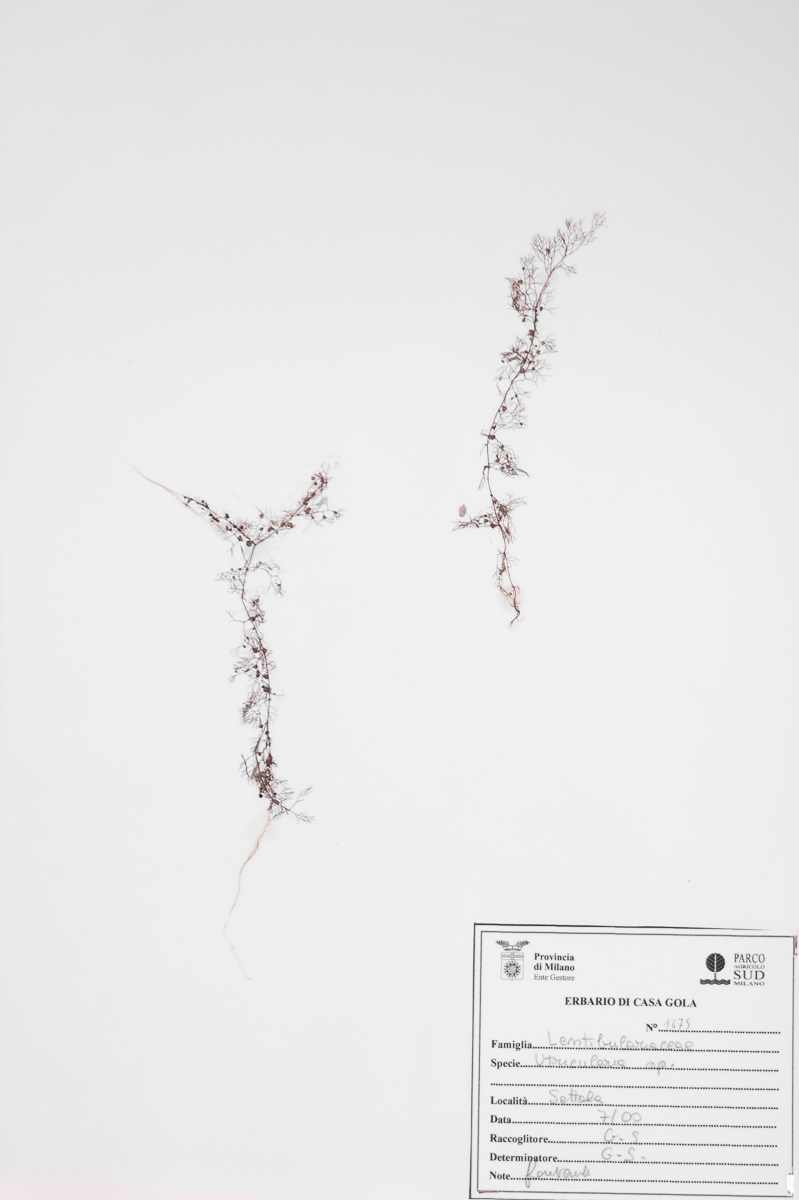
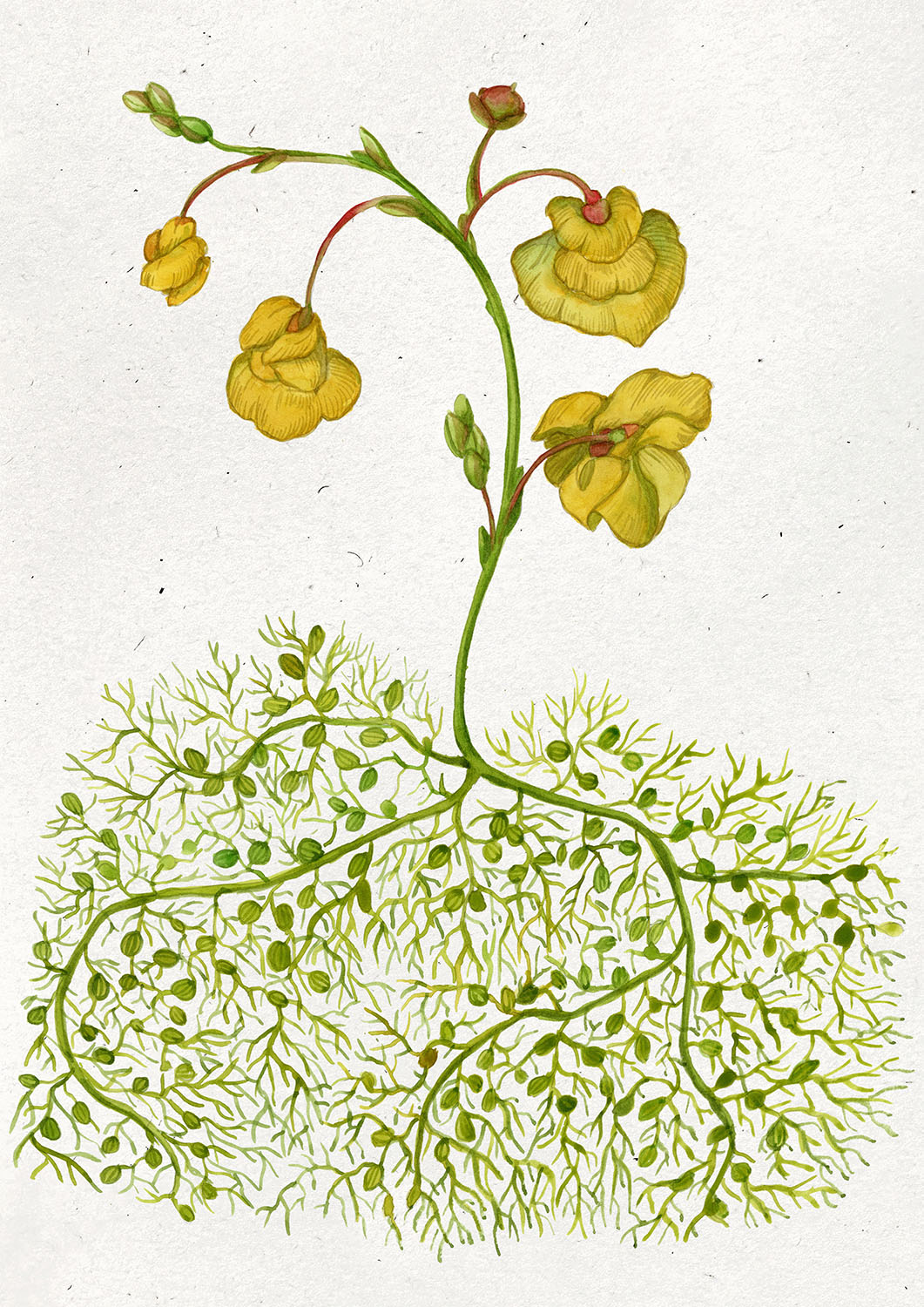
Habit and Size: Perennial floating aquatic plant with stems up to 150 (200) cm long, bearing assimilative leaves and rhizoids (3-30 mm), flat-tape shaped leaves 1-4(8) cm long, 2-3 times divided into numerous filiform segments with margins equipped with tiny ciliated teeth.
Stem: Branched, submerged, flexible stems, rootless, all homomorphic and green (chlorophyllous).
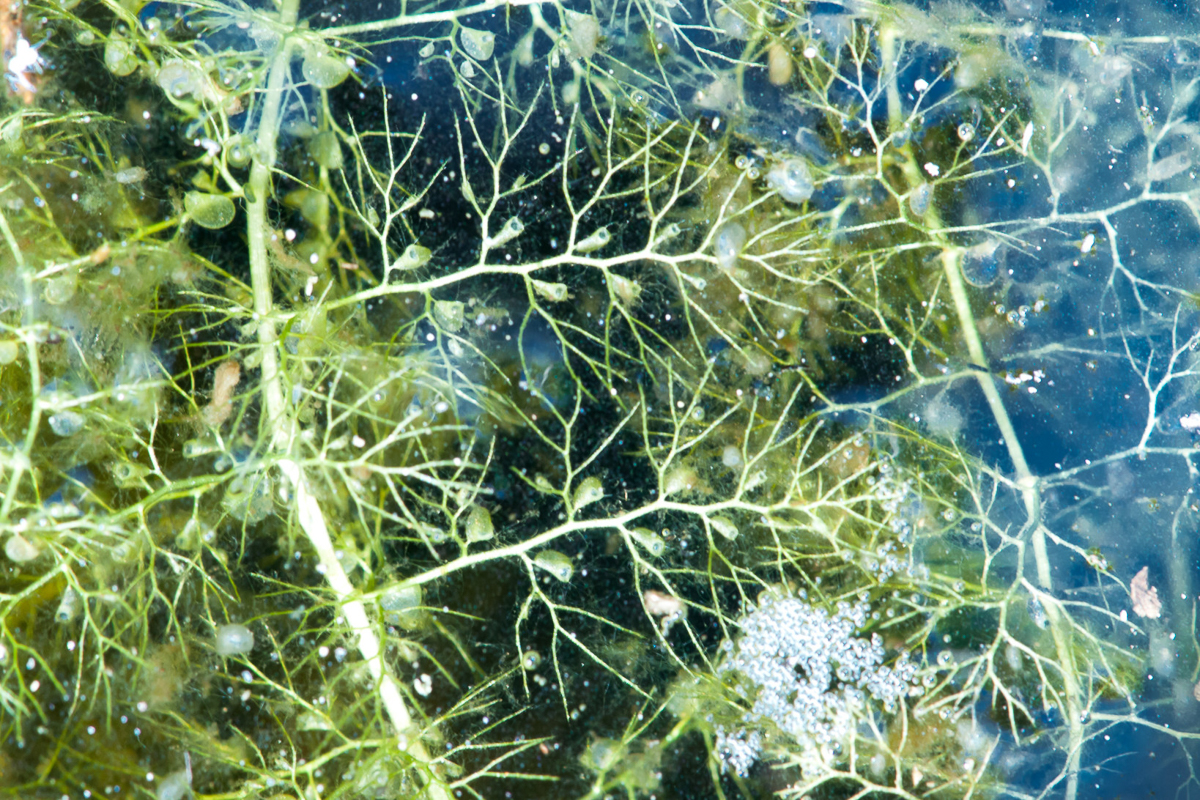
Leaves: Leaves are 1-4(8) cm long, 2-3 times divided into numerous filiform segments with margins equipped with tiny ciliated teeth. Among the leaves are numerous (10-210) translucent bladders (utricles or ascidia) 3 mm in diameter, ovoid in shape, used to capture microscopic organisms. They are equipped with a series of bristles at the end and tetrapartite absorbing hairs inside.
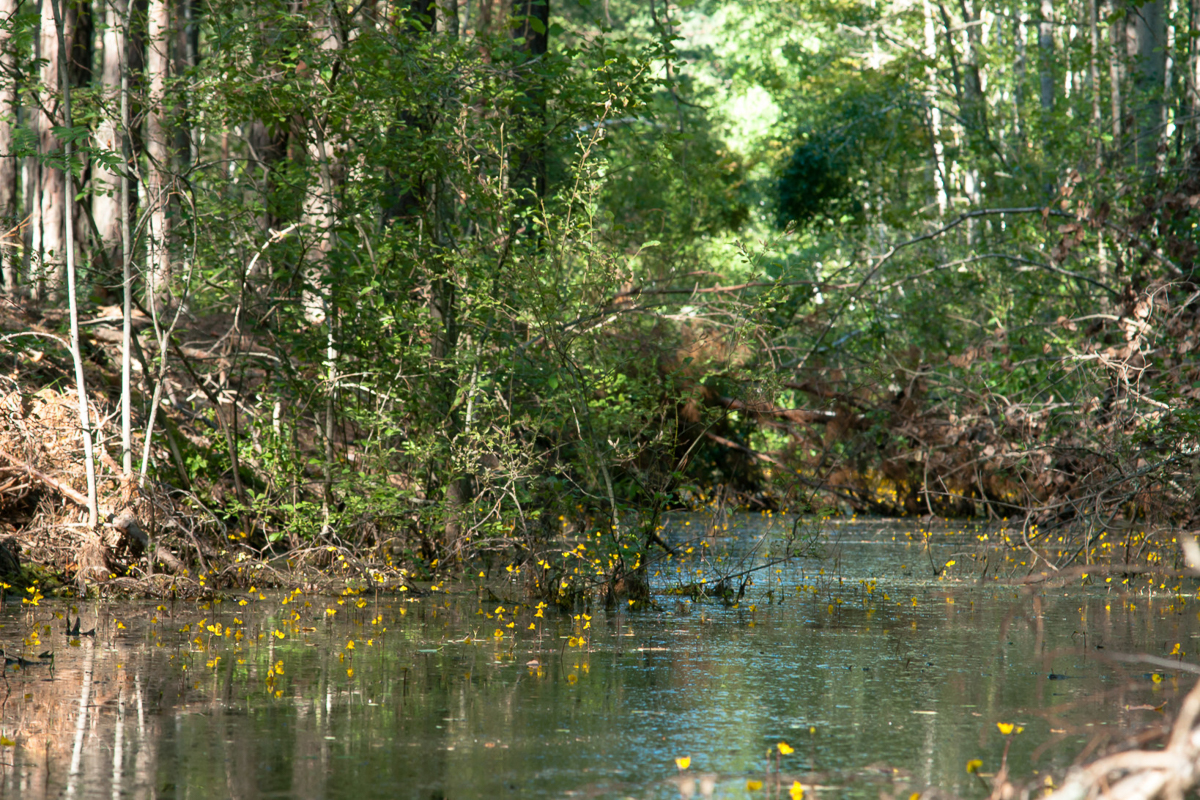
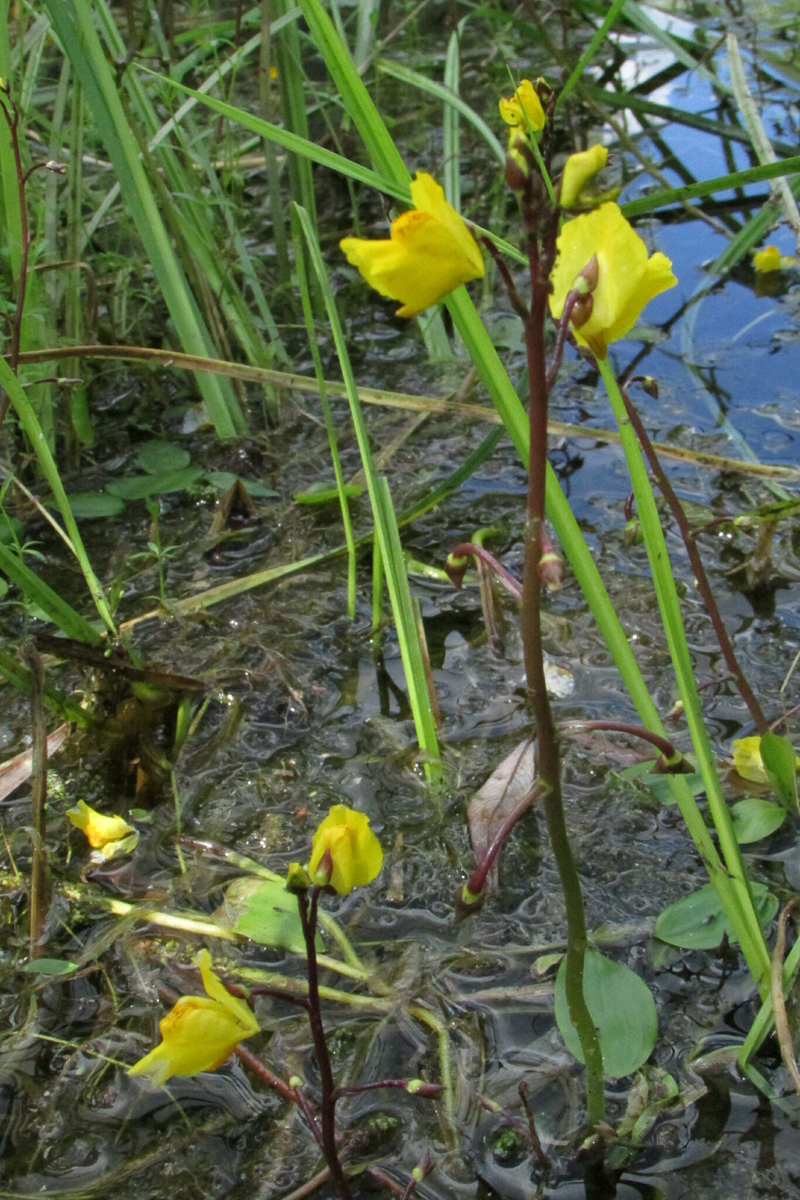
Flowers: Erect flower stalks, emergent, brownish, 10-40 cm long, with 4-15 hermaphroditic and zygomorphic flowers arranged in a raceme with pedicels 2-3 times longer than the bracts (4.5-6 mm), curved in fruiting. Calyx reddish, divided into two lips; corolla golden yellow, bilabiate, 13-20 mm, with orbicular lower lip, deflexed margin, and palate speckled with orange. Blooms from May to August.
Fruits and Seeds: The fruit is a subglobose circumscissile capsule with a short beak, containing prismatic, tightly winged, and wrinkled seeds.
DISTRIBUTION AND HABITAT
Found in Lombardy, Emilia Romagna, and Friuli Venezia Giulia, extinct or uncertain in other regions of the North Center, in stagnant waters as long as they are deep enough, from 0 to 1,000 meters.
INTERESTING FACTS
The bladders of Utricularia act both as floatation devices and as tiny traps. They have a series of small bristles at the end and contain air, and when the bristles are touched by, for example, a small crustacean, the trap opens, and the insect is sucked into the bladder by the influx of water. The plant does not secrete digestive juices to devour the insect but absorbs the soluble part after it decomposes. This way, the plant can absorb nitrogenous compounds and minerals in an environment that is poorly supplied with them.
All species of Utricularia have become very rare in Italy in recent decades due to the general eutrophication of waters, pollution, land reclamation, and canalization.
Photos: Freely licensed from iNaturalist