

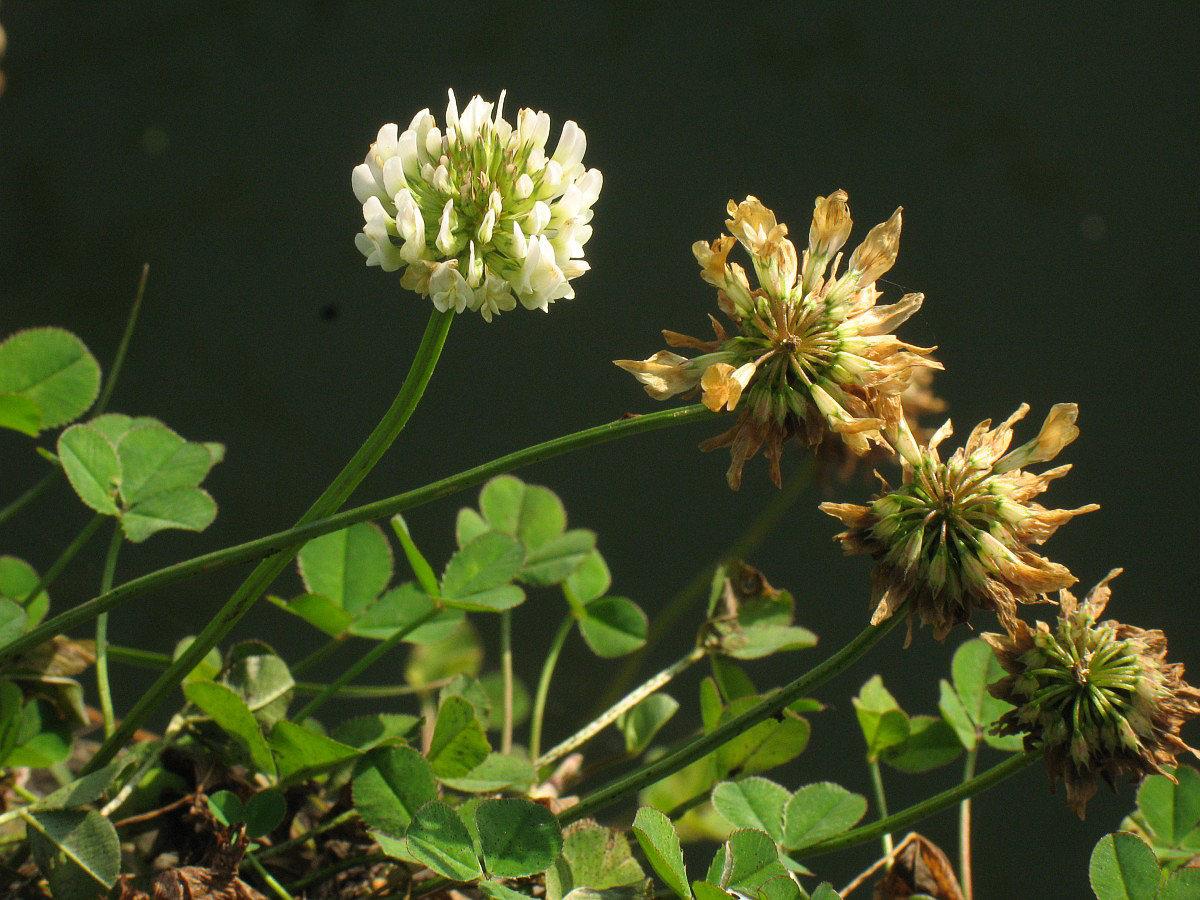
White Clover
Scientific name: Trifolium repens L.
Family: Fabaceae
MORPHOLOGY
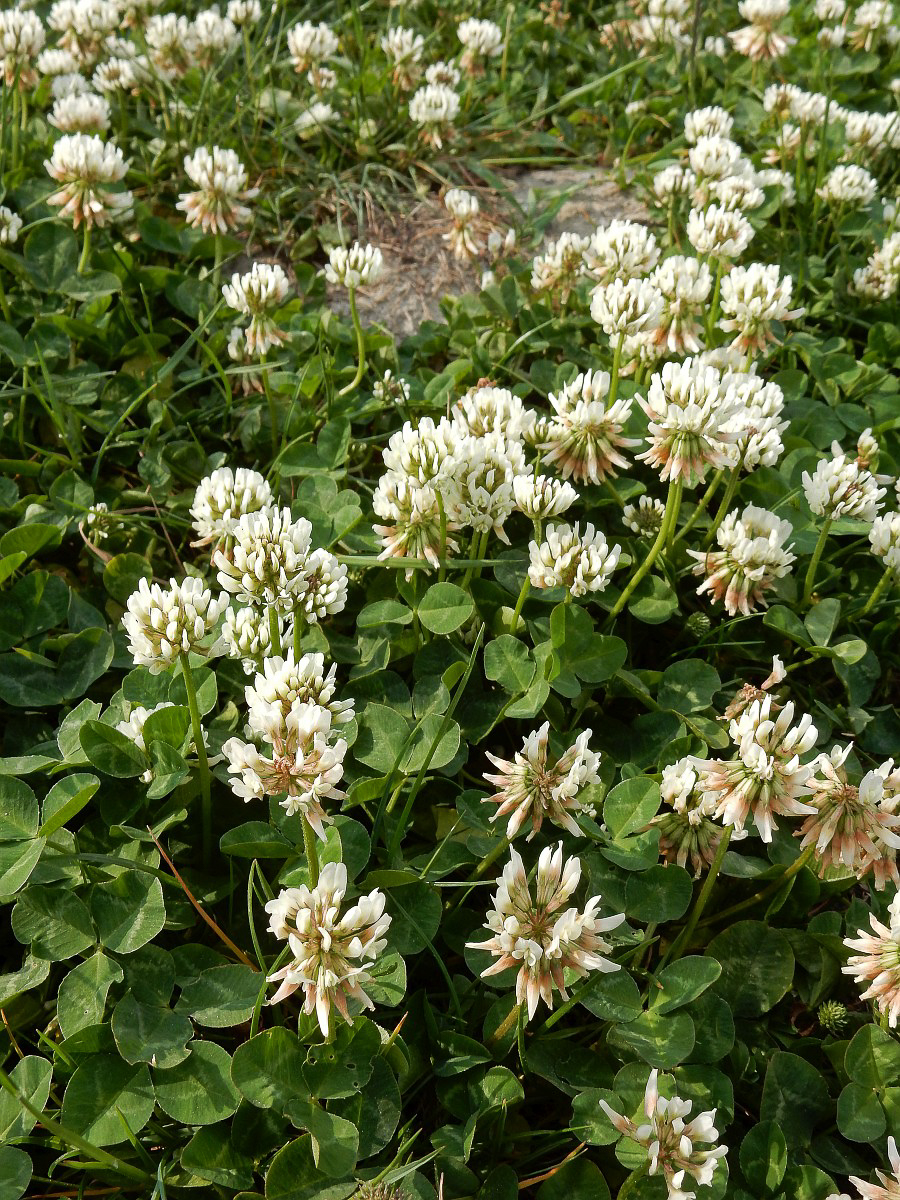
Habit and Size: Perennial herbaceous plant, nearly hairless, with highly branched rhizomes. It never exceeds 30 cm in height and forms extensive carpets in meadows.
Stem: Creeping stems, mostly stoloniferous, rooting at the nodes.
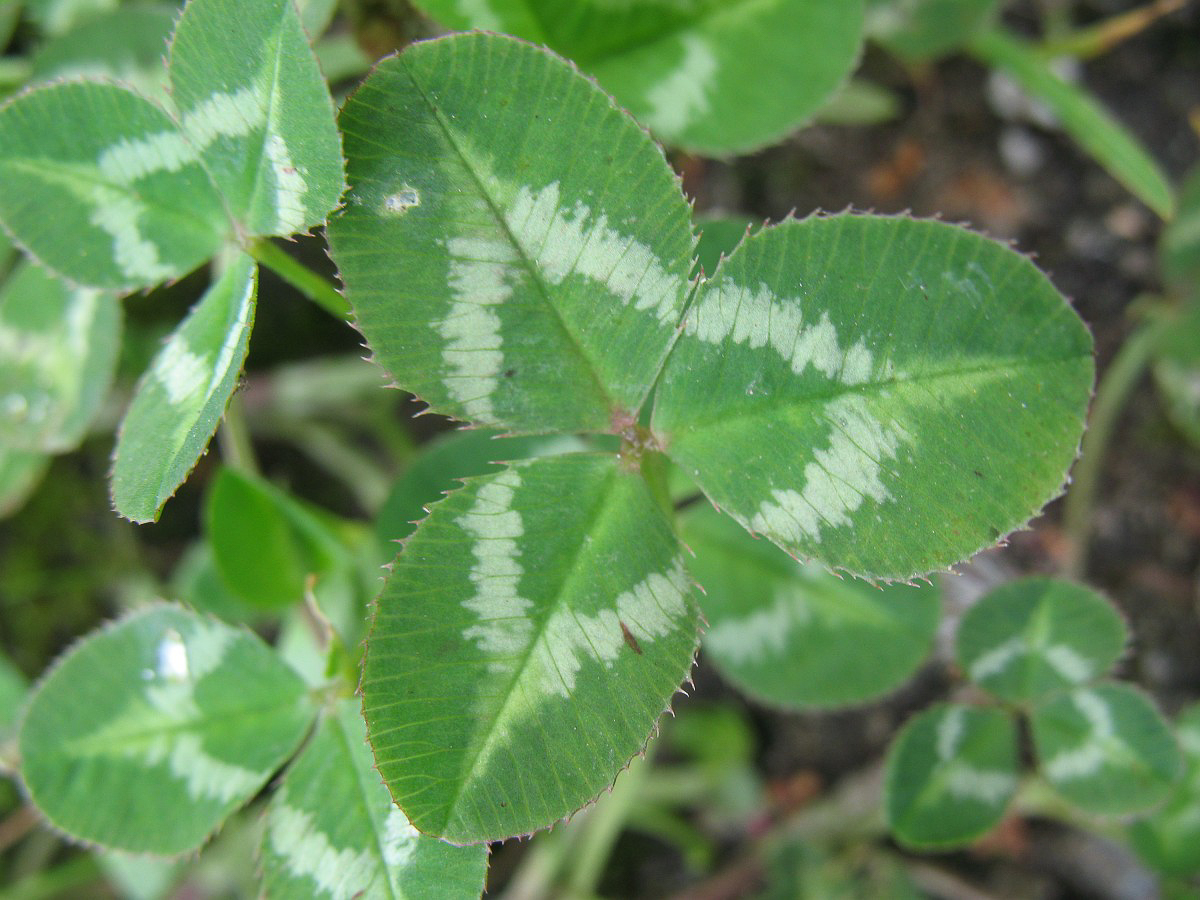
Leaves: The trifoliate leaves have long petioles; the leaflets are subovate, from cuneate to broadly elliptical, finely serrated; green in color, with a clear transverse spot on the upper surface of the blade.
Flowers: The flowers are grouped in solitary, globose heads, white, greenish, or pink, composed of 40-80 elements at the apex of erect, hairless peduncles. After flowering, the flowers become pendulous and brown. Blooms from March to October.
Fruits and Seeds: The fruits are linear, flattened legumes, with 3-4 heart-shaped seeds, varying in color: yellow, orange, and red, which remain in the dried calyx.
DISTRIBUTION AND HABITAT
Present throughout Italy along country roads, at the edge of woods, in meadows, from 0 to 2,750 m.
USE
Antirheumatic, depurative, ophthalmic, cleansing, tonic plant. Indicated for digestive disorders and persistent diarrhea, respiratory tract inflammations, rheumatism. For external use, it is antiseptic. Before taking any herbal product (whether medicinal or non-medicinal) for therapeutic or similar purposes, it is always advisable to consult your doctor. Combined with grasses, it represents excellent forage and is also sown for this purpose, spreading rapidly and improving poor pastures. Up to 8 cuts of excellent quality can be obtained, usually used as green forage.
The flowers can be used in omelets, and combined with the leaves, they can be used as an ingredient for a drink similar to “sangria.” In the past, during periods of famine, dried flower heads were collected to be ground, thus integrating the flour.
Like all species belonging to the genus Trifolium, it is an excellent source of both nectar and pollen for bees, although the reduction of cultivation using the “marcite” system in Lombardy has significantly reduced the production of unifloral honey.
INTERESTING FACTS
Sangria with Trifolium repens:
In a jug, squeeze the juice of an orange, and cut the peel into small pieces (only the colored part). Add one bottle of dry red wine and one bottle of dry white wine. Add 5 or 6 handfuls of clover flowers and tender leaves, and mix thoroughly. Let it rest in the refrigerator, covering the container, for a couple of days, stirring once a day. Strain the liquid, add one ripe but firm peach cut into pieces, and about 100 grams of brown sugar, and mix well. Serve very cold.
Photos: freely licensed from Saxifraga and Ed Stikvoort, Jan van der Straaten, Rutger Barendse