

Marsh Woundwort
Scientific Name: Stachys palustris L.
Family: Lamiaceae
MORPHOLOGY
Habit and Size: Perennial, herbaceous plant with a horizontal underground rhizome; height 30-120 cm.
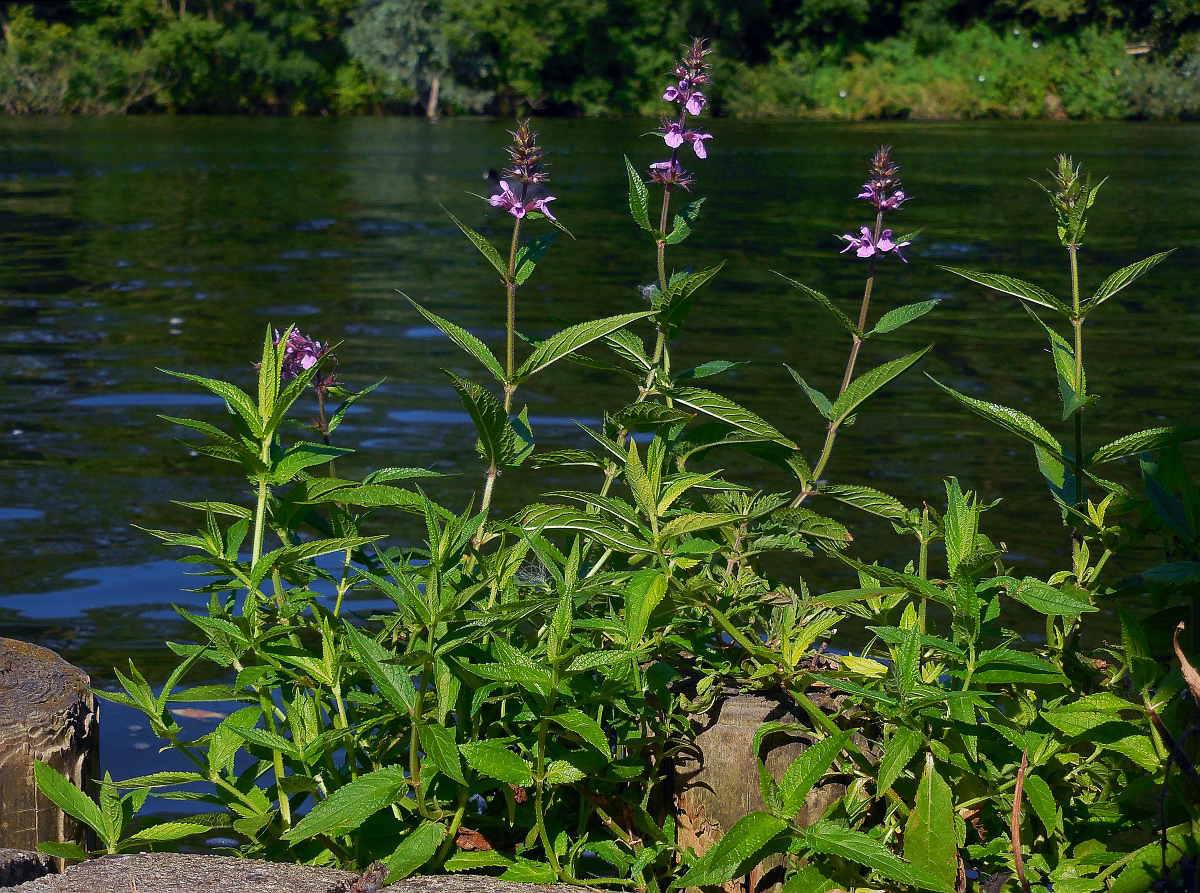
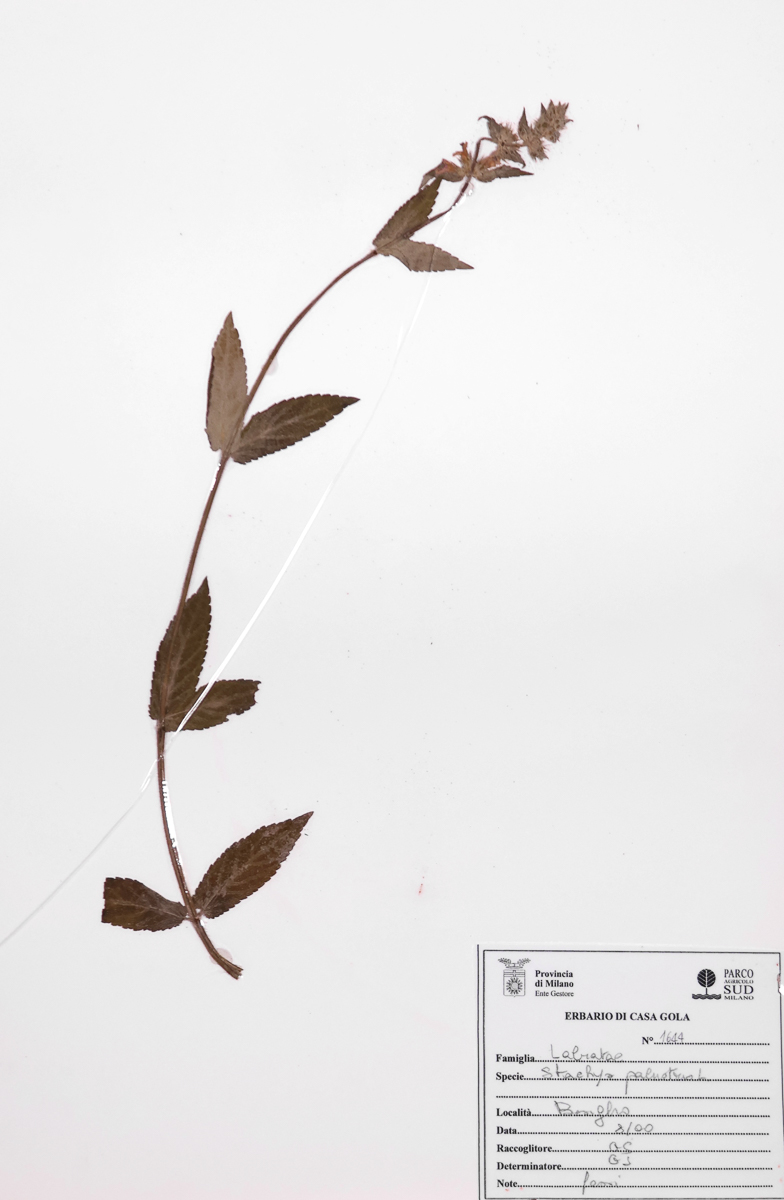
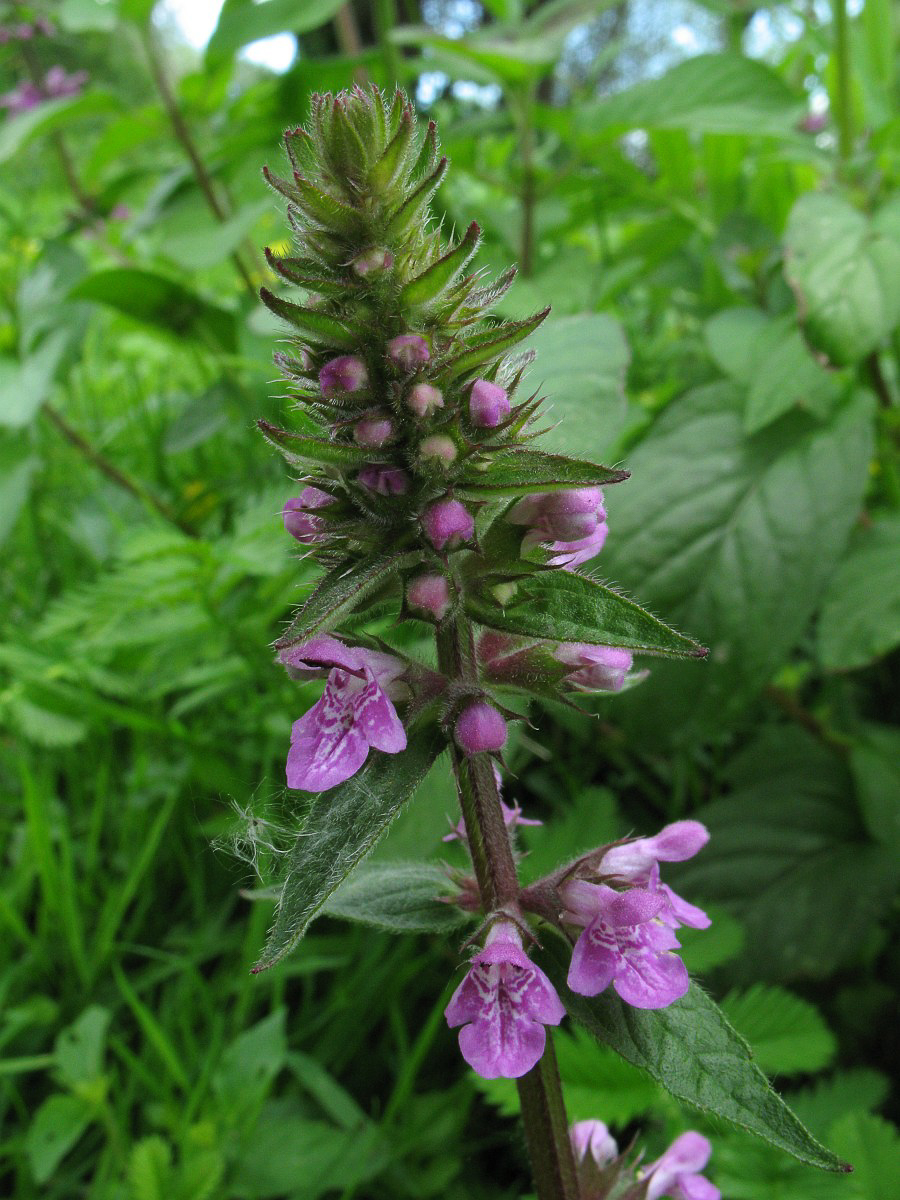
Stem: Erect, quadrangular stem, reddish, subglabrous at the base, hairy at the top, unbranched, sometimes bent under the weight of the inflorescence.
Leaves: Opposite leaves, upper ones sessile, lower ones shortly petiolate, narrowly lanceolate with toothed and slightly ciliate margins. The upper surface is slightly villous, and the lower surface has villous veins; floral leaves reduced to bracts.
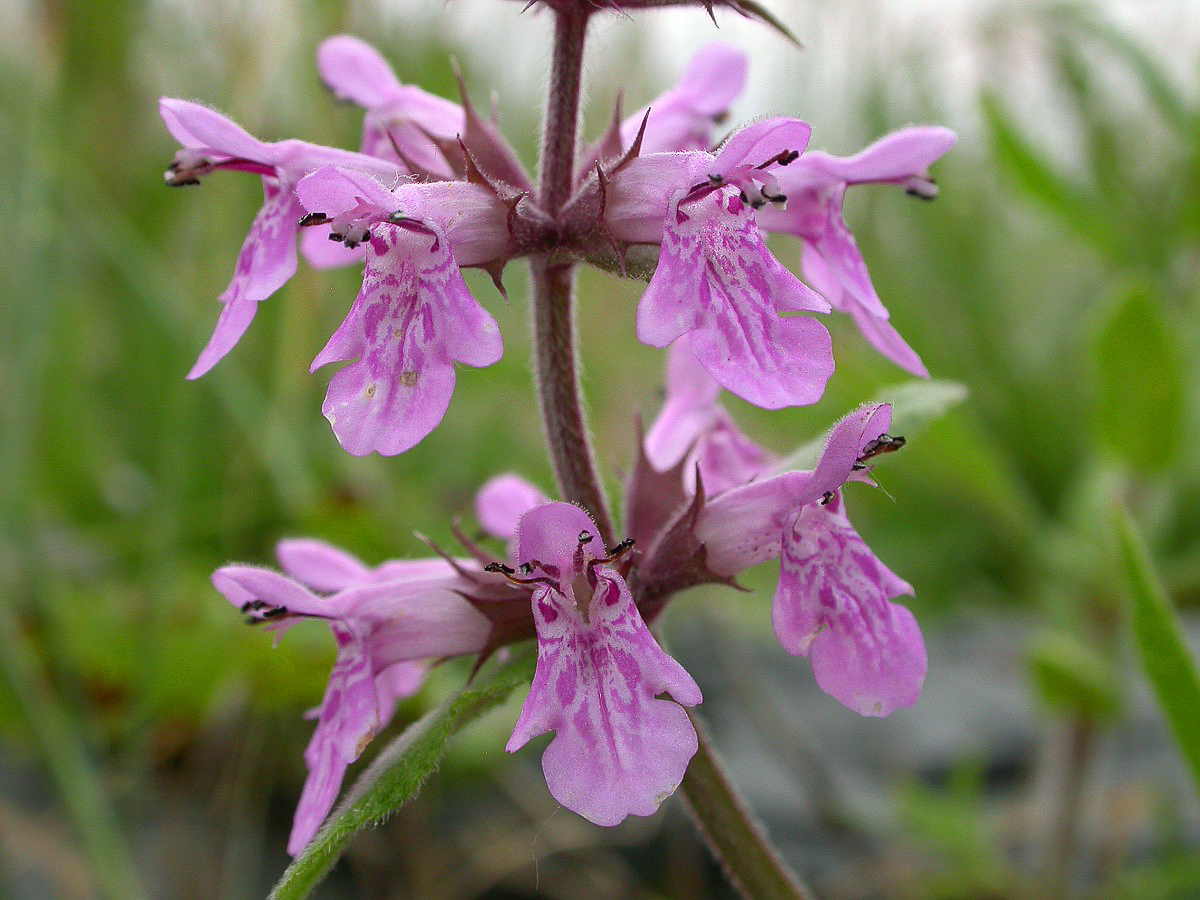
Flowers: Flowers are grouped in glomeruli forming a spicate inflorescence at the top of the stem. The bilabiate corolla has a longer lower lip than the upper lip, pink-violet in color and speckled. Blooms from May to August.
Fruits and Seeds: Fruits are tetranucleate, 2.5 x 2 mm, trigonal, papillose, shiny brown.
DISTRIBUTION AND HABITAT
Found throughout Italy except the major islands, Calabria, Basilicata, and Campania, along the banks of slow-moving watercourses, riverbeds, marshes, coastal areas, and damp fallow land from 0 to 1,300 m.
USE
Antispasmodic, emmenagogue; expectorant, hemostatic, antiseptic, vulnerary, sedative, tonic. The infusion has healing, cleansing, and antiseptic properties, beneficial for wounds, injuries, bruises, and abrasions. A yellow dye can be extracted from the plant. In cosmetics, an infusion of the flowering tops and leaves provides an excellent lotion for cleansing oily and seborrheic skin, lightening it, and soothing skin irritation due to couperose. Before using any plant-based product (medicinal or non-medicinal) for therapeutic or similar purposes, it is always advisable to consult your doctor first.
Tender leaves can be used in salads, omelets, stuffing, sauces, filled pasta, and soups. The tubers can also be used in various culinary preparations. Leaves collected in summer and dried, then powdered, can be mixed with snuff to flavor it and enhance its sneezing properties.
Photo: under free license from Saxifraga and Ed Stikvoort, Jan van der Straaten, Rutger Barendse