
Reed canary grass
Scientific name: Phalaris arundinacea (L.) Moench.
Family name: Poaceae
MORPHOLOGY
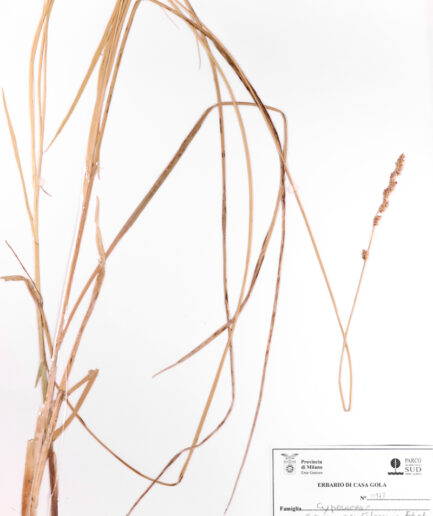
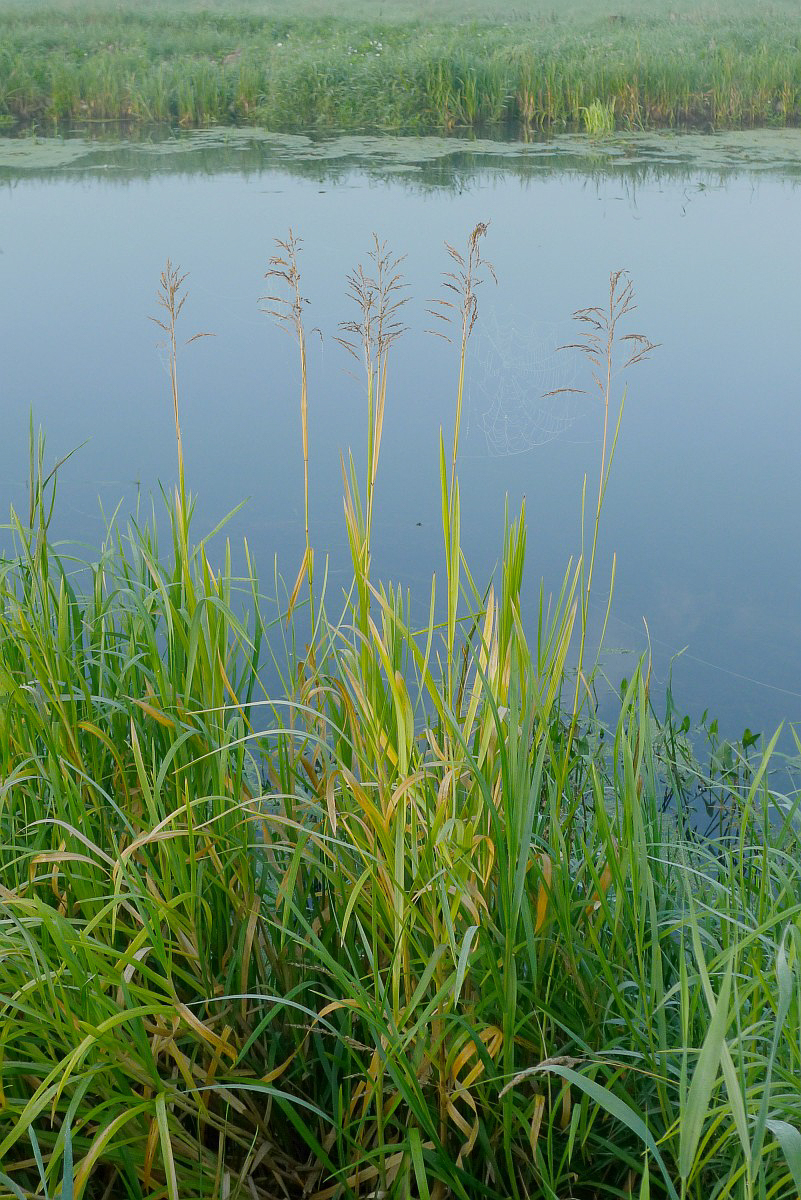
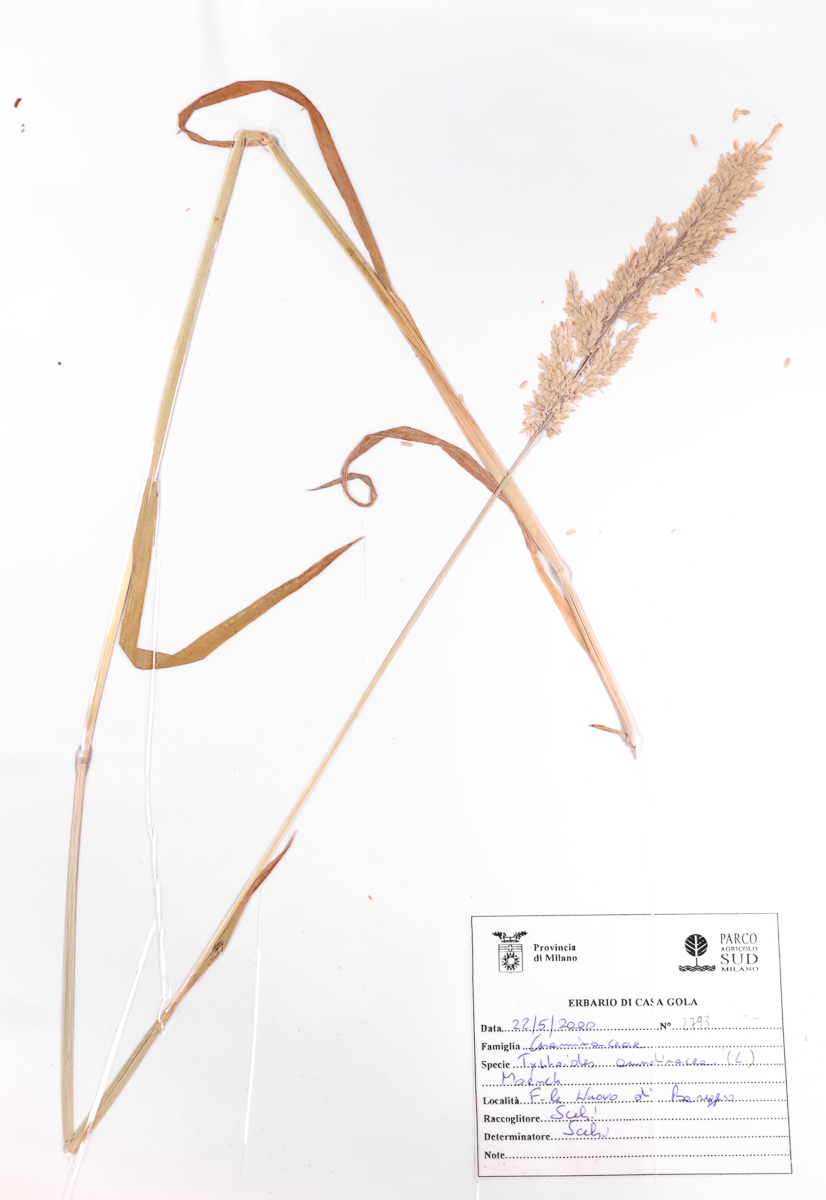
Habit and dimensions: perennial herbaceous plant with an erect growth habit, reaching heights varying between 60 and 150 centimeters. It develops very rapidly.
Stem: sturdy and hollow, exhibiting a reddish coloration in the upper part.
Leaves: linear with a pointed apex.
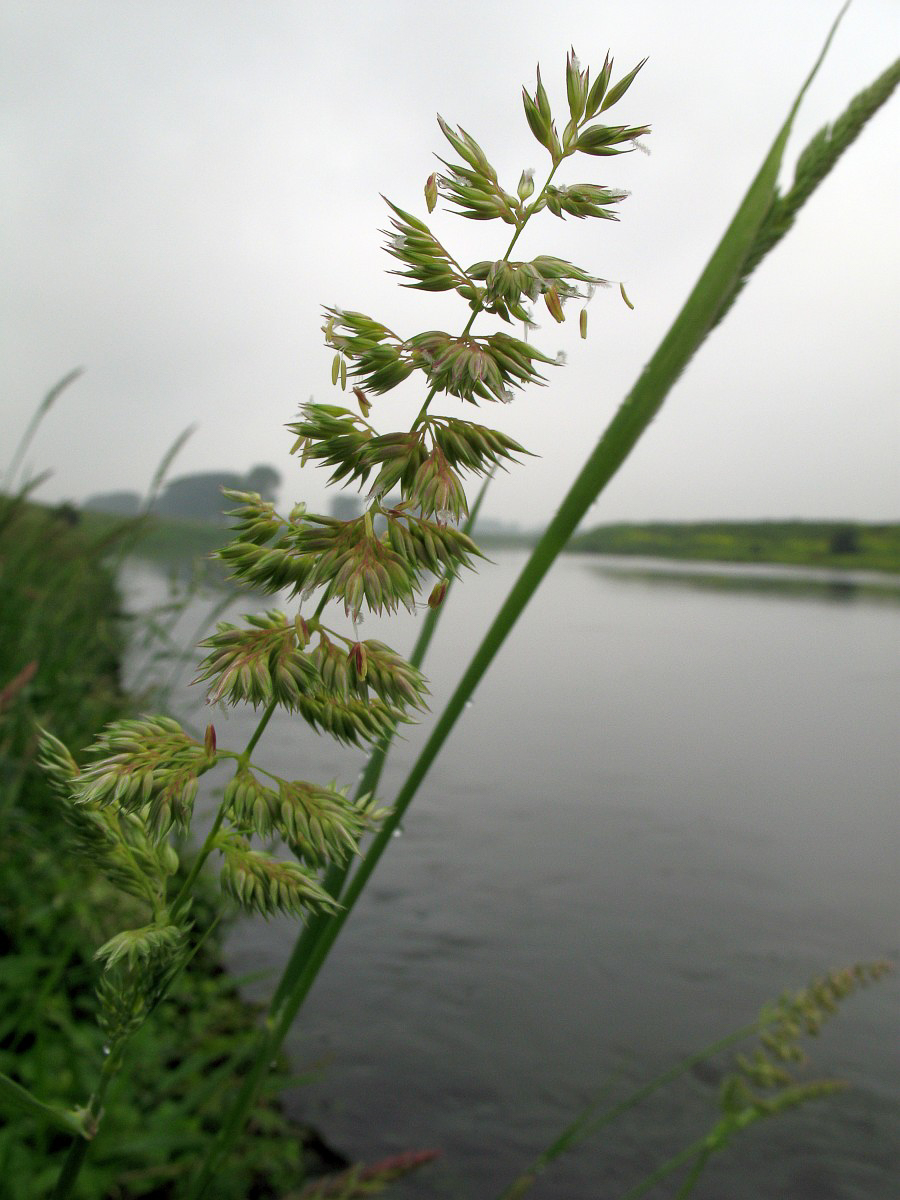
Flowers: inconspicuous, arranged in panicle inflorescences. They appear between May and August.
Fruits and seeds: spikelets grouped in dense clusters, containing caryopses that are ciliate and reticulated.
DISTRIBUTION AND HABITAT
Native to the Northern Hemisphere, from America to Asia. In Italy, it grows in almost all regions, except the southernmost ones, from sea level up to 1,500 meters in altitude. It is primarily found in wet areas, marshes, along the banks of watercourses, and in ponds, preferring humid temperate-cold climates.
USE
Reed canary grass can be cultivated for forage purposes, although the seeds contain substances with hallucinogenic and toxic effects. These effects, however, only manifest at high dosages.
INTERESTING FACTS
The specific epithet derives from the combination of the words arùndo and -dinis, referring to the species’ resemblance to reeds and rushes. It is also known as Spanish reed.
Photo: Under free license from Saxifraga – Mark Zekhuis and Rutger Barendse