



Red willow
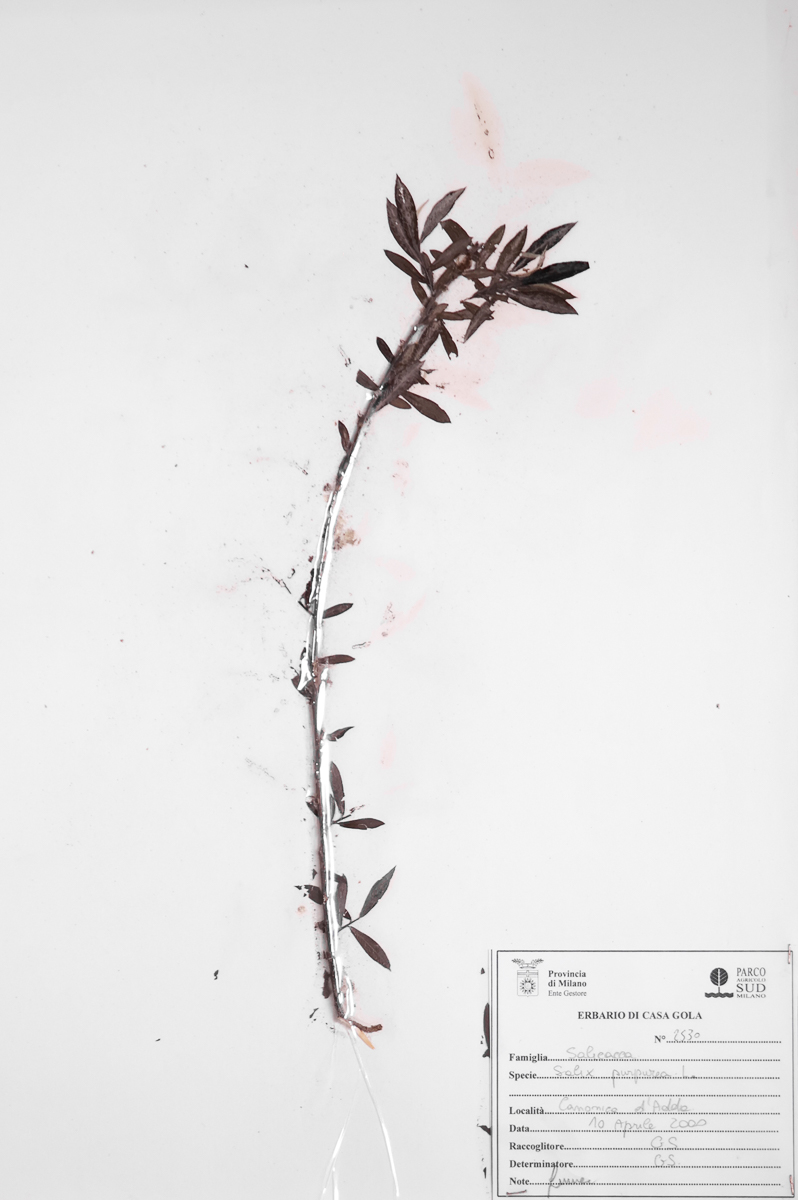
Scientific name: Salix purpurea L.
Family name: Salicaceae
MORPHOLOGY
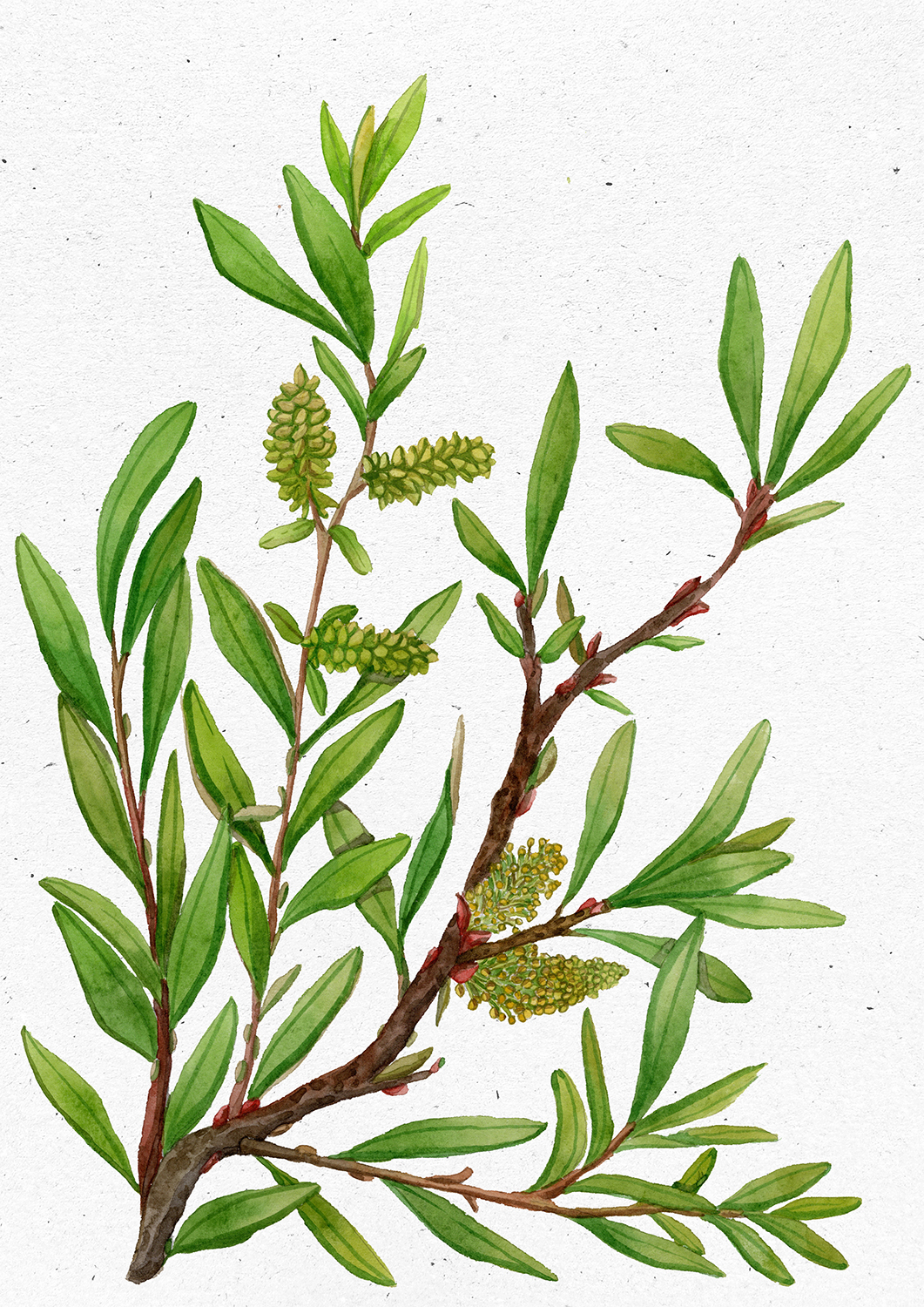
Habit and dimensions: deciduous shrub reaching heights of up to 6 meters. Branches are thin, flexible, and tend to bend with age.
Bark: gray in color, smooth in young specimens, becoming irregularly fissured with age.
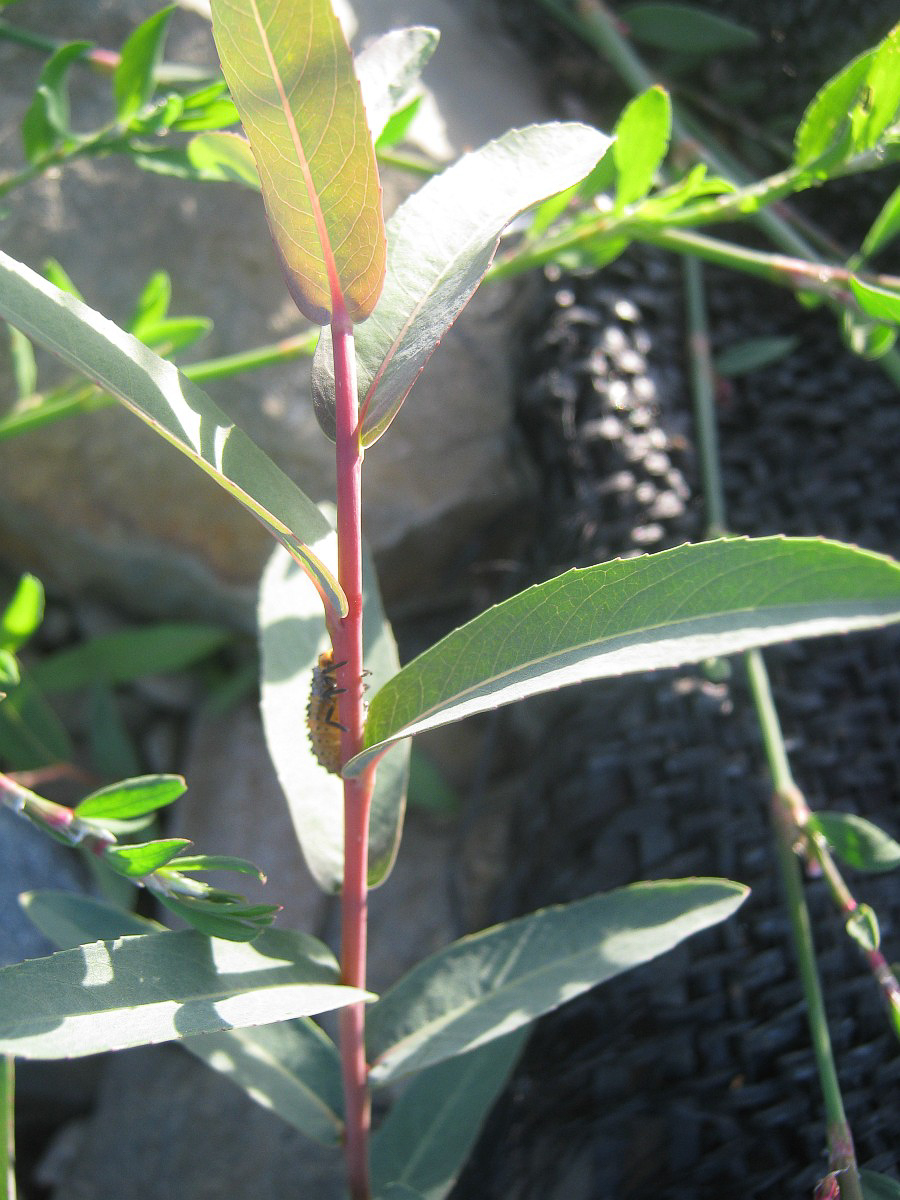
Leaves: alternate, oblanceolate in shape with finely serrated margins. They are borne on short petioles and have scattered hairs along the lower surface.
Flowers: clustered in catkin-like inflorescences. Male flowers are small and cylindrical, initially gray and then reddish. Female flowers are slender, gray-green in color. The species is dioecious: bearing male and female flowers on separate plants.
Fruits and seeds: oval capsules containing very small seeds equipped with a pappus for wind dispersal.
DISTRIBUTION AND HABITAT
Native to Europe and Western Asia, widespread along riverbanks and in wetland areas. In Italy, it is found throughout the peninsula, up to 1800 meters above sea level. It is tolerant to both frost and drought and indifferent to soil type. It often forms associations with other willow species and white alder.
USE
Although less common today, the flexible branches of red willow were used to make woven objects and ties for agriculture. Due to its high reproductive capacity, the plant is used for stabilizing unstable terrain, such as landslides and eroded riverbanks. Like other willow species, it yields salicylates, precursor compounds for aspirin synthesis.
INTERESTING FACTS
The specific name refers to the reddish color of the male inflorescences.
Photo: under free license by Saxifraga-Rutger Barendse and Jan van der Straaten.