
Rosemary
Scientific Name: Salvia rosmarinus Spenn.
Family: Lamiaceae
MORPHOLOGY
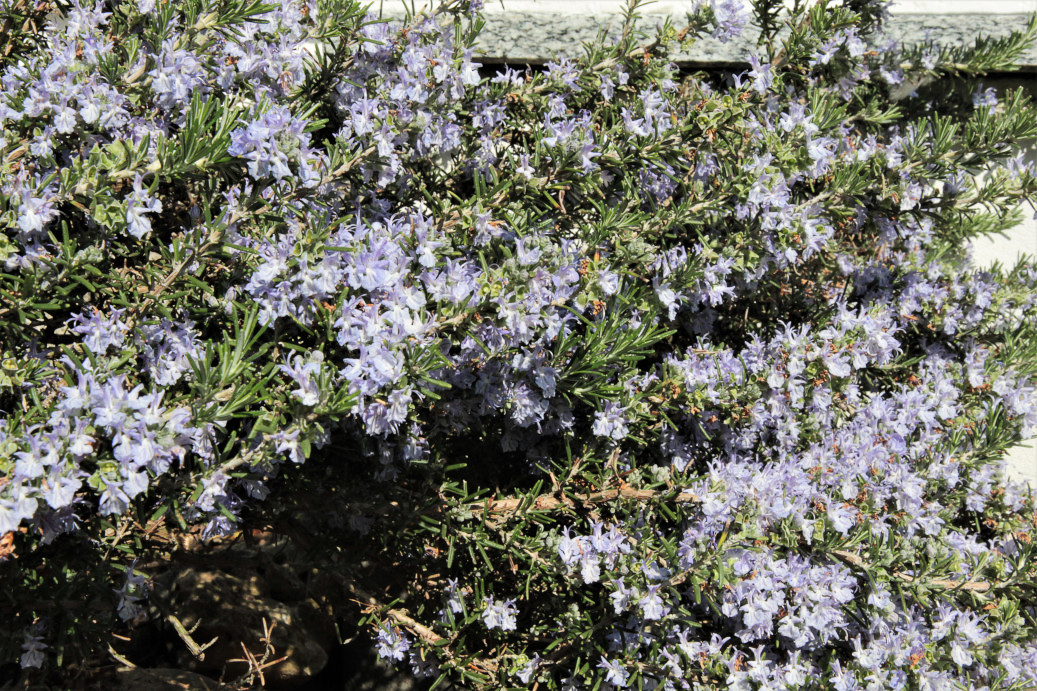
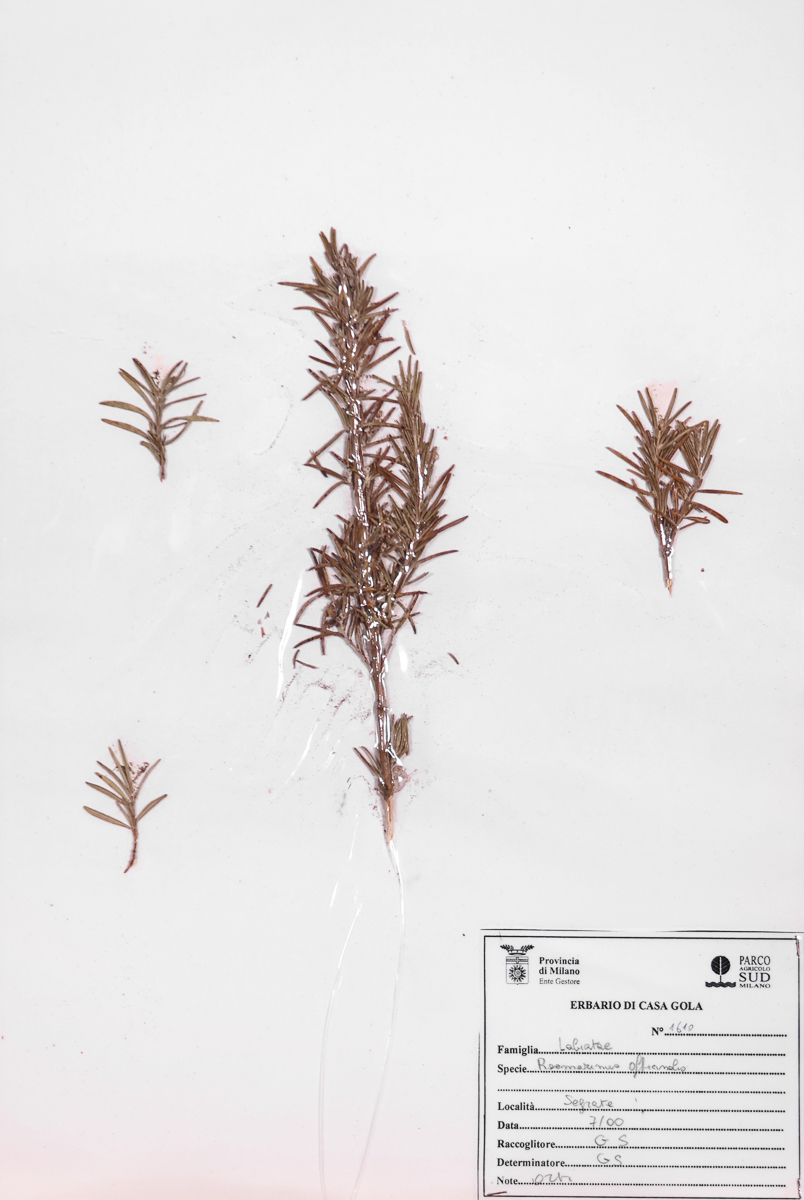
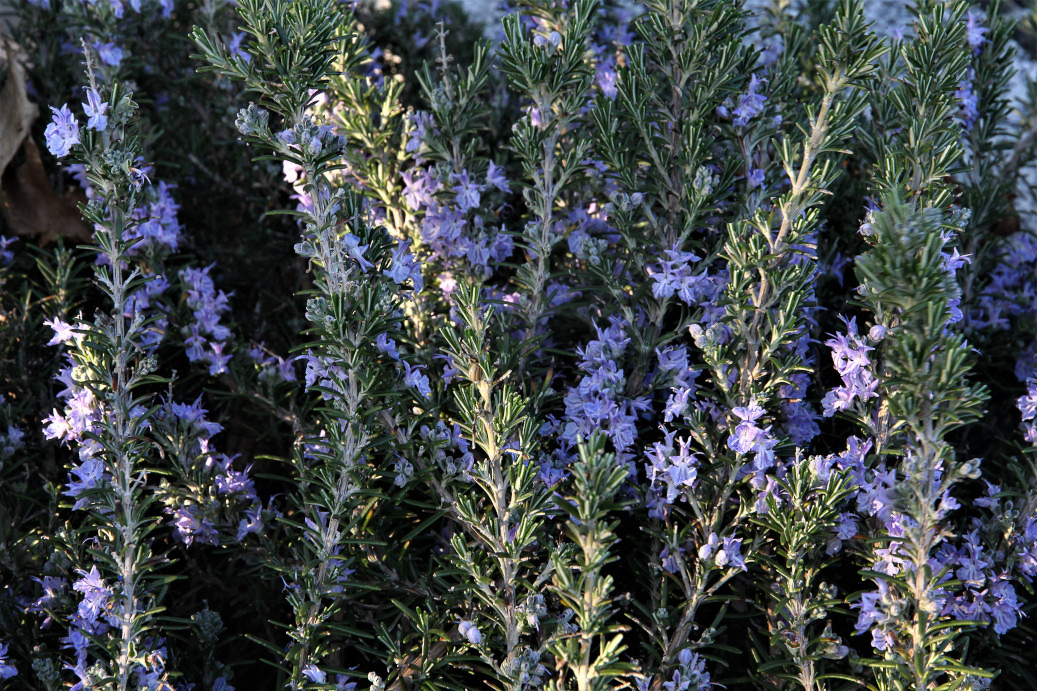
Growth habit and size: Woody, perennial evergreen shrub, up to 2 m tall, with light brown bark.
Stem: Highly branched with a sometimes ascending, sometimes prostrate posture, never truly erect.
Leaves: Linear leaves, 2-3 mm wide and 15-30 mm long, revolute at the edges, sessile, dark green and glossy on top, white tomentose underneath, opposite along the branches and in axillary clusters.
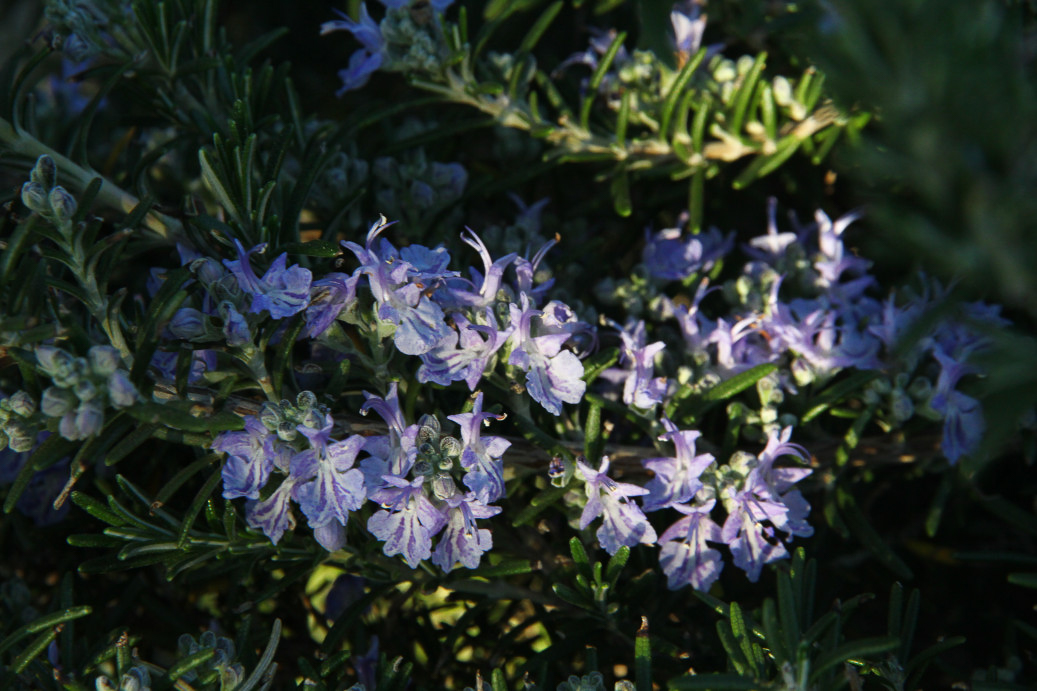
Flowers: Flowers are grouped in short axillary racemes, generally in the upper part of the branches, each with 4-16 flowers. The calyx is bell-shaped, bilabiate, tomentose, 5-6 mm long, divided up to one-third of its length. The corolla is light blue or lilac, sometimes pink or white, bilabiate with a protruding tube, swollen at the throat, with a straight upper lip formed by two connate lobes and a trifid lower lip with a larger, concave central lobe and oblong, slightly revolute lateral lobes. Blooms all year round.
Fruits and seeds: Schizocarpic fruit with 4 oblong mericarps (achenes), light chestnut in color.
DISTRIBUTION AND HABITAT
It grows throughout Italy from sea level to 800 m. It is found along all the Tyrrhenian and Ionian coasts; on the Adriatic coast up to Molise; also found on all the islands and on the western shores of Lake Garda. Cultivated and sometimes naturalized over most of the territory.
USE
Various therapeutic properties were identified, and Arab physicians frequently used it, though aware that high doses could cause spasms and dizziness. Historically, Rosmarinus officinalis was used for a wide range of medical applications (stimulant for nerve diseases and amenorrhea, treatment for tumors, chronic diarrhea, gangrene, prolapse of the rectum and vagina), which were invaluable in times when modern and effective therapies were not available, though their importance has decreased with time.
Currently, rosemary is recognized for its aromatic, aperitive, digestive, antispasmodic, diuretic, balsamic, antiseptic, rubefacient, and stimulant properties. Essential oils and extracts from rosemary are widely used in perfumery, cosmetics, liquor making, and pharmacy. For internal use, rosemary has digestive, antispasmodic, and carminative properties; it stimulates diuresis and sweating, regulates the menstrual cycle, thins bronchial secretions, and soothes convulsive coughs. For external use, it is primarily a good antiseptic. The essential oil also has local stimulating and rubefacient properties useful for treating bruises, joint and muscle pain, rheumatism, and stiff necks.
In cosmetics, lotions and baths deodorize and purify the skin, tinctures revitalize the scalp, and toothpaste and mouthwashes with rosemary strengthen the gums. Before taking any plant-based product (medicinal or non-medicinal) for therapeutic or similar purposes, it is always advisable to consult a doctor.
The success of rosemary in cooking is undisputed. For centuries, along with sage, thyme, and bay leaf, rosemary has been giving a typical aroma to meat, fish, and game dishes, as well as to simple and popular desserts like chestnut cake.
INTERESTING FACTS
Rosemary flowers attract many bees, which produce honey with excellent properties and flavor. From Mediterranean coastal regions, Salvia rosmarinus found its way into the gardens and jars of medieval convents, in those “hortuli” where the 16 beneficial plants that constituted the therapeutic wealth of the medieval West were cultivated. These 16 plants, in addition to rosemary, included wormwood, watercress, fennel, mallow, fenugreek, lily, privet, wild honesty, melon, round-leaved mint, pennyroyal, rue, sage, tansy, and summer savory, all plants of the spontaneous Italian flora.
Photos: Kindly provided by Claudio Farinati